

















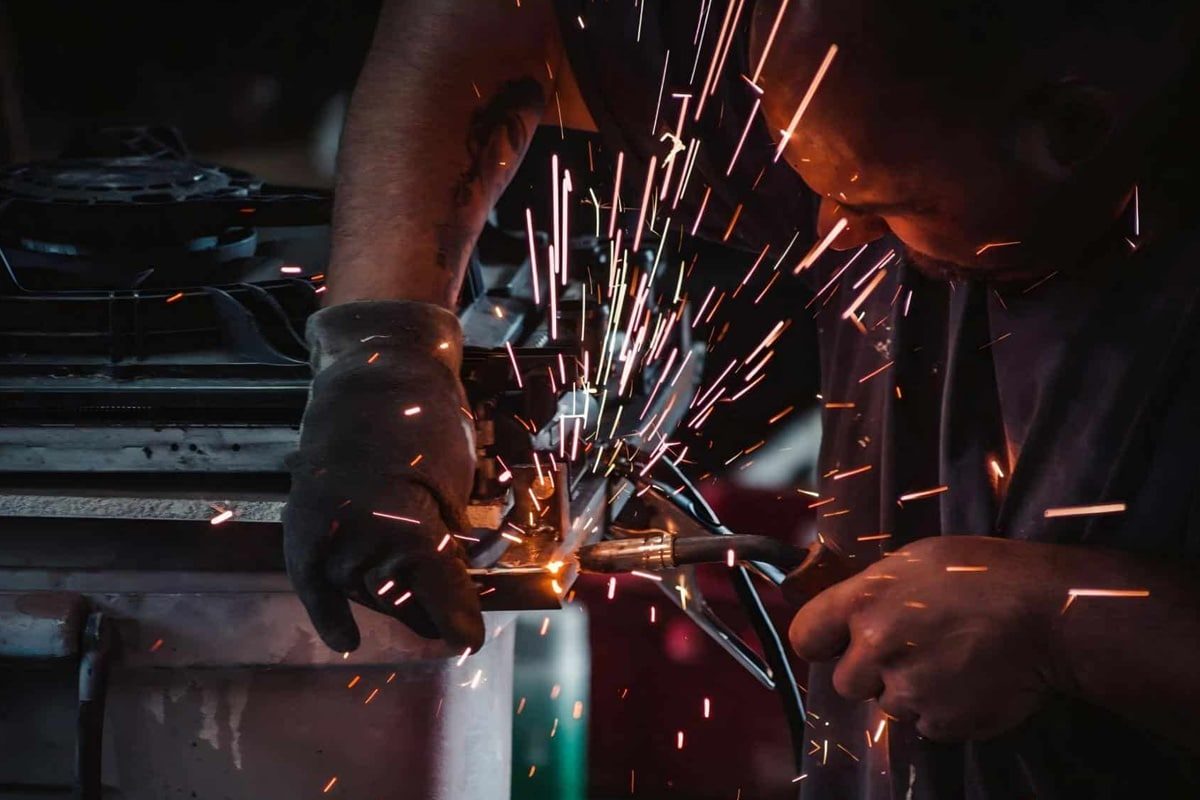
さまざまな用途に合わせてレーザー溶接プロセスパラメータを最適化
Against the backdrop of modern manufacturing’s continuous upgrade towards higher precision, higher consistency, and automation, laser welding is gradually replacing traditional welding processes, becoming an indispensable key technology in high-end manufacturing. From automotive body structural components to aerospace precision parts, from medical device micro-components to electronic and microelectronic products, laser welding significantly improves product performance and production efficiency due to its advantages, such as non-contact processing, controllable heat input, and stable weld quality. However, laser welding is not a “one-size-fits-all” approach; different materials, structures, and industries have fundamentally different requirements for welding results.
In actual production, many manufacturers often encounter problems such as unstable welds, insufficient penetration, spatter, or thermal deformation after introducing fiber laser welding or pulsed laser welding equipment. The root cause is not insufficient equipment performance, but rather a mismatch between laser welding parameter settings and the application scenario. Variables such as laser power, pulse parameters, welding speed, and focal point position are interdependent; any unreasonable parameter setting will directly affect the final weld quality.
Therefore, optimizing laser welding parameters for different applications has become a core issue for improving weld consistency, weld strength, and overall production efficiency. Scientific parameter optimization can not only improve the appearance and internal quality of welds but also effectively reduce energy consumption, decrease rework rates, and enhance the stable operation of automated production lines. This is particularly important for manufacturing enterprises pursuing large-scale production and long-term cost control.
This article will focus on the theme of “Optimizing Laser Welding Parameters for Different Applications,” systematically analyzing the core components of laser welding parameters, exploring the key factors affecting parameter optimization, and proposing practical laser welding parameter optimization strategies based on typical industry applications such as automotive, aerospace, medical devices, and electronics manufacturing. This will help manufacturers fully unleash the true potential of laser welding technology in the face of complex and ever-changing production demands.
目次
Understanding Key Parameters in Laser Welding
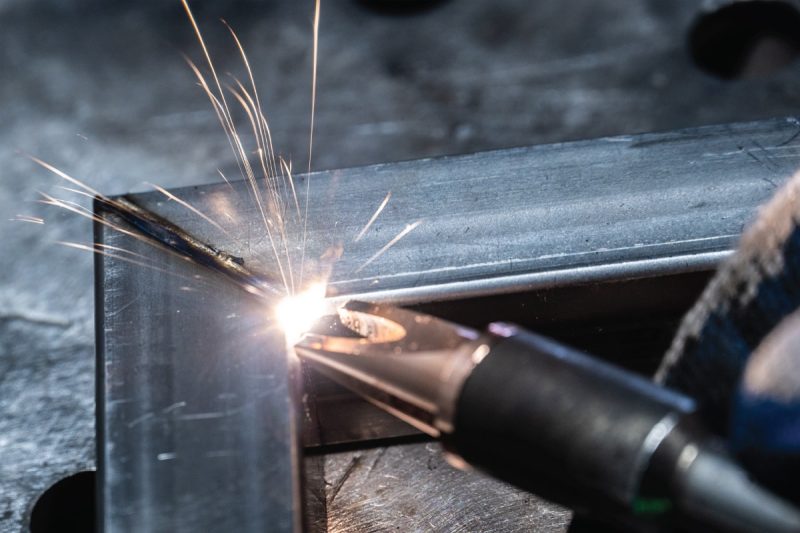
In laser welding applications, equipment performance is only the foundation; the core factor determining weld quality and stability lies in the scientific setting and matching of laser welding parameters. Whether in continuous fiber laser welding or pulsed laser welding, different parameters do not exist independently but work together to influence the formation of the weld pool, weld geometry, and final mechanical properties.
A lack of systematic understanding of laser welding parameters often leads to unstable welding, poor weld consistency, and even increased production costs. Therefore, before formally discussing parameter optimization strategies for different industries, it is necessary to conduct an in-depth analysis of the key parameters of laser welding and their mechanisms of action.
Laser Welding Power
Laser power is the core parameter determining the welding energy input level and is the primary factor affecting weld penetration and width. In laser welding, laser power directly relates to whether the material can reach a stable melting state.
When laser power is insufficient, it is difficult to form a complete weld pool, and common problems include incomplete fusion, insufficient weld strength, or welding interruptions. While setting the power too high can achieve greater penetration, it can also easily lead to defects such as increased spatter, porosity, and material ablation.
In fiber laser welding applications, appropriate power selection requires comprehensive consideration of material thickness, material absorptivity, and welding speed, rather than simply relying on the equipment’s maximum output power. Stable and controllable power output is often more valuable than simply pursuing high power.
Pulse Duration and Pulse Frequency
In pulsed laser welding, pulse duration and pulse frequency are key parameters for controlling instantaneous heat input and weld formation. Pulse duration determines the concentration of energy released by a single pulse, while pulse frequency affects the continuity of the welding process.
Shorter pulse durations help to quickly concentrate energy in a localized area, effectively reducing the heat diffusion range and minimizing the heat-affected zone. This characteristic makes pulsed laser welding particularly suitable for welding thin-walled parts, precision components, and heat-sensitive materials.
When the pulse frequency is too low, discontinuities are likely to occur between weld points; when the frequency is too high, heat may accumulate, weakening the advantages of pulsed welding. Therefore, in practical applications, pulse parameters usually need to be optimized in sync with welding speed and power.
Laser Welding Speed
Welding speed is an important indicator of laser welding efficiency and a key variable affecting weld quality. Welding speed directly determines the amount of energy input received per unit length of weld. In laser welding, excessively fast welding speeds shorten the interaction time between the laser and the material, leading to insufficient molten pool formation and inadequate weld penetration. Conversely, excessively slow welding speeds cause excessive heat accumulation, increasing weld width and the risk of thermal deformation.
In automated laser welding systems, welding speed often needs to be matched with laser power, focal spot position, and path planning to achieve a balance between weld quality and production efficiency.
フォーカスのサイズと位置
The focal spot size determines the laser spot size, thus affecting the energy density distribution. Smaller focal spots mean higher energy density, suitable for achieving deep penetration laser welding, while larger focal spots are more conducive to obtaining a smooth, uniform weld appearance.
Focus position is equally crucial. Whether the focal spot is located on the material surface, slightly above, or slightly below, it will significantly affect the molten pool morphology and welding stability. By appropriately adjusting the focal spot position, spatter can be effectively reduced, weld formation improved, and welding process stability enhanced. In welding complex structures or multi-layered materials, focal parameters often need to be dynamically fine-tuned according to the actual welding conditions.
Beam Quality and Beam Mode
Beam quality reflects the uniformity and focusability of laser energy distribution, and is a latent factor affecting the consistency of laser welding. Good beam quality helps achieve a stable molten pool morphology and improves welding repeatability.
In high-power fiber laser welding applications, beam mode stability is particularly important. Stable beam output not only improves welding quality but also reduces process debugging difficulty and improves long-term production reliability.
In summary, laser welding parameters are highly correlated. Power determines the energy level, and pulse parameters control the heat input method, welding speed affects energy distribution, while focus and beam quality determine the stability and control ability of the welding process.
Only by fully understanding the mechanisms of each parameter and making systematic adjustments based on specific material properties and application requirements can the advantages of laser welding in terms of high quality, high efficiency, and high consistency be truly realized. This understanding also provides a solid technical foundation for subsequent laser welding parameter optimization strategies for different industry applications.
考慮すべき重要な要素
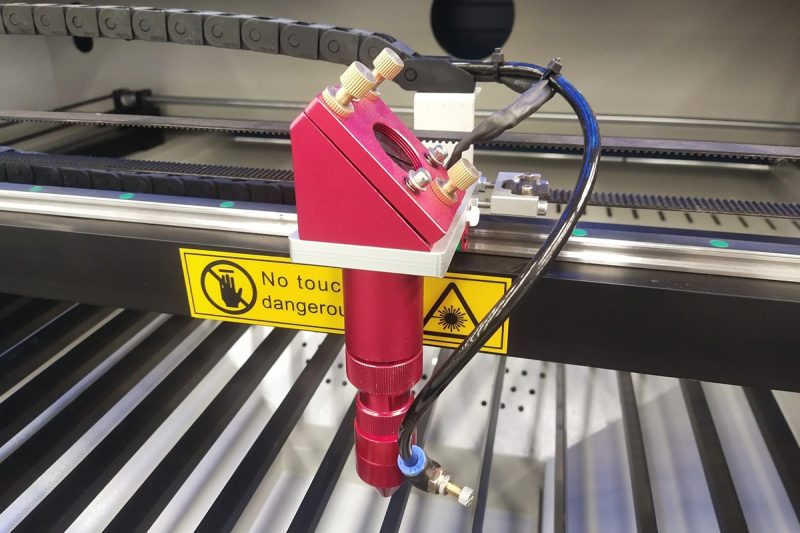
適切な CO2 レーザー切断機を選択するには、最適なパフォーマンス、効率、特定の製造ニーズとの互換性を確保するために、さまざまな要素を慎重に検討する必要があります。切断速度やレーザー出力からソフトウェアの互換性やメンテナンス要件まで、あらゆる側面が、意図した用途に対する機械の適合性に影響します。この段落では、CO2 レーザー切断機を選択する際に考慮すべき重要な要素を明らかにし、企業や個人が要件や目標に合った情報に基づいた決定を下せるようにすることを目的としています。
切削速度
芸術と彫刻
CO2 レーザー切断機の切断速度によって、材料を処理できる速度が決まります。切断速度が速いほど、特に大量生産環境では生産性が大幅に向上します。したがって、速度と切断品質のバランスを取る必要があります。速度が速いほど生産速度は上がりますが、切断速度が速すぎると完成品の精度と品質が損なわれることもあります。したがって、速度と品質の希望するバランスに一致する切断速度の機械を選択して、生産要件を評価する方が効果的です。
レーザーパワー
芸術と彫刻
レーザー出力は、CO2 レーザー切断機の切断能力を決定する上で重要な役割を果たします。レーザー出力が高いほど、より厚い材料を加工でき、切断速度も速くなります。レーザー出力要件を評価する際は、加工する材料の種類と必要な切断深さを考慮してください。切断品質にも重点を置きながら、アプリケーションのニーズを満たすのに十分な出力を持つマシンを選択してください。また、レーザー出力が高いほど、より多くの冷却システムとエネルギー消費が必要になる可能性があるため、マシンに適切な出力レベルを選択する際には、これらの要素を考慮してください。
レーザー光源
芸術と彫刻
CO2 レーザー切断機を選ぶ際には、レーザー ソースの品質と種類が重要な考慮事項となります。信頼性の高いパフォーマンスと最小限のダウンタイムを確保するには、耐久性と効率性に優れたレーザー ソースで知られる評判の良いブランドを選択してください。レーザー ソースによってビーム品質、安定性、寿命が異なるため、オプションを調べて比較し、ニーズに最適なレーザー ソースを見つけてください。さらに、メンテナンス要件や保守性などの要素もレーザー ソースの選択時に考慮する必要があります。これらの要素は、マシンの長期的な信頼性とコスト効率に影響を与える可能性があります。
切断エリア
芸術と彫刻
CO2 レーザー切断機の切断面積によって、処理できる材料の最大サイズが決まります。生産ニーズと材料のサイズを評価して、適切な切断面積を持つ機械を選択してください。作業の効率や柔軟性を犠牲にすることなく、予想される最大のワークピースに対応できる切断面積を持つ機械を選択してください。切断面積が大きいほど、機械の設置面積が大きくなり、初期投資額も高くなる可能性があることに注意してください。アプリケーションに最適なサイズを決定するときは、これらの要素を考慮してください。
正確さと精度
芸術と彫刻
正確さと精度は、CO2 レーザー切断機の利点の 1 つです。特に、複雑な設計と厳しい許容誤差が求められる用途では、その利点が顕著です。機械の位置決め精度、再現性、および動作制御システムを評価して、正確で一貫した切断結果を確保してください。精度と再現性の向上に役立つリニア エンコーダーやサーボ モーターなどの機能を探してください。さらに、ビーム品質や安定性などの要素も考慮する必要があります。これらの要素は、切断プロセスの全体的な精度にも影響する可能性があるためです。
ソフトウェアの互換性
芸術と彫刻
ソフトウェアの互換性により、CO2 レーザー切断機の機能性を最大限に引き出すことができます。機械が業界標準の設計ソフトウェアとファイル形式をサポートしていることを確認し、既存のワークフローにシームレスに統合できるようにします。CAD/CAM ソフトウェアとの互換性により、設計から製造までのプロセスを効率化でき、直感的な制御インターフェイスにより操作とプログラミング タスクが簡素化されます。機械のソフトウェア機能と互換性を評価して、特定のアプリケーション要件との互換性を確保します。
メンテナンスとサポート
芸術と彫刻
定期的なメンテナンスは、CO2 レーザー切断機の耐用年数と最適なパフォーマンスの確保に役立ちます。信頼性の高い技術サポートとすぐに入手できるスペアパーツを備えた機械を優先して、ダウンタイムを最小限に抑え、生産性を最大化します。メンテナンスおよびサポート サービスを評価するときは、サービス契約、トレーニング プログラム、リモート診断機能などの要素を考慮してください。さらに、メーカーの保証範囲とサービス応答時間について尋ねて、発生する可能性のある問題に迅速に対処できるようにします。
セキュリティ機能
芸術と彫刻
CO2 レーザー切断機を操作する際は、安全性を最優先にしてください。安全インターロック、密閉された作業エリア、レーザー ビーム ガードなどの包括的な安全機能を備えた機械を探してください。これらの機能は、事故のリスクを軽減し、操作中にオペレーターを保護するのに役立ちます。さらに、職場の安全性をさらに高めるために、緊急停止ボタン、ドア センサー、排気システムなどの追加の安全機能を備えた機械を検討してください。
コストと予算
芸術と彫刻
CO2 レーザー切断機を評価する際は、初期投資コスト、運用コスト、長期的な投資収益率を考慮してください。総所有コストを決定するには、消耗品、メンテナンス、トレーニングなどの追加コストを考慮してください。予算の制約を評価し、特定のニーズと要件を満たす機能に優先順位を付けてください。初期コストを考慮する必要がありますが、投資が費用対効果の高いものであることを確認するには、選択したマシンによって提供される長期的な価値と利点も評価する必要があります。
使いやすさ
芸術と彫刻
ユーザーフレンドリーなマシンは、スムーズな操作を保証し、生産性を最大限に高めます。直感的なコントロール、簡単なセットアップとメンテナンス手順、包括的なトレーニングとサポート リソースなどの機能を探してください。明確な安全機能と人間工学に基づいた設計を備えたマシンは、ユーザー エクスペリエンスをさらに強化し、オペレーターの満足度と効率を高めます。ユーザー フレンドリーさと技術仕様を優先することで、企業はパフォーマンス要件を満たすだけでなく、ワークフローへのシームレスな統合も促進する CO2 レーザー カッターを選択できます。
これらの重要な要素 (精度と精密度、ソフトウェアの互換性、メンテナンスとサポート、安全機能、コストと予算) を慎重に検討することで、選択した CO2 レーザー切断機が特定の要件を満たし、アプリケーションのニーズを満たすパフォーマンス、信頼性、セキュリティを実現できるようになります。
その他の注意事項
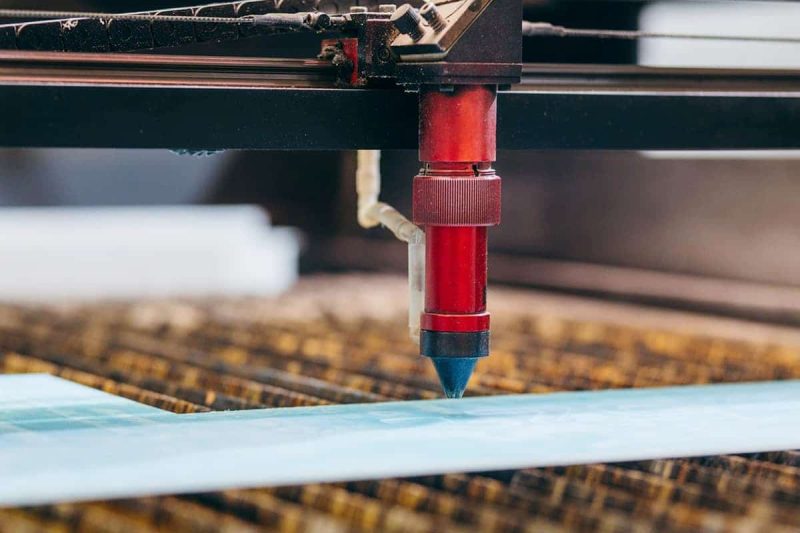
CO2 レーザー切断機を選択する際には、技術仕様と使いやすさに加えて、考慮すべき重要な要素がいくつかあります。
ブランドの評判
芸術と彫刻
メーカーやブランドの評判は非常に重要です。評判の良いブランドを選択すると、信頼性だけでなく、品質と一貫したパフォーマンスも保証されます。顧客のレビュー、証言、業界レポートなどの広範な調査を徹底的に調べて、ブランドの評判と実績に関する貴重な洞察を得てください。
保証とアフターサポート
芸術と彫刻
CO2 レーザー切断機を選ぶ前に、メーカーが提供する保証範囲とアフターサポートを評価する必要があります。包括的な保証は、安心感を与えるだけでなく、予期しない問題から投資を保護します。さらに、迅速なアフターサポートにより、運用中に遭遇した技術的な課題が迅速に解決され、ダウンタイムが最小限に抑えられ、生産性が最大化されます。
将来の拡張とアップグレード
芸術と彫刻
将来の拡張やアップグレードの可能性を考慮することが重要です。変化する生産ニーズを満たすために、拡張可能でアドオン アクセサリやモジュールと互換性のある CO2 レーザー切断機を選択してください。レーザー出力の増加や高度なソフトウェア機能などの利用可能なアップグレード オプションについて問い合わせて、マシンがビジネスに合わせて適応し、成長できるようにします。
これらの追加的な考慮事項を技術仕様や使いやすさと組み合わせることで、企業は、現在の要件を満たすだけでなく、将来の拡張計画を補完し、投資収益を最大化し、長期的な成功を確実にする CO2 レーザー切断機を選択する際に、情報に基づいた決定を下すことができます。
要約する
適切な CO2 レーザー切断機を選択することは重要な決定であり、さまざまな要素を慎重に考慮する必要があります。この記事では、企業や個人が CO2 レーザー切断機を選択する際に評価する必要がある重要な側面について包括的に説明します。切断速度、レーザー出力、切断領域などの技術仕様から、ユーザー中心の要素などのユーザーフレンドリーさやブランドの評判まで、各側面が特定のアプリケーションへの機械の適用性を決定します。さらに、この記事では、選択した機械のシームレスで効率的なエクスペリエンスを確保するために、保証、アフターサポート、将来の拡張とアップグレードの可能性の重要性も強調しています。これらの要素を深く検討することで、企業は CO2 レーザー切断技術の分野でニーズ、目標、長期的な成長計画を満たす賢明な決定を下すことができます。
製造および加工のニーズに CO2 レーザー切断技術の力を活用する準備はできていますか? 薄い材料の精密切断をお求めの場合も、厚い基板の容易な切断に取り組まれる場合も、当社のチームはお客様の要件を満たすカスタマイズされたソリューションを提供します。今すぐ当社にご連絡いただき、レーザー切断のニーズについてご相談いただき、当社のソリューションがお客様の目標達成にどのように役立つかをご確認ください。最大切断厚さ、材料の適合性、カスタム切断要件などについてご質問がある場合でも、当社のチームはあらゆる段階で専門的なガイダンスとサポートを提供いたします。

連絡先
- [email protected]
- [email protected]
- +86-19963414011
- No. 3 ゾーン A、Lunzhen 工業地帯、玉城市、山東省。
レーザー ソリューションを入手する