

















How to Handle Different Joint Configurations in Laser Welding?
Laser welding technology is transforming modern manufacturing. The global machine à souder au laser market was valued at $2.7 billion in 2024 and is projected to grow to $4.5 billion by 2034. The reason behind this rapid growth is simple: laser welding is 4-10 times faster, more precise, and produces less thermal deformation than traditional TIG welding.
However, many engineers encounter a key problem in practical applications: how to handle different joint configurations? Butt joints, lap joints, corner joints, and T-joints—each structure has different welding requirements. Assembly gaps, beam alignment, and thermal management strategies—these details determine the success or failure of the weld quality.
The choice of joint configuration depends on multiple factors, including product design, stress conditions, assembly precision, and production costs. For example, when connecting two steel plates, butt joints offer the highest strength but have stringent assembly requirements, while lap joints are easier to assemble but suffer from stress concentration. Laser welding is particularly sensitive to joint configuration—the spot diameter is typically only 100-600 micrometers, requiring extremely high alignment precision.
Table des matières
Introduction au soudage laser
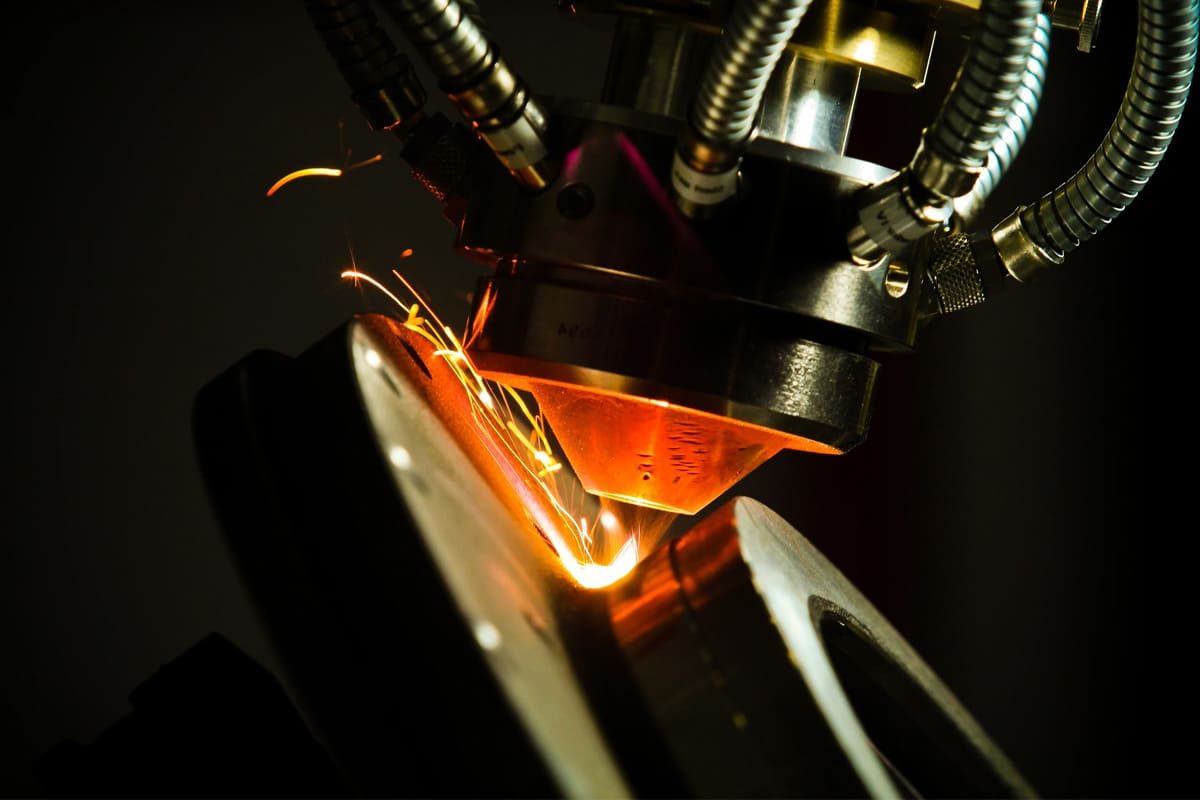
Laser welding works by using a high-energy-density laser beam (typically exceeding 1,000,000 W/cm2) to melt the metal surface, forming a strong joint upon cooling. This process is completely different from traditional arc welding; the laser uses focused photons to penetrate deep into the material, rather than simply heating the surface.
Two Welding Modes
Conduction Welding Mode: In conduction welding mode, the laser power density is lower (<0.5 MW/cm2). Energy is absorbed at the surface and then conducted inward. The weld is shallow and wide, bowl-shaped, suitable for Class A surfaces with high aesthetic requirements. This mode has low heat input and good deformation control, often used for thin-plate welding. Due to energy dispersion, excessive melting and spatter are avoided, resulting in a smooth and aesthetically pleasing weld surface.
Deep Penetration Welding Mode: In deep penetration welding mode, the power density exceeds 1.5 MW/cm2. The metal not only melts but also vaporizes. The recoil pressure generated by evaporation creates a vapor channel (keyhole effect) within the metal, allowing the laser to penetrate deep into the material, forming a deep and narrow weld. This mode is suitable for thick-plate welding, with penetration depths several times the width. Deep penetration mode offers high welding speed and efficiency, making it the most commonly used method in industrial production.
The switching between the two modes depends on the power density. By adjusting the laser power, spot size, and defocusing amount, it’s possible to switch between conduction mode and deep penetration mode. Engineers need to select the appropriate mode based on material thickness, joint type, and quality requirements.
The Rise of Handheld Laser Welding
In 2024-2025, handheld laser welding systems attracted significant interest from the welding industry. These devices offer high production efficiency, simple setup, low training requirements, and relatively low cost, alleviating the industry’s shortage of skilled labor. Some systems weld four times faster than TIG welding and require almost no material preparation or post-processing.
Handheld devices are particularly suitable for repair, small-batch production, and on-site welding. While their precision is not as high as automated equipment, their flexibility and low investment threshold make them increasingly popular among small and medium-sized enterprises. Operators can learn to use them after brief training, without requiring years of welding experience.
Laser welding achieves rapid melting and joining of materials through a high-energy-density laser beam. Its working mechanism and energy application method are fundamentally different from traditional arc welding. Two modes, conduction welding and deep penetration welding, respectively meet the different requirements for thin-plate appearance quality and thick-plate high-efficiency welding. In engineering, these modes can be flexibly switched by adjusting power density and beam parameters.
With the rapid development of handheld laser welding systems, the application threshold for laser welding is significantly decreasing. These devices, while ensuring high welding quality, also offer advantages in efficiency, flexibility, and cost. This allows laser welding to gradually expand from high-end automated production lines to maintenance, small-batch production, and SME scenarios, further promoting the popularization and deepening application of laser welding technology.
Five Types of Joint Configurations
Butt Joint Definition and Applications
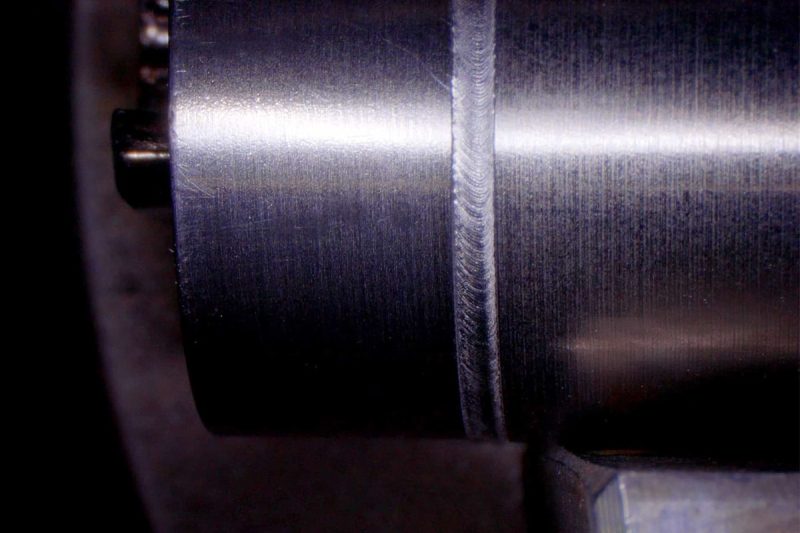
Butt joints are formed by aligning the edges of two plates and welding them directly together. This is the most common and strongest joint type because the weld and base material are stressed in parallel, resulting in a uniform stress distribution. In engineering mechanics, butt joints have the highest load-bearing efficiency, theoretically reaching 100% of the base material’s strength.
They are widely used in pressure vessels, pipelines, sheet metal manufacturing, and automotive bodies. Butt joints are the preferred choice for any application requiring high-strength connections and allowing access from both sides. They are also widely used in electric vehicle battery housings, aerospace structural components, and precision instrument housings. In automotive manufacturing, the production of body panels is a typical application of butt welding.
Key Points of Laser Welding Technology
Extremely high alignment requirements are the biggest characteristic of butt joints. The laser spot is small, and the edges of the two plates must be precisely aligned. Ideally, the assembly gap should be less than 10% of the plate thickness. For example, when welding a 1mm thick plate, the gap should be controlled within 0.1mm. Beyond this range, the laser will pass through the gap, preventing the formation of an effective molten pool. Industry experience shows that for every 0.05mm increase in gap, welding difficulty increases significantly, and the risks of porosity and incomplete fusion also rise.
The beam focusing position is crucial. Typically, the focus is set on the workpiece surface or slightly downwards (1-2mm negative defocus) to achieve optimal energy concentration. Negative defocus increases weld depth, forming a deeper molten pool. Positive defocus can be used when welding thin plates, resulting in a larger spot size and dispersed energy, preventing burn-through. The focus position adjustment range is usually within ±3mm; precise control requires a high-precision focusing system. In practice, even small changes in defocus can significantly affect weld quality; precise adjustments are necessary based on the material and thickness.
The shielding gas must adequately cover the molten pool. Argon flow rate is typically 10-20L/min, and the gas flow should be stable to avoid turbulent air entrainment. When welding aluminum alloys and titanium alloys, the back side also needs protection to prevent oxidation. Stainless steel can be welded with argon or nitrogen, but aluminum and titanium require high-purity argon (99.99% or higher). The design of the shielding gas nozzle is also crucial, ensuring uniform gas flow over the welding area without dispersing the molten pool. The nozzle angle is typically 30-45 degrees to the workpiece, and the distance should be 10-15 mm.
For butt welding of thick plates, beveling is sometimes necessary. While lasers can penetrate thicker materials, the limit for single-pass welding is usually between 8 and 12 mm. Beyond this thickness, V-grooving or U-grooving is required for multiple passes. The beveling angle is typically 30-60 degrees, ensuring the laser reaches the root while avoiding excessive material consumption. The precision of the beveling directly affects weld quality; the edges should be straight and smooth, and the angle error should be controlled within ±2 degrees.
Avantages
- Highest strength, joint efficiency up to 90-100%
- Narrow and deep welds, small heat-affected zone, minimal deformation
- No overlap required, saving material
- Smooth appearance, easy for subsequent processing
Challenges
- Strict assembly precision requirements; gaps and misalignments must be strictly controlled.
- High edge preparation requirements; cut surfaces must be straight, smooth, and burr-free.
- Thick plate welding may require beveling.
- Back-side welding quality is difficult to guarantee.
Lap Joint Definition and Application
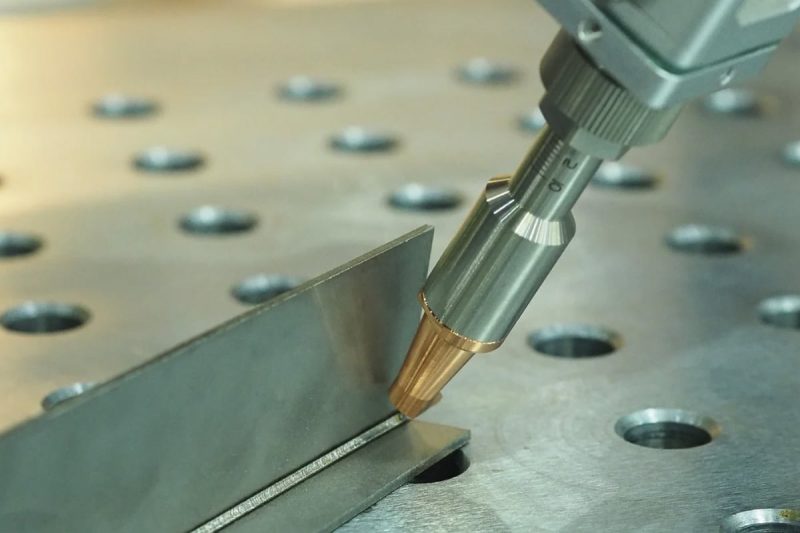
A lap joint is formed by pressing one plate onto another and welding from one side. The weld is located on the edge or surface of the upper plate, melting the upper plate and penetrating to the lower plate to form a fusion. This type of joint is widely used in manufacturing.
Widely used in automotive manufacturing (body welding, stiffener connections), white goods (refrigerator, washing machine housings), electronic product housings, building sheet metal, etc. Particularly suitable for situations where access from the back is impossible or where weld protrusions are not permitted. In battery pack manufacturing, the sealing welding of the cover and shell typically uses a lap joint.
Key Points of Laser Welding Technology
Reasonable overlap is crucial for lap joint design. Typically, the width of the upper plate covering the lower plate is 3-5 times the thickness of the upper plate. Insufficient overlap results in insufficient welding area and low strength; excessive overlap wastes material and prolongs welding time. For example, for a 0.8mm upper plate, the overlap should be between 2.4 and 4mm. This rule of thumb applies to most applications, but adjustments should be made based on material type, stress conditions, and operating environment. For areas under high stress, the overlap can be increased to improve the safety factor.
The laser must have sufficient energy to penetrate the upper plate and melt the lower plate. The power should be 20-30% higher than for butt joints to allow for deeper heat transfer. The welding speed should be appropriately reduced to allow sufficient time for heat to conduct downwards. Too high a speed may only melt the surface of the upper plate, resulting in a false weld—it may look normal, but lacks actual connection strength. Too slow a speed may cause the upper plate to burn through, creating a deep pit in the lower plate, also leading to weld failure. This balance needs to be determined through systematic testing and the establishment of a parameter database.
The two plates must fit tightly together. Any gaps will cause laser energy loss in the air, resulting in poor weld penetration. Generally, a gap of <0.2mm is required, ideally <0.1mm. For galvanized steel plates, the situation is different; a 0.1mm gap is intentionally left to allow zinc vapor to escape and prevent explosive porosity. Zinc’s boiling point of 907 degrees Celsius is much lower than steel’s melting point of 1500 degrees Celsius, causing zinc to vaporize first during welding. If the plates are completely fitted together, the gas has nowhere to escape, forming numerous pores in the molten pool, potentially even leading to a weld explosion. This gap value needs to be precisely controlled based on the galvanized layer thickness.
Filler material is sometimes used. If the gap is large or the weld thickness needs to be increased, welding wire can be added. However, this reduces welding speed by 20-40%, increases material costs and equipment complexity, and is generally avoided. In automated production, adding a wire feeding system increases equipment complexity and maintenance costs. Filler wire should only be considered in special cases, such as high-requirement sealing welds or applications with exceptionally high strength requirements.
The choice of beam angle is also important. Vertical irradiation is the most common, but sometimes tilting it by 5-10 degrees can improve energy distribution and prevent burn-through of the upper plate. Tilting the welding beam can also improve the flow of the molten pool and reduce porosity. However, the tilt angle should not be too large, otherwise it will lead to unstable welding and poor weld formation.
Avantages
- Simple assembly, low requirements for edge preparation
- Can connect plates of different thicknesses
- Single-sided welding, no need to approach the back side
- Good fault tolerance
Challenges
- Joint strength is lower than that of butt joints; fatigue strength is only 50-70% of butt joints
- Difficult to control the weld penetration depth
- Porosity is prone to occur in the plating material
- Overlapping parts increase weight
Edge Joint Definition and Application
An edge joint is formed by aligning the edges of two plates vertically and welding them together. The weld seam is located at the junction of the two plate edges. It is mainly used for welding thin plates (typically <2mm), such as sealing the cover plates of prismatic batteries, connecting the housings of precision instruments, and welding the longitudinal seams of thin-walled pipes. Sealing the aluminum housing of electric vehicle power batteries is a typical application. The edges of the cover plate and the housing are aligned, and the laser melts the two edges to form a sealing weld while ensuring that the interior is not contaminated.
Key Points of Laser Welding Technology
Edge preparation must be meticulous. Both edge surfaces must be straight, smooth, and of uniform thickness. Any burrs or unevenness will lead to poor welding. The laser beam must be precisely aligned with the junction line of the two edges; a deviation of 0.1mm may result in melting only one side. Using a vision tracking system can improve alignment accuracy. The energy density must be moderate. Too high a density will burn through, while too low a density will not penetrate. Pulsed welding or low-power continuous welding is usually used, with precise control of heat input.
Avantages
- Smooth and aesthetically pleasing weld seam, with almost invisible welding marks.
- No increase in joint thickness.
- Suitable for sealing welding of thin plates.
Challenges
- Suitable only for thin plates, typically limited to below 2mm.
- High assembly requirements.
- Limited weld strength.
Corner Joint Definition and Application
A corner joint is a connection between two plates at a certain angle (usually 90 degrees), with the weld seam located on the outer or inner side of the corner. Widely used in structures such as enclosures, frames, and supports. Corner joints are used in equipment cabinets, control boxes, corners of building curtain walls, and connections between longitudinal and transverse beams in vehicle chassis.
Key Points of Laser Welding Technology
Joint preparation should consider weld accessibility. The beam angle needs to be adjusted, usually tilted 15-30 degrees, to ensure the laser irradiates the root of the corner. The shielding gas must cover the weld seam; gas shielding for corner joints is more difficult than for flat plates. The root gap must be controlled; ideally, the two plates should fit tightly together.
Avantages
- Suitable for constructing complex structures
- Can weld plates of varying thicknesses
- High degree of automation, easy to program
Challenges
- Easy to achieve fusion at the root
- Angle errors affect quality
- Difficult to weld internal corners
T-Joint Definition and Application
A T-joint is formed by inserting one plate perpendicularly into the surface of another plate, creating a T-shape. The weld is located at the joint of the T, typically one fillet weld on each side. It is widely used in the connection of ship decks and bulkheads, longitudinal and transverse beams of bridges, reinforcing ribs of storage tanks, and supporting structures of mechanical equipment.
Key Points of Laser Welding Technology
Joint assembly must be accurate. The vertical plates must be truly perpendicular, with a deviation not exceeding 2-3 degrees. There are two strategies for beam positioning: one is to align the beam with the connecting line, melting both plates simultaneously; the other is to slightly deflect the beam towards the vertical plate, melting the vertical plate first to form a molten pool, and then wetting the base plate. Double-sided welding is generally better than single-sided welding. Welding one weld from each side of the T results in higher strength and more balanced stress. Heat control must consider the difference in heat dissipation between the two plates.
Avantages
- High structural strength
- High efficiency of stiffener connection
- Flexible design
Challenges
- High welding difficulty
- Difficulty in deformation control
- Difficulty in inspection
Five common joint types—butt joints, lap joints, edge joints, corner joints, and T-joints—cover the vast majority of structural and functional welding needs in modern manufacturing. Laser welding, with its high energy density and precisely controllable heat input, exhibits significant advantages in different joint configurations: butt joints achieve the highest structural strength, lap joints offer assembly flexibility, edge joints are suitable for sealing thin plates, and corner and T-joints meet the needs of complex spatial structures and stiffener connections.
However, different joint types have significantly different requirements for assembly accuracy, beam positioning, energy control, and gas protection, and the welding difficulties also vary. Only by fully understanding the stress characteristics, material properties, and process window of the joint, rationally selecting the joint type, and precisely matching laser welding parameters can the manufacturing goals of high efficiency, low deformation, and high consistency be achieved while ensuring welding quality.
Technical Considerations for Different Joint Configurations in Laser Welding
Optimisation des paramètres laser
Power and Power Density
Different joint types require vastly different power levels. Butt joints are the most efficient: 1.5kW is sufficient for butt welding of 1mm acier au carbone; 3mm thickness requires 3-4kW. Acier inoxydable has low thermal conductivity, allowing for a 10-15% reduction in power. Aluminium alloys have high reflectivity, requiring a 50-100% increase in power.
Lap joints require even higher power; for the same thickness, lap welding demands 20-30% more power than butt welding. Power density determines the welding mode: <0.5 MW/cm² is conduction welding; >1.5 MW/cm² enters deep penetration mode.
Handheld laser welding systems typically have a power of 1-3kW, suitable for thin plates and medium-thickness materials. Automated systems can reach 10-20kW, capable of welding thick plates and highly reflective materials.
Beam Focusing and Spot Control
The spot diameter is typically 100-600 micrometers, determining the energy concentration and weld width. Small laser spot sizes (100-200 μm) offer high energy density, making them suitable for deep penetration and precision welding, but they require extremely high alignment accuracy. Large laser spot sizes (400-600 μm) provide energy dispersion and have high tolerance for gaps, making them suitable for lap welding.
Beam oscillation technology is becoming increasingly common. The laser spot oscillates at a specific frequency (50-200 Hz) and amplitude (0.5-2 mm) to increase weld width and improve energy distribution. Studies have shown that conventional laser welding is difficult to succeed when the gap exceeds 20% of the plate thickness, but oscillating welding can compensate for larger gaps.
Welding Speed and Linear Energy Control
Welding speed affects linear energy (power/speed) and production efficiency. Linear energy is a key parameter measuring heat input, typically measured in J/mm. Linear energy = Power (W) / Speed (mm/s). Linear energy determines the degree of material heating, the size of the molten pool, and the cooling rate, thus affecting the weld microstructure and properties. Excessive linear energy leads to coarse grains and degraded performance; insufficient linear energy results in defects such as incomplete fusion and porosity.
Welding speeds for thin plates can be very high. For 0.5-1mm stainless steel, speeds can reach 8-12 meters per minute (133-200mm/s), a significant advantage of laser welding over traditional welding. High-speed welding not only improves production efficiency but also reduces heat input and deformation. On automotive production lines, the high speed of laser welding reduces welding time per vehicle from several hours to tens of minutes. Welding speeds for carbon steel can be even faster, while aluminum alloys require slightly more heat to overcome their high thermal conductivity.
For thick plates, the welding speed must be reduced to ensure complete penetration. For 5mm steel plates, the welding speed might only be 0.5-1 meter per minute (8-17mm/s). Too fast a speed will result in insufficient penetration, incomplete root fusion, and a significant reduction in joint strength. Too slow a speed will lead to overmelting, causing collapse or burn-through, and an uneven weld surface. The optimal speed needs to be determined through systematic testing, typically by creating a penetration curve (penetration vs. speed) to find the process window that ensures penetration without overheating. This window is usually quite narrow; a speed variation of ±10% can affect quality.
The optimal speed differs for different joint types. Butt joints can be faster because of their high energy efficiency; all molten material is used to form the weld, with no waste. Corner joints and T-joints require slower speeds to allow heat to be fully conducted to the root, ensuring complete root fusion. The root is the weakest point of the joint; poor fusion will severely affect strength. Lap joints require a speed between these two, needing to ensure penetration of the upper plate, avoid burn-through, and ensure complete melting of the lower plate.
Speed stability is crucial, a problem often overlooked. Speed fluctuations can lead to uneven welds, resulting in “fish-scale” patterns, discontinuities, and inconsistent strength. Automated equipment typically offers speed control accuracy within ±1%, ensuring stable weld quality and good batch consistency. Handheld equipment, on the other hand, can experience speed fluctuations of ±10-20%, which is one of the main reasons why handheld welding quality is inferior to automated welding. Operator skill level and fatigue levels both affect speed stability. Therefore, for applications requiring high quality, automated welding should be used whenever possible.
Considérations matérielles
Weldability of Different Metals
Carbon steel and low-alloy steel have the best weldability, with moderate absorption (30-40%), and are less prone to cracking and porosity. Stainless steel also has good weldability, especially austenitic stainless steel (304, 316), but attention should be paid to chromium oxidation.
Aluminum alloys are challenging materials: high reflectivity, high thermal conductivity, easy oxidation, and prone to porosity. High-power laser generators, sophisticated protective gas systems, and strict surface cleaning are required. Welding typically results in softening and a 20-40% reduction in strength.
Copper is even more difficult, with reflectivity >95% and extremely high thermal conductivity. Green (515-532nm) or blue (450nm) laser generators, or ultra-high power (>10kW) systems, are required. Titanium alloys are sensitive to oxygen and must be welded under high-purity argon protection.
Thickness Range and Special Requirements
Both ultra-thin materials (<0.5mm) and ultra-thick materials (>10mm) have special requirements and necessitate specialized process design.
Welding thin plates requires reducing energy density to avoid burn-through. Using defocusing (moving the focal point up 2-5mm, increasing the spot size), reducing power, increasing speed, and pulse mode can all reduce energy density. Fixtures must precisely control the clearance, typically requiring <0.05mm, which places high demands on fixture design. Edge joints and lap joints are more suitable for thin plates because the clearance requirements are relatively more lenient.
Welding ultra-thin foils of 0.1-0.3mm is technically challenging. Materials of this thickness have extremely low heat capacity; even slight excess energy will cause burn-through. Typically, ultra-low power (50-200W), high-speed welding (>5m/min), and pulse mode (pulse width <5ms) are used. The fixture must be able to flatten the thin plate without any warping. Sometimes, a copper or aluminum plate is needed on the back for heat dissipation to prevent overheating.
Thick-plate welding requires a deep-penetration mode. High power (>5kW), appropriate speed, and negative defocusing (1-3mm) create a stable keyhole effect. The stability of the pinhole is crucial; instability can lead to defects such as porosity and collapse. The maximum penetration depth for a single weld is typically 8-12mm (depending on the material and equipment), with fiber lasers reaching up to 12mm on steel and approximately 6-8mm on aluminum. Thicker materials require beveling or double-sided welding.
Medium thickness (2-8mm) offers the widest adaptability, supporting various joint types and welding modes. This is the most widely used thickness range for laser welding, offering flexible parameter selection and easy quality control. Engineers also have the most extensive accumulated experience data, enabling the rapid establishment of stable processes.
Strict Surface Condition Requirements
Surface cleanliness has a significant impact on laser welding quality, far exceeding that of traditional welding. This is because laser welding is fast and has low heat input, meaning contaminants cannot be burned off or removed in time and remain directly in the weld.
Oil can vaporize and create porosity. Residual cutting fluid, rust-preventive oil, and hand sweat must be thoroughly removed. Wipe with solvents (acetone, alcohol, specialized cleaning agents) or use ultrasonic cleaning. Weld as soon as possible after cleaning to avoid recontamination. In workshops with poor environmental conditions, it is best to complete welding within one hour of cleaning. Some companies require gloves to be worn when handling cleaned parts to prevent contamination from hand sweat.
Oxide layers affect laser absorption and fusion. The melting point of aluminum oxide on the surface is 2050 degrees Celsius, far exceeding the melting point of aluminum (660 degrees Celsius), and it must be removed. Methods include: stainless steel brushing (using a brush specifically designed for aluminum to avoid iron contamination), chemical conversion treatment, and laser cleaning (pre-scanning with a low-power laser to remove the oxide layer). Chromium oxide layers on stainless steel also need treatment, but their impact is relatively smaller. For materials stored for extended periods, the oxide layer can be thick and must be thoroughly removed.
Rust introduces impurities and moisture, leading to porosity and cracks. Rust on steel surfaces must be removed by grinding or pickling. Light rust can be removed with sandpaper or a grinding wheel, while severe rust requires sandblasting or pickling. Moisture in rust decomposes at high temperatures to produce hydrogen, a major source of weld porosity and cracks. The solubility of hydrogen in steel changes drastically with temperature; it dissolves into the molten pool during welding and precipitates upon cooling, forming pores. For high-strength steel, hydrogen can also cause delayed cracking, appearing hours or even days after welding, posing a significant hazard.
Surface roughness also has an impact. Excessively smooth surfaces (mirror polishing, Ra < 0.2 μm) have high reflectivity and low laser absorption, making welding difficult. Appropriate roughness (Ra 1-5 μm) can actually improve absorption because the microscopic irregularities of the surface can reflect the laser multiple times, increasing absorption opportunities. However, excessive roughness (Ra > 10 μm) can lead to uneven welds and spatter. The optimal surface roughness depends on the material and laser parameters, and is usually determined experimentally. Generally, the surface roughness after turning or milling is just right and requires no additional treatment.
Joint Preparation and Assembly
Edge Preparation
Laser-cut or sheared edges offer the best quality and can be directly welded. Edges from flame-cut or plasma-cut edges must be thoroughly ground. For thick plates, laser accessibility must be considered when beveling; V-grooves are typically 30-60 degrees.
Assembly Tolerances
Butt joints have the strictest clearance tolerances, requiring <10% of the plate thickness, typically 0.05-0.15mm. Misalignment should be <10% of the plate thickness. Lap joints should have a fit clearance <0.2mm. Angular tolerances are critical for diagonal and T-joints; deviations >3 degrees will significantly affect quality.
Clamping System
Clamps must eliminate gaps, prevent thermal deformation, and facilitate laser access. Positioning accuracy should reach ±0.1mm. Long welds require multiple clamping points with a spacing <200mm. The process stability and welding quality of laser welding under different joint configurations depend on laser parameters, material properties, and the system matching of joint preparation. Power, power density, spot size, and welding speed collectively determine heat input and molten pool behavior. Different joint types have significantly different requirements for energy utilization efficiency and speed windows. Properly controlling the heat input and maintaining a stable welding speed are crucial for achieving consistent weld quality and structural strength.
Meanwhile, the type of material, thickness range, and surface condition have a significant impact on laser welding. High-reflectivity and high-thermal-conductivity materials place higher demands on equipment capabilities and process control, while thin and thick plates require drastically different energy management strategies. Only through high-quality edge processing, strict assembly tolerance control, and a reliable clamping system can the technological advantages of laser welding in terms of high precision, low deformation, and high efficiency be fully realized, providing a stable and reliable connection solution for complex joint structures.
Avantages du soudage laser
Précision et exactitude
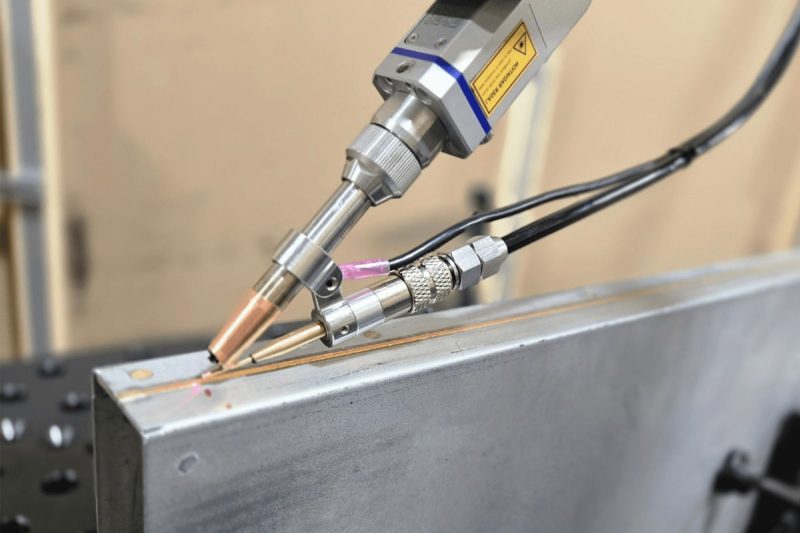
Weld width can be controlled within 0.2-1.5mm, far less than the 5-10mm of traditional arc welding. Deformation of precision parts after welding can be controlled within 0.1mm. With a vision tracking system, positional accuracy is <0.05mm. Repeatability can reach ±0.02mm, ensuring high consistency in product quality within the same batch.
Laser welding is naturally suited for automation. The beam can be transmitted via fiber optics, and the welding head can be mounted on a robot or CNC platform. Modern laser welding systems are highly intelligent, with real-time monitoring systems detecting the welding process and quality traceability systems recording welding parameters for each product.
Rapidité et efficacité
For butt welding of thin stainless steel plates, laser welding can achieve speeds of 8-10 meters per minute, while TIG welding only reaches 1-2 meters, increasing production efficiency by 4-5 times. Handheld laser welding systems are 4 times faster than TIG welding and 3 times faster than MIG welding.
Laser welds are narrow and smooth, typically requiring no grinding or polishing. Single-pass welding capability is strong; traditional welding of 5mm steel plates requires 3-4 passes, while laser welding only requires 1 pass. Overall energy consumption can be reduced by 30-50%.
Multifunctionality
Lasers can weld almost all metallic materials. Dissimilar material welding (steel-aluminum, steel-copper, titanium-stainless steel) is a unique advantage of lasers. Thickness adaptability ranges from 0.1mm to 12mm. Five main joint types (butt joint, lap joint, edge joint, corner joint, T-joint) can all be laser-welded, and complex three-dimensional joints can also be handled.
Laser welding has significant advantages in precision, efficiency, and process adaptability. Its extremely small weld width and controllable heat input greatly reduce welding deformation and dimensional deviations. Combined with automated and intelligent monitoring systems, it enables highly consistent and traceable mass production. At the same time, laser welding is fast and has strong single-pass welding capabilities, significantly improving production efficiency and reducing overall energy consumption, as well as reducing post-processing steps.
Furthermore, laser welding is extremely versatile in terms of materials and joint types, suitable not only for a wide range of thicknesses from ultra-thin plates to medium-thick plates, but also for high-quality dissimilar metal connections and welding of complex spatial structures. These advantages make laser welding a key welding technology in modern manufacturing that balances high quality, high efficiency, and flexible production.
Défis et solutions
Multifunctionality
Core Challenges
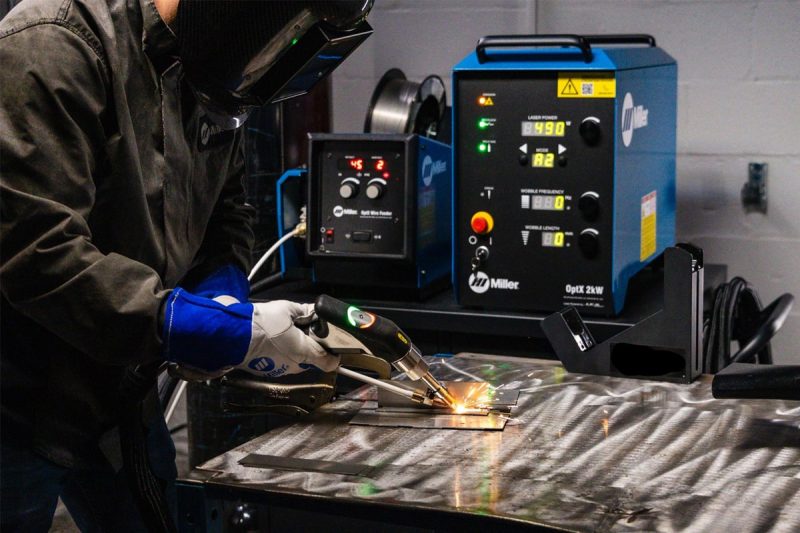
Laser welding, with its typically small spot diameter of only 100–600 μm, places extremely high demands on the alignment accuracy of joint assembly and welding paths. Even a misalignment of 0.3–0.5 mm can cause energy to miss the joint center, resulting in defects such as incomplete fusion, burn-through, or weld misalignment.
In actual production, the cumulative effects of machining tolerances, clamping errors, workpiece warping, and thermal deformation during welding continuously alter the true position of the joint, rendering the initial alignment conditions invalid. Butt joints, with almost no geometric redundancy, are the most sensitive to alignment issues; lap joints, due to their overlapping areas, offer the highest tolerance for alignment errors.
Solutions
Improving the precision of front-end manufacturing and assembly is fundamental. Employing high-precision machining methods such as laser cutting and waterjet cutting can significantly improve edge consistency and reduce assembly errors. Introducing self-positioning features such as positioning holes, positioning slots, and positioning pins during the structural design phase can control manual assembly errors within ±0.1 mm.
During the welding process, introducing a vision tracking system is a key means of improving stability. By using coaxial or off-axis cameras to identify the weld position in real time and dynamically correct the welding path, alignment accuracy can be improved to within ±0.05 mm.
Simultaneously, laser oscillation welding technology significantly expands the process window. Gap compensation is achieved through an oscillation amplitude of 0.5–2 mm, increasing the acceptable assembly gap from the traditional ≤0.1 mm to 0.3–0.5 mm. Combined with modular fixtures, vacuum adsorption, or magnetic adsorption clamping solutions, workpiece displacement and warping during welding can be effectively suppressed.
Gestion thermique
Main Challenges
Although laser welding has a low overall heat input, the energy is highly concentrated, resulting in a very narrow thermal management window. Excessive heat input can easily lead to molten pool collapse, weld widening, expansion of the heat-affected zone, and overall structural deformation; insufficient heat input can result in insufficient penetration, incomplete fusion, porosity, and even cold cracking.
Different joint types, variations in material thermal conductivity, and plate thickness significantly increase the complexity of thermal management, especially in multi-directional heat dissipation structures such as corner joints and T-joints, where root fusion control is particularly difficult.
Solutions
The core approach is to establish stable heat input control through systematic parameter optimization. Compared to continuous welding, pulsed welding is easier to precisely adjust energy input in thin plates and high-precision applications, helping to control the molten pool size and cooling rate.
Laser oscillation welding not only improves energy distribution but also helps stabilize keyhole structures. Practice has shown that in aluminum alloy welding, an oscillation frequency of 100–150 Hz can significantly reduce porosity.
For high-carbon and high-strength steels, preheating and post-heat treatment are crucial for preventing cracking. Preheating to 200–300 degrees Celsius before welding effectively suppresses martensitic transformation and reduces the risk of cold cracking; for thick plate welding, multi-pass or layered welding strategies can be used to distribute heat input.
Furthermore, numerical simulation technology (finite element thermo-mechanical coupling analysis) is being widely used to predict temperature fields, residual stresses, and deformation trends, thereby optimizing process schemes before trial welding and shortening process development cycles.
Compatibilité des matériaux
Compatibility Challenges
Material differences are one of the most challenging factors in laser welding, especially dissimilar metal welding. During steel-aluminum welding, brittle intermetallic compounds such as FeAl3 and Fe2Al5 are easily formed; when their thickness exceeds 10 μm, the joint toughness decreases sharply.
Steel-copper welding is limited by copper’s high reflectivity (>95%) and extremely high thermal conductivity, making effective laser energy coupling difficult and resulting in poor welding stability. Reactive metals such as titanium alloys are extremely sensitive to oxygen and nitrogen, placing extremely high demands on the shielding gas system.
Innovative Solutions
Laser offset welding is one of the key technologies for solving dissimilar material problems. By offsetting the center of the laser spot towards the side with a higher melting point and lower thermal conductivity, the rate of intermetallic compound formation can be significantly reduced. Practice has shown that controlling the compound layer thickness to within 5 μm can achieve joint strengths of 80–85% of the aluminum-side base material strength.
Introducing an intermediate layer material (such as zinc plating, nickel, or copper foil) can buffer interfacial reactions, improving wettability and metallurgical bonding quality. Composite heat source welding (laser + arc) increases heat source flexibility, expands the process window, and improves adaptability to assembly and material differences.
Furthermore, the application of green (515–532 nm) and blue (≈450 nm) laser generators has significantly improved the absorption rate of copper and highly reflective materials (40–60%), providing a new technical path for stable welding of high thermal conductivity materials.
Laser welding demonstrates significant advantages in high-precision, high-efficiency manufacturing, but it also places more stringent requirements on joint alignment, heat input control, and material compatibility. The small spot size and high energy density make assembly accuracy and welding stability key factors affecting quality; different materials and joint types present differentiated challenges to thermal management, and welding dissimilar metals is a particularly challenging process.
By introducing high-precision machining and fixture design, vision tracking, and laser oscillation welding technologies, as well as advanced process methods such as pulse control, preheating, and numerical simulation, the process window for laser welding is constantly expanding. Meanwhile, the application of offset welding, intermediate layer technology, and new wavelength laser sources has significantly improved the welding feasibility of complex material combinations. With continuous advancements in equipment performance and process control capabilities, laser welding is transitioning from a “high-barrier-to-entry process” to a more stable, intelligent, and engineered mainstream joining solution.
Résumé
The ability of laser welding to handle various joint configurations is continuously improving. Butt joints offer the highest strength and least deformation, making them suitable for load-bearing structures and precision parts; lap joints are simple to assemble and can be welded on one side, making them particularly suitable for mass production; edge joints produce aesthetically pleasing and smooth welds, ideal for thin-plate sealing structures; corner joints and T-joints are the most basic and common connection forms in box, frame, and support structures.
The key to successful high-quality laser welding lies in fully understanding the stress characteristics and process sensitivities of different joint types, and accordingly matching laser parameters with assembly schemes. Power and energy density determine the penetration depth and welding mode, beam focusing and spot size affect welding accuracy and assembly tolerance, while welding speed directly controls heat input and production efficiency. Only through precise parameter coordination, stable clamping design, and standardized process flows can consistent and stable welding quality be achieved in complex joint structures.
In practical industrial applications, the advanced nature of laser welding is gradually translating into tangible productivity. Leveraging our mature fiber laser welding platform and extensive experience in joint applications, we provide complete welding solutions covering butt joints, lap joints, corner joints, and T-joints for various industries. From handheld laser welding systems to automated welding units, Laser AccTek prioritizes process adaptability, operational stability, and long-term reliability, helping companies improve production efficiency and reduce overall manufacturing costs while ensuring welding quality. Through continuous technological iteration and process support, we assist manufacturing companies in establishing a long-term competitive advantage in high-end manufacturing and intelligent welding.

Coordonnées
- [email protected]
- [email protected]
- +86-19963414011
- No. 3 Zone A, zone industrielle de Lunzhen, ville de Yucheng, province du Shandong.
Obtenez des solutions laser