
















What Are the Limitations of Laser Cleaning?
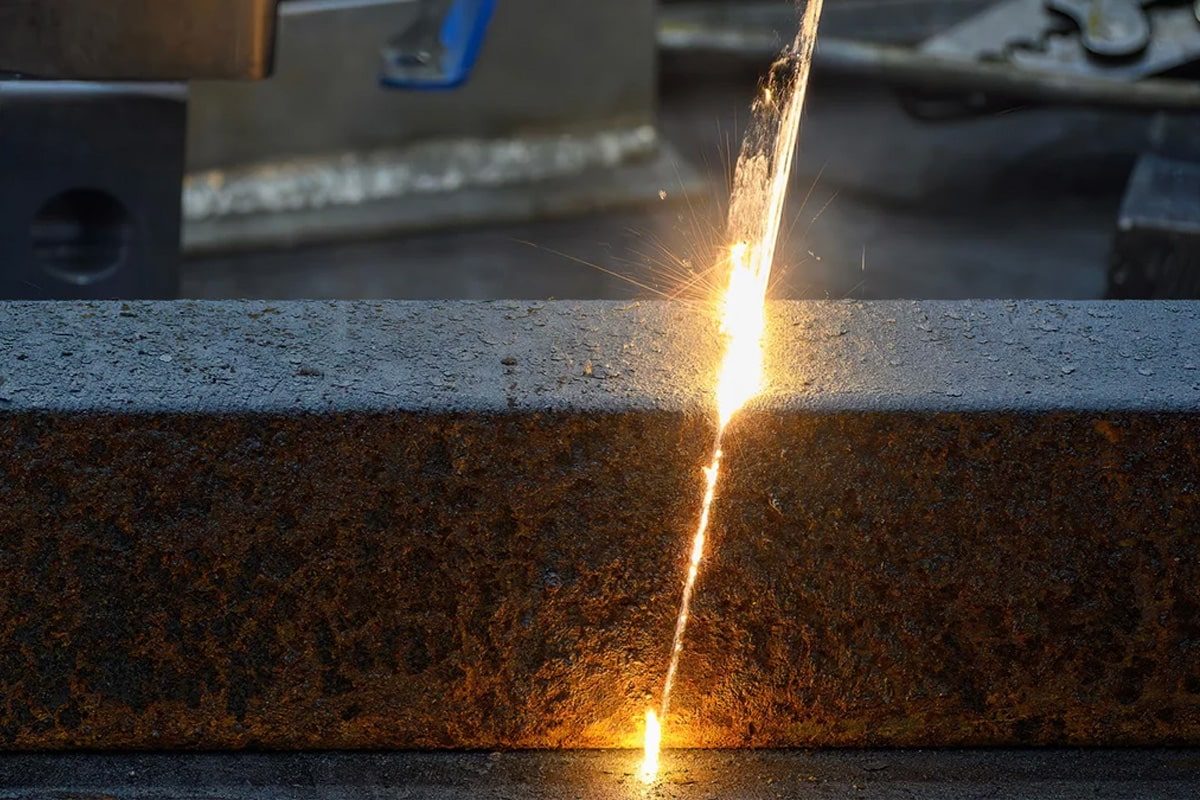
As global manufacturing continues to upgrade towards green manufacturing, precision processing, and intelligent production, laser cleaning technology is rapidly becoming a crucial solution in the field of industrial surface treatment. Compared to traditional chemical cleaning, sandblasting, and mechanical polishing, industrial laser cleaning technology, with its advantages of non-contact, no consumables, high controllability, and environmental friendliness, is increasingly being applied in key processes such as laser rust removal, oil stain cleaning, coating stripping, pre-welding surface treatment, and mold maintenance. In fields such as automotive manufacturing, aerospace, metal processing, and shipbuilding, laser cleaning is gradually transforming from a “new technology” to a “standard process.”
The mature application of pulsed laser cleaning, in particular, enables companies to achieve precise removal of contaminants without damaging the substrate. This high-precision, repeatable cleaning method not only helps improve product consistency but also complies with increasingly stringent environmental regulations and sustainable development requirements. Therefore, questions surrounding “whether laser cleaning is worth investing in” and “whether laser cleaning can be applied stably in the long term” are becoming frequent topics of search and discussion among manufacturing companies during their technological upgrades.
However, as the title of this article suggests, “Limitations and Solutions of Laser Cleaning,” laser cleaning does not inherently possess absolute advantages in all application scenarios. When introducing laser cleaning equipment, companies often focus on several practical issues: How adaptable is laser cleaning to different materials and contaminants? Do the cleaning efficiency, cost, and safety performance meet the needs of mass production? In actual industrial environments, how can parameter control and system optimization be used to avoid material damage and improve stability? These questions determine whether laser cleaning can truly upgrade from a “feasible solution” to a “high-value process.” The following content will systematically analyze the key limitations of laser cleaning and further explore how to effectively overcome these limitations through technological optimization and process combinations, achieving efficient, stable, and controllable industrial laser cleaning applications, providing a reference for companies to make rational and long-term technological decisions.
İçindekiler
Analysis of the Main Limitations of Laser Cleaning
In industrial practice, laser cleaning is not a “plug-and-play” process, but rather a precision technology highly dependent on material properties, contaminant conditions, and equipment configuration. While industrial laser cleaning offers significant advantages in terms of environmental friendliness and controllability, its actual cleaning effectiveness often depends on the synergistic interaction of multiple variables.
For manufacturing companies that are evaluating or have already deployed lazer temizleme makineleri, a deep understanding of these limitations will help avoid discrepancies in technical expectations and provide a realistic basis for subsequent process optimization.
High Dependence of Laser Cleaning on Material Surface Absorptivity
The efficiency of laser cleaning primarily depends on the ability of the material and contaminants to absorb laser energy. Different metals and non-metals exhibit significant differences in absorptivity at the same laser wavelength:
- High-reflectivity materials (such as aluminum,copper, and polished stainless steel) reflect a large amount of laser energy.
- Surface conditions (oxidation, roughness, sandblasting) significantly alter laser absorption behavior.
- The color and composition of the contaminants themselves also affect energy coupling efficiency.
This means that in some applications, even increasing the laser power may not linearly improve laser cleaning efficiency, but may instead lead to increased energy consumption or surface damage.
Limitations of Contaminant Thickness and Structure on Laser Cleaning Effectiveness
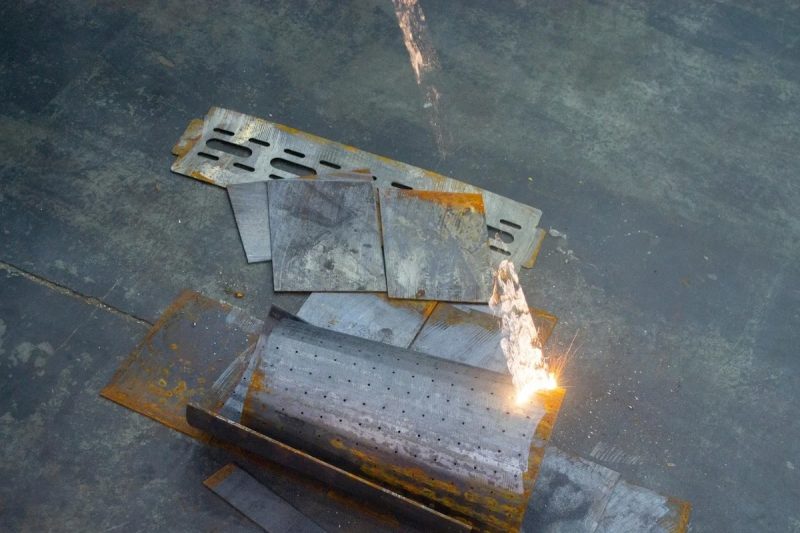
From a process perspective, laser cleaning is essentially a layer-by-layer stripping process, which is particularly ideal for thin layers of contaminants. However, when contaminants have the following characteristics, the cleaning difficulty increases significantly:
- Heavy rust layers accumulated over many years
- Thick coatings with high adhesion
- Multi-layer composite contaminant structures
In these cases, the laser needs to repeatedly scan the same area, leading to:
- Extended cleaning time
- Increased complexity of scanning paths
- Increased cost per unit
This is a major reason why “laser rust removal for heavy corrosion” is a frequently searched topic.
Narrow Laser Cleaning Parameter Window and High Process Control Requirements
Compared to traditional cleaning methods, laser cleaning is significantly more dependent on process parameters, including:
- Laser power and energy density
- Pulse width and pulse frequency
- Scanning speed and spot size
In pulsed laser cleaning applications, the parameter window is often narrow:
- Too low energy → incomplete cleaning
- Too high energy → substrate surface overheating or even damage
This makes laser cleaning highly demanding in terms of engineering experience and test data during the initial debugging phase.
Laser cleaning is not "damage-free" and still carries the risk of thermal effects on materials
Although laser cleaning is classified as non-contact cleaning, thermal effects can still occur at the microscopic level, especially in:
- Thin plates or thin-walled structures
- Precision components
- Applications are susceptible to surface morphology
If laser energy is concentrated locally, it can lead to micro-melting, surface remelting, or changes in grain structure. This is particularly important in mold repair and precision manufacturing.
Laser cleaning requires higher safety and environmental management standards
Compared with traditional methods, although laser cleaning reduces the use of chemicals, it does not mean “zero risk”:
- Laser reflection may pose optical safety hazards
- Smoke and fine particles are generated during the cleaning process
- Open-air operations require stricter operating procedures
Therefore, industrial laser cleaning systems usually require comprehensive protection, fume extraction, and safety interlock systems, increasing the overall system complexity.
Efficiency challenges of laser cleaning in large-area and high-throughput production
The advantage of laser cleaning lies in precision, not coverage speed. In large-area workpieces or high-capacity scenarios, cleaning efficiency is often limited by:
- Scanning system speed
- Beam coverage width
- Path planning efficiency
Without high-speed galvanometer or multi-beam solutions, the overall cycle time may be slower than traditional processes, which is a key reason why users are concerned about “laser cleaning speed vs. sandblasting.”
Initial investment and return on investment period of laser cleaning equipment
From an investment perspective, laser cleaning equipment typically involves:
- High-quality laser source
- Precision optical components
- Control and safety systems
This makes the initial purchase cost relatively high. Although long-term operating costs are lower, the return on investment period is closely related to the actual application intensity, and not all short-term or small-batch projects can immediately demonstrate advantages.
Practical limitations of laser cleaning in terms of material applicability
Laser cleaning is not suitable for all material combinations. For certain:
- Heat-sensitive composite materials
- Special plastics or coating systems
- Multi-layer heterogeneous material structures
Laser action may cause changes in surface properties, limiting its versatility. Therefore, the misconception of “universal cleaning” must be avoided in practical applications.
Selective Characteristics of Laser Cleaning Based on Contaminant Types
From an application perspective, laser cleaning consistently removes rust, grease, and oxide layers. However, for:
- Complex mixed contaminants
- Materials with high water content or high hygroscopicity
- Residues are unevenly attached to the surface
The cleaning effect may fluctuate, requiring a more refined process design.
In summary, the limitations of laser cleaning are not technical defects, but rather a natural consequence of its precision characteristics. These limitations remind companies that when introducing industrial laser cleaning technology, a systematic evaluation should be conducted from multiple dimensions, including materials, contaminants, production capacity, and costs.
Only by fully understanding these technical boundaries can companies truly leverage the advantages of laser cleaning in environmental protection, high precision, and controllability through parameter optimization, automation integration, and process combinations in the next stage.
How to Overcome the Limitations of Laser Cleaning?
After understanding the practical limitations of laser cleaning in terms of material adaptability, cleaning efficiency, and cost structure, the more important question is how to overcome them through engineering means. In fact, as laser cleaning technology continues to mature, these limitations are being gradually mitigated. Through systematic parameter control, equipment optimization, and process integration, laser cleaning has evolved from a single piece of equipment into a sustainable industrial solution. The following will focus on key technological pathways, systematically explaining how to effectively overcome the main limitations of laser cleaning in actual industrial scenarios.
Improving the Controllability of Laser Cleaning Through Pulse Width and Power Control
In industrial applications, pulsed lasers are more suitable for surface cleaning than continuous lasers. The fundamental reason is that the pulsed mode can release energy in a very short time while limiting heat diffusion into the substrate. By rationally designing the pulse width and peak power, the laser energy can preferentially act on the contaminant layer, causing it to peel off or vaporize, while the substrate remains structurally stable. This characteristic is particularly important for thin-walled parts and high-precision metal components.
In practice, the parameter windows for different material and contaminant combinations are not the same. By finely adjusting the pulse frequency and energy density, companies can significantly improve laser cleaning efficiency while reducing the risk of surface micro-melting or re-solidification. This parameter-controlled optimization is a crucial prerequisite for the widespread application of pulsed laser cleaning in high-end manufacturing.
From a long-term operation perspective, stable parameter control also means that the cleaning quality has good repeatability, which helps laser cleaning transition from an experimental process to a standardized production process.
Optimizing Scanning and Beam Delivery Systems to Improve Laser Cleaning Consistency
In the laser cleaning process, the laser source is only the energy provider; what truly determines the cleaning uniformity and efficiency is how the beam is scanned and delivered to the workpiece surface. High-performance galvanometer scanning systems can maintain spot stability during high-speed movement, thus avoiding problems of energy concentration or missed areas.
When the scanning path, scanning speed, and laser parameters are matched, laser cleaning can increase the coverage area per unit time while ensuring surface quality. This is particularly crucial for companies that prioritize laser cleaning speed and production cycle time, especially in medium-to-large volume cleaning applications.
Furthermore, a stable beam delivery structure can reduce the uncertainty caused by energy fluctuations, allowing industrial laser cleaning systems to maintain consistent performance over long-term operation, thereby improving overall process reliability.
Adapting to Complex Workpiece Surfaces Through Focal Length Adjustment Technology
In real industrial environments, workpiece surfaces often exhibit height differences, curvature variations, or irregular structures. If the laser focus cannot be consistently maintained at the appropriate position, the cleaning effect will fluctuate significantly. By introducing focal length adjustment or tracking systems, laser cleaning equipment can automatically adjust the working distance according to changes in the workpiece surface.
This capability is particularly important when processing molds, welded structural components, and irregularly shaped parts. A stable focal length means controllable energy density, thus avoiding problems of localized over-cleaning or insufficient cleaning, and improving overall consistency.
From an application perspective, focal length adjustment technology significantly broadens the scope of laser cleaning technology, making it no longer limited to flat or regular workpieces.
Improving Overall Cleaning Efficiency Through Pre-cleaning and Post-cleaning Processes
When dealing with thick rust layers or multi-layered contaminants, relying solely on laser cleaning often prolongs processing time. By performing simple pre-treatment before laser cleaning, such as removing loosely attached materials, the load on the laser system can be significantly reduced, improving subsequent cleaning efficiency.
After laser cleaning is completed, necessary post-treatment is performed according to application requirements to help stabilize the surface condition or prepare for the next process. This collaborative approach of pre- and post-processing makes laser rust removal more efficient and stable.
From an engineering perspective, pre-cleaning and post-cleaning are not a weakening of the laser cleaning capability, but rather a more economical and reliable overall process through rational division of labor.
Achieving Stable Replication of Laser Cleaning Through Automation and Robotics
When laser cleaning is applied to mass production, manual operation makes it difficult to guarantee long-term consistency. By integrating the laser cleaning system with industrial robots or automated production lines, high consistency in scanning paths, parameter execution, and cycle control can be ensured.
Automation not only improves the repeatability of cleaning quality but also reduces the uncertainty caused by human factors. In high-throughput production environments, this stability is often more important than the speed of a single cleaning operation. With the development of intelligent manufacturing, automation is becoming a key supporting technology for the large-scale application of industrial laser cleaning.
Achieving Closed-Loop Control of the Cleaning Process Through Optical Sensing and Feedback Systems
To avoid over-cleaning or insufficient cleaning, more and more laser cleaning systems are incorporating real-time monitoring and feedback mechanisms. By detecting surface reflection signals or changes in state, the system can determine whether the cleaning has reached the target state.
In a closed-loop control mode, laser parameters can be dynamically adjusted according to the actual cleaning effect, significantly improving process stability. This intelligent capability allows laser cleaning to maintain consistent performance even under complex working conditions. From a technological development trend perspective, feedback systems are gradually becoming an important component of high-end laser cleaning machines.
Establishing a reliable laser cleaning process foundation through material compatibility testing
There are no universal parameters for laser cleaning that work for all materials. Different metals, alloys, or composite materials exhibit significantly different responses to laser irradiation, making systematic material compatibility testing indispensable.
By conducting preliminary tests and establishing a parameter database, companies can avoid repeated trial and error in formal production, thereby reducing risks and costs. This data-driven process management approach is the foundation for the long-term stable application of laser cleaning. This is especially important in scenarios involving parallel production of multiple materials.
Integrating safety and environmental design into laser cleaning systems
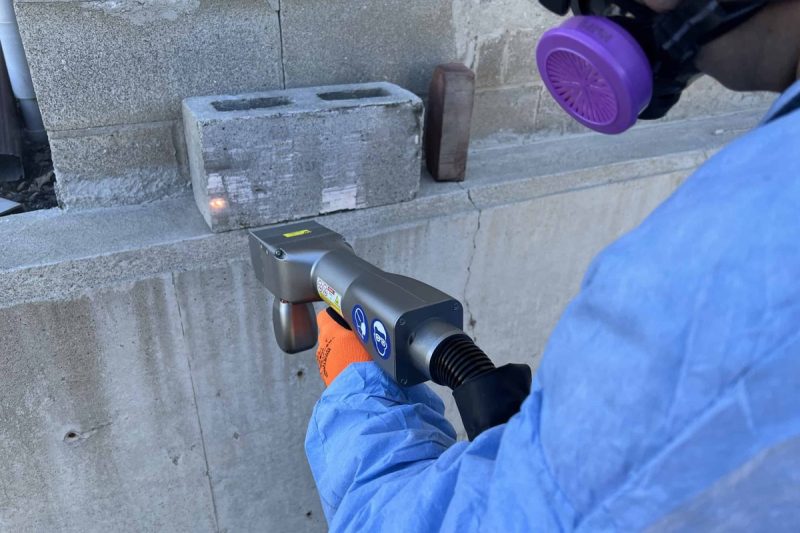
Although laser cleaning reduces the use of chemicals, it is still a high-energy industrial process. By integrating protective covers, interlocking systems, and fume filtration devices, operational risks can be effectively reduced, and industrial safety and environmental requirements can be met.
Incorporating safety design into the overall system solution helps ensure smooth deployment of equipment in different countries and regions, and provides a guarantee for long-term operation. From a business management perspective, this systematic safety design is an indispensable part of industrial laser cleaning systems.
Expanding the application boundaries of laser cleaning through process combinations
In actual production, laser cleaning does not need to completely replace all traditional cleaning methods. By combining it with mechanical or chemical methods, the advantages of various processes can be fully utilized.
This process synergy approach transforms laser cleaning from a single technology into a comprehensive solution, demonstrating greater flexibility in complex application scenarios.
Conducting a cost-benefit analysis of laser cleaning from a full life cycle perspective
Although laser cleaning equipment has relatively high initial investment costs, its advantages of low consumables, low maintenance, and high automation gradually become apparent from a long-term operational perspective.
Through full life cycle cost analysis, companies can more accurately assess the economic value of laser cleaning technology in their production system, rather than focusing solely on initial procurement costs.
The limitations of laser cleaning are not insurmountable, but require systematic engineering methods to address them. When parameter control, automation, process integration, and safety design form a synergistic system, laser cleaning will become a stable, efficient, and long-term competitive industrial process.
Özet
In summary, laser cleaning is not simply an alternative cleaning technology, but rather an advanced manufacturing process highly dependent on system design and engineering control. From material absorption characteristics and contaminant types to parameter windows, automation levels, and safety management, the effectiveness of laser cleaning applications is always built upon a clear understanding of its technological limitations. It is these seemingly “limitations” that dictate the need for a more rational and professional approach to the introduction and use of laser cleaning.
Through reasonable pulse parameter control, scanning and beam transmission optimization, focal length adjustment, and process flow integration, companies can transform laser cleaning from an experimental application into a stable and reproducible production process. Further combining automation, optical feedback systems, and material compatibility testing, industrial laser cleaning technology can not only meet high-precision surface treatment requirements but also possess the reliability for long-term operation in complex industrial environments.
From a longer-term perspective, the true advantage of laser cleaning lies not only in its single-pass cleaning effectiveness but also in its continuous support for environmental compliance, process consistency, and production flexibility. When companies evaluate costs and benefits from a full lifecycle perspective, laser cleaning often demonstrates superior overall value compared to traditional cleaning methods in the medium to long term.
As a manufacturer with extensive experience in the industrial laser equipment field, AccTek Laser has accumulated rich experience in the engineering application of laser cleaning technology. Whether it’s the parameter design of pulsed laser cleaning machines or system integration for automated production lines, we are committed to providing solutions that are closer to actual production needs, based on different materials, contaminant types, and application scenarios. Through rigorous technology selection and continuous optimization, we help our customers improve cleaning quality while building a more stable and sustainable manufacturing system.
For companies that are evaluating or planning to introduce laser cleaning technology, choosing a partner with engineering understanding and a long-term service commitment will directly impact the ultimate success of the laser cleaning project. AccTek Lazer looks forward to collaborating with manufacturing companies worldwide to explore the broader application space of laser cleaning in modern industry.
From an investment perspective, laser cleaning equipment typically involves:

İletişim bilgileri
- [email protected]
- [email protected]
- +86-19963414011
- 3 Bölge A, Lunzhen Sanayi Bölgesi, Yucheng Şehri, Shandong Eyaleti.
Lazer Çözümleri Alın