

















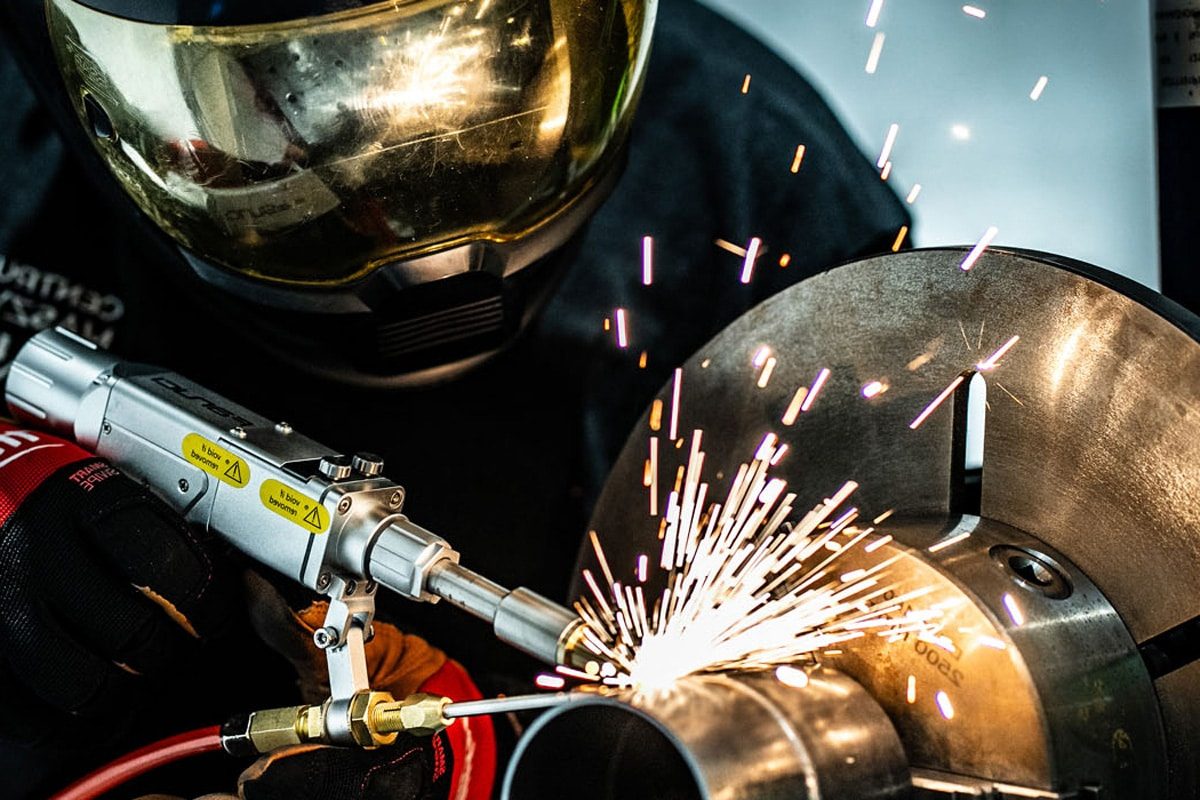
How to Determine Laser Welding Speed?
Welding speed determines the energy input per unit length of weld seam, making it one of the most sensitive and easily overlooked process parameters in laser welding. Speed changes directly alter the molten pool morphology, weld geometry, and heat-affected zone, thus impacting weld strength, consistency, and appearance quality. In actual production, welding speed is often coupled with power, spot diameter, and focal point position. Adjusting speed in isolation while ignoring other parameters often fails to yield ideal results. Therefore, understanding the underlying physics of welding speed is fundamental to achieving stable welding and high repeatability.
At the engineering application level, there is no universally applicable optimal welding speed; it varies continuously with material thickness, thermal conductivity, reflectivity, and joint type. Thin-plate materials rely more heavily on high-speed welding to control heat input, while thick-plate welding requires a balance between speed and penetration depth. Furthermore, the type of shielding gas, welding posture, and equipment stability also affect the available speed window. Through systematic parameter testing, weld cross-section analysis, and process monitoring, the optimal welding speed that meets quality requirements while also considering efficiency and cost can be gradually determined, providing a reliable basis for mass production.
Tabla de contenido
Fundamentals of Laser Welding Speed
Before discussing how to determine welding speed, we need to understand what welding speed is and why it’s so important.
Definition and Measurement of Welding Speed
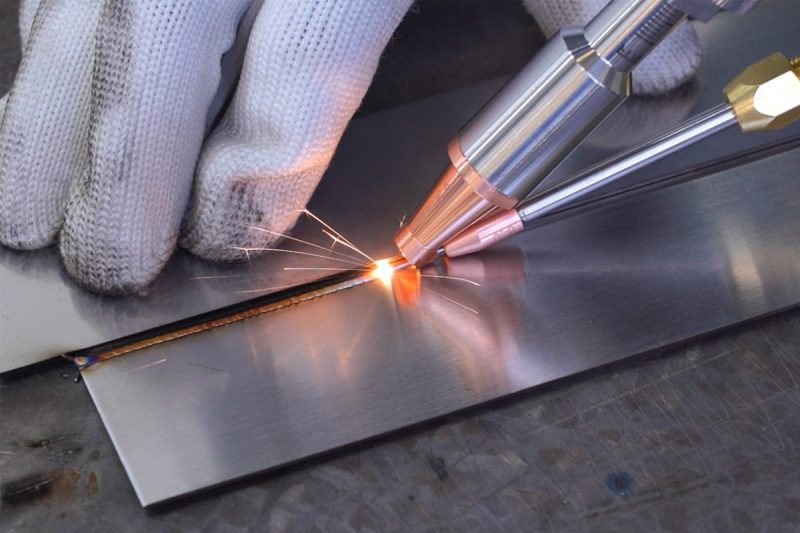
Welding speed refers to the speed at which the laser beam moves relative to the workpiece, usually measured in millimeters per second (mm/s) or meters per minute (m/min). In handheld laser welding, the speed is determined by the operator’s manual movement. In automated systems, the speed is precisely controlled by a CNC system or robot program. Measuring welding speed is simple: the weld length divided by the welding time.
In actual production, welding speed is not always constant. The speed often needs to be reduced at the start and end of the weld to ensure good arc initiation and termination quality. When welding complex three-dimensional paths, the speed may need to be dynamically adjusted according to curvature changes. Modern laser welding systems typically have speed planning functions that can automatically optimize the speed profile of the entire weld.
The range of welding speeds is wide. Laser welding speeds for thin stainless steel sheets can reach several meters or even tens of meters per minute. Deep penetration welding speeds for thick steel sheets may only be tens of centimeters per minute. Although pulse spot welding has a very short welding time per point, the equivalent speed is often not high when considering the positioning time. Understanding the typical speed range for different applications is the starting point for determining process parameters.
Relationship between Welding Speed, Penetration, and Heat Input
Welding speed and laser power together determine the linear energy input, a key concept for understanding the welding process. Linear energy equals laser power divided by welding speed, measured in joules per millimeter (J/mm). For example, welding at 1000 watts of power and a speed of 20 mm/s results in a linear energy of 50 J/mm. Linear energy directly affects penetration, weld width, and the size of the heat-affected zone.
With a constant laser power, reducing the welding speed increases linear energy input, leading to deeper penetration and a wider weld. This is because the laser acts on each unit length of weld for a longer time, resulting in a greater total energy input. However, the relationship between penetration and speed is not a simple linear one, but rather influenced by a complex interplay of factors such as heat conduction, convection, and material evaporation.
Recent research in 2026 indicates the existence of an optimal speed-power combination that yields the maximum penetration and the most stable welding process. Excessive energy input at too low a speed can cause an overly large and unstable weld pool, even leading to collapse. At excessively high speeds, although energy is concentrated, the effective time is insufficient to form a stable keyhole, resulting in a reduced weld penetration.
The size of the heat-affected zone (HAZ) is also closely related to welding speed. High-speed welding reduces the time for heat to conduct to the surrounding material, resulting in a narrower HAZ. This is beneficial for reducing material deformation, maintaining base material properties, and improving weld appearance. However, excessively high cooling rates may lead to the formation of hardened structures, increasing the risk of cracking, especially for high-carbon steels and certain alloy steels.
The Importance of Balancing Speed and Quality
A trade-off between speed and quality always exists in production. Increasing welding speed can increase output, reduce unit cost, and shorten delivery time, which is crucial in a highly competitive market. However, pursuing speed at the expense of quality can lead to increased defects, higher rework rates, and customer complaints, ultimately increasing total costs.
Establishing reasonable quality standards is a prerequisite for balancing speed and quality. Different applications have significantly different requirements for welding quality. Aerospace and medical devices require near-perfect weld quality, allowing for a relatively narrow speed range. Ordinary structural components and decorative welds can tolerate a certain degree of imperfection, allowing for higher speeds. Clearly defining quality requirements is essential to determining the acceptable speed ceiling.
Process capability analysis helps quantify the relationship between speed and quality. By conducting welding tests at different speeds and measuring key indicators such as penetration depth, weld width, and surface quality, a speed-quality curve can be plotted. This curve shows the range within which quality is stable and reliable, and beyond which quality begins to decline. Based on this analysis, the highest possible speed can be selected within the quality stability zone.
Economic analysis considers equipment investment, energy consumption, labor costs, and quality costs. High-speed welding may require higher-powered laser generators and more precise motion systems, resulting in a larger initial investment. However, if production volume is high enough, the equipment cost can be offset by efficiency improvements. While low-speed welding uses simpler equipment, labor and time costs may be higher. Only by considering all these factors can the economically optimal welding speed be found.
Key Factors Affecting Laser Welding Speed
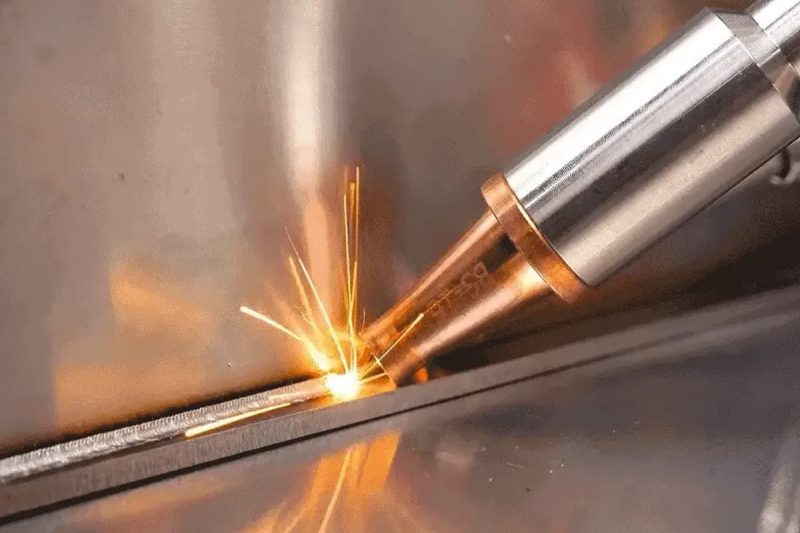
Welding speed cannot be determined in isolation; it must consider the influence of multiple factors, including materials, laser, joint, and process. These factors are interrelated and collectively determine the feasible speed range and optimal speed value.
The Decisive Role of Material Properties
Material type is the primary factor affecting welding speed. Different metals exhibit vastly different laser absorptivity, thermal conductivity, and melting characteristics, requiring drastically different welding speeds. Carbon steel and stainless steel have high absorptivity to 1-micron wavelength fiber lasers and moderate thermal conductivity, allowing for high welding speeds. While aluminum alloys have lower absorptivity, their low melting point allows for high speeds with proper parameter selection.
Titanium alloys and nickel-based superalloys typically have lower welding speeds. These materials have high strength, high melting points, and are highly sensitive to hot cracking, requiring controlled cooling rates. Excessive welding speed leads to cracking, while excessively slow welding results in coarse grains. The high reflectivity and high thermal conductivity of copper and copper alloys make laser welding difficult, limiting speed even when using blue lasers or hybrid laser technologies.
Material thickness directly determines the required weld penetration, thus affecting the welding speed. Welding a 1mm thin plate requires only a few kilowatts of laser power at a speed of a few meters per minute. Welding a 10mm thick plate may require tens of kilowatts of laser power, and the speed must be reduced to tens of centimeters to a meter per minute. Empirical formulas show that for every doubling of the weld penetration, the welding speed needs to be reduced by approximately 30-50%, depending on whether the laser power is increased accordingly.
Slight differences in material composition also affect the optimal welding speed. For example, with 304 stainless steel, a significant change in welding behavior occurs when the carbon content decreases from 0.08% to 0.03%. The low-carbon version has better weldability and can withstand slightly higher speeds without cracking. Fluctuations in the magnesium content of 6061 aluminum alloy affect the tendency for hot cracking, requiring adjustments to the welding speed to control the cooling rate.
Thermal conductivity and laser absorption coefficient are two key material properties. Materials with high thermal conductivity, such as copper and aluminum, allow heat to dissipate rapidly, requiring higher power or lower speeds to maintain a stable molten pool. Materials with low absorption coefficients require more energy input, which can be achieved by increasing power or reducing speed. Welding pure copper is a typical example; even with the use of blue lasers to increase absorption, the welding speed is still far lower than that for steel.
Key Influences of Laser Parameters
Laser power is the primary factor determining the upper limit of welding speed. Under the premise of sufficient penetration, higher power allows for faster welding speeds. This is why the development of laser generators from kilowatt to megawatt levels has significantly improved the production efficiency of laser welding. However, power increases are not unlimited. When the speed is too high, even high power cannot form a stable keyhole, and the weld quality will decrease.
Power density is more important than total power. Power density equals laser power divided by the spot area, measured in watts per square millimeter. High power density is necessary to quickly melt the material and form a keyhole, achieving deep penetration welding. This is why beam quality is important; better beam quality allows for focusing to a smaller spot, achieving higher power density, and thus allowing for faster welding speeds.
The setting of the beam focus and diameter affects energy distribution and welding mode. Focusing on the surface results in the smallest spot size and the highest energy density, suitable for high-speed welding of thin plates. When the focus is slightly below the surface, the spot size is smaller within the material, which is beneficial for deep penetration, but the spot size is larger at the surface, potentially reducing the maximum allowable speed. The choice of defocusing amount requires finding a balance between penetration depth and welding speed.
The frequency and duration of pulsed lasers provide additional degrees of freedom for speed adjustment. The pulse frequency determines the number of pulses per unit length of weld seam; higher frequencies can achieve effects similar to continuous welding, allowing for faster welding speeds. The pulse width affects the size and penetration depth of individual weld spots; longer pulses are suitable for thick materials but require a correspondingly lower welding speed. The combination of pulse energy, frequency, and welding speed requires system optimization.
Beam oscillation technology has developed rapidly in recent years, opening up new avenues for speed optimization. The laser beam does not simply move in a straight line along the weld seam but oscillates in a figure-eight, circular, or other trajectory. Oscillation can widen the molten pool, improve fusion, reduce defects, and, in some cases allows for increased linear movement speed without sacrificing quality. However, the oscillation frequency and amplitude settings need to be coordinated with the welding speed; excessively rapid oscillation can lead to instability.
Influence of Joint Design and Geometry
Joint type and assembly clearance significantly impact permissible welding speeds. Butt joints, with well-controlled clearance, allow for high-speed, deep-penetration welding. Excessive clearance causes laser energy to penetrate directly without effectively heating the material, necessitating slower speeds or the use of filler wire. Lap joints have more complex heat conduction paths, typically requiring lower speeds to ensure adequate melting of the underlying material.
Welding position directly affects the stability of the molten pool and the available speed range. In a flat welding position, gravity helps hold the molten pool within the weld, allowing for relatively high speeds. In vertical welding, the molten pool tends to sag, requiring slower speeds and potentially the use of pulsed patterns to control pool size. Overhead welding is the most challenging; high-speed welding causes molten metal to fall, typically requiring significant speed reductions or the use of specialized welding techniques.
Welding direction and path planning affect heat accumulation and deformation control. Long, straight welds can maintain a constant high welding speed. Welds with frequent turns require deceleration at corners; otherwise, inertia can cause trajectory deviations. Welding speeds for complex three-dimensional paths require dynamic planning, accelerating on straight sections and decelerating on curved sections and corners. The welding sequence also affects optimal speed; certain sequences can slightly increase speed by utilizing preheating effects.
Joint accessibility and visibility limit practical speed applications. If the laser head must approach the joint at a specific angle, or if the vision system struggles to accurately identify the weld location, speed reduction may be necessary to ensure alignment accuracy. For welding deep within cavities or in severely obstructed areas, even if high-speed welding is theoretically possible, cautious speed reduction is crucial in practice to ensure reliability.
Comprehensive Considerations of Process Conditions
The type and flow rate of the shielding gas affect welding stability and permissible speed. Argon shielding is suitable for most materials, but may not provide sufficient protection at high-speed welding, leading to oxidation or porosity. Helium or argon-helium mixtures, due to their density and thermal conductivity, can maintain good protection at higher speeds. Gas flow rate must also be adjusted with speed; the faster the speed, the greater the gas flow rate required to ensure coverage of the entire welding area.
Welding environment and atmospheric conditions cannot be ignored. In ordinary workshop environments, airflow can interfere with the shielding gas, limiting the maximum usable speed. Welding in a closed glove box or argon-filled chamber allows for higher speeds without concerns about oxidation. Ambient temperature also has an impact; higher temperatures result in better material preheating, allowing for a slight increase in speed; cold environments may require a reduction in speed or increased preheating.
Pre-welding treatment directly affects the achievable welding speed. Thoroughly cleaned material surfaces allow for high-speed welding without porosity or inclusions. If the surface has an oxide layer or oil contamination, the speed must be reduced to allow more time for gases and impurities to escape; otherwise, defects will occur. Preheating reduces the risk of cracking and allows for increased welding speed while maintaining quality. Properly heat-treated materials with a homogeneous microstructure also benefit from higher welding speeds.
Post-weld treatment requirements, in turn, influence speed selection. If post-weld heat treatment is required to relieve stress or adjust the microstructure, a slightly higher welding speed can be set, as some of the adverse effects of rapid welding can be mitigated by heat treatment. If post-weld heat treatment is not permitted, a suitable microstructure and residual stress state must be directly achieved by controlling the welding speed, which may require a lower speed to ensure an appropriate cooling rate.
Practical Methods for Determining Laser Welding Speed
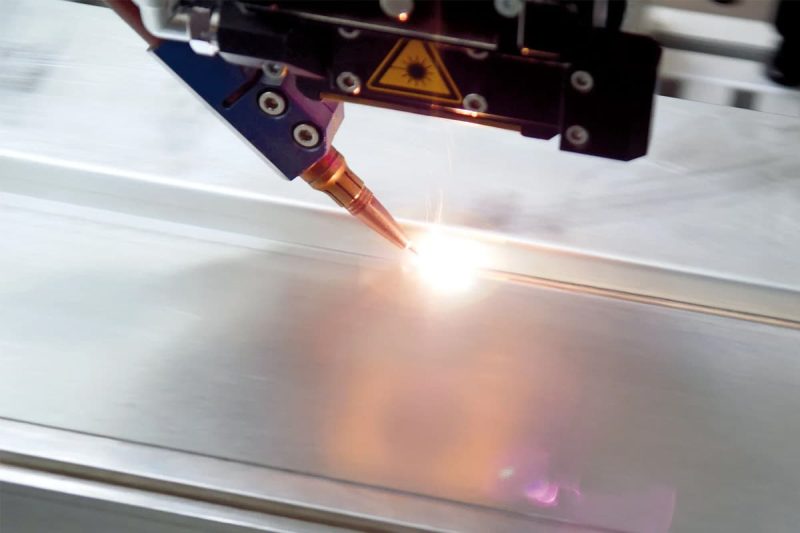
After understanding the influencing factors, we need specific methods to determine the optimal welding speed. In practice, three methods are usually combined: empirical experiments, mathematical models, and monitoring systems.
Application of Empirical Experimentation
Empirical experimentation is the most reliable method for determining welding speed, especially for new materials or applications. The basic idea is to systematically change the welding speed while keeping other parameters constant, observe and measure the welding results, and find the speed range with the best or most stable quality. Although this method is time-consuming, the results are direct and reliable, and it is the standard practice for process development.
The experimental design must be scientific and reasonable. First, determine a rough speed range based on experience or literature, and then select several speed points within this range for testing. The interval between speed points should not be too large, otherwise the optimal point may be missed; nor should it be too small, otherwise the number of experiments will be too large. A typical approach is to first use a larger interval for a coarse scan to find a rough optimal range, and then refine the optimization by increasing the number of test points within this range.
The fabrication and testing of welded specimens need to be standardized. At least 3-5 specimens should be welded at each speed point to evaluate repeatability. The specimen length should be sufficiently long, typically at least 50-100 mm, to observe the stability of the welding process. After welding, a visual inspection is first performed to observe defects such as weld appearance, spatter, and dents. Then, non-destructive testing, such as X-ray or ultrasonic testing, is performed to check for internal porosity and lack of fusion.
Destructive testing provides more comprehensive quality information. The weld specimen is cut open to prepare a metallographic specimen, observing the penetration depth, weld shape, heat-affected zone, and microstructure. The weld width and penetration depth are measured, and the depth-to-width ratio is calculated. Tensile tests are performed to test joint strength, bending tests to check plasticity, and hardness and impact toughness tests can be performed if necessary. These data are plotted as a speed-quality curve, clearly showing the optimal speed range.
Statistical analysis improves the reliability of test results. For each speed point, the mean and standard deviation of the quality indicators are calculated. A small standard deviation indicates a stable welding process and good repeatability at that speed. Mean-range plots or other control charts can be plotted to identify which speed points have acceptable quality fluctuations. Based on statistical analysis, we can not only find the speed with the best average quality, but also the speed with the most stable quality.
Mathematical Models and Simulations
Mathematical models can predict welding results without extensive experimentation, accelerating process development. The simplest are empirical formulas, which establish relationships between speed and other parameters based on large amounts of historical data. For example, some manuals provide recommended speed-power combinations for different materials and thicknesses. These formulas are convenient to use but have limited accuracy and are usually only used as references for initial parameters.
Heat conduction models calculate the temperature field distribution during welding based on heat transfer theory. By inputting laser power, spot size, welding speed, and material thermophysical parameters, the model can predict the size, shape, and cooling rate of the molten pool. By changing the speed parameters, the impact of different speeds on the temperature field can be quickly assessed. Although this type of model has certain simplification assumptions, it helps understand the speed-penetration relationship.
Finite element simulation provides more accurate predictions. Modern welding simulation software can consider complex factors such as nonlinear material behavior, latent heat of phase change, surface tension, and vapor pressure to simulate the dynamic processes of keyhole formation and molten pool flow. Through simulation, different welding speeds can be “experimented” on a computer, the weld formation process can be observed, and the final weld shape and quality can be predicted.
Computational Fluid Dynamics (CFD) models further consider the flow of liquid metal in the molten pool. The molten pool under laser irradiation exhibits complex convection driven by temperature gradients, surface tension gradients, and vapor pressure. These flows affect energy transfer and element mixing, thus influencing weld quality. CFD models can reveal variations in molten pool flow at different welding speeds, explaining why defects are more likely to occur at certain speeds.
Artificial intelligence and machine learning methods are seeing increasing application in 2026. By collecting large amounts of welding data, including process parameters and quality results, neural networks or other machine learning models can be trained. These models learn the complex nonlinear relationships between parameters and quality, predicting weld quality for a given combination of parameters, or recommending parameters, including the optimal welding speed, to achieve the target quality.
Online Monitoring and Adaptive Control
Real-time monitoring systems continuously observe the welding status during the welding process, providing feedback for speed adjustments. Optical monitoring systems use high-speed cameras to observe the molten pool or plasma plume, and image analysis determines welding stability. If the molten pool shape or plasma intensity deviates from the normal range, the current speed may be unsuitable and needs adjustment.
Spectral monitoring analyzes the spectral characteristics of plasma emission. Different elements emit light at specific wavelengths, and spectral intensity is related to temperature and element concentration. Studies have shown that certain spectral characteristics are associated with welding defects such as porosity and lack of fusion. Real-time spectral monitoring can determine whether the welding quality is normal at the current speed, providing a basis for speed optimization.
Acoustic emission monitoring utilizes the acoustic signals emitted during the welding process. Porosity formation, crack initiation, and spatter all emit specific sounds. Acoustic sensors collect signals and perform spectral analysis to identify defect characteristics. If defect signals are frequently detected at a certain speed, it indicates that the speed is unsuitable and needs adjustment to a more stable speed range.
Adaptive control systems automatically adjust welding parameters based on monitoring information. The simplest form is fixed feedback control, such as automatically reducing the speed when insufficient penetration is detected and increasing the speed when excessive penetration is detected. More advanced systems employ model predictive control or intelligent control algorithms, which can anticipate the impact of parameter changes and proactively adjust the speed to maintain stable welding quality.
Digital twin technology synchronizes the physical welding process with a virtual model in real time. Based on current welding parameters and monitoring data, the virtual model predicts the upcoming welding results. If the prediction indicates an impending quality problem, the system can adjust the speed or other parameters in advance to avoid it. This predictive control is more effective than reactive control, intervening before defects actually occur.
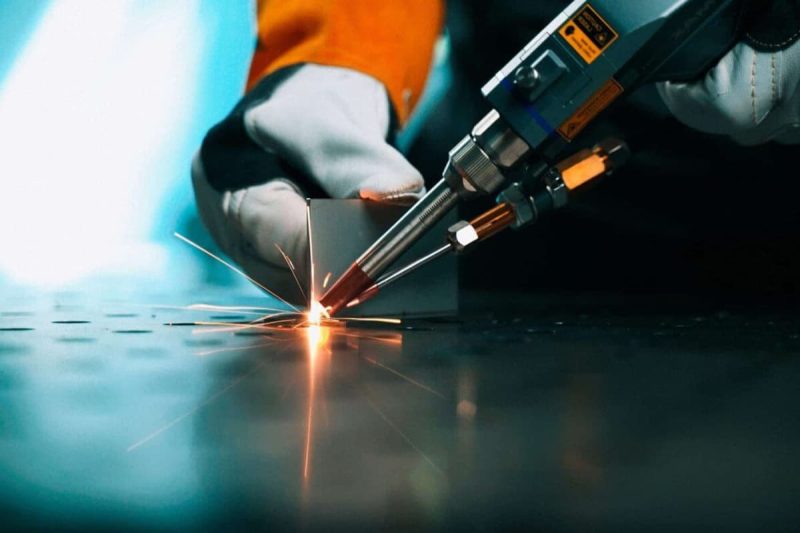
Practical Steps for Determining the Optimal Laser Welding Speed
With the methods in place, we need a systematic process to apply them to actual process development. The following steps have been validated for efficiently determining the optimal welding speed.
Initial Setup and Calibration
Ensure the equipment is in good working order. The laser generator output power needs to be calibrated to ensure the actual power matches the set value. Check the cleanliness of the optical system; contaminated lenses will degrade performance. Check the accuracy of the motion system; repeatability should be within ±0.05mm. Standardize workpiece clamping and positioning, using dedicated fixtures to ensure consistency. Control the welding environment, avoiding strong airflow that could interfere with the shielding gas.
Conduct System Welding Tests
Determine the initial speed range based on the material and thickness, referring to the literature. For example, when welding a 2mm stainless steel plate using a 2000W laser, the initial speed should be set between 20-60mm/s. Within this range, select 5-7 speed points evenly distributed. Keep other parameters constant, only changing the speed, welding at least 3 samples at each speed point, and recording observations.
Immediately conduct a preliminary inspection, visually inspecting the weld surface and measuring the weld width. Plot a speed-quality relationship diagram to identify the approximate optimal range.
In-depth analysis and optimization
Conduct comprehensive testing on candidate speed samples. Prepare metallographic samples and measure weld penetration, weld width, and heat-affected zone. Observe the microstructure and inspect for defects. Perform mechanical property tests, including tensile, bending, and hardness tests, to verify joint strength.
Statistically analyze all test data, calculating the average and standard deviation at different speeds. Plot a speed-quality curve to identify the process window that meets quality requirements. Select the speed with the most stable quality as the preferred choice. Considering quality, efficiency, and cost comprehensively, determine the optimal speed.
Verification experiments confirm the reliability of the selected speed. Weld a batch of samples using the optimal speed, detect the quality distribution, and calculate the process capability index Cpk. A Cpk greater than 1.33 indicates sufficient process capability and stable, reliable quality.
The importance of continuous monitoring and adjustment
Finding the optimal speed is not the end point of process development, but the starting point of production. In actual production, various factors will change, requiring continuous monitoring and timely adjustment of the speed to maintain stable quality.
Production process monitoring tracks key process parameters and quality indicators. Modern laser welding systems automatically record data from each weld, periodically sample product quality, and compare it with standards. When a quality decline is detected, the cause is promptly identified and corrected.
Equipment condition changes over time, requiring regular maintenance and calibration. Laser generator power attenuation, optical component contamination, or wear and tear on the motion system can all affect welding results. When changes in equipment performance are detected, fine-tuning the welding speed may be necessary to compensate; for example, if the power decreases by 5%, the speed should be reduced by 5-10%.
Batch variations in materials are a common source of quality fluctuations. First-piece testing should be conducted on new batches of materials to verify the applicability of current process parameters. Seasonal changes in environmental conditions also require attention; in winter, a reduced speed or preheating may be necessary, while in summer, a slightly higher speed can be appropriate.
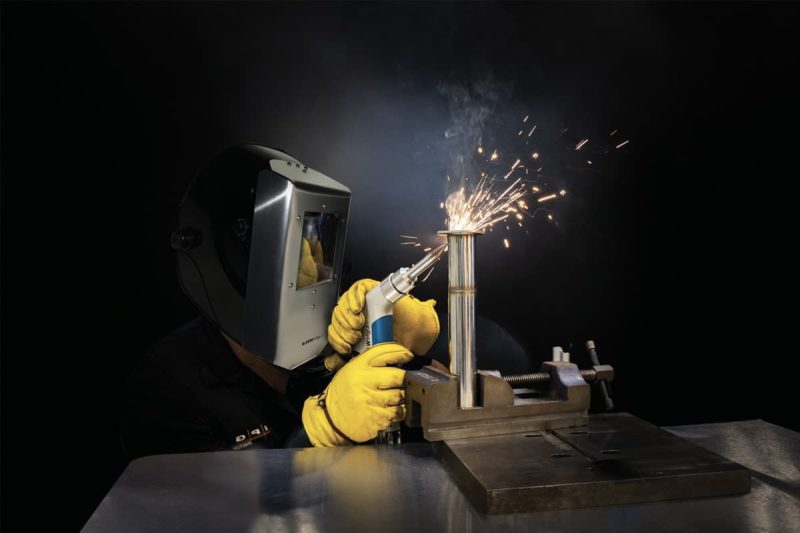
Practical Considerations for Determining Laser Welding Speed
Besides technical factors, several practical and managerial considerations are equally important for the successful application of laser welding speed optimization.
Precauciones de seguridad
Laser safety is paramount. Class 4 lasers can cause permanent eye damage; work must be performed within a sealed protective enclosure or using safety interlock devices. Personnel must wear laser safety goggles that meet wavelength requirements. Welding fumes require an effective fume extraction system, with the extraction rate adjusted according to the welding speed. Operators should wear protective clothing, gloves, and safety shoes, and use personal protective equipment correctly.
Equipment Setup and Maintenance
Laser power requires regular calibration, especially before changing critical parameters. Use a power meter to measure actual output and establish a calibration curve. Protective lenses should be regularly inspected and cleaned, and the focusing lens position must be accurate. Cooling system maintenance ensures a stable operating temperature, with temperature control accuracy within ±1℃. Motion system maintenance includes guide rail lubrication, drive belt tensioning, and repeatability accuracy within ±0.05mm.
Environmental Factor Control
Temperature fluctuations affect the thermal state of materials and laser generator performance. Ideally, the workshop temperature should be controlled between 20-25℃. In winter, when the room temperature is low, the welding speed may need to be reduced by 5-10%. Humidity affects the moisture absorption of the material surface and should be controlled below 50%. Use dehumidifiers or store materials in sealed packaging.
Air quality and airflow affect the effectiveness of the protective gas. Dust and strong airflow in the workshop can affect welding quality. Pay attention to environmental stability and take vibration isolation and noise reduction measures as necessary to ensure stable equipment operation and operator comfort.
Data Recording and Process Optimization
Establish a process parameter database to record the optimal welding speed and related parameters for each product. Record welding results in detail, including quality data, defective product information, and customer feedback, and perform correlation analysis with process parameters. Use Statistical Process Control (SPC) charts to monitor process stability and identify problems early.
Implement Continuous Improvement Projects to Systematically Improve Welding Performance: Set improvement goals, develop action plans, verify effects, and standardize successful practices. Document process knowledge, compile operating instructions, and ensure knowledge transfer and rapid personnel development.
This section systematically summarizes the key factors that must be considered when determining laser welding speed from a practical application perspective. Besides the process parameters themselves, safety precautions, equipment calibration and maintenance, environmental stability, and data management also directly affect the feasible range and stability of welding speed. Through standardized safety measures, effective equipment condition control, a controlled production environment, and continuous data recording and process optimization, companies can achieve stable increases in welding speed and long-term replicable process results while ensuring personnel safety and welding quality.
Resumir
Determining the optimal laser welding speed requires comprehensive consideration of multiple factors. Welding speed and laser power together determine the energy input per unit length, directly impacting weld penetration, weld formation, and overall weld quality. Different materials exhibit significant differences in thermal conductivity, reflectivity, and melting point, and parameters such as laser type, spot size, and focusing position also alter the speed window. Simultaneously, joint type, plate thickness, assembly precision, and shielding gas conditions all significantly influence the optimal welding speed; a change in any single parameter can disrupt the existing process equilibrium.
In practical applications, empirical testing remains the most reliable method for determining the optimal welding speed. By systematically comparing weld quality at different speeds, a stable process range can be intuitively identified. Mathematical models and numerical simulations can quickly narrow down the parameter range in the early stages, reducing experimental costs; online monitoring technology allows for real-time speed adjustments during production, achieving dynamic optimization. Combining these three methods, along with rigorous equipment calibration, standardized experimental procedures, and thorough result verification, ensures that the welding speed is both replicable and consistently stable.
From a company’s perspective, welding speed optimization is not only a process issue but also a crucial means of enhancing competitiveness. Láser AccTek designs its laser welding systems with full consideration of power stability, motion precision, and process adjustability, providing customers with a wider speed process window and higher process consistency. Leveraging mature and reliable equipment configurations, comprehensive technical support, and systematic process verification services, we help manufacturing companies continuously improve production efficiency, reduce overall costs, and build more sustainable production models while ensuring welding quality and safety, truly translating laser welding speed into long-term, stable commercial value.

Información del contacto
- [email protected]
- [email protected]
- +86-19963414011
- No. 3 Zona A, Zona Industrial de Lunzhen, Ciudad de Yucheng, Provincia de Shandong.
Obtenga soluciones láser