














Can Laser Marking Be Done on Curved or Irregular Surfaces?
Laser marking has become one of the most widely adopted methods of permanent product identification across modern manufacturing. From serial numbers and barcodes on medical implants to decorative engravings on consumer electronics and traceability codes on aerospace components, laser marking delivers a level of precision, permanence, and versatility that no other marking technology can match. As global supply chains demand increasingly rigorous traceability standards and as product designs grow ever more complex, the ability to apply high-quality laser marks to non-planar surfaces has moved from a niche capability to a mainstream manufacturing requirement.
The question: Can a machine de marquage laser be used on curved or irregular surfaces? — is one that procurement managers, product engineers, and manufacturing specialists encounter with growing frequency. The short answer is yes. But the complete answer is considerably more nuanced. Laser marking on flat, two-dimensional surfaces is a well-established and straightforward process. Laser marking on cylindrical shafts, spherical implants, conical housings, freeform consumer product casings, and other complex three-dimensional geometries introduces a set of optical, mechanical, and process engineering challenges that require specialized equipment, careful system configuration, and a thorough understanding of how laser physics interacts with surface geometry.
This comprehensive guide is designed to provide engineers, buyers, and technical decision-makers with everything they need to understand about laser marking on curved and irregular surfaces. We begin with a foundational overview of laser marking technology — its process principles, available techniques, and compatible materials. We then examine in detail the specific challenges that surface curvature and geometric complexity introduce, the advanced technologies developed to overcome those challenges, the application-specific considerations that govern successful implementation, and the real-world industries where curved-surface laser marking is already delivering critical results. Finally, we offer a set of best practices and quality assurance recommendations to guide your own implementation efforts.
Whether you are specifying laser marking equipment for the first time or seeking to upgrade an existing system to handle more complex part geometries, this guide provides the technical depth and practical guidance you need.
Table des matières
Understanding Laser Marking: Processes, Technologies, and Materials
Before examining the specific challenges of curved and irregular surfaces, it is essential to establish a clear understanding of what laser marking is, how it works, and what variations of the technology exist. This foundational knowledge is the necessary context for understanding why surface geometry matters so much in laser marking applications.
Overview of the Laser Marking Process
Laser marking is a broad term that encompasses any process in which a focused laser beam is used to create a permanent, visible change on the surface of a material. The laser beam — a highly coherent, monochromatic, and precisely controllable source of electromagnetic radiation — is directed at the workpiece surface through a system of galvanometric scanning mirrors and a focusing lens. The scanning mirrors move the beam rapidly across the surface in a programmed pattern corresponding to the desired mark, while the focusing lens concentrates the beam energy to a small focal spot — typically between 20 and 500 micrometers in diameter, depending on the system — where the laser-material interaction takes place.
The nature of that interaction, and therefore the type of mark produced, depends on the laser parameters (wavelength, pulse duration, repetition rate, peak power, and average power), the material properties (optical absorptivity, thermal conductivity, melting and boiling points), and the specific laser marking process being employed.
Types de procédés de marquage laser
Several distinct laser marking processes are in common industrial use, each producing a different type of mark and suited to different materials and application requirements.
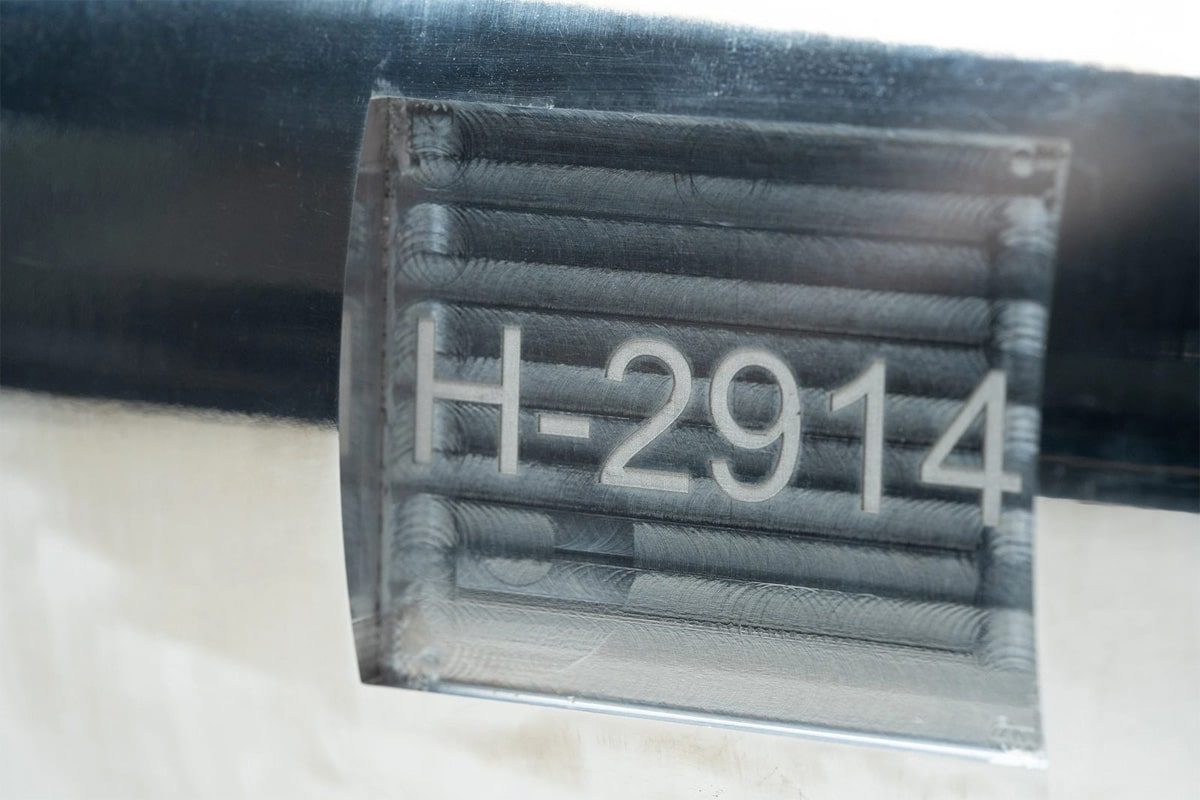
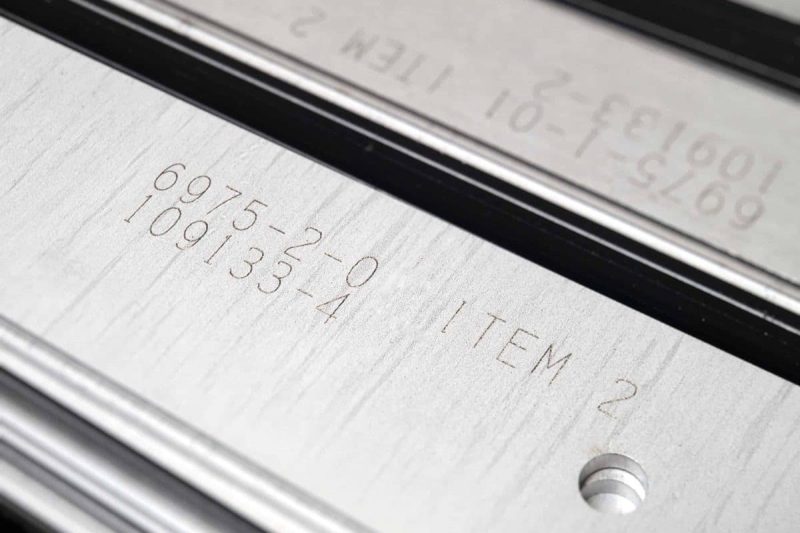
Laser engraving is the process of using a high-energy laser beam to physically remove material from the surface, creating a recessed mark with measurable depth. The ablated material is vaporized or expelled as fine particles, leaving a cavity in the substrate. Laser engraving produces marks with excellent tactile definition and very high durability — because the mark is physically recessed into the material, it is highly resistant to abrasion, chemical exposure, and surface treatments applied after marking. Engraving is widely used on metals, plastics, wood, and ceramics, and is the preferred method for applications where long-term mark legibility under harsh conditions is paramount.
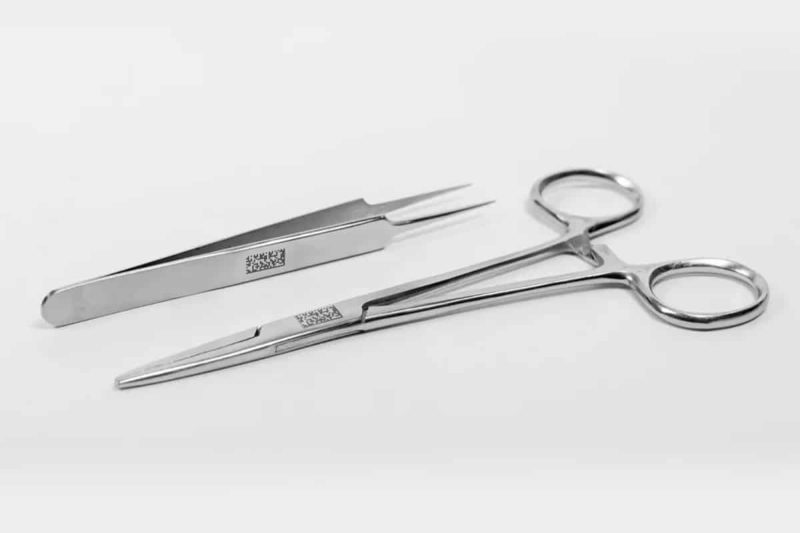
Laser annealing is a process used exclusively on metals, particularly ferrous alloys and stainless steel. In annealing, the laser heats the metal surface to a temperature sufficient to cause controlled oxidation and microstructural changes in a thin surface layer, producing a color change — typically ranging from yellow to brown, blue, or black depending on the oxide thickness — without removing any material. Because the surface remains intact and smooth, laser annealing produces marks that are highly corrosion-resistant and do not compromise the surface finish or the mechanical integrity of the part. This makes annealing the preferred laser marking method for medical implants and surgical instruments, where surface integrity is a regulatory requirement.
Laser foaming, also referred to as laser carbonization in some literature, is a process used primarily on dark-colored plastics and polymers. The laser heats the polymer to a temperature at which gas is released from the material, forming a foamed, light-colored raised structure within the dark substrate. The contrast between the light foam and the dark background produces a highly legible mark without removing material. Laser foaming is commonly used for marking dark ABS, polyamide, and polycarbonate components in automotive and consumer electronics applications.
Laser ablation in the marking context refers to the selective removal of a surface coating or layer to reveal a contrasting substrate beneath. For example, ablating a black anodized layer from an aluminum part reveals the bright metallic aluminum beneath, creating a high-contrast mark with excellent legibility. Similarly, ablating paint or powder coating from a metal surface creates a mark that is readable from the exposed substrate. Ablation marking is widely used in the electronics industry for marking painted or coated housings and panels.
Color laser marking on metals — achieved through a process related to annealing but using precisely controlled laser parameters to produce specific thin-film interference colors — has emerged as a technology of growing interest for decorative and branding applications on stainless steel and titanium products.
Materials Compatible with Laser Marking
Laser marking is compatible with an exceptionally broad range of materials, which is one of the key reasons for its widespread adoption across industries.
Metals are among the most commonly laser-marked materials. Carbon steel, stainless steel, aluminum, titanium, copper, brass, and precious metals can all be marked effectively using the appropriate laser system and process parameters. The high thermal conductivity of metals means that laser parameters must be carefully tuned to achieve the desired surface effect without excessive heat diffusion into the surrounding material.
Engineering plastics — including ABS, polycarbonate, polyamide (nylon), PEEK, polyethylene, and polypropylene — respond well to laser marking, though the optimal process and laser wavelength vary significantly between polymer types. UV lasers (355 nm) and green lasers (532 nm) are often preferred for plastics because their shorter wavelengths are more readily absorbed by many polymer matrices, enabling more precise and controlled marking with less thermal damage to the surrounding material.
Ceramics and glass can be marked using laser engraving or surface ablation, though their brittleness requires careful control of laser energy density to avoid micro-cracking. Specialized ultrashort pulsed laser generator — picosecond and femtosecond systems — are particularly effective for marking brittle materials because their extremely short pulse durations deposit energy into the material before significant heat diffusion can occur, producing what is known as a “cold” ablation effect with minimal thermal damage.
Composite materials, including carbon fiber reinforced polymers (CFRP) and glass fiber reinforced polymers (GFRP), are used in aerospace and automotive applications. The anisotropic and multi-phase nature of composites requires particularly careful laser parameter development to achieve consistent marking without delamination or fiber damage.
Laser marking is a versatile technology that utilizes a controlled laser beam to create permanent, visible changes on a substrate’s surface. Depending on the laser parameters and material properties, different processes are employed: engraving for depth and durability, annealing for corrosion-resistant color changes on metals, foaming for high contrast on plastics, and ablation for removing surface coatings. This technology is compatible with a vast array of materials, from metals and engineering plastics to brittle ceramics and complex composites. Selecting the appropriate wavelength and pulse duration is crucial for achieving high-precision results while minimizing thermal damage across these diverse substrates.

Challenges of Laser Marking on Curved or Irregular Surfaces
The transition from marking flat, two-dimensional surfaces to marking curved, cylindrical, conical, or freeform three-dimensional geometries introduces a set of fundamental technical challenges rooted in laser optics and beam-material interaction physics. Understanding these challenges in detail is the necessary foundation for appreciating why specialized technologies and approaches are required.
Overview of the Core Challenges
At the most fundamental level, laser marking systems are designed to deliver a focused beam to a surface located at a specific, fixed distance from the focusing lens — a distance known as the focal length or working distance. When the surface being marked is flat and perpendicular to the beam axis, every point on the surface is at the same distance from the lens, and the beam remains in focus across the entire marking field. When the surface is curved or irregular, different points on the surface are at different distances from the lens. This variation in working distance causes the beam to be in focus only at points that lie at the design focal distance, while points that are closer or farther away receive a defocused beam with a larger focal spot and lower energy density. The consequences of this defocusing ripple through every dimension of mark quality and consistency.
The Effect of Surface Curvature on Laser Beam Focus
The focusing behavior of a laser beam is governed by the optical properties of the focusing system — primarily the focal length of the focusing lens and the beam quality parameter (M² factor) of the laser source. For a given optical system, the depth of focus — the axial range over which the beam remains acceptably focused — is determined by the formula relating depth of focus to beam divergence and wavelength. For typical industrial laser marking systems with galvanometric scanning heads and flat-field (f-theta) lenses, the depth of focus at the workpiece plane ranges from a few millimeters for high-precision fine-marking applications to several tens of millimeters for lower-resolution large-field applications.
When marking a curved surface, the critical question is how much the surface deviates from the flat focal plane within the marking field. For a mildly curved surface — such as a large-radius cylindrical component where the depth variation across the marking area is within the system’s depth of focus — standard flat-field marking systems can produce acceptable results with minimal adjustment. However, as the curvature increases — for example, on small-diameter cylindrical shafts, strongly curved medical implants, or freeform consumer product surfaces — the surface deviation across the marking field can easily exceed the depth of focus by a factor of two, five, or ten, resulting in severe defocusing at the extremities of the mark.
The practical consequences of beam defocusing are significant and multifaceted. A defocused beam delivers lower energy density (irradiance) at the surface because the same pulse energy is distributed over a larger focal spot area. For process thresholds that depend on exceeding a minimum energy density — such as the ablation threshold for engraving or the annealing threshold for color marking — defocusing can cause the laser to fail to initiate the desired surface effect altogether in out-of-focus regions. Where the process threshold is exceeded despite defocusing, the larger focal spot produces wider, shallower, and lower-resolution mark features that degrade the legibility of text, the readability of barcodes, and the precision of graphic elements.
Inconsistency in Marking Depth and Quality
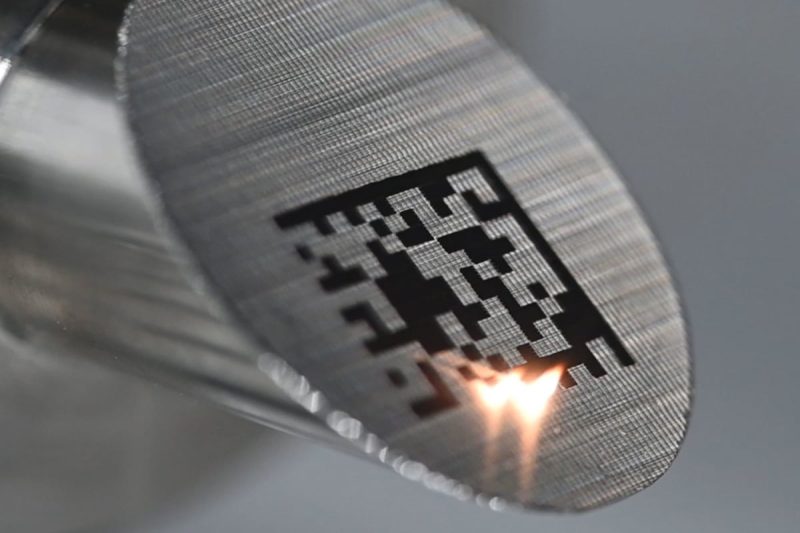
In laser engraving applications on curved surfaces, the variation in energy density across the marking field translates directly into variation in engraving depth. Regions of the surface that are at the design focal distance receive the highest energy density and achieve the target engraving depth. Regions outside the depth of focus receive lower energy density and are engraved to a shallower depth, or not engraved at all. This depth variation compromises the tactile consistency of the mark, creates visual non-uniformity in reflectivity and color, and can impair the readability of machine-readable codes such as Data Matrix or QR codes that depend on consistent contrast between mark and background.
For laser annealing of curved metal surfaces, the color produced by the annealing process is extremely sensitive to the laser energy density delivered to the surface — small changes in fluence (energy per unit area) can produce significant shifts in oxide layer thickness and, therefore, in the perceived color. A mark that transitions smoothly from black at the focal point to brown or blue at the defocused periphery is not only aesthetically unacceptable but may fail regulatory requirements for marking legibility and contrast in regulated industries such as medical devices.
The primary challenge of marking curved or irregular surfaces lies in the physics of focal depth and energy distribution. Traditional laser systems are designed for a fixed working distance; when a surface deviates from this focal plane, the laser beam becomes defocused. This results in an enlarged focal spot and diminished energy density, leading to significant inconsistencies in engraving depth, mark resolution, and color uniformity (such as in metal annealing). Consequently, regions outside the depth of focus often suffer from poor legibility or failed surface reactions, necessitating advanced 3D sensing or motion control technologies to maintain quality.
Mark Distortion and Misregistration on Complex Geometries
Beyond focus-related quality issues, curved and irregular surfaces introduce a second category of challenge related to the geometric relationship between the laser scanning field and the three-dimensional surface being marked. Standard galvanometric laser scanning systems are designed to deflect the laser beam across a flat two-dimensional plane. When the beam is directed at a curved surface, the flat-plane scan pattern projected by the scanner must be mapped onto a non-planar surface geometry, and the result — without correction — is a mark that is geometrically distorted relative to the intended design.
On a cylindrical surface, for example, a rectangular scan pattern from a flat-field scanner produces a mark that is compressed at the edges and expanded at the center when viewed on the unwrapped cylindrical surface. Characters that were designed to be square appear as trapezoids; barcodes that were designed with uniform bar spacing exhibit non-uniform spacing that may cause barcode readers to reject them as invalid. On freeform surfaces with varying curvature in multiple directions, the distortion can be complex and non-uniform, requiring sophisticated geometric correction algorithms to produce a mark that appears correct when viewed on the actual three-dimensional surface.
The angular relationship between the laser beam and the surface normal also varies across a curved surface. At points where the beam strikes the surface at a steep angle of incidence (far from the surface normal), the effective spot shape on the surface becomes elliptical rather than circular, reducing the marking resolution in the direction of beam inclination and potentially causing shadowing effects at sharp surface discontinuities such as edges, steps, and undercuts.
Technologies for Laser Marking on Curved and Irregular Surfaces
The industrial laser marking community has developed a range of technical approaches to address the challenges described above. These technologies range from relatively simple mechanical adaptations of standard systems to sophisticated multi-axis optomechanical platforms with real-time adaptive control. The appropriate technology for a given application depends on the degree of surface complexity, the required mark quality and resolution, the throughput requirements, and the capital investment available.
Four primary technology approaches have emerged as the dominant solutions for curved-surface laser marking: dynamic focusing, rotational marking, full three-dimensional laser marking systems, and adaptive laser marking with surface sensing. Each approach addresses the challenge of curved surfaces from a different angle and carries its own capabilities, limitations, and cost profile.
Dynamic Focusing Systems
Dynamic focusing is the most direct technical response to the defocusing problem on curved surfaces. In a dynamic focusing system, the collimated laser beam passes through a motorized focusing element — typically a movable lens or a variable-focal-length (zoom) beam expander — before entering the galvanometric scanning head. By synchronizing the position of this focusing element with the scan pattern, the system continuously adjusts the focal distance of the beam in real time as it traverses the marking field, maintaining the beam in focus on the surface even as the surface-to-lens distance varies.
The key parameter governing the performance of a dynamic focusing system is the speed and range of the focusing element’s travel. For surfaces with gradual, predictable curvature — such as the outside of a cylinder or a sphere — the required focus adjustment at any given scan position can be calculated from the known geometry of the surface and programmed into the scan controller as a deterministic focus correction profile. For surfaces with more complex or less predictable geometry, the focus correction profile must be derived from a three-dimensional surface model or from real-time surface sensing data.
Dynamic focusing systems extend the effective depth of focus of a laser marking system dramatically — from the few millimeters available with a fixed-focus flat-field lens to several centimeters or more, depending on the travel range of the focusing element. This makes them suitable for a wide range of curved-surface applications without requiring changes to the workpiece fixturing or the scanning geometry. However, dynamic focusing does not address the geometric distortion problem: it corrects the focus but not the scan pattern geometry, so marks on highly curved surfaces may still exhibit some degree of distortion without additional correction algorithms.
Rotational Marking Systems
Rotational marking is a technique specifically suited to cylindrical and conical workpieces — components such as shafts, pipes, bearings, rollers, bottles, and capsules that have a well-defined axis of rotational symmetry. In a rotational marking setup, the workpiece is mounted on a motorized rotary axis (sometimes called a rotary fixture or chuck) that rotates the part beneath the laser marking head. The laser marks a narrow axial stripe on the surface as the part rotates, and by coordinating the rotation speed of the part with the scan speed and step-over of the laser, the system effectively “unrolls” the cylindrical surface into a flat strip that the laser can mark without defocusing.
Because the laser always marks at the same radial distance from the rotation axis, and that point is always at the top of the cylinder directly below the scanner, the surface-to-lens distance remains constant throughout the marking process. This eliminates both the defocusing problem and the geometric distortion problem for cylindrical surfaces in a single, mechanically elegant solution. Rotational marking systems can achieve the same mark quality on cylindrical surfaces as flat-bed systems achieve on flat surfaces, making them the preferred solution for high-volume cylindrical component marking in the automotive, bearing, and packaging industries.
The limitation of rotational marking is that it requires the workpiece to be symmetric about a rotational axis, which precludes its use on freeform or prismatic surfaces. It also requires a dedicated rotary axis fixture, which adds to the system cost and complexity and may impose constraints on part size and weight.
Three-Dimensional Laser Marking Systems
Three-dimensional laser marking systems — often referred to as 3D laser markers — represent the most technologically advanced and versatile solution for marking curved and irregular surfaces. A 3D laser marking system integrates dynamic focusing with a three-dimensional scan field model and a geometric correction engine to deliver focused, geometrically accurate marks on surfaces of arbitrary shape within the system’s working volume.
The core of a 3D laser marking system is a three-axis scanning head that combines the two angular axes of a standard galvanometric scanner with a dynamic focus axis providing the third (Z) degree of freedom. The system’s control software maintains a three-dimensional model of the surface being marked — derived either from CAD data, from a surface scan using structured light or laser triangulation, or from programmed geometric primitives such as cylinders, spheres, and cones — and uses this model to calculate, for each point in the scan pattern, the correct focus position and the geometric correction required to ensure that the mark appears undistorted on the actual three-dimensional surface.
The result is a system that can mark text, graphics, barcodes, and complex patterns on curved, conical, spherical, and freeform surfaces with the same quality and resolution that a flat-bed system achieves on flat surfaces. The mark appears correctly proportioned and legible when viewed on the actual three-dimensional surface, and the engraving depth or annealing effect is consistent across the entire mark area regardless of surface curvature. Three-dimensional laser marking systems are more expensive than standard flat-bed or dynamic-focus systems, and they require more sophisticated programming and setup. However, for applications requiring high mark quality on complex geometries — medical implants, aerospace components, luxury consumer products, and precision engineering parts — they deliver results that are simply not achievable with simpler technology.
Adaptive Laser Marking with Surface Sensing
Adaptive laser marking is an emerging approach that addresses the limitations of pre-programmed 3D systems by incorporating real-time surface sensing into the marking process. In an adaptive system, one or more sensors — typically laser triangulation profilometers or structured light scanners — measure the actual surface geometry of the workpiece immediately before or during marking. The measured surface data is processed in real time by the marking controller, which adapts the scan pattern, focus correction, and geometric compensation to match the actual measured surface rather than a pre-programmed nominal model.
This approach is particularly valuable in applications where part-to-part geometric variation is significant — for example, cast or forged components where dimensional tolerances are relatively loose, or flexible or deformable parts whose shape may vary between fixturing events. By measuring the actual surface of each part before marking it, adaptive systems can maintain consistent mark quality even in the presence of dimensional variation that would cause systematic quality degradation in a pre-programmed 3D system.
Adaptive laser marking systems represent the current frontier of curved-surface marking technology and are still primarily found in high-value, low-to-medium volume applications where the cost of the sensing and adaptive control infrastructure is justified by the criticality of the marking quality requirement. As sensor costs continue to decline and processing power increases, adaptive marking is expected to become more accessible to mainstream manufacturing applications.
For laser marking on curved and irregular surfaces, the industrial sector has developed four main technical solutions: dynamic focusing, rotational marking, 3D laser marking, and surface-aware adaptive marking. Dynamic focusing adjusts the focal length in real time using an electric focusing element, effectively extending the system’s depth of focus and suitable for moderately complex curved surfaces, but it cannot completely eliminate geometric distortion. Rotational marking uses a rotating axis to move cylindrical workpieces, “unfolding” the curved surface into an equivalent plane, structurally solving both defocusing and distortion problems, but it is only suitable for parts with rotational symmetry. 3D Laser Marking Systems further integrate three-axis scanning and 3D model calculation capabilities, enabling precise focal length and path correction for any curved surface based on CAD or scanned data, achieving the highest accuracy and widest applicability, but with higher cost and system complexity. Adaptive Laser Marking represents the cutting edge, acquiring actual workpiece surface data in real time using sensors and dynamically adjusting marking parameters, addressing incoming material errors and deformation issues, and is particularly suitable for high-value, small-to-medium batch applications. Overall, these four technologies have evolved step by step from “mechanical compensation → structural reconstruction → digital modeling → real-time perception” to form a complete solution path system for current curved surface laser marking technology.

Key Considerations for Successful Laser Marking on Curved Surfaces
Beyond the choice of marking technology, successful laser marking on curved and irregular surfaces depends on a range of material, process, and operational factors that must be carefully managed to achieve consistent, high-quality results.
Achieving reliable, repeatable, high-quality laser marks on curved surfaces requires attention to three interconnected domains: material characteristics and laser compatibility, surface preparation and cleanliness, and laser parameter optimization for the specific surface geometry and marking requirement. Neglecting any one of these domains will compromise the overall result regardless of the sophistication of the marking technology employed.
Material Properties and Laser Compatibility
Not all materials respond to laser marking in the same way, and the curvature of the surface adds a layer of complexity to the material-laser interaction. The optical absorptivity of the material at the laser wavelength determines how efficiently the laser energy is coupled into the surface — materials with low absorptivity at the laser wavelength will reflect a large fraction of the incident energy and require higher fluence to achieve the desired surface effect, increasing the risk of thermal damage to the substrate. On a curved surface, the angle of incidence of the laser beam varies across the mark area, and for highly reflective materials, this angular variation can cause significant local differences in effective absorptivity and therefore in mark quality.
The thermal properties of the material — thermal conductivity, heat capacity, and thermal diffusivity — govern how the laser-deposited heat spreads through the substrate during and after each laser pulse. High thermal conductivity materials, such as copper and aluminium, dissipate heat rapidly, requiring higher peak power and shorter pulse durations to achieve the required surface temperature for annealing or ablation before the energy diffuses into the bulk material. On a curved surface, the varying angle of incidence affects the effective energy density delivered to the surface and therefore the thermal response — a factor that must be compensated for by adjusting laser parameters as a function of scan position.
Material coatings and surface treatments — anodising, painting, plating, chemical conversion coatings — present additional considerations on curved surfaces. The thickness and adhesion quality of the coating may vary across a curved surface due to the geometry of the coating process, and these variations can cause local differences in the laser marking response that manifest as non-uniformity in the mark appearance. Pre-marking characterisation of coating uniformity, using methods such as profilometry or optical reflectometry, can identify potential issues before production marking begins.
Surface Preparation and Cleaning
The cleanliness and surface condition of the workpiece before laser marking have a profound effect on mark quality, and this is especially true for curved surfaces where direct inspection and cleaning can be more challenging. Contaminants on the surface — including oils, fingerprints, machining coolant residues, oxide films, and particulate matter — can absorb laser energy and interfere with the laser-material interaction in unpredictable ways, causing localized variations in mark depth, color, and legibility.
For metals, a standardized cleaning protocol before laser marking typically involves degreasing with an appropriate solvent or aqueous cleaner, followed by drying to remove all moisture. For components with complex curved geometries, ultrasonic cleaning in an appropriate cleaning solution is often the most effective method of achieving uniform cleanliness across all surfaces, including recessed areas and undercuts that are difficult to reach with wiping or spraying methods.
For plastics, the surface energy of the polymer affects how well the laser-induced surface modification adheres and maintains its contrast over time. Some polymers benefit from a pre-marking surface activation step — such as corona discharge or plasma treatment — that increases surface energy and improves the uniformity of the laser interaction, particularly on curved surfaces where the plasma or corona treatment intensity may vary with surface orientation relative to the treatment electrode.
Optimal Laser Parameter Selection for Curved Surfaces
The selection of laser parameters — wavelength, pulse duration, repetition rate, pulse energy, scan speed, and hatch spacing — for marking curved surfaces requires more careful optimisation than for flat surfaces, because the parameter sensitivity is compounded by the geometric effects of curvature. A parameter set that produces excellent marks at the optimal focal distance may produce significantly inferior results just a few millimetres outside the focal plane, making it important to characterise the process window — the range of parameters over which acceptable mark quality is achieved — and to ensure that the marking system maintains the workpiece surface within that window throughout the mark.
For engraving applications on curved surfaces, the key parameters are pulse energy, repetition rate, scan speed, and hatch spacing, which together determine the fluence (energy per unit area) delivered to the surface and the effective engraving depth per pass. On curved surfaces, a tighter hatch spacing and a lower scan speed are often used to increase the robustness of the process to minor defocusing effects, at the cost of longer cycle time. Multiple passes at lower fluence per pass can produce more consistent engraving depth than a single high-fluence pass, because the cumulative effect of multiple lower-energy pulses is less sensitive to small variations in energy density caused by defocusing.
For annealing and colour marking applications, where the mark quality is extremely sensitive to fluence variations, the acceptable defocus tolerance is typically narrower than for engraving. Three-dimensional marking systems with real-time dynamic focus control are generally required to maintain the fluence uniformity needed for consistent annealing colour across curved surfaces.
Successful laser marking on curved and irregular surfaces requires a holistic approach that integrates material compatibility, surface preparation, and precise laser parameter optimization. Variations in material absorptivity, thermal behavior, coating uniformity, and surface cleanliness can significantly affect marking quality, especially when compounded by changing laser incidence angles on curved geometries. Achieving consistent results therefore depends on careful process control, including proper cleaning protocols, surface characterization, and maintaining stable laser parameters within an optimized process window. Advanced solutions such as dynamic focus control and 3D laser marking systems further enhance process stability and marking uniformity across complex surfaces.
Applications of Laser Marking on Curved and Irregular Surfaces Across Industries
The ability to mark curved and irregular surfaces with high quality and consistency is a capability that addresses critical needs across a wide range of industries. The following industry profiles illustrate the diversity of applications and the specific marking requirements that drive technology selection in each sector.
Industrie automobile
The automotive industry is one of the largest users of laser marking technology, and curved-surface marking applications are pervasive throughout the vehicle manufacturing process. Engine components — including crankshafts, camshafts, connecting rods, pistons, and valve bodies — are predominantly cylindrical or near-cylindrical and must be permanently marked with part numbers, manufacturing dates, batch codes, and data matrix codes for traceability throughout the vehicle’s lifetime. Fuel system components, transmission gears, and bearing rings are similarly marked using rotational or 3D laser marking systems.
Beyond mechanical powertrain components, automotive exterior and interior trim parts — including curved plastic panels, door handles, steering wheel spokes, and instrument cluster faces — require decorative and functional laser marking on their formed surfaces. The trend toward greater personalization in premium vehicles has driven demand for high-quality color laser marking and engraving on complex freeform surfaces.
Medical Device Industry
The medical device industry imposes some of the most stringent marking requirements of any sector. Regulatory frameworks, including FDA 21 CFR Part 830 (Unique Device Identification), EU Medical Device Regulation (MDR 2017/745), and ISO 15223, require that medical devices carry permanent, legible, machine-readable unique device identification (UDI) codes throughout their service life. For implantable devices — including orthopedic implants such as hip stems, femoral heads, tibial trays, and spinal cages — the marking must survive sterilization processes, the biological environment of the body, and decades of mechanical stress without fading, corroding, or leaching harmful substances.
Laser annealing on stainless steel and titanium alloys is the dominant marking process for implantable devices because it produces marks that are corrosion-resistant, biocompatible, and do not create stress concentrations that could compromise fatigue life. The complex three-dimensional geometries of modern orthopedic implants — featuring curved articulating surfaces, porous ingrowth structures, and variable-taper stems — make 3D laser marking systems the technology of choice in this application.
Industrie aérospaciale
Aerospace manufacturers are subject to rigorous part traceability requirements driven by airworthiness regulations and aviation safety standards. Every safety-critical component must be permanently marked with part numbers, revision levels, manufacturing lot codes, and often data matrix codes that link to the digital part history record. The materials used in aerospace — aluminum alloys, titanium alloys, nickel superalloys, and composite structures — span a wide range of laser marking responses, and the complex geometries of turbine blades, compressor discs, structural frames, and fastener heads demand the full range of curved-surface marking technologies.
A particular challenge in aerospace marking is the requirement that the marking process not damage the fatigue life or corrosion resistance of the marked component. Laser annealing and low-energy laser engraving are preferred over deep mechanical engraving for this reason, and the process parameters must be validated to demonstrate that the marking does not introduce residual stresses or micro-cracks that could propagate under cyclic loading.
Consumer Electronics
The consumer electronics industry drives enormous volumes of laser marking on curved and irregular surfaces, from the contoured aluminum and glass enclosures of smartphones and tablets to the cylindrical bodies of wireless earbuds, styluses, and camera lenses. Marking requirements in consumer electronics include brand logos, model designations, regulatory compliance marks (CE, FCC, RoHS), and serial numbers, all of which must be applied with high aesthetic quality on premium curved surfaces.
The aesthetic expectations in consumer electronics are among the highest of any industry — a mark that is slightly misaligned, inconsistently colored, or visually rough is immediately apparent on a high-gloss curved surface and can be commercially unacceptable. Three-dimensional laser marking systems, combined with precision fixturing and high-resolution scanning optics, are used to achieve the sub-millimeter positioning accuracy and uniformly high mark quality demanded by premium consumer electronics brands.
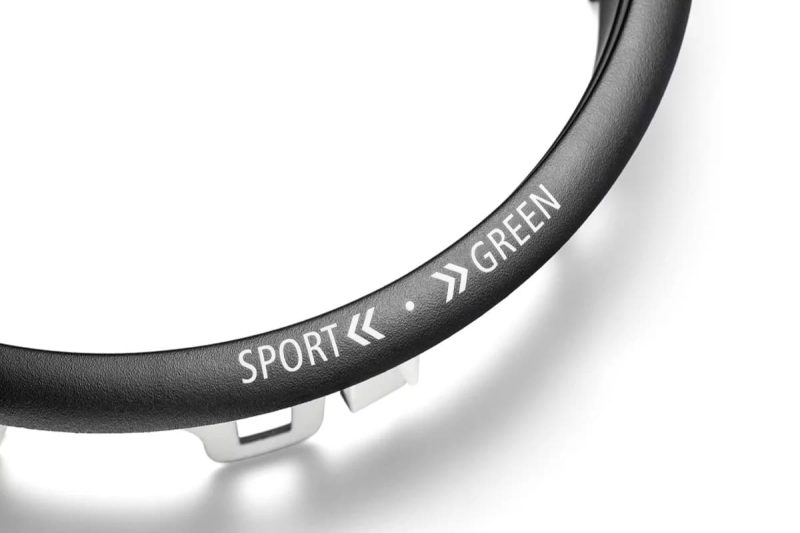
Laser marking on curved and irregular surfaces has become an essential capability across industries such as automotive, medical devices, aerospace, and consumer electronics, where requirements for traceability, regulatory compliance, and high-end aesthetics continue to increase. Advanced technologies including 3D laser marking, rotary systems, and laser annealing enable precise, consistent marking on complex geometries without compromising material integrity or performance. As manufacturing moves toward higher precision and customization, reliable curved-surface marking solutions are becoming a key factor in production efficiency and competitiveness.
Best Practices for Laser Marking on Curved and Irregular Surfaces
Translating the technical capabilities of advanced laser marking systems into reliable, high-quality production results on curved surfaces requires disciplined attention to the practical details of system setup, fixturing, process validation, and quality control.
Surface Preparation and Fixturing Design
The foundation of consistent curved-surface laser marking is reliable, repeatable workpiece positioning. Because the marking quality is sensitive to small variations in the distance and angle between the workpiece surface and the laser focusing system, the fixture that holds the workpiece during marking must locate it with precision and repeatability. For rotational marking of cylindrical components, the rotary chuck must grip the part concentrically with minimal runout; for 3D marking of complex freeform parts, the fixture must locate the part in all six degrees of freedom with tolerances compatible with the marking system’s positional accuracy.
Fixture design should also consider the accessibility of all areas to be marked, ensuring that the laser beam can reach every point on the surface without obstruction or shadowing, and that the fume extraction system can capture ablation byproducts from all marking positions.
Choosing the Right Laser Parameters
Process development for curved-surface laser marking should begin with systematic parameter screening on flat coupons of the target material to establish the baseline process window — the range of parameters that produces acceptable mark quality. The parameter window should then be evaluated on curved sample pieces representative of the production geometry, with attention to how mark quality varies across the range of surface orientations and focal distances encountered on the actual part. Parameters should be selected from the centre of the process window rather than the edges, to provide robustness against normal process variation.
Where 3D marking software supports defining focus correction and geometric compensation profiles, these profiles should be validated by marking test patterns — including fine lines, small characters, and barcode structures — at multiple locations across the marking field and comparing the results against the design intent.
Mesures de contrôle de la qualité
A robust quality control program for curved-surface laser marking should include incoming inspection of workpieces to verify that their geometry is within the tolerance range for which the marking process has been validated, in-process monitoring of key laser system parameters (average power, repetition rate, scan speed) to detect drift before it impacts mark quality, and post-marking inspection of the marks themselves for legibility, dimensional accuracy, and consistency.
For marks that include machine-readable codes such as Data Matrix or QR codes, automated vision-system verification using calibrated barcode readers conforming to ISO 15415 (for 2D symbols) or ISO 15416 (for linear barcodes) is the industry-standard method for confirming that the code is readable and meets the required grade for the application. Statistical process control (SPC) methods applied to mark quality metrics — such as symbol contrast, cell uniformity, and decode success rate — provide early warning of process drift and support continuous improvement efforts.
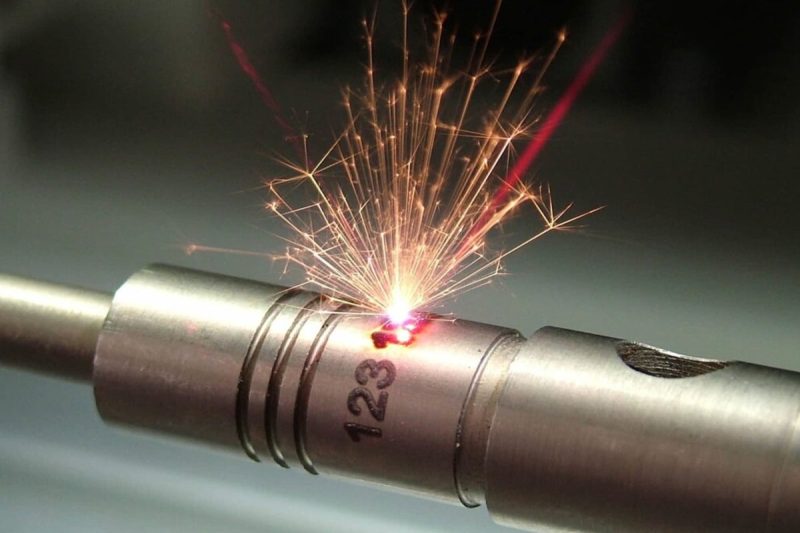
Achieving high-quality production results on irregular geometries requires a disciplined approach to precision fixturing, parameter optimisation, and rigorous quality control. Stable workpiece positioning is foundational; fixtures must ensure repeatable alignment to maintain the correct focal distance and beam accessibility. Process development should transition from flat-material baselines to representative 3D geometries, selecting robust parameters from the center of the process window to accommodate natural variations. Finally, implementing automated vision verification—especially for machine-readable codes like QR or Data Matrix—and employing Statistical Process Control (SPC) ensures long-term consistency, legibility, and compliance with industrial standards.
Résumé
Laser marking on curved and irregular surfaces is not only possible — it is a well-established, technically mature capability that is already deployed at high volume across some of the world’s most demanding manufacturing sectors. The challenges that surface curvature introduces — beam defocusing, mark distortion, inconsistent energy density, and angular variation effects — are real and significant, but they are addressed by a well-developed set of technologies, including dynamic focusing, rotational marking, full 3D laser marking systems, and adaptive surface-sensing approaches. The right technology choice for any given application depends on the specific geometry, material, mark quality requirement, throughput demand, and budget of the application.
What this guide has aimed to demonstrate is that the question is not whether curved surfaces can be marked by laser — they clearly can — but rather how to select and implement the right combination of technology, process parameters, fixturing, and quality control to achieve consistent, high-quality results reliably in production. This is fundamentally an engineering challenge, and one that rewards systematic thinking, rigorous process development, and investment in appropriately capable equipment.
The industries reviewed in this guide — automotive, medical devices, aerospace, and consumer electronics — represent only a fraction of the total application landscape for curved-surface laser marking. Food and beverage packaging, jewellery, firearms, power tools, sporting goods, and semiconductor manufacturing all present curved-surface marking requirements that are being addressed with the technologies and approaches described here. As product designs continue to evolve toward greater geometric complexity and as traceability and identification requirements become more stringent across more industries, the importance of high-quality curved-surface laser marking will only grow.
For manufacturers and engineers evaluating laser marking technology for curved surface applications, the message is clear: the technology exists to meet your requirements. The key is working with an experienced laser marking system supplier who can draw on deep application knowledge, a broad portfolio of system configurations, and proven process development methodologies to design and validate a solution that delivers the mark quality, throughput, and reliability your application demands.
Obtenez des solutions de marquage laser
If your application involves marking curved, cylindrical, conical, or freeform surfaces — or if you are seeking to upgrade an existing laser marking system to handle more complex part geometries — our team of laser marking engineers is ready to help you design the right solution for your specific requirements.
Laser AccTek supplies a comprehensive range of laser marking systems, from high-speed rotational marking platforms for cylindrical components to fully integrated 3D laser marking cells with adaptive surface sensing for complex freeform parts. Our systems are engineered for production environments across the automotive, medical device, aerospace, and consumer electronics industries, and we have the application experience to support marking on metals, plastics, ceramics, and composite materials at the quality levels demanded by the most stringent regulatory and customer standards.
Every laser marking solution we supply is backed by a rigorous application development process. We begin with a feasibility assessment of your specific part geometry, material, and marking requirement, followed by laboratory process development on sample parts to establish and validate the optimal laser parameters, fixturing approach, and quality control methodology. We provide full documentation of the validated process, including parameter records, inspection criteria, and operator training materials, to support your internal quality management system and regulatory compliance requirements.
Our systems are designed for long-term reliability in demanding production environments, with robust construction, proven laser sources, and service support infrastructure spanning more than 50 countries. We offer comprehensive commissioning, operator training, preventive maintenance programs, and responsive technical support to ensure that your laser marking system delivers consistent performance over its entire service life.
Whether you are specifying a single marking station for a specialised application or planning a multi-cell production line installation, we have the engineering resources, product breadth, and application expertise to support your project from initial concept through to validated production. Contact our laser marking specialists today to schedule a consultation, request a sample marking demonstration on your parts, or discuss your technical requirements in detail. Our team responds within one business day and is proud to serve manufacturing customers in over 120 countries worldwide.

Coordonnées
- [email protected]
- [email protected]
- +86-19963414011
- No. 3 Zone A, zone industrielle de Lunzhen, ville de Yucheng, province du Shandong.
Obtenez des solutions laser