


Quais são os consumíveis utilizados em máquinas de limpeza a laser?
One of the most persistent questions from buyers evaluating laser cleaning equipment is whether the technology is genuinely as low-maintenance as manufacturers claim. The marketing language around laser cleaning frequently emphasizes its advantage over traditional surface preparation methods — no abrasive media to purchase and dispose of, no chemical solvents to manage, no hazardous waste streams to handle — and this advantage is real. But “no consumables” is not quite the same thing as “zero consumables,” and buyers who go into a laser cleaning equipment purchase expecting a completely consumable-free operation may be caught off guard when they discover that certain components do, in fact, wear out and require periodic replacement.
The confusion is understandable. Laser cleaning systems driven by a laser generator do not consume sand, grit, dry ice pellets, or chemical stripping agents the way that abrasive blasting and chemical cleaning processes do. There is no recurring need to purchase bulk media, no spent media to collect and dispose of as waste, and no solvent vapor exposure to manage through ventilation systems. This is the foundation of laser cleaning’s genuine cost and environmental advantage over conventional surface preparation methods, and it is not an exaggeration — it is a structurally different cost model that has driven much of the technology’s rapid adoption across rust removal, paint stripping, weld pre-cleaning, and mold cleaning applications in recent years.
What laser cleaning equipment requires, however, is the periodic replacement of a small number of optical and mechanical components that are directly exposed to the cleaning process and that degrade through normal use. These parts are inexpensive relative to the bulk consumable costs of sandblasting or chemical cleaning, but they are not free, and understanding which parts wear out, how quickly, and why is essential for any business trying to calculate the true operating cost of laser cleaning machines over their working life.
This article provides a complete, technically grounded breakdown of laser cleaning machine consumables. It explains why the “zero-consumable” claim is directionally accurate but technically imprecise, walks through a realistic cost comparison against traditional cleaning methods, identifies each of the major wear components along with realistic service life expectations for each, and offers practical, actionable guidance on how operators can extend consumable life through correct maintenance practices. The goal is to give buyers and operators a clear, honest picture of what owning and running laser cleaning machines actually costs in consumable terms — information that is often understated or omitted entirely in sales conversations, and that can make a meaningful difference to how confidently a business can plan and budget for this equipment over its full working life.
Índice
Are Laser Cleaning Machines Really "Zero-Consumable"?
Before examining the specific components that wear out in laser cleaning systems, it is worth directly addressing the “zero-consumable” claim that surrounds this technology, because the claim is both largely true and slightly misleading at the same time. Understanding precisely what the claim means — and what it does not mean — provides the proper context for everything that follows in this article.
The Traditional Cleaning Cost Model
Traditional surface cleaning and rust removal methods are built around the continuous consumption of a physical cleaning medium. Abrasive blasting — using sand, steel grit, glass bead, or similar media — consumes that media at a rate proportional to the surface area being cleaned, and the spent media, now mixed with the removed rust, paint, or coating material, must be collected, contained, and disposed of as waste, often as hazardous or regulated waste depending on what contaminants were removed from the workpiece. The ongoing cost of purchasing replacement media, the labor cost of handling and disposing of spent media, and the regulatory compliance cost of managing the waste stream are all continuous operating expenses that scale directly with the volume of cleaning work performed.
Chemical cleaning methods follow a similar continuous-consumption model, substituting chemical stripping agents, solvents, or acid-based rust removers for abrasive media. These chemicals must be purchased on an ongoing basis, applied and then collected after use, and disposed of in compliance with hazardous waste regulations in most jurisdictions. Beyond the direct cost of the chemicals themselves, businesses using chemical cleaning methods typically bear the cost of personal protective equipment for operators, ventilation systems to manage chemical vapor exposure, and containment and neutralization systems to manage chemical runoff and waste.
The Laser Cleaning Cost Model
Laser cleaning operates on a fundamentally different cost model. The laser generator converts electrical energy into a focused beam that ablates rust, paint, oxide layers, and surface contaminants directly off the workpiece through a process of rapid, localized vaporization, without depositing or consuming any physical cleaning medium in the process. The contaminant removed from the surface is typically vaporized or reduced to fine particulate that is captured by a fume extraction and filtration system, rather than mixed with spent abrasive media that must be collected and landfilled.
This means that the dominant ongoing operating cost of laser cleaning machines is electricity consumption — a predictable cost, scales transparently with usage, and does not carry the procurement, storage, handling, and disposal burdens associated with physical consumable media. Beyond electricity, the only other ongoing costs are the periodic replacement of a small number of optical and mechanical components that are directly exposed to the cleaning beam and the ablation byproducts it generates. These components are real consumables — they are not “zero” — but their cost, frequency of replacement, and overall financial impact are dramatically smaller than the continuous media consumption that defines traditional cleaning cost structures.
Why the Distinction Matters for Buyers
The practical implication for buyers is that laser cleaning machines should be evaluated honestly: not as a completely consumable-free technology, but as a technology whose consumable costs are a small fraction — typically a very small percentage — of what equivalent traditional cleaning methods would cost over the same period of use. Buyers who go into a purchase expecting absolutely zero ongoing parts costs may feel misled when the first lens replacement is needed. Buyers who understand from the outset that a small number of inexpensive optical components require periodic replacement, and who factor this realistically into their cost projections, will find that the experience matches expectations closely and that the overall cost advantage over traditional cleaning methods remains substantial.
Laser cleaning machines are not literally consumable-free, but the claim that they dramatically reduce consumable costs compared to abrasive blasting and chemical cleaning is accurate and well-supported. Traditional cleaning methods consume physical media continuously and generate waste streams that carry their own handling and disposal costs. Laser cleaning replaces that continuous media consumption with electricity usage and the periodic replacement of a small number of inexpensive optical and mechanical components. Understanding this distinction precisely — rather than taking the “zero-consumable” marketing language at face value — gives buyers a more accurate and more useful basis for evaluating the true operating economics of the equipment.
Actual Cost Comparison: Laser Cleaning VS Sandblasting
To move beyond general claims about laser cleaning’s cost advantage and provide buyers with a concrete sense of scale, it is useful to walk through a simplified, illustrative comparison of the ongoing consumable cost structures associated with laser cleaning versus traditional abrasive blasting over a comparable period of regular use. While exact figures vary by region, equipment model, and specific application, the relative proportions involved are instructive and help explain why laser cleaning’s cost advantage holds up even once its modest consumable costs are fully accounted for.
The Abrasive Blasting Cost Structure
A typical abrasive blasting operation consumes media continuously throughout every job, with consumption rates that scale directly with surface area and the type of media selected. Beyond the direct purchase cost of replacement media — whether sand, steel grit, or glass bead — the operation incurs the labor cost of loading and managing the blasting equipment, the cost of containing and collecting spent media mixed with removed contaminant, and in many jurisdictions, the cost of disposing of that spent media as regulated or hazardous waste, depending on what was removed from the workpiece surface. Additional costs include personal protective equipment for operators working in dusty, abrasive environments, and in some cases, the cost of operating dust collection and containment systems required to meet workplace safety and environmental regulations.
These costs do not diminish with experience or improved technique in the way that some operating costs can be optimized over time — they are essentially fixed per unit of surface area processed, meaning that a business performing a large and growing volume of blasting work sees its media and disposal costs grow proportionally, with no equivalent to the “fixed consumable replacement schedule” that characterizes laser cleaning.
The Laser Cleaning Cost Structure
The laser cleaning operation processing the same surface area incurs an electricity cost that scales with the laser generator’s power consumption and the time required to complete the job, plus a share of the periodic consumable replacement costs discussed throughout this article — protective lenses replaced roughly every one to two weeks, focusing lenses replaced every three to twelve months, and nozzles replaced every two to three months. Because these consumable items are replaced on a time-based schedule rather than a usage-volume basis in the same direct proportional sense as blasting media, a business that increases its production volume without dramatically increasing the number of hours the equipment operates does not see its consumable costs scale up in the same linear way that blasting media costs would.
When the total consumable replacement cost is averaged across a typical month of regular operation and compared against the cost of the abrasive media, waste disposal, and protective equipment that an equivalent volume of blasting work would require, the laser cleaning consumable cost typically represents a small fraction of the comparable blasting cost — frequently cited by equipment manufacturers and industry analysts as being in the range of a few percent of the cost that would otherwise be spent on abrasive media and disposal alone. While exact percentages vary by application and region, the directional conclusion is consistent: laser cleaning’s modest consumable costs do not erode its fundamental cost advantage over abrasive methods, even when those consumable costs are fully and honestly accounted for rather than glossed over.
A realistic side-by-side comparison of cost structures clarifies why laser cleaning retains a substantial economic advantage over traditional abrasive blasting, even though it does carry genuine consumable costs. Abrasive blasting’s media, disposal, and protective equipment costs scale directly and continuously with production volume, with no natural ceiling on consumable expense as volume grows. Laser cleaning’s consumable costs are tied to time-based replacement schedules for a small number of inexpensive components, resulting in a cost structure that remains a small fraction of equivalent blasting costs across most realistic production scenarios. This comparison underscores that laser cleaning’s value proposition holds up to honest scrutiny, even when the “zero-consumable” marketing simplification is set aside in favor of a complete and accurate accounting.
Core Wear Parts and Their Lifespan
Having established that laser cleaning machines do have a small set of genuine consumable components, this section provides a detailed breakdown of each major wear part, the factors that influence its service life, and realistic lifespan expectations under typical operating conditions. Understanding these specifics allows buyers to budget accurately for ongoing parts costs and helps operators recognize when a component is approaching the end of its useful life before it causes a quality or performance problem.
Protective Lens (Protection Window)
The protective lens, sometimes called the protection window, is the first optical surface that the laser beam passes through on its way out of the cleaning head toward the workpiece, and it is also the component most directly exposed to the debris, dust, and vaporized material thrown back from the cleaning surface during operation. Its function is to shield the more expensive focusing lens positioned behind it from contamination and damage, acting as a sacrificial barrier that absorbs the brunt of splatter and particulate exposure so that the focusing lens does not have to.
Because of this direct, continuous exposure to ablation byproducts, the protective lens is the fastest-wearing optical component in laser cleaning systems. Under typical operating conditions, a protective lens generally lasts between one and two weeks of regular use before it requires replacement, though this range varies considerably depending on the specific work environment. Cleaning operations that generate heavy dust or fine particulate — rust removal on heavily corroded surfaces, for example — will contaminate the protective lens more quickly than lighter-duty cleaning tasks such as light oxide removal from relatively clean metal surfaces. Operating in dusty ambient environments, insufficient air assist flow, or extended continuous operation without periodic inspection can all shorten the practical service life of the protective lens significantly below the typical range.
The good news for operators is that the protective lens is also the least expensive optical component to replace, and its replacement procedure is typically simple and fast — most cleaning heads are designed to allow the protective lens to be swapped out in a matter of minutes without specialized tools or technical expertise. Because of its low cost and quick replacement, the protective lens is generally treated as a routine, low-stakes consumable rather than a high-cost or maintenance burden, provided that operators establish a habit of inspecting it regularly and replacing it proactively rather than waiting for visible degradation to affect cleaning quality.
Focusing Lens
The focusing lens sits behind the protective lens within the cleaning head and is responsible for shaping the laser beam to the precise focal spot size and position required for effective cleaning. Because it is shielded from direct exposure to splatter and particulate by the protective lens in front of it, the focusing lens experiences a much slower rate of degradation and correspondingly enjoys a substantially longer service life.
Under normal operating conditions with reasonable maintenance practices, a focusing lens typically lasts between three and six months. With diligent care — consistent protective lens replacement before it becomes heavily contaminated, careful handling during any cleaning or maintenance, and operation within the manufacturer’s recommended parameters — focusing lens life can extend to a full year or, in some cases, longer. The wide range in stated lifespan reflects how significantly maintenance discipline affects this particular component: a focusing lens that is well protected by a diligently maintained protective lens, and that is never exposed to contamination through neglect of the upstream barrier, will outlast one that operates behind a protective lens that is allowed to degrade for extended periods before replacement.
The focusing lens is considerably more expensive than the protective lens, both because of its more precise optical specifications and because its replacement, while still a routine maintenance task, typically requires more careful handling and alignment verification than a protective lens swap. This higher cost and slightly more involved replacement process is the primary reason that protecting the focusing lens through diligent protective lens maintenance is one of the most financially significant maintenance habits laser cleaning operators can adopt.
Bocal
The nozzle, sometimes referred to as the cleaning head tip or air assist nozzle, directs the flow of compressed air or assist gas that helps clear ablated particulate and debris away from the beam path and the workpiece surface during cleaning. Because the nozzle sits at the leading edge of the cleaning head, in proximity to the workpiece and the debris generated at the point of contact, it experiences gradual mechanical wear and thermal stress from repeated exposure to the cleaning process.
Typical nozzle service life falls in the range of two to three months under regular operating conditions, though this can vary depending on the intensity and duration of daily use, the type and severity of contamination being removed, and the specific nozzle design and material used by the equipment manufacturer. Nozzles that are used predominantly for heavy rust removal on rough, irregular surfaces tend to experience faster wear than nozzles used primarily for lighter cleaning tasks on relatively smooth surfaces, since heavier contamination generates more debris and more aggressive particulate impact against the nozzle structure during operation.
Nozzle replacement is generally a straightforward mechanical task that does not require the careful optical alignment considerations associated with lens replacement, making it one of the simpler routine maintenance tasks in laser cleaning machine operation. Nonetheless, operators should monitor nozzle condition for signs of wear, such as deformation, clogging, or irregular air assist flow patterns, since a degraded nozzle can affect cleaning consistency and indirectly accelerate wear on the optical components positioned further back in the cleaning head by allowing more debris to travel toward the lenses than a properly functioning nozzle would permit.
Other Minor Wear Components
Beyond the three primary wear components discussed above, a small number of additional minor parts may require periodic attention depending on the specific machine model and configuration. Fiber optic cable connectors at the point where the beam delivery cable attaches to the cleaning head can experience wear from repeated connection and disconnection if the cleaning head is swapped between different configurations, though this is a relatively infrequent maintenance item for most operators who use a fixed cleaning head configuration. Internal air assist seals and gaskets within the cleaning head assembly may also degrade slowly over an extended operating period, generally requiring attention only during scheduled major maintenance intervals rather than as a frequent routine replacement item.
Recognizing the Warning Signs of Worn Consumables
Rather than relying purely on calendar-based replacement schedules, operators benefit from learning to recognize the practical warning signs that indicate a consumable component is approaching the end of its useful life, since actual wear rates vary across installations as discussed below. A protective lens nearing the end of its service life typically shows visible spotting, haze, or pitting when inspected under good lighting, and may also produce a faint but noticeable reduction in cleaning intensity or an uneven cleaning pattern across the beam spot as contamination begins to scatter or absorb a portion of the beam energy before it reaches the workpiece. A focusing lens approaching failure often manifests as a gradual decline in overall cleaning effectiveness, even when the protective lens in front of it appears clean, or as visible thermal damage marks near the center of the lens if it has been exposed to excessive power or insufficient cooling over an extended period.
A worn nozzle frequently reveals itself through inconsistent or weaker air assist flow, audible changes in the air discharge sound during operation, or visible deformation or enlargement of the nozzle orifice when compared against a new replacement part. Operators who develop familiarity with these practical indicators, rather than waiting strictly for a calendar-based interval to elapse, can often catch a degrading component before it meaningfully affects cleaning quality or, in the case of a failing protective lens, before contamination has a chance to progress further back and begin affecting the more expensive focusing lens behind it.
Why Lifespan Ranges Vary So Widely
Buyers and operators reviewing the lifespan ranges given above for each component will notice that every range is fairly wide — the protective lens at one to two weeks, the focusing lens at three months to a year, and the nozzle at two to three months. This variability is not a sign of inconsistent or unreliable equipment; rather, it reflects the reality that the rate of wear on every one of these components is heavily influenced by the specific operating conditions, contamination type, and maintenance discipline applied in each individual installation.
Duty cycle is one of the most significant variables. Laser cleaning machines operated for a few hours per day in a low-volume repair shop setting will generally see their consumables last considerably longer, measured in calendar time, than the same machine operated for two or three full shifts per day in a high-volume industrial production environment, simply because the components accumulate exposure to ablation byproducts at a rate proportional to actual operating hours rather than calendar days. Contamination severity is another major factor: removing light surface oxidation from a relatively clean substrate generates far less particulate and debris than removing decades of accumulated heavy rust and old paint layers from severely corroded structural steel, and the heavier contamination case will generally produce faster component wear at an equivalent number of operating hours.
The specific material being cleaned also plays a role. Certain coatings and contaminants — particularly those containing oils, certain paint formulations, or galvanized coatings — can generate byproducts during ablation that are more aggressive toward optical surfaces than the byproducts generated when cleaning bare ferrous metal corrosion, and operators working extensively with these more demanding materials should generally expect to budget for somewhat more frequent protective lens replacement than the lower end of the typical range would suggest. Recognizing which of these factors apply most strongly to a specific operation’s typical workload allows for more accurate consumable budgeting than simply averaging the published ranges without considering the operation’s actual conditions.
The core wear components in laser cleaning machines — the protective lens, the focusing lens, and the nozzle — each have distinct service life expectations driven by their position in the beam delivery path and their degree of direct exposure to ablation byproducts. The protective lens, positioned at the point of greatest exposure, wears fastest and typically requires replacement every one to two weeks, but is also the least expensive component to replace. The focusing lens, shielded by the protective lens, lasts considerably longer, at three to six months or up to a year with diligent maintenance, and represents a higher cost when replacement is needed. The nozzle, subject to mechanical wear and debris exposure at the cleaning head tip, typically lasts two to three months. The considerable variability within each of these ranges reflects real differences in duty cycle, contamination severity, and material type across different operating environments, and operators benefit from calibrating their own replacement expectations and maintenance budgets to their specific working conditions rather than relying on generic averages alone.
How to Extend the Lifespan of Your Cleaning Machine's Consumables
While the wear components discussed in the previous section have inherent service life ranges driven by the physics of the cleaning process, the actual lifespan achieved in any specific operating environment is significantly influenced by maintenance practices, operating discipline, and environmental conditions. This section provides practical, actionable guidance that operators can implement immediately to extend consumable life, reduce replacement frequency, and lower the overall cost of ownership of their laser cleaning equipment.
Maintain Stable and Adequate Air Assist Flow
The air assist system that directs compressed air or gas through the cleaning head nozzle serves a critical protective function beyond simply clearing debris from the immediate cleaning zone: it also helps prevent ablated particulate, smoke, and fine dust from being drawn backward into the cleaning head where it can contaminate the protective lens and, if allowed to progress far enough, eventually the focusing lens behind it. When air assist flow is inconsistent, insufficient, or improperly configured, the natural air currents generated by the cleaning process and by ambient air movement in the work area can carry contamination back toward the optical components at a faster rate than a properly configured air assist system would allow.
Operators should verify that the air assist pressure and flow rate are set according to the equipment manufacturer’s specifications for the specific cleaning task being performed, and should check this configuration periodically rather than assuming it remains correctly set indefinitely. Compressed air supply systems can experience pressure fluctuations due to compressor performance, line losses, or simultaneous demand from other equipment sharing the same air supply, and these fluctuations can degrade air assist performance without any obvious symptom other than accelerated lens contamination over time. Installing a dedicated air supply with appropriate pressure regulation for the laser cleaning machine, rather than sharing a compressed air line with other shop equipment that may draw down pressure unpredictably, is a practical step that helps maintain consistent air assist performance and, by extension, extends optical component life.
Establish a Daily Pre-Operation Lens Cleaning Routine
A disciplined daily maintenance routine, performed before the start of each working day or shift, is one of the single most effective practices for extending the service life of both the protective lens and the focusing lens. This routine should include a visual inspection of the protective lens for visible contamination, pitting, or damage, followed by careful cleaning using anhydrous alcohol — commonly isopropyl alcohol in a high-purity, water-free formulation — applied with a lint-free optical cleaning cloth or specialized lens cleaning tissue.
The cleaning technique matters as much as the cleaning material. Operators should apply the alcohol to the cleaning cloth rather than directly to the lens surface, and should wipe the lens using light, even pressure in a single consistent direction rather than a circular or back-and-forth scrubbing motion, which can grind particulate against the lens surface and cause fine scratching rather than removing contamination cleanly. Lenses should never be wiped with dry cloths or with cloths that have not been specifically designated for optical cleaning use, since residual fibers, dust, or contamination on a general-purpose cloth can introduce new scratches or deposits onto the lens surface during what is intended to be a cleaning action.
This daily inspection and cleaning routine should be treated as a non-negotiable part of the equipment startup procedure, not an occasional or as-needed task. The cumulative effect of consistent daily lens care compounds significantly over weeks and months of operation: a protective lens that receives careful daily cleaning will often achieve service life at the upper end of its typical range, while a protective lens that is neglected for days at a time between cleanings will frequently require replacement well before the typical one-to-two-week mark, and may also transmit accelerated contamination to the focusing lens positioned behind it.
Match Operating Parameters to the Material and Contamination Type
Operating the laser cleaning machine with parameters — power level, scanning speed, and pulse frequency — that are well matched to the specific material and contamination type being addressed reduces unnecessary stress on consumable components. Operating at excessive power for a given cleaning task generates more ablation byproduct and more thermal stress on the nozzle and surrounding optical components than necessary, accelerating wear without providing any corresponding improvement in cleaning quality once the contamination has been adequately removed. Conversely, operating at insufficient power for a given task can require multiple passes over the same area, extending the total exposure time of the consumable components to the cleaning process and similarly accelerating wear relative to a single, properly parameterized pass.
Operators benefit from developing or following manufacturer-provided parameter guidelines for common material and contamination combinations, adjusting from those starting points based on direct observation of cleaning results rather than defaulting to maximum power settings as a way of ensuring the job gets done quickly. This disciplined approach to parameter selection not only protects consumable components but typically improves overall cleaning quality and consistency as a secondary benefit.
Keep the Work Environment as Clean as Practically Possible
The ambient dust and particulate level of the work environment surrounding the laser cleaning machine has a direct bearing on how quickly the protective lens and other exposed components accumulate contamination. Laser cleaning machines operated in a relatively clean, well-ventilated work area, away from other dust-generating processes such as grinding, sandblasting, or general metal fabrication dust, will generally experience slower lens contamination than the same machine operated in a heavily dust-laden environment with poor ambient air quality.
Where possible, positioning the laser cleaning workstation away from other particulate-generating operations, ensuring that the general shop ventilation system adequately manages ambient dust levels, and keeping the immediate work area around the cleaning machine reasonably free of accumulated debris all contribute to extending consumable component life beyond what equipment maintenance alone can achieve. For shops where dust-generating processes cannot be physically separated from the laser cleaning workstation, more frequent protective lens inspection and replacement should be budgeted for as a practical accommodation to the operating environment.
Keep a Maintenance and Replacement Log
A simple but often overlooked practice that meaningfully improves consumable management is keeping a written or digital log of each component replacement, noting the date, the approximate number of operating hours since the previous replacement, and any observations about the condition of the part being replaced. Over time, this log builds an operation-specific dataset that reveals the actual replacement intervals being achieved in that particular working environment, rather than relying solely on the general industry ranges discussed in this article.
This data has practical value beyond simple record-keeping. It allows a shop to anticipate upcoming replacement needs and order parts proactively rather than discovering a worn-out component only when cleaning quality has already begun to degrade — a situation that can interrupt production unexpectedly. It also makes it much easier to identify when a component is wearing out unusually quickly, which can be an early indicator of an air assist configuration problem, a parameter mismatch, or a maintenance routine that is not being followed consistently, allowing the underlying issue to be corrected before it causes a more significant or costly problem. For shops with multiple operators using the same equipment, a shared maintenance log also helps ensure consistent maintenance discipline across shifts rather than relying on the diligence of any single individual.
Extending the service life of laser cleaning machine consumables comes down to five practical disciplines: maintaining stable and properly configured air assist flow to keep contamination away from the optical path, establishing and consistently following a daily pre-operation lens cleaning routine using anhydrous alcohol and proper technique, matching operating parameters to the specific material and contamination type rather than defaulting to excessive power settings, managing the ambient work environment to minimize unnecessary dust and particulate exposure, and keeping a maintenance log that builds an accurate, operation-specific picture of actual replacement intervals over time. Operators who adopt these practices consistently can expect to achieve consumable service life at the upper end of the typical ranges discussed earlier in this article, translating directly into lower ongoing parts costs and less frequent maintenance interruptions to production schedules.
Resumo
This article has provided a complete, honest examination of laser cleaning machine consumables — addressing the common “zero-consumable” claim directly, walking through a realistic cost comparison against traditional cleaning methods, identifying the specific components that genuinely do wear out and require periodic replacement, providing realistic service life expectations for each, and offering practical maintenance guidance for extending that service life as far as possible.
The “zero-consumable” framing often used to market laser cleaning equipment is directionally accurate but technically imprecise. Laser cleaning eliminates the continuous consumption of abrasive media or chemical agents that define the cost structure of traditional surface preparation methods, replacing that ongoing media expense with electricity and the periodic replacement of a small number of inexpensive optical and mechanical components. This is a structurally different and substantially more economical cost model than sandblasting or chemical cleaning, even though it is not literally free of any recurring parts cost. The side-by-side cost comparison explored in this article reinforces why this advantage holds up under honest scrutiny: abrasive media and disposal costs scale continuously and directly with production volume. At the same time, laser cleaning’s time-based consumable replacement schedule remains a small, manageable fraction of equivalent blasting costs across most realistic operating scenarios.
The three core wear components in laser cleaning systems — the protective lens, the focusing lens, and the nozzle — each have distinct service life characteristics rooted in their position within the beam delivery path and their degree of exposure to ablation byproducts. The protective lens, bearing the brunt of debris exposure, typically requires replacement every one to two weeks but carries minimal cost. The focusing lens, shielded by the protective lens, lasts considerably longer, at three to six months or up to a year with diligent care, representing a higher but still modest cost when replacement is eventually needed. The nozzle, subject to mechanical wear at the cleaning head tip, generally lasts two to three months under typical conditions. The considerable variability within each of these ranges reflects genuine differences in duty cycle, contamination severity, and material type across different operating environments — a reality that buyers should factor into their own expectations rather than assuming a single fixed number applies universally.
Achieving the upper end of these service life ranges — and minimizing total consumable cost over the equipment’s working life — depends substantially on operator discipline. Maintaining stable, properly configured air assist flow, following a consistent daily lens cleaning routine using anhydrous alcohol and correct technique, matching operating parameters to the specific cleaning task rather than defaulting to maximum power, managing ambient work environment cleanliness, and keeping a simple maintenance log to track actual replacement intervals are all practical, low-cost habits that compound into meaningfully longer consumable life and lower ongoing maintenance costs over time.
For any business evaluating laser cleaning equipment, understanding this complete picture — the genuine cost advantage over traditional methods, the specific components that do wear out, the factors that drive variability in their service life, and the maintenance practices that extend that service life — provides the realistic foundation needed to budget accurately, set appropriate expectations, and operate the equipment cost-effectively over its full working life. The buyer who goes into laser cleaning machine purchases with this level of clarity is far better positioned to evaluate competing equipment options, plan maintenance schedules, and realize the full economic advantage that this technology genuinely offers over conventional surface preparation methods.
Obtenha soluções de limpeza a laser
Understanding the true consumable cost structure of laser cleaning equipment — and the maintenance practices that influence how long those consumables actually last — gives buyers and operators a realistic basis for evaluating the total cost of ownership and planning ongoing maintenance budgets. Translating that understanding into a well-matched equipment purchase, however, benefits from working with a manufacturer who can speak knowledgeably about real-world consumable performance rather than relying solely on best-case marketing figures that may not reflect the conditions a specific business will actually encounter.
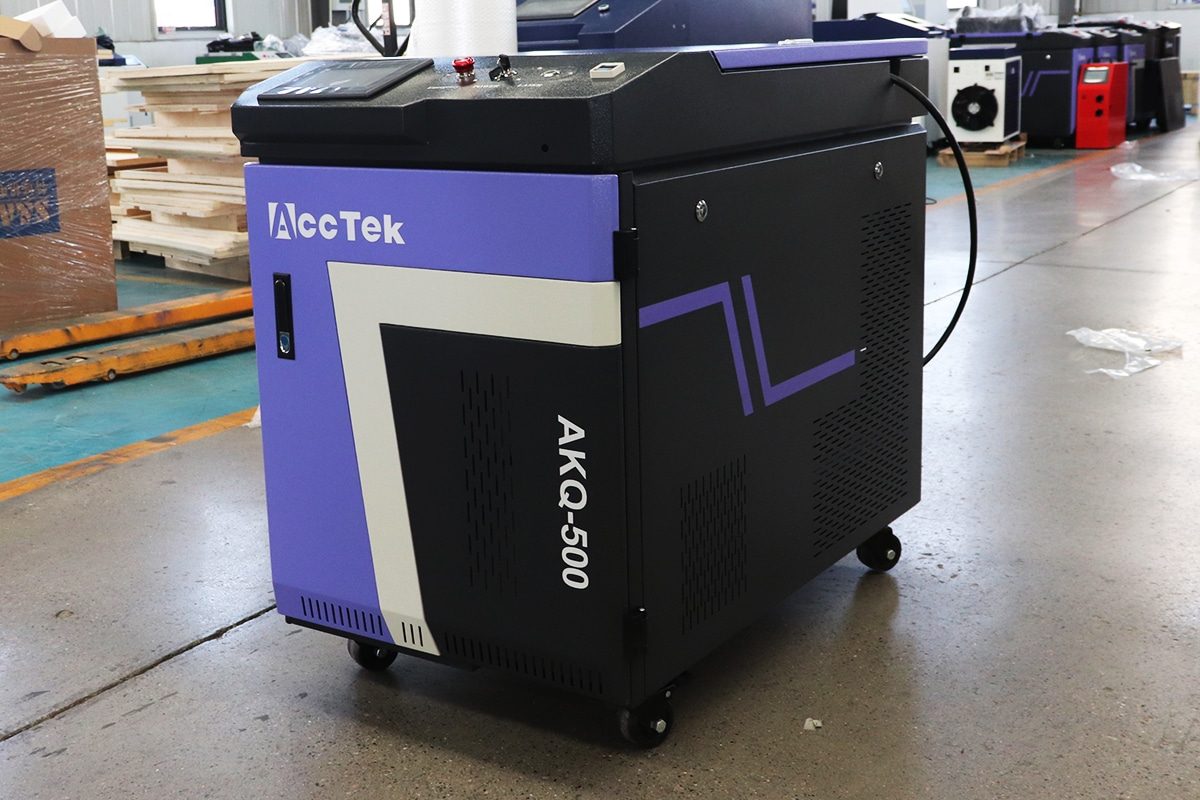
AccTek Laser manufactures a range of industrial laser cleaning machines, including both pulsed and continuous wave configurations, engineered with protective optics and air assist systems designed to support strong consumable service life under demanding industrial operating conditions. Its cleaning head designs prioritize accessible, quick-change protective lens assemblies that minimize downtime during routine replacement, while focusing lens and nozzle components are engineered for durability across the typical duty cycles encountered in rust removal, paint stripping, weld pre-cleaning, and surface preparation applications.
Customers evaluating laser cleaning equipment can discuss their specific contamination types, expected daily duty cycle, and ambient work environment conditions to receive guidance on realistic consumable replacement intervals and recommended maintenance practices for their particular application, along with full pre-sales consultation, installation support, operator training on proper lens and nozzle maintenance procedures, and ongoing access to genuine replacement parts and responsive after-sales technical support throughout the equipment’s working life.

Informações de contato
- [email protected]
- [email protected]
- +86-19963414011
- No. 3 Zona A, Zona Industrial de Lunzhen, Cidade de Yucheng, Província de Shandong.
Obtenha soluções a laser