

















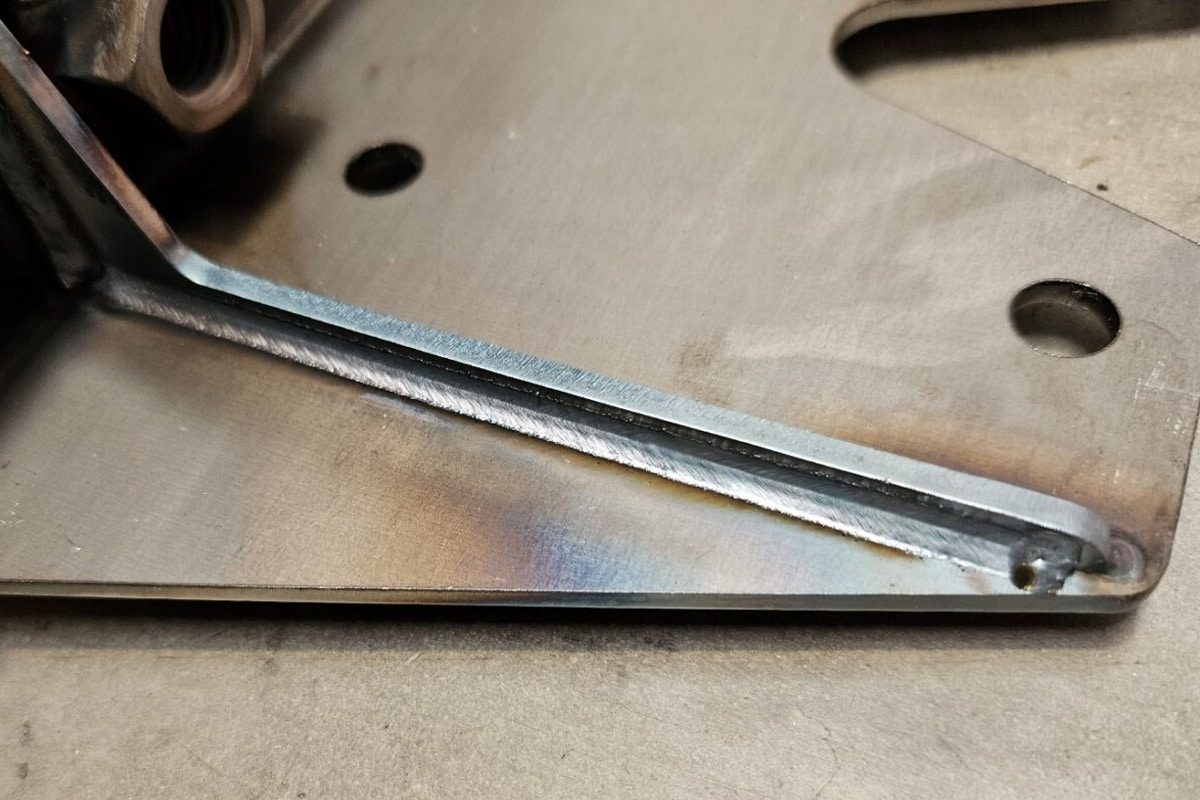
Which Materials Can Be Welded Using Fiber Lasers?
Fiber laser welding has seen rapid adoption over the past decade. The global laser welding market reached $2.9 billion in 2025 and is projected to grow to $4.2 billion by 2034, with fiber laser generators accounting for 48.6% of the market share. The logic behind this is simple: fiber lasers are more efficient, have lower maintenance costs, and can weld a wider range of materials than traditional CO2 lasers.
Many people’s first question before trying fiber laser welding is, “What materials can this machine weld?” This article will clarify common metal materials one by one—which materials have good welding performance, which are challenging but have solutions, whether dissimilar metals can be welded, and how to handle problems encountered.
İçindekiler
The Basic Principle of Fiber Laser Welding
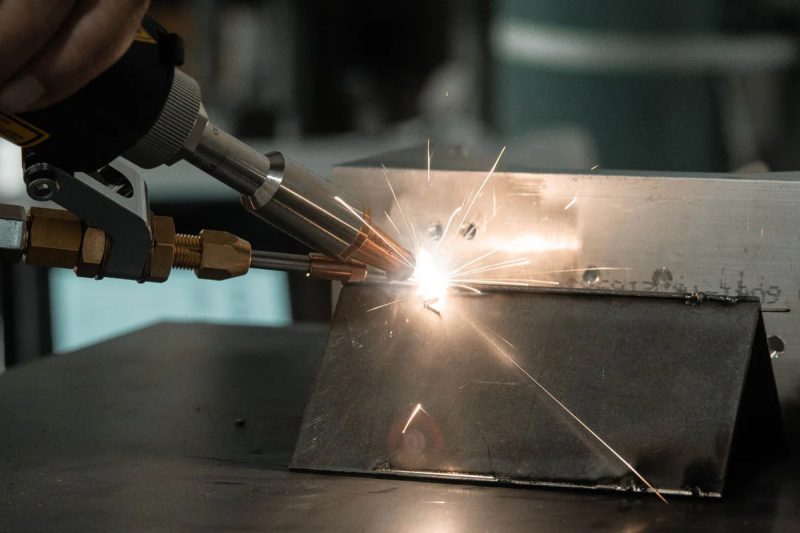
The working principle of a fiber laser generator is to transmit laser energy through an optical fiber and focus it onto the workpiece surface to create a high energy density. This energy can melt the metal in a very short time, and after cooling, a weld is formed.
Compared to traditional methods such as TIG welding and MIG welding, fiber laser welding has a smaller heat-affected zone (HAZ), less post-weld deformation, higher precision, and faster speed. Current fiber laser welding equipment ranges in power from 800W handheld devices to 20kW industrial automation systems, covering various scenarios from precision parts to heavy-duty plate welding.
The wavelength of fiber lasers is typically around 1064nm. This wavelength exhibits better penetration and absorption rates for most metals than CO2 lasers (10.6μm), which is a key reason why it has become a mainstream industrial welding technology.
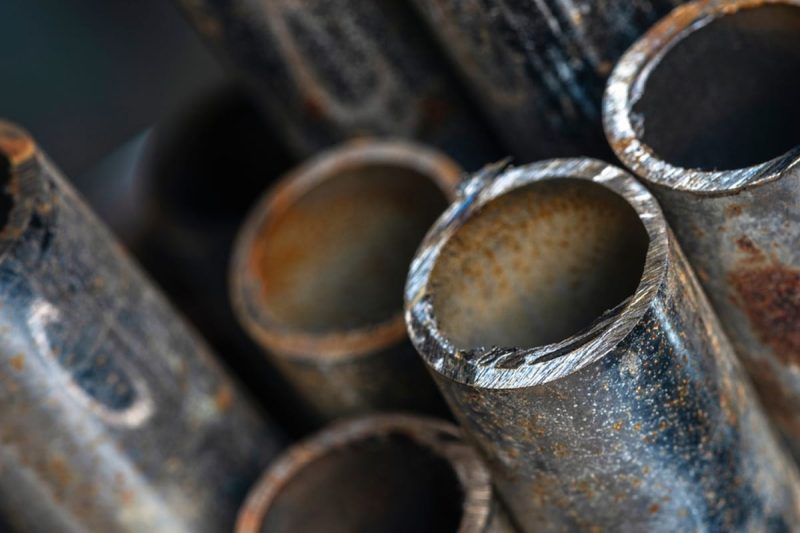
Welding Properties of Common Metals
Paslanmaz çelik
Stainless steel is one of the most widely used materials for fiber laser welding and is also one of the easiest to handle.
Stainless steel has an absorption rate of approximately 30-40% for 1064nm wavelength lasers, resulting in stable welding performance. The weld strength of austenitic stainless steel (304, 316) can reach 90-100% of the base material, with no significant impact on corrosion resistance. In terms of welding speed, fiber lasers can reach 3-8 meters per minute, far exceeding traditional TIG welding.
For ultra-thin stainless steel (thickness less than 0.2mm), the advantages of fiber lasers are even more pronounced. By optimizing power, speed, and frequency parameters, defect-free welding can be achieved, and residual stress can be controlled at a low level. Welding duplex and martensitic stainless steels is slightly more difficult, requiring more precise parameter control, but they remain irreplaceable in high-strength applications such as oil and gas and marine engineering.
Main Application Scenarios: Kitchen equipment (sinks, countertops, cookware), medical devices (surgical instruments, implants), automotive exhaust systems, chemical equipment pipelines, food processing equipment.
Karbon çelik
Karbon çelik is the most common engineering material, and the process of welding carbon steel with fiber lazer kaynak makineleri is very mature, with a wide process window and a low probability of problems.
Low-carbon steel (carbon content below 0.25%) has excellent weldability, requires almost no preheating, and produces a fine weld structure with high strength. A 1mm thick carbon steel plate can be welded at a speed of 4-6 meters per minute using 1.5-2kW power, reducing energy consumption by 30-40% compared to traditional arc welding. Medium-carbon steel is prone to hardening during welding, requiring controlled cooling rates to achieve ideal weld performance.
Galvanized steel sheet welding is a representative detail in carbon steel welding: fiber laser welding can reduce zinc evaporation and porosity defects, which is difficult to achieve with traditional welding methods.
Main applications: automotive manufacturing (body frames, chassis, seat frames), building steel structures, pipe manufacturing, appliance housings, steel furniture, metal doors and windows.
Alüminyum ve Alüminyum Alaşımları
Aluminum alloys are the most challenging mainstream material for fiber laser welding, but also the fastest-growing area in terms of demand. The challenge stems from aluminum’s high reflectivity (90-95%) and high thermal conductivity, but modern equipment and processes can handle these challenges well.
6-series aluminum alloys (6061, 6082) are the most commonly welded grades. Using oscillation welding technology, weld strength can reach 290 MPa, with an elongation of 12.75%, approaching 94% of the base metal’s properties. 5-series aluminum alloys (5052, 5083) also exhibit good weldability, making them particularly suitable for shipbuilding and marine engineering. The heat-affected zone in fiber laser welding is only 1-3 mm, significantly reducing the softening problem commonly found in aluminum alloy welding.
Several mature solutions exist for addressing the high reflectivity of aluminum alloys: increasing laser power (high-power equipment of 10-20kW can ensure sufficient effective energy); using green (515-532nm) or blue (450nm) lasers, as aluminum’s absorption rate of green light can reach 40-60%; surface pretreatment (grinding, sandblasting, or chemical conversion treatment) can also effectively improve the absorption rate.
Main application scenarios: electric vehicle battery pack casings, aerospace (fuselage, wing skin, fuel tanks), rail transit vehicle bodies, ship superstructures, and radiator manufacturing.
Titanyum ve Titanyum Alaşımları
Titanium alloys are not inexpensive, but they have virtually no substitutes in high-end fields such as aerospace, medical, and chemical industries. Fiber laser welding of titanium alloys is of moderate difficulty; the key is to ensure a proper protective atmosphere.
Titanium alloys have a laser absorption rate of approximately 40-50%, resulting in good weldability. Ti-6Al-4V (TC4) is the most commonly used grade, achieving weld strength of 85-95% of the base metal. The high energy density of fiber lasers allows for fast welding speeds and a small heat-affected zone, reducing the risk of titanium oxidation at high temperatures. Welding pure titanium (Grades 1-4) is easier; with sufficient shielding gas, weld quality can meet X-ray inspection standards.
Key considerations for titanium alloy welding: Sufficient argon or helium protection is crucial. Not only should the molten pool surface be protected, but a drag shield should also be applied to the back side; otherwise, the weld will oxidize and discolor, affecting performance and appearance.
Main application scenarios: aircraft engine components (turbine blades, combustion chambers), medical implants (artificial joints, dental implants), chemical equipment (heat exchangers, reaction vessels), and sporting goods (golf balls, bicycle frames).
Bakır ve Bakır Alaşımları
Copper is widely recognized as the most difficult material to weld using fiber lasers. Its reflectivity exceeds 95%, and its thermal conductivity is 8-9 times that of steel. These two characteristics combined mean that most of the laser energy is reflected, and the remaining energy is rapidly conducted away, making it difficult to form a molten pool.
However, this situation has changed significantly in recent years. There are two approaches to copper welding: one is to use a new type of green laser (wavelength 515-532nm). Copper’s absorption rate of green light can reach 40-60%, which is 4-6 times that of traditional 1064nm infrared light, greatly improving welding results; the other is to use a high-power (10-20kW) traditional 1064nm fiber laser, relying on high power to “hard-break” the reflection barrier. A 20kW high-power laser generator launched in 2024 was specifically optimized for welding cast aluminum and copper.
Welding copper alloys (brass, bronze) is relatively easier. Their reflectivity and thermal conductivity are lower than pure copper, and fiber laser welding speeds can reach 2-4 meters per minute.
Main application scenarios: electric vehicle battery connection (welding of copper busbars to battery tabs), heat sinks and connectors in the electronics industry, busbars and switch contacts in the power industry, and copper pipes for air conditioning and refrigeration.
Pirinç
Brass (a copper-zinc alloy) has significantly better weldability than pure copper, making it an ideal material for fiber laser welding, and deserves special mention.
Brass has a laser absorption rate of approximately 20-30%, twice that of pure copper. It also has low thermal conductivity, preventing heat loss during welding. Common H62 and H68 brasses, when welded using fiber lasers, can achieve weld strengths of 80-90% of the base material.
The main concern when welding brass is zinc evaporation. Zinc preferentially vaporizes during laser heating, easily leading to porosity. Solutions include controlling heat input (reducing power or increasing speed) and using argon gas to protect the molten pool, effectively reducing porosity.
Main applications: plumbing fittings (faucets, valves), musical instrument manufacturing (saxophones, trumpets), decorative hardware (door handles, locks), electrical components (terminals, sockets), and cartridge manufacturing.
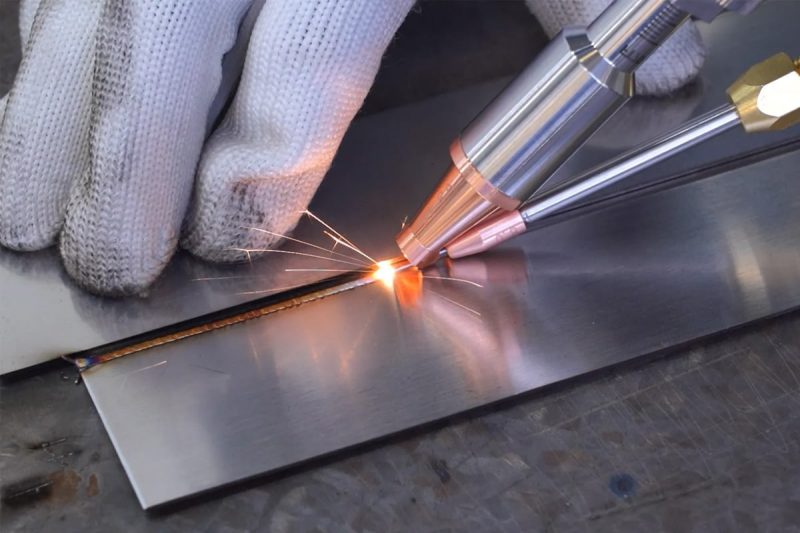
Welding of High-Performance Alloys
Inconel
Inconel is a nickel-chromium-based superalloy. Inconel 718 is the most widely used grade and can operate continuously at 650℃. Fiber laser welding of Inconel produces a fine weld microstructure with excellent high-temperature strength and creep resistance.
Oscillating welding is particularly effective for Inconel. Studies have shown that at an oscillation frequency of 150Hz, the grain size can be refined from 24.30μm to 5.87μm, increasing microhardness by more than 10%, which is difficult to achieve with traditional welding methods. The welding speed is 3-5 times faster than traditional TIG welding, and the heat-affected zone is narrow, avoiding the problems of sensitization and coarsening of precipitates.
Main applications: Aero engines (combustion chambers, turbine disks, guide vanes), rocket engines, high-temperature components of gas turbines, and nuclear reactor core components.
Hastelloy
Hastelloy is a nickel-molybdenum alloy, renowned for its extremely strong corrosion resistance. Hastelloy C-276 exhibits excellent resistance to strong acids, strong alkalis, and chlorides. Fiber laser welding of Hastelloy alloys eliminates the need for preheating; rapid cooling is actually beneficial to performance. The weld maintains high levels of resistance to pitting corrosion, crevice corrosion, and stress corrosion cracking. Uniform microstructure and undiminished corrosion resistance are crucial welding parameters for materials used in highly corrosive environments.
Main applications: Chemical equipment (reactors, distillation towers, heat exchangers), flue gas desulfurization absorption towers, pharmaceutical reactors, deep-sea pipelines in marine engineering, and nuclear waste treatment facilities.
Monel
Monel 400 contains 63% nickel and 28% copper, combining the corrosion resistance of nickel with the thermal conductivity of copper. Fiber laser welding of Monel can achieve weld strength of 90-95% of the base material, with good toughness and resistance to seawater corrosion.
Its welding performance is better than that of pure nickel and pure copper. High-quality welds can be obtained with argon protection, and post-weld heat treatment is unnecessary, saving costs.
Main applications: Ship propeller shafts and seawater pipelines, offshore oil platform pipelines and valves, chemical equipment (hydrofluoric acid and hydrochloric acid treatment equipment), seawater desalination plants.
Magnezyum Alaşımları
Magnesium alloys have a density only two-thirds that of aluminum, making them the lightest structural metal. With the continued growth in weight reduction demands in electric vehicles, electronics, and aerospace, the market for magnesium alloy laser welding is rapidly expanding.
Magnesium alloys have good laser absorption (approximately 30-40%), and commonly used grades such as AZ31 and AZ91 can achieve defect-free welding. The rapid heating and cooling of fiber lasers reduces the risk of magnesium oxidation and combustion, and the mechanical properties of the weld can reach 75-85% of the base material.
Main applications: automotive lightweighting (steering wheel frames, seat frames), electronic product housings (laptops, mobile phones, cameras), aerospace secondary load-bearing structures, and drone fuselages.
Kobalt Alaşımları
Cobalt alloys are renowned for their exceptional wear resistance and high-temperature performance. The Stellite series is the most commonly used cobalt-based alloy; after fiber laser welding, the weld hardness can reach HRC 40-55, exhibiting excellent wear resistance.
Cobalt alloys do not soften significantly during welding, possessing excellent oxidation resistance and thermal fatigue resistance, making them particularly effective for repairing or strengthening highly worn components.
Main Applications: Medical implants (artificial joints, dental implants), wear-resistant components for aero-engines (bearings, sealing rings), cutting tool reinforcement, and wear-resistant components for oil drilling tools.
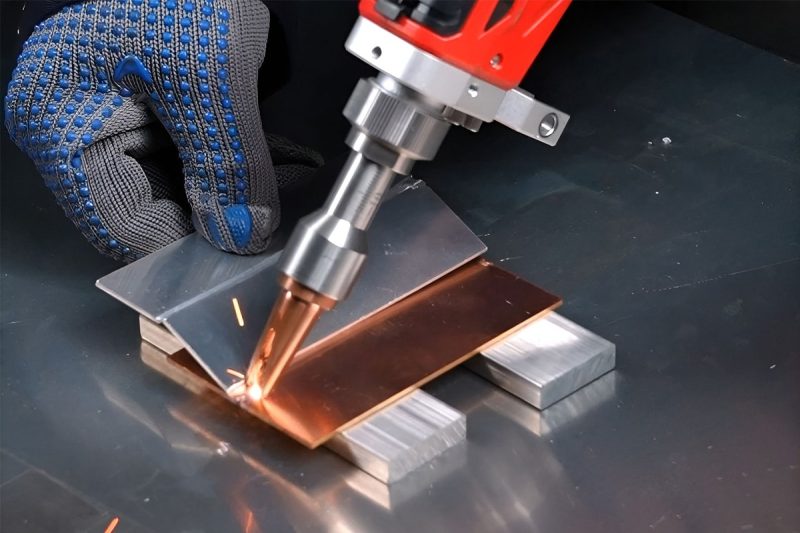
Dissimilar Metal Welding
Dissimilar metal welding is one of the most promising technologies in fiber laser welding, primarily driven by the demands for lightweighting and functional integration in electric vehicles and aerospace.
Steel and Aluminum
Steel-aluminum dissimilar metal joining is a typical application in automotive manufacturing. Steel has high strength, while aluminum is lightweight; combining the two ensures structural strength while reducing weight.
The core technology for welding steel and aluminum is “laser offset welding”: the laser spot is offset towards the steel side, melting the steel first to form a molten pool. The aluminum is then heated by the molten pool and melts, wetting the steel surface. This allows the thickness of the brittle intermetallic compound (Fe-Al) to be controlled within 5 micrometers, ensuring joint toughness. The joint strength can reach over 80% of the aluminum base material, meeting the requirements of vehicle body structural components.
Currently, automakers such as Tesla and Mercedes-Benz are already using steel-aluminum laser welding in the battery packs of mass-produced vehicles. Besides automobiles, steel-aluminum joining in white goods and lightweighting in rail transit vehicles are also rapidly being adopted.
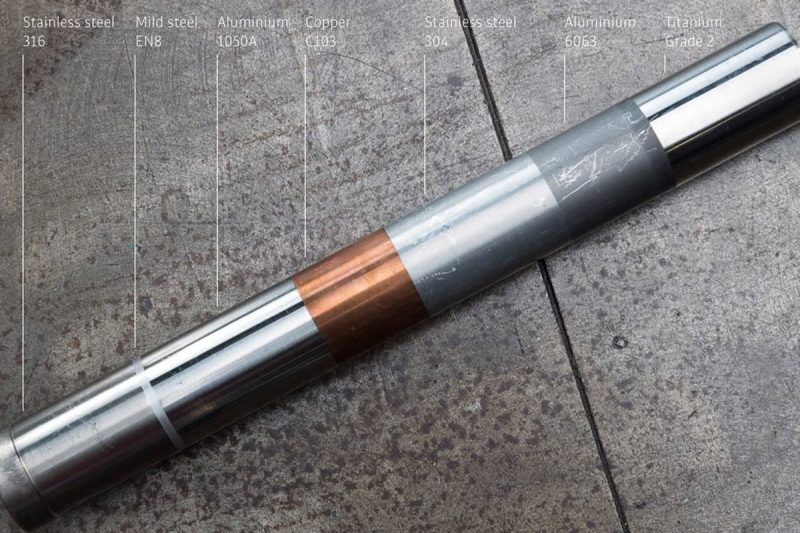
Titanium and Stainless Steel
Titanium boasts exceptional corrosion resistance but is expensive, while stainless steel offers better value but exhibits weaker corrosion resistance than titanium. Welding the two can achieve a complementary effect: titanium for critical components and stainless steel for others, significantly reducing overall cost.
The challenge in welding titanium and steel lies in the tendency for brittle phases (Ti-Fe) to form. The solution is to add niobium as an intermediate alloying element to suppress this formation. With proper parameter control, joint strength can reach 200-250 MPa, meeting the requirements of most chemical and medical applications.
Typical applications: connecting titanium linings to stainless steel shells in chemical equipment; connecting titanium tubes to stainless steel tube sheets in heat exchangers; and combination joints for medical implants (titanium alloy head + stainless steel shaft).
Common Challenges and Solutions in Fiber Laser Welding
After understanding the welding properties of materials, it’s also necessary to know what problems might be encountered in actual operation and how to deal with them.
Materials with High Reflectivity
Aluminum and copper have extremely high reflectivity to 1064nm lasers, resulting in significant energy waste, low welding efficiency, and the potential damage of optical components from reflected laser light.
Çözümler
- Using green (515-532nm) or blue (450nm) laser generators can increase the absorption rate of copper and aluminum materials by 4-6 times.
- Increasing laser power, using high power of 10kW or more to compensate for reflection losses.
- Surface pretreatment (grinding, sandblasting, chemical conversion treatment) to improve the absorption rate.
- Oscillating welding technology increases the interaction time between the laser and the material, indirectly improving energy utilization.
Materials with High Thermal Conductivity
Materials with high thermal conductivity, such as bakır Ve alüminyum, rapidly dissipate heat, making it difficult to form a stable molten pool. When welding dissimilar metals, heating two materials with large differences in thermal conductivity simultaneously makes temperature balance even more difficult to control.
Çözümler
- Increase welding speed to reduce heat diffusion time (modern fiber lasers combined with high-speed scanning galvanometers can achieve welding speeds of over 10 meters per minute).
- Properly preheat the workpiece to reduce heat loss during welding.
- Use laser deflection technology for dissimilar metal welding, directing the laser spot towards the side with lower thermal conductivity.
Gözeneklilik ve Çatlaklar
Porosity is the most common defect in laser welding. Hydrogen porosity in aluminum alloys, oxygen porosity in copper, and magnesium vapor porosity in magnesium alloys are all issues that require careful control. Hot cracking also prone to occur in high-alloy steels, aluminum alloys, and nickel-based alloys.
Çözümler
- Thoroughly clean the material surface (remove oil, moisture, and rust).
- Sufficient shielding gas flow rate (argon or helium, 10-20 L/min), high purity (above 99.99%).
- Optimize welding parameters: appropriately reduce power, increase speed, and shorten the molten pool time to prevent gas from escaping.
- Allow gas bubbles to escape during the pulse welding interval.
- Prevent hot cracking: control chemical composition (reduce carbon, sulfur, and phosphorus content); preheat high-carbon steel to 200-300℃ before welding and slow cool after welding.
Insufficient Alignment Accuracy
Laser welding spot diameter is typically only 0.2-0.8mm; a deviation of 0.5mm can lead to weld misalignment or incomplete welding. Assembly errors, thermal deformation, and fixture deviations all affect accuracy, with the cumulative error problem being more pronounced in long welds.
Çözümler
- Visual tracking system (CCD camera monitors weld position in real time, automatically adjusts, accuracy ±0.1mm)
- The laser rangefinder sensor detects the workpiece height and automatically adjusts focus
- Use precision fixtures to control assembly gaps within 0.1-0.2mm
- Maintain repeatability accuracy of the robot or CNC platform within ±0.05mm
- Oscillating welding increases the tolerance range (larger spot coverage, small deviations do not affect weld quality)
Isıdan Etkilenen Bölge (HAZ) Sorunları
Although the HAZ is smaller than in conventional welding, it still has a significant impact on some materials: aluminum alloys experience HAZ softening, resulting in a 30-40% reduction in strength; high-strength steels may harden and become brittle in the HAZ; and stainless steel may experience intergranular corrosion sensitization.
Çözümler
- Reducing line energy (power/speed ratio) is the most effective method.
- Pulsed welding makes it easier to control line energy than continuous welding.
- Single-mode fiber lasers offer high beam quality, allowing for sufficient penetration with lower power and reducing heat input.
- Post-weld heat treatment: Resolution and aging can restore properties in aluminum alloys; tempering can improve HAZ microstructure in steel.
- Oscillating welding can narrow the HAZ and create a more uniform microstructure.
Surface Contamination
Oil, oxide layers, dust, and moisture all affect weld quality. The melting point of alumina on the aluminum surface exceeds 2000℃, far higher than aluminum’s own 660℃, and must be removed before welding.
Çözümler
- Establish a standard cleaning process: Solvent wiping or acid pickling to remove grease → Wire brush or sandpaper polishing to remove oxide layer → Final wiping with anhydrous ethanol
- Aluminum can be treated with chemical conversion (phosphate treatment) to remove the oxide layer. Weld as soon as possible after treatment to avoid re-oxidation.
- Laser cleaning is an emerging solution: using a laser to scan the surface instantly vaporizes contaminants, resulting in thorough cleaning and environmental friendliness, suitable for mass production.
- The working environment must control dust and oil mist. Workpieces should be stored in a moisture-proof and rust-proof environment. Operators must wear clean gloves.
Welding Parameter Reference for Different Materials
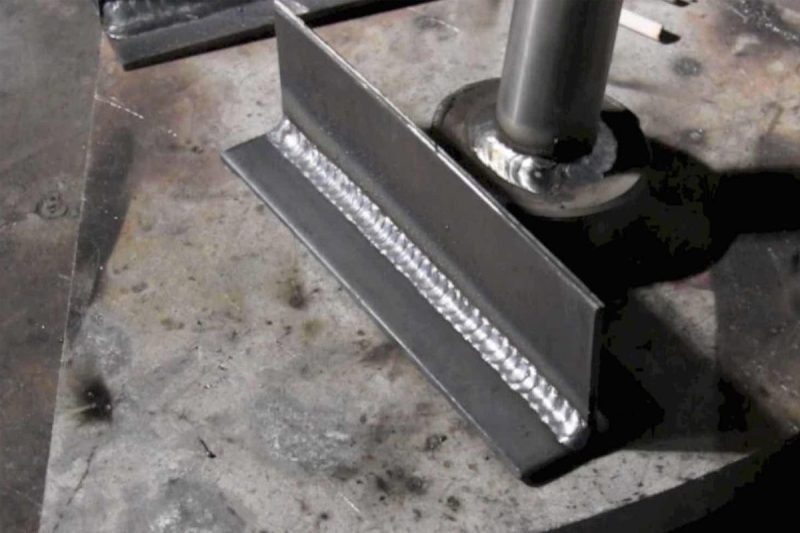
The following are approximate welding parameter ranges for common materials. In actual applications, adjustments need to be made based on specific equipment, joint type, and quality requirements.
304 Stainless Steel (1mm thick)
- Power: 1-1.5kW
- Speed: 3-6m/min
- Shielding Gas: Argon, 10-15L/min
Aluminum Alloy 6061 (2mm thick)
- Power: 2-3kW
- Speed: 3-5m/min
- Shielding Gas: Argon, 15-20L/min
- Recommended: Oscillating welding, frequency 100-150Hz
Carbon Steel Q235 (2mm thick)
- Power: 1.5-2kW
- Speed: 4-6m/min
- Shielding Gas: Argon or mixed gas, 1 0-15L/min
Titanium Alloy Ti-6Al-4V (1.5mm thick)
- Power: 1-1.5kW
- Speed: 2-4m/min
- Shielding Gas: Argon, double protection on both sides, total 20-30L/min
Pure Copper (1mm thick)
- Power: 5-10kW (using 1064nm) or 2-3kW (using green light)
- Speed: 1-3m/min
- Shielding Gas: Argon, 20L/min
It is important to note that these parameters are only a starting point for reference, not a standard answer. The actual output power, beam quality, and focal point position vary for each device. Furthermore, differences in joint type, material batch, and surface condition mean that actual welding requires process testing on small test pieces before applying to final workpieces.
Material Compatibility Considerations When Choosing Fiber Laser Welding Equipment
If you are purchasing fiber laser welding equipment for a specific material, several dimensions deserve your attention.
- Laser Power: High-reflectivity materials such as aluminum alloys and copper require higher power. Generally, at least 2kW is recommended for welding aluminum alloys, 6kW or more for copper, and 10kW or higher for thick, highly reflective materials. Stainless steel and carbon steel are relatively power-efficient; 1-3kW can cover most thin-plate welding needs.
- Laser Wavelength: 1064nm is suitable for most metals; if primarily welding copper or aluminum, green (515-532nm) or blue (450nm) lasers are more efficient. Although the equipment is more expensive, it is a worthwhile investment in the long run for mass production.
- Oscillating Function: When welding aluminum alloys, nickel-based alloys, and dissimilar metals, the oscillating welding function can significantly improve weld quality and microstructure, and is recommended as a standard requirement.
- Shielding Gas System: Titanium alloy welding has extremely high requirements for shielding gas; it is necessary to confirm that the equipment supports front + back double shielding, and the gas flow rate and purity must be guaranteed.
- Cooling system: High-power equipment (above 5kW) must be equipped with an industrial water chiller. The cooling capacity must be matched with the laser power. The quality of the water chiller directly affects the stability of the equipment and the lifespan of the laser generator.
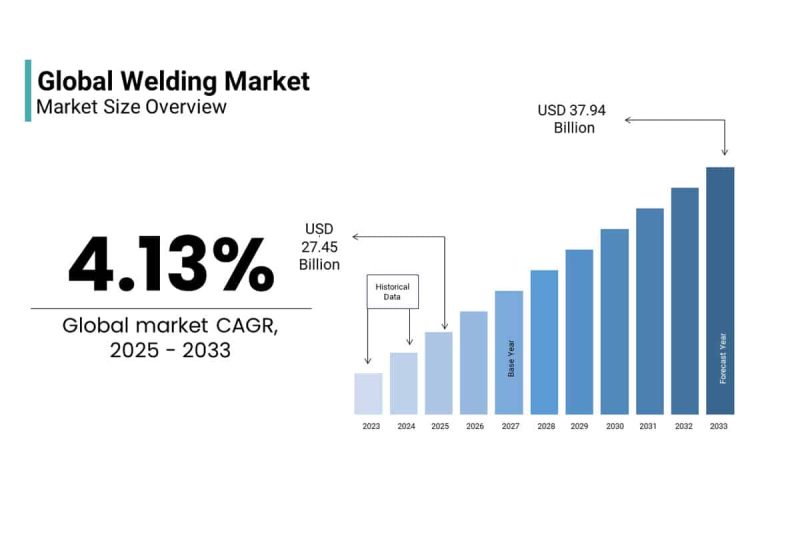
Market Trends and Applications
Market data from recent years shows particularly strong demand growth in several areas:
- Electric Vehicles (EVs): This is currently the largest growth market for fiber laser welding. International Energy Agency data shows that global EV sales exceeded 14 million units in 2024. Battery pack assembly (aluminum shell welding, tab welding), motor stator welding, copper-aluminum connections—each EV contains hundreds of laser welds, making the market size immense.
- Aerospace: The demand for lightweighting is driving continued growth in the welding of titanium alloys, aluminum alloys, and nickel-based alloys. Dissimilar metal welding is also increasingly appearing in aerospace structures.
- New Energy Equipment: Energy storage systems, photovoltaic brackets, and wind power equipment all involve significant demand for aluminum alloy and stainless steel welding.
- Medical Devices: Precision welding of stainless steel, titanium alloys, and cobalt-chromium alloys continues to grow in the manufacture of surgical instruments and implants. Regulatory requirements for welding quality are also increasing, making the precision advantages of laser welding even more prominent.
Southeast Asia and India, as regions with rapid manufacturing growth, are also experiencing accelerated demand for fiber laser welding equipment. This is a significant market change in the past two to three years.
Özet
Among conventional metals, stainless steel and carbon steel have the best welding performance, the most mature processes, and the most widespread applications. Although aluminum alloys have high reflectivity, high-quality welds can now be achieved using high-power equipment and oscillating welding, making it one of the fastest-growing welding materials. Copper was once the most difficult material to weld, but the widespread adoption of green and blue lasers is changing this situation. Titanium alloys have good welding performance; the key is to ensure a proper protective atmosphere.
Regarding high-performance alloys, nickel-based alloys such as Inconel, Hastelloy, and Monel exhibit excellent performance after fiber laser welding, and oscillating welding can further refine grains and improve mechanical properties. Magnesium alloys and cobalt alloys have irreplaceable value in their respective niche markets.
Dissimilar metal welding is at the forefront of this technology. Steel-aluminum welding has been commercialized in electric vehicles, and titanium-steel welding continues to advance in chemical and medical equipment; market demand for these applications will continue to grow.
Challenges encountered—high reflectivity, high thermal conductivity, porosity, cracks, alignment accuracy, and surface contamination—all have corresponding solutions. No material is “unweldable”; some materials simply require more suitable process parameters, better equipment configurations, and stricter operating procedures.
If you are considering using fiber laser welding to process a specific material or have questions about material compatibility when purchasing equipment, please contact AccTek Lazer. We will provide tailored advice based on the actual material and application scenario, which is often more valuable than general parameter tables.

İletişim bilgileri
- [email protected]
- [email protected]
- +86-19963414011
- 3 Bölge A, Lunzhen Sanayi Bölgesi, Yucheng Şehri, Shandong Eyaleti.
Lazer Çözümleri Alın