















Key Factors Influencing the Price of Laser Cleaning Machines
Laser cleaning has rapidly moved from a niche scientific technique to a mainstream industrial process, and for good reason. By directing a focused, high-energy beam from a laser generator onto a contaminated surface, the technology can remove rust, paint, oxides, grease, coatings, and a wide range of other contaminants with a speed, precision, and environmental cleanliness that traditional methods — sandblasting, chemical stripping, mechanical abrasion — simply cannot match. The process is non-contact, generates no secondary waste streams requiring hazardous disposal, leaves the substrate intact, and can be automated for high-volume production environments. Industries from automotive manufacturing and aerospace maintenance to cultural heritage restoration and semiconductor fabrication have adopted laser cleaning as a preferred surface treatment solution.
Yet for any business evaluating laser cleaning for the first time, one of the first and most pressing questions is also the most practically important: how much does it actually cost? The answer is not a single number. Laser cleaning machines span an extraordinarily wide price range — from portable, handheld units costing a few thousand dollars to fully automated industrial systems that can exceed one hundred thousand dollars or more. The variation is not arbitrary; it reflects real and meaningful differences in laser generator power, cleaning mode, mechanical configuration, degree of automation, software sophistication, build quality, and the scope of after-sales support included with the purchase.
Understanding this cost landscape — and the factors that drive it — is essential for making a purchasing decision that genuinely serves the operational and financial needs of the business. Buying too few machines for the application results in poor cleaning performance, excessive cycle times, and premature component wear. Buying more machines than the application requires means capital tied up in unused capability and ongoing energy and maintenance costs that erode the return on investment.
This article provides a structured, comprehensive guide to laser cleaning machine pricing. It begins with a concise explanation of the technology and its applications, moves through a price segmentation by machine tier and configuration, examines in detail the factors that drive cost differences within and across those tiers, identifies the hidden and ongoing costs that are often overlooked in initial budgeting, and concludes with practical guidance on how to select the right machine for a given application and budget. The goal is to equip readers with the knowledge needed to evaluate laser cleaning investments clearly, ask the right questions of suppliers, and make decisions that deliver long-term value.
Table of Contents
Understanding Laser Cleaning Technology
Before examining cost, it is worth establishing a clear and shared understanding of what laser cleaning is, how it works at a physical level, what types of machines implement it, and where it is most valuably applied. This foundation prevents the common mistake of selecting a machine based on headline specifications rather than genuine application fit — a mistake that is both expensive and frustrating to correct after the fact.
What Is Laser Cleaning and How Does It Work?
Laser cleaning is a surface treatment process in which a laser generator produces a high-intensity beam that is directed at a contaminated surface. When the beam strikes the surface, the contaminant layer — whether rust, paint, oxide scale, grease, or other residue — absorbs the laser energy and undergoes rapid thermal expansion, ablation, or vaporization. Because the contaminant layer and the underlying substrate have different optical and thermal properties, the laser energy can be tuned so that the contaminant is selectively removed while the substrate beneath is left undamaged or minimally affected.
The physical removal mechanism depends on the contaminant type, laser parameters, and cleaning mode. In ablative cleaning, the contaminant vaporizes or sublimates directly upon absorbing laser energy. In spallation cleaning, the rapid thermal expansion of the contaminant creates mechanical stress at the contaminant-substrate interface, causing the contaminant to detach and be ejected. In both cases, an extraction system captures the resulting fumes, particles, and vapor to protect operator health and maintain a clean working environment.
The laser generator at the heart of the system — most commonly a fiber laser generator operating at a wavelength of approximately 1,064 nm in modern industrial machines — determines the available power, pulse characteristics, and beam quality. These parameters, together with the scan head optics that distribute the beam across the cleaning area, define the achievable cleaning speed, selectivity, and surface finish quality. The result is a highly controllable, repeatable, and documentable cleaning process that can be adapted through parameter adjustment to handle an enormous range of contaminant-substrate combinations. Unlike sandblasting, which generates large volumes of contaminated abrasive waste requiring disposal, or chemical stripping, which involves hazardous reagents and wastewater treatment, laser cleaning produces only the vaporized contaminant itself — captured by an extraction system — making it one of the most environmentally benign industrial cleaning methods available. The absence of consumable media, chemicals, or contact forces also means that laser cleaning cannot introduce secondary contamination into the workpiece, a property of particular value in precision manufacturing and food processing equipment maintenance.
Types of Laser Cleaning Machines
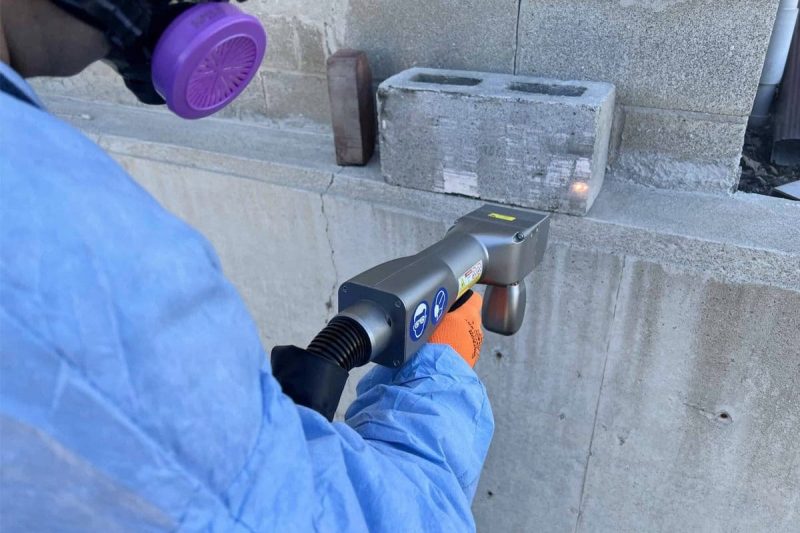
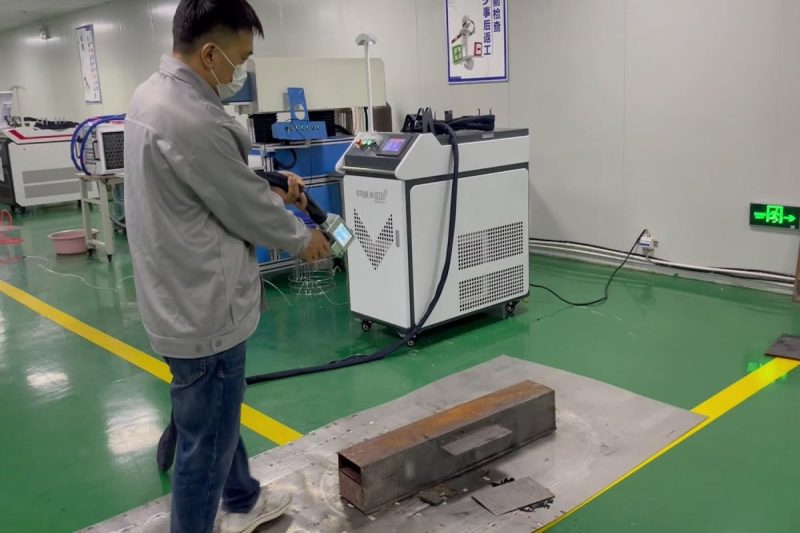
Laser cleaning machines are manufactured in several distinct form factors, each designed to address different operational requirements. Handheld laser cleaning machines are compact, operator-directed units in which a handheld gun delivers the laser beam to the surface. They offer maximum flexibility for field work, irregular surfaces, and large or immovable workpieces, and are available in both continuous-wave and pulsed configurations. Portable laser cleaning systems expand on this concept with a compact cart-mounted chassis that integrates the laser generator, cooling system, and control electronics into a self-contained unit that can be moved between workstations or job sites. Stationary or cabinet-style laser cleaning machines fix the laser generator and beam delivery system in place, typically processing workpieces on a conveyor or indexing table; these systems are better suited to repetitive production-line cleaning of consistent part geometries. Fully automated laser cleaning systems integrate the laser cleaning head with robotic arms, CNC gantries, or conveyor systems and are designed for high-throughput, unmanned production environments.
Common Application Areas and Industries
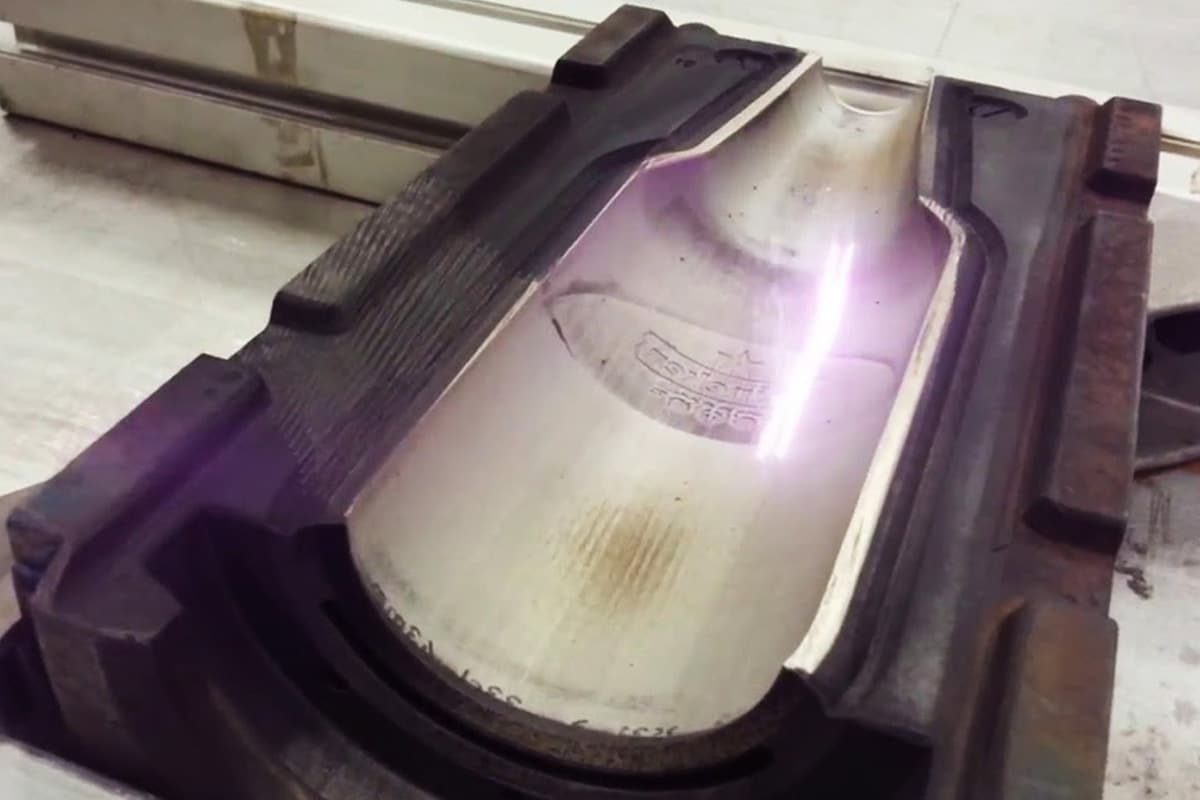
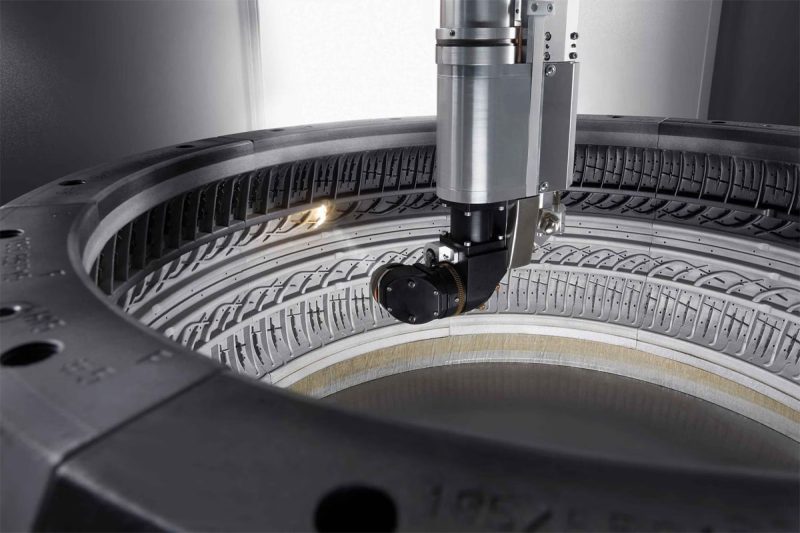
The applications of laser cleaning span a remarkable breadth of industries and use cases. In metal fabrication and manufacturing, laser cleaning removes rust, mill scale, and surface oxides from steel and aluminum components before welding, coating, or bonding — ensuring bond integrity and coating adhesion without introducing abrasive contamination. In the automotive industry, it is used to clean engine components, molds, and body panels, and to prepare surfaces for painting or assembly. In aerospace, laser cleaning removes coatings, corrosion products, and surface oxides from aircraft structural components and engine parts without affecting critical dimensional tolerances. The electronics and semiconductor industries use laser cleaning for precision removal of contamination from circuit boards, connectors, and sensitive components. In cultural heritage conservation, laser cleaning reveals the original surfaces of stonework, paintings, and metallic artifacts by gently removing centuries of accumulated grime and corrosion products. Industrial mold cleaning — removing buildup from injection molds, rubber molds, and tire molds without disassembly — is another high-value application where laser cleaning dramatically reduces downtime compared to conventional methods.
Laser cleaning is a non-contact, highly selective surface treatment technology in which a laser generator delivers concentrated energy to ablate or detach contaminants from a substrate. Available in handheld, portable, stationary, and fully automated configurations, it serves a wide range of industries and applications. Understanding the technology’s operating principles and form factor options is the essential first step in evaluating which machine type and price tier is genuinely appropriate for a given application.
How Much Does a Laser Cleaning Machine Cost?
Laser cleaning machine prices vary enormously across the market, reflecting genuine differences in capability, build quality, and intended application. This section provides a realistic price segmentation across three tiers — entry-level and portable systems, mid-range machines, and high-power industrial systems — with reference price ranges derived from current market data. These figures should be treated as orientation guides rather than definitive quotes; actual pricing will vary by supplier, configuration, geographic market, and any customization requirements.
Entry-Level / Portable Laser Cleaning Machines
Entry-level and portable laser cleaning machines are typically continuous-wave fiber laser systems in the 100 W to 500 W power range, packaged in a compact, cart-mounted, or backpack-style chassis for maximum portability. These machines are designed for tasks that prioritize flexibility and accessibility over cleaning speed: field rust removal from vehicles, machinery, and structural steelwork; surface preparation in repair and maintenance environments; cleaning in locations where large stationary systems cannot operate; and lower-volume production cleaning where cycle time is less critical than capital cost.
In terms of pricing, basic continuous-wave handheld and portable systems with laser generator outputs of 100 W to 500 W generally range from approximately $3,000 to $15,000. At the lower end of this range, machines typically offer straightforward on/off control, basic scanning optics, and air cooling. Moving toward $10,000 to $15,000, buyers can expect better beam quality, a wider cleaning swath, more adjustable parameters, improved ergonomics for extended handheld use, and, in some cases, integrated fume extraction. Pulsed laser cleaning machines in the 100 W to 500 W range are priced higher than their continuous-wave counterparts — typically $14,000 to $20,000 for a 500 W pulsed system — because pulsed laser generators require more complex resonator designs and timing electronics to produce controlled bursts of high peak power, which provides superior cleaning selectivity on delicate substrates.
Entry-level machines are the appropriate starting point for businesses new to laser cleaning, service companies doing field work, and applications where portability is genuinely required. Their limitations — lower cleaning throughput, restricted power for heavy contamination, and reduced duty cycle capability — become apparent when the workload grows or the contamination type demands higher peak power.
Mid-Range Laser Cleaning Machines
Mid-range laser cleaning machines occupy the power band from approximately 1,000 W to 2,000 W and represent the most commercially active segment of the market. At these power levels, cleaning throughput is high enough to support meaningful production applications, while the machines remain compact enough for flexible deployment in a variety of facility configurations. Both continuous-wave and pulsed variants are available at these power levels, serving different application profiles: continuous-wave systems are preferred for high-speed bulk cleaning of metals where selectivity is less critical; pulsed systems are used where more controlled removal is needed to protect sensitive surfaces or achieve cleaner surface profiles.
Continuous-wave fiber laser cleaning machines in the 1,500 W to 2,000 W range are typically priced between $4,000 and $6,000, making them one of the most cost-effective options per watt of cleaning power in the market. These machines are widely used for production-line rust removal, weld seam cleaning, and pre-treatment of steel components. Pulsed systems at comparable power levels carry significantly higher price tags due to their laser generator complexity: a 1,000 W pulsed laser cleaning machine typically ranges from $25,000 to $30,000, and a 1,500 W pulsed system from $30,000 to $40,000, while a 2,000 W pulsed unit generally falls in the $40,000 to $50,000 range. The premium over continuous-wave machines reflects the advanced pulse-shaping electronics, higher-precision optical components, and the inherently more complex design of a high-peak-power pulsed laser generator.
Mid-range machines are the standard choice for metal fabrication shops, automotive component suppliers, and contract cleaning operations where a balance of cleaning performance, operational flexibility, and capital cost is the primary decision criterion.
High-Power / Industrial-Grade Laser Cleaning Machines
High-power industrial laser cleaning machines, starting at approximately 3,000 W and extending to 6,000 W and beyond, are designed for the most demanding production environments: continuous high-throughput cleaning of heavily contaminated surfaces, cleaning of thick corrosion layers or industrial coatings in a single pass, and integration into fully automated production cells with robotic handling and conveyor systems. At these power levels, cleaning speeds, and surface coverage rates are dramatically higher than lower-power systems, reducing cycle times in ways that can justify the higher capital cost through labor savings and throughput gains.
A 6,000 W laser cleaning machine from a reputable manufacturer typically costs between $15,000 and $20,000 for the machine unit itself in continuous-wave configuration. Fully automated laser cleaning systems — incorporating robotic arms, CNC-controlled gantries, conveyor systems, and integrated fume extraction — start at approximately $40,000 for basic automated configurations and can exceed $150,000 for large-scale industrial systems with high power outputs, extensive custom integration, and advanced process monitoring. The wide range within this tier reflects the enormous variability in system complexity: a simple robotic cleaning cell for a single part type is a very different engineering and commercial proposition from a flexible, multi-axis automated system capable of handling a variety of component geometries in a high-mix production environment.
High-power and automated systems are the appropriate choice for automotive manufacturers, aerospace maintenance operations, shipyards, and any production environment where cleaning throughput, consistency, and labor reduction are prioritized over capital cost minimization.
Laser cleaning machine prices span from approximately $3,000 for basic entry-level portable systems to more than $150,000 for fully automated industrial installations. The continuous-wave versus pulsed distinction, power level, and degree of automation are the three most consequential price drivers across all tiers. Understanding where your application falls within this landscape — in terms of required cleaning throughput, contamination type, and operational environment — is the starting point for a rational budget allocation.
Key Factors Influencing Laser Cleaning Machine Prices
The price ranges described above are not arbitrary; they reflect the cost of producing machines with different technical capabilities and operational characteristics. This section examines the specific factors that cause price variation within and between machine tiers, giving buyers a framework for understanding why two machines with similar headline specifications may carry significantly different price tags.
Laser Generator Power and Type
The laser generator is the single most expensive and technically complex component in a laser cleaning machine, and its power rating and type are the primary determinants of both machine price and cleaning capability. Higher power laser generators — whether continuous-wave or pulsed — require more powerful pump diode arrays, larger gain fiber or resonator elements, more robust beam delivery components, and more capable cooling systems, all of which add cost. The relationship between power and price is not perfectly linear; there are economies of scale at certain power levels and cost step-changes at others, as different engineering approaches are required to achieve higher outputs.
Beyond power level, the type of laser generator — continuous-wave fiber versus pulsed fiber — has a large impact on price at equivalent power ratings. Pulsed laser generators must produce very high peak power values (often 10 to 100 times the average power) in precisely timed bursts, which requires sophisticated Q-switching or gain-switching electronics, tighter component tolerances, and more careful thermal management than a continuous-wave system of comparable average power. This additional complexity is reflected directly in the price premium that pulsed systems carry over continuous-wave systems at the same nominal wattage.
Cleaning Mode: Pulsed vs. Continuous Wave
Cleaning mode is closely related to laser generator type, but merits separate consideration because it directly determines the range of applications the machine can serve — and therefore its value proposition relative to its cost. Continuous-wave laser cleaning delivers a steady, uninterrupted beam, generating relatively high average power at the surface. This is efficient for rapid removal of heavy contamination from robust metallic substrates where selectivity — the ability to remove only the contaminant without affecting the substrate — is not a primary concern. Continuous-wave machines are generally less expensive than pulsed systems at equivalent power levels and offer high cleaning speeds on steel and other ferrous materials.
Pulsed laser cleaning delivers energy in discrete, high-peak-power bursts separated by periods of zero or very low emission. The high instantaneous power in each pulse drives efficient ablation and spallation of the contaminant while the off-time between pulses allows the substrate to dissipate absorbed heat, limiting thermal damage. This makes pulsed cleaning the preferred mode for sensitive substrates, delicate coatings, precision components, and applications where surface cleanliness level and substrate integrity are critical. The higher price of pulsed machines is justified in these applications by the quality and controllability of the cleaning outcome that continuous-wave systems cannot replicate.
Equipment Configuration and Portability
The physical configuration of the machine — whether it is a handheld gun, a portable cart-mounted unit, a stationary cabinet system, or a fully enclosed automated cell — significantly affects its price, independent of laser generator power. Portable configurations require engineering for compact size, low weight, ruggedized construction, and battery or single-phase power compatibility; these design requirements add cost relative to a stationary machine of equivalent laser generator power that can use a heavier chassis, three-phase power, and standard industrial construction. Stationary and cabinet-style systems require precise beam delivery alignment, industrial-grade motion systems, and safety enclosures with interlocks, adding their own cost components. Fully automated systems add robotic or CNC motion systems, programmable part fixturing, conveyor integration, and human-machine interface software, each of which contributes substantially to the final system price.
Degree of Automation
Automation level is one of the most impactful price variables in the laser cleaning machine market. A basic handheld system requires only the operator’s hand to direct the beam — no motion system beyond a manually operated scan head. A semi-automatic system might incorporate a motorized linear axis or rotary table that moves the workpiece under a fixed cleaning head, adding cost but reducing operator fatigue and improving cleaning consistency. A fully automatic system replaces operator direction entirely with a programmed motion system — typically a six-axis robot, a CNC gantry, or a combination — that traces the cleaning path autonomously. Each step up the automation ladder adds high cost, but also delivers measurable returns in throughput consistency, labor reduction, and the ability to run unattended during shifts.
Included Software and Control Systems
The sophistication of the control system and software platform embedded in the machine affects both its ease of use and its price. Basic machines offer simple parameter adjustment through a panel-mounted interface with a limited number of preset modes. More capable systems provide touchscreen HMI interfaces with programmable parameter profiles for different material-contaminant combinations, real-time process monitoring displays, data logging, and, in some cases, remote diagnostic connectivity. Machines designed for integration into Industry 4.0 production environments may include OPC-UA communication interfaces, MES connectivity, and API-accessible process data. These software capabilities add genuine operational value — reducing setup time, improving process repeatability, and enabling quality documentation — but they also add to the machine’s development and manufacturing cost, which is reflected in its price.
After-Sales Support and Warranty Services
The scope and quality of after-sales support included with a laser cleaning machine purchase is a factor that significantly differentiates suppliers and influences price, even when the hardware specifications appear similar. A machine sold with a comprehensive warranty — covering laser generator, optics, electronics, and motion system for one to three years — plus factory-trained application support, remote diagnostics capability, a local spare parts inventory, and guaranteed response time commitments represents a meaningfully different value proposition than a nominally identical machine sold with a minimal warranty and no structured support infrastructure. The cost of providing genuine, responsive after-sales support is built into the purchase price of reputable manufacturers, and buyers who prioritize the lowest upfront cost by selecting suppliers with limited support capability often find that the total cost of ownership — factoring in downtime, repair costs, and productivity loss — is higher than a better-supported machine would have been.
Brand Origin and Manufacturing Quality
The geographic origin and manufacturing quality philosophy of the machine’s producer are factors that buyers frequently encounter but do not always know how to evaluate objectively. Machines from established manufacturers with vertically integrated production — controlling the design and manufacture of the laser generator, optical components, and control electronics in-house rather than assembling from commodity components — tend to command higher prices but also deliver tighter performance specifications, more consistent quality from unit to unit, and better access to technical expertise when problems arise. Manufacturers who invest in international quality certifications — CE marking for the European market, FDA registration for the United States — demonstrate a commitment to systematic quality control that is meaningful beyond the certification itself. Country of manufacture affects cost structure, and machines of comparable specification produced in different countries may be priced very differently; when evaluating these differences, the quality of materials, the precision of assembly, and the rigor of pre-shipment testing matter as much as the headline specification comparison.
Laser cleaning machine prices are driven by a constellation of factors — laser generator power and type, cleaning mode, physical configuration, automation level, software sophistication, brand and manufacturing quality, and after-sales support scope — each of which adds genuine value and cost to the system. Evaluating machines on any one of these dimensions in isolation produces misleading comparisons; the price differences between machines reflect real differences in capability and total ownership value that must be understood in the context of the specific application requirements.
Hidden and Ongoing Costs to Consider
The purchase price of a laser cleaning machine is only one component of the total financial commitment it represents. Several categories of costs that are frequently overlooked or underestimated in initial budgeting have a material impact on the true cost of ownership over the machine’s operating life. Buyers who account for these costs from the outset make better purchasing decisions and experience fewer unpleasant financial surprises after commissioning.
Installation and Commissioning Fees
Laser cleaning machines — particularly stationary and automated systems — require professional installation and commissioning that is not always included in the quoted machine price. Installation involves positioning and leveling the machine, connecting electrical and cooling system services, routing fume extraction ducting, and verifying that all safety interlocks function correctly before the machine is put into service. Commissioning involves the supplier’s engineers configuring the machine parameters for the specific materials and contamination types the buyer intends to clean, running acceptance tests to verify that the machine meets its performance specifications, and handing over the system to the operator with appropriate documentation. For large automated systems, commissioning can take several days and may involve travel and accommodation costs for the supplier’s engineers. These costs should be explicitly discussed and budgeted during the procurement process, rather than treated as an afterthought.
Operator Training and Personnel Certification
Effective and safe operation of a laser cleaning machine requires trained personnel. Operators must understand laser safety principles — including the Class 4 hazard classification of industrial laser generators, the proper use of laser-rated eye protection, and the function and testing of safety interlocks — as well as the practical skills of parameter selection, scan head operation, and basic troubleshooting. In many jurisdictions, formal laser safety training and a designated Laser Safety Officer (LSO) are legal requirements rather than optional best practices. Manufacturers typically offer operator training as a service, either included in the purchase price or quoted separately; the cost varies with the duration and depth of the training program and whether it is conducted at the manufacturer’s facility or on-site. Personnel turnover means that training is not a one-time cost; new operators will require training as staff changes occur, and ongoing competency refreshers are good practice.
Maintenance and Consumable Costs
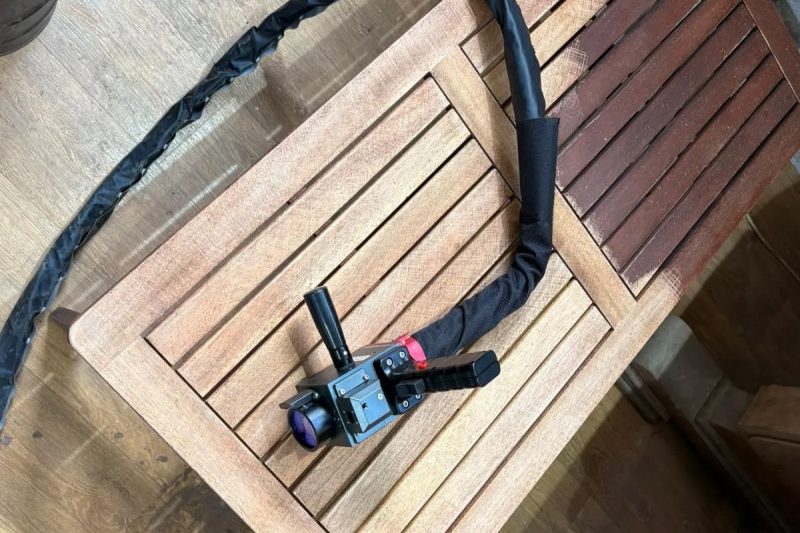
Laser cleaning machines have substantially lower consumable costs than abrasive blasting, chemical cleaning, or other traditional methods — there are no blasting media, chemical reagents, or large water volumes to purchase and dispose of. However, they are not maintenance-free. The optical components of the beam delivery system — the focusing lens, scan mirror, and protective window — require periodic inspection and replacement as they accumulate contamination or suffer surface damage from spatter and fumes. The protective window is the most frequently replaced optical component and represents a recurring consumable cost. Cooling system maintenance — coolant changes, filter replacement, and for chiller-cooled high-power systems, periodic refrigerant service — adds further ongoing cost. The laser generator itself requires periodic preventive maintenance, including checking beam quality, verifying cooling system performance, and inspecting fiber connections, with more comprehensive servicing at the intervals specified by the manufacturer.
Energy Consumption
The electrical energy consumed by a laser cleaning machine during production is a real and recurring operating cost that should be estimated realistically. A continuous-wave laser cleaning machine at 2,000 W laser generator output will draw significantly more total electrical power — accounting for wall-plug efficiency, cooling system load, and motion system consumption — than the laser generator’s output wattage alone suggests. As a practical reference, a 500 W pulsed laser cleaning machine consumes approximately 2.5 kW of electrical power during operation, including all system loads. Larger, high-power systems with water-cooled laser generators and automated motion systems may draw 15 kW or more in continuous operation. At industrial electricity rates, the annual energy cost of running a high-power laser cleaning machine on a single-shift, five-day-per-week schedule can amount to several thousand dollars, and should be included in total cost of ownership calculations.
Replacement Parts and Spares
Beyond routine consumables, laser cleaning machines require periodic replacement of components that wear over longer time scales. Scan head mirrors and galvanometer bearings, pump diode modules within the laser generator, cooling system pumps and filters, and electronic control components all have finite service lives that must be managed. For high-power laser generators, pump diode replacement — when the diodes approach their rated operating hours — is a significant cost event that should be anticipated in long-term budgeting. Maintaining a small inventory of the most critical spare parts on-site reduces downtime risk when a component fails unexpectedly; the cost of this inventory should be recognized as a capital commitment that is part of the total system investment.
The total cost of operating a laser cleaning machine over its useful life includes installation and commissioning, operator training, optical consumables, cooling system maintenance, energy consumption, and periodic replacement of wear components. These ongoing costs can easily amount to 10 to 20 percent of the machine’s purchase price per year, depending on duty cycle, power level, and maintenance practices. Building a realistic total cost of ownership model — rather than comparing machines on purchase price alone — is the foundation of a sound investment decision.
How to Choose the Right Laser Cleaning Machine for Your Budget
Armed with an understanding of the price landscape, the factors that drive it, and the full spectrum of ownership costs, buyers are in a position to make a rational, well-informed machine selection. This section provides a practical framework for that decision, covering application matching, total cost of ownership evaluation, the new versus refurbished question, and the questions that should be put to suppliers before any purchasing commitment is made.
Matching Equipment Specifications to Application Needs
The first and most important step in machine selection is a clear, honest definition of the application requirements. What contaminant types need to be removed — rust, paint, oxide, grease, a combination? What is the substrate — carbon steel, stainless steel, aluminum, a delicate alloy, or a non-metallic material? How thick and adherent is the contamination? What surface cleanliness standard must be achieved — a rough surface for subsequent coating, a pristine surface for precision bonding, or something in between? How large is the surface area to be cleaned per shift, and what cycle time is required to meet production targets? Is the workpiece fixed in place, or can it be positioned on a table or conveyor?
The answers to these questions determine the minimum required laser generator power, the appropriate cleaning mode (pulsed for sensitive substrates, continuous-wave for robust metal surfaces), the form factor needed (handheld for field work, stationary for production line), and the degree of automation justified by the production volume. Specifying the application in this level of detail before engaging with suppliers prevents the common outcome of selecting a machine based on what is available or affordable rather than what is genuinely fit for purpose.
Evaluating Total Cost of Ownership
Once a shortlist of technically suitable machines has been established, the selection among them should be based on total cost of ownership (TCO) over the expected operating life of the machine — typically five to ten years — rather than on purchase price alone. TCO encompasses the purchase price, installation and commissioning costs, annual energy cost at the expected duty cycle, annual consumables and maintenance costs, the amortized cost of periodic major component replacements (particularly laser generator pump diodes), and the cost of downtime attributable to reliability differences between machines. A machine that costs 20 percent more to purchase but consumes 15 percent less energy, requires less frequent optical replacement due to better protective window design, and benefits from faster and more knowledgeable technical support may well have a lower TCO over five years than a cheaper alternative — and will certainly be less frustrating to own and operate.
Buying New vs. Refurbished Equipment
The used and refurbished laser cleaning machine market offers entry points at significantly lower purchase prices than new equipment, which can be attractive for buyers with constrained capital budgets or uncertain application volumes. However, refurbished machines carry risks that new machines do not: uncertain remaining service life on the laser generator’s pump diodes, potential for hidden optical or electronic damage that is not apparent from visual inspection, limited or no warranty coverage, and, in many cases, no access to the original manufacturer’s technical support. Buyers considering refurbished machines should insist on a full technical inspection report covering laser generator output power measurement, beam quality assessment, and cooling system performance verification; negotiate meaningful warranty coverage as a condition of purchase; and verify that spare parts and technical support are available for the specific model and vintage being purchased. As a general guideline, refurbished machines are most justifiable for lower-power, simpler continuous-wave systems where pump diode hours are the primary remaining life variable and where optical and electronic complexity is limited. For high-power pulsed systems with sophisticated beam delivery optics and complex control electronics, the risk profile of refurbished equipment is significantly higher, and the economic case for new equipment correspondingly stronger.
Questions to Ask Suppliers Before Purchasing
Before committing to a laser cleaning machine purchase, buyers should ask a structured set of questions to prospective suppliers to evaluate both the machine and the supplier relationship they are entering. These should include: What is the exact laser generator power and type, and what independent performance data supports the specification? What cleaning speed — in square centimeters per minute — is achievable on the specific material and contamination type relevant to the application, and can this be demonstrated on representative samples? What is the warranty coverage, and what does it specifically include and exclude? What is the typical response time for technical support, and is remote diagnostics available? What training is included in the purchase price, and what additional training is available? What is the recommended preventive maintenance schedule, and what are the expected annual consumable costs? Are local spare parts available, or must they be imported? Can the machine be integrated with existing production systems, and what interface options are supported?
The quality and specificity of the supplier’s answers to these questions is itself a valuable signal about the reliability of the ongoing relationship. Suppliers who provide vague or evasive answers to straightforward technical questions are unlikely to provide the responsive, knowledgeable after-sales support that productive laser cleaning operations require.
Effective machine selection begins with a precise definition of application requirements, proceeds through a rigorous total cost of ownership comparison of technically suitable options, weighs the risk-adjusted economics of new versus refurbished equipment where relevant, and is completed by a structured supplier evaluation that tests both technical knowledge and service commitment. Buyers who follow this framework consistently make better decisions than those who lead with purchase price and work backward from budget.
Conclusion
This article has provided a comprehensive guide to the cost of laser cleaning machines — spanning the full price spectrum from entry-level portable systems to high-power automated industrial installations, the factors that drive those prices, the ongoing costs that shape the true economics of ownership, and the decision framework for selecting the right solution for a given application and budget.
The fundamental insight that runs through every section is that the cost of a laser cleaning machine is not a single number to be minimized, but a multidimensional investment to be optimized. Purchase price is only the most visible component of a cost structure that also includes installation and commissioning, operator training, optical consumables, cooling system maintenance, energy consumption, and periodic component replacement. Buyers who evaluate machines on purchase price alone — ignoring these ongoing cost components and the performance and support differences that drive them — reliably underperform those who invest the effort in a full total cost of ownership analysis.
The price landscape itself reflects real and meaningful differences in capability. Entry-level portable systems in the $3,000 to $15,000 range deliver valuable flexibility and a low barrier to entry for businesses exploring laser cleaning for the first time or serving field-based applications. Mid-range machines — continuous-wave systems at $4,000 to $6,000 for 1,500 W to 2,000 W units, and pulsed systems ranging from $25,000 to $50,000 depending on power and configuration — represent the workhorses of the industrial laser cleaning market, balancing performance and capital cost for the broadest range of production applications. High-power and automated systems, from $40,000 to well above $150,000, are justified where throughput, consistency, and labor reduction are the primary value drivers and where production volumes support the investment.
The factors that determine price within any given tier — laser generator power and type, cleaning mode, configuration, automation level, software, and after-sales support — each represent real engineering and commercial value that must be assessed against the specific demands of the application. The hidden costs that are often overlooked — installation, training, consumables, energy, and spares — can materially change the relative economics of competing machines and must be included in any honest comparison.
Ultimately, the right laser cleaning machine is not the cheapest one that meets the minimum specification — it is the one that delivers the required cleaning performance, at the required throughput, with the required reliability and support, at the lowest total cost of ownership over its operating life. With the framework provided in this article, buyers are equipped to define that machine precisely, evaluate it rigorously, and select it with confidence.
Get a Laser Cleaning Solution
Understanding laser cleaning machine costs and the factors that shape them is the essential foundation — but translating that knowledge into the right purchase requires access to a supplier with the product range, technical depth, and service commitment to support the decision from initial inquiry through to long-term productive operation.
AccTek Laser is a professional laser cleaning machine manufacturer with over a decade of experience serving industrial customers across a wide range of sectors and power requirements. Its product portfolio covers the full spectrum of laser cleaning configurations: handheld and portable continuous-wave fiber laser cleaning machines from 1,500 W to 6,000 W for flexible field and workshop applications; pulsed laser cleaning machines from 500 W to 2,000 W for precision cleaning of sensitive substrates and delicate coatings; and fully automated laser cleaning systems with robotic and CNC integration for high-throughput production environments. All machines are built around high-quality fiber laser generators from globally recognized brands, equipped with reliable cooling systems matched to each power level, and supported by CE and FDA certifications that confirm compliance with international safety and quality standards. Customization — in laser generator power, cooling configuration, cleaning width, automation options, and control interface — is available to match the machine precisely to the application requirements rather than forcing the application to fit a standard configuration. The service framework spans the full equipment lifecycle: pre-sales application consultation and machine selection guidance, professional installation and commissioning, comprehensive operator training, competitive spare parts supply, and responsive after-sales technical support, including remote diagnostics — providing the partnership needed to maximize the return on the laser cleaning investment over its full operating life.
For businesses ready to move from evaluation to action, the most productive next step is a direct conversation with an application engineer who can assess the specific cleaning requirements, recommend the appropriate machine configuration, and provide a detailed, application-specific quotation that makes the total cost picture clear from the outset.

Contact information
- [email protected]
- [email protected]
- +86-19963414011
- No. 3 Zone A, Lunzhen Industrial Zone,Yucheng City , Shandong Province.
Get Laser Solutions