













What Is a Laser Marking Machine Used For?
Walk through any modern manufacturing facility — whether it produces automotive components, medical implants, electronic circuit boards, or luxury watches — and you will encounter laser marking at almost every stage of the production and quality assurance process. Laser marking machines have become one of the most widely adopted identification and surface treatment technologies in industrial manufacturing, and their presence across such a broad range of sectors reflects a fundamental shift in how manufacturers approach the challenge of permanent, precise, and programmable marking.
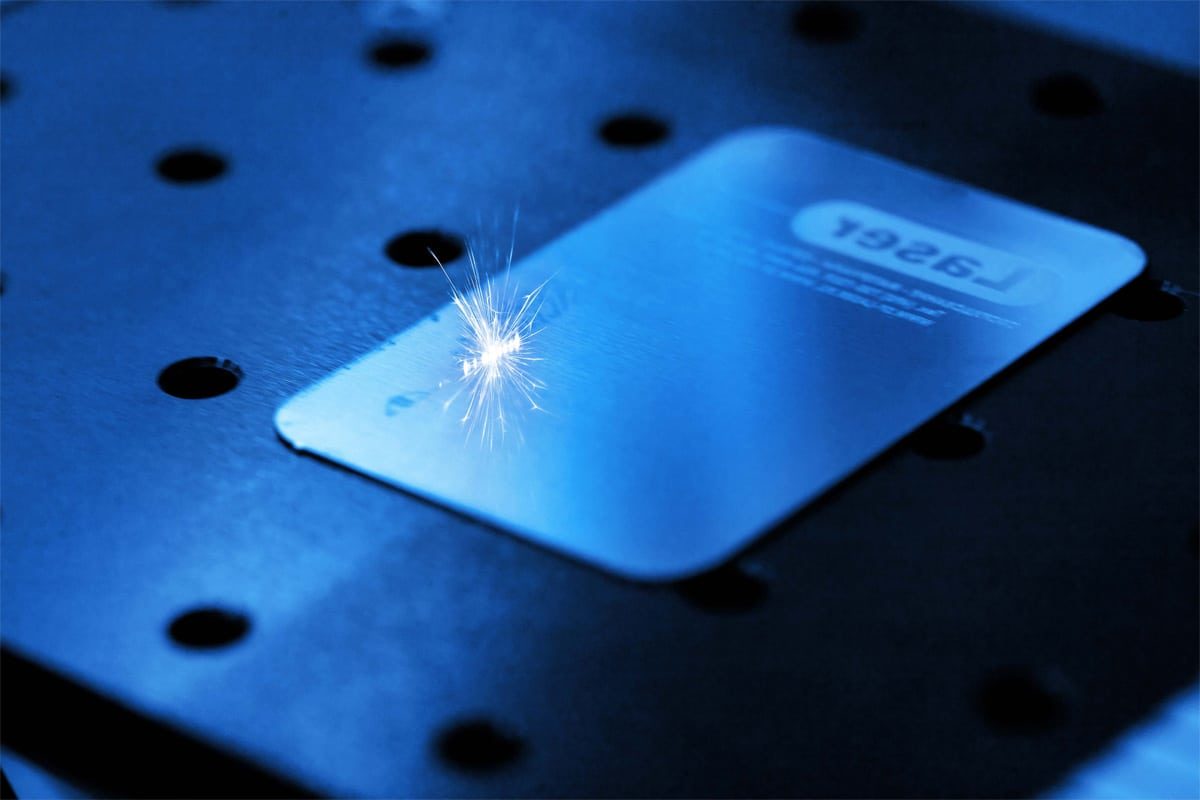
At its core, a laser marking machine uses the focused output of a laser generator to create a visible, permanent mark on a material surface by altering the surface’s optical or physical properties. Unlike ink printing, which deposits material on the surface, or mechanical engraving, which removes material through physical contact, laser marking achieves its effect through a controlled thermal or photochemical interaction with the workpiece itself. The result is a mark that is intrinsically part of the material — not something applied to it — and therefore resistant to the wear, chemical attack, and environmental degradation that compromise surface-applied markings over time.
The range of what laser marking machines actually do in practice spans an extraordinary breadth of functions: permanently encoding serial numbers, barcodes, and QR codes that enable supply chain traceability; engraving logos and brand marks on products ranging from surgical tools to premium consumer goods; marking regulatory compliance symbols such as CE marks and UDI codes on medical devices and electrical equipment; creating anti-counterfeiting features in security-critical products; and producing decorative engravings on jewelry, gifts, and architectural elements. Each of these functions serves a different commercial, regulatory, or aesthetic purpose, but all share the common foundation of laser marking’s defining properties — precision, permanence, programmability, and the absence of consumables.
This article provides a comprehensive exploration of what laser marking machines are used for across the full spectrum of modern industrial and commercial applications. It examines how the technology works, the industries that depend on it most heavily, the materials it can process, and the specific advantages that have driven its displacement of older marking technologies across sector after sector. Whether you are evaluating laser marking for a new application, seeking to understand why it has become so prevalent, or looking for practical guidance on where it delivers the most value, this article provides the complete picture.
Table of Contents
How Laser Marking Works: A Brief Technical Overview
A meaningful understanding of what laser marking machines can do in different applications requires a basic grasp of how the technology works — specifically, what physical mechanisms create the mark and how different laser generator types address different material categories. This foundation prevents the common mistake of selecting the wrong laser marking technology for a given application or material.
The Marking Mechanisms
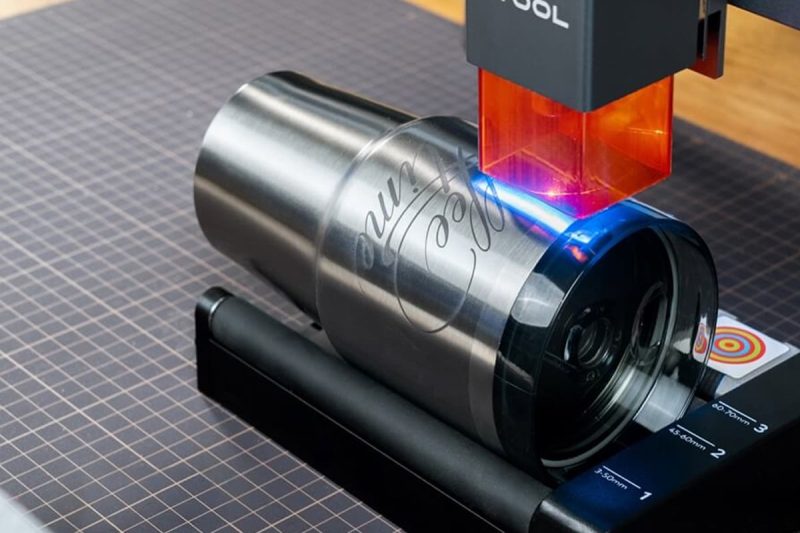
Laser marking is not a single process but a family of related surface modification techniques, each producing marks through a different physical or chemical mechanism. Laser engraving removes material from the surface through rapid vaporization or ablation, creating a recessed cavity visible as the mark. Because the mark has physical depth — typically 0.01 to 0.5 mm — it is exceptionally resistant to surface wear and remains legible even after aggressive handling, cleaning, or surface finishing. Engraving is the preferred mechanism for high-durability applications such as tool marking, industrial component identification, and decorative metalwork.
Laser annealing is a process specific to metals — particularly stainless steel and titanium — in which the laser generator heats the surface without removing material, causing controlled oxidation that produces a color change visible as the mark. Annealed marks are smooth, flush with the surface, and chemically stable, making them the preferred marking solution for medical implants and food-contact surfaces where surface integrity and corrosion resistance must be preserved. Carbon migration produces dark, high-contrast marks on certain steel alloys through a similar thermal mechanism — laser heat drives carbon atoms to the surface, creating a visible dark layer without material removal. Foaming creates raised, light-colored marks on dark plastics by generating controlled subsurface bubbles that alter the surface’s reflective properties. Color change marking uses laser energy to trigger a chemical reaction in laser-sensitive additives incorporated into plastic formulations, producing high-contrast marks without material removal.
Types of Laser Marking Machines
Three principal laser generator types are used in commercial laser marking systems. Fiber laser generators, emitting at approximately 1,064 nm, are the dominant technology for metal marking — their near-infrared wavelength is efficiently absorbed by metals and many dark plastics, enabling all five marking mechanisms on a wide range of metallic and polymeric substrates. CO2 laser generators, emitting at 10.6 µm, excel at marking organic materials — wood, leather, glass, ceramics, and most plastics — where their mid-infrared wavelength is strongly absorbed. UV laser generators, emitting at 355 nm, offer a cold marking capability that minimizes heat input to the surrounding material, making them the preferred choice for heat-sensitive polymers, thin films, and transparent materials such as glass and clear plastics.
Why Laser Marking Is Preferred
The shift from inkjet printing, pad printing, stamping, and mechanical engraving toward laser marking across so many industries reflects several compounding advantages: marks that are permanent and non-removable without additional material processing; no consumable inks, reagents, or tooling that add ongoing cost and supply chain complexity; programmability that allows marking content to change with every part without any physical setup; and precision that enables feature sizes and information densities unachievable by contact marking methods. Together, these properties make laser marking the natural choice wherever marking quality, durability, and production flexibility are simultaneously important.
Laser marking encompasses five distinct physical mechanisms — engraving, annealing, carbon migration, foaming, and color change — each suited to different material types and application requirements. Three laser generator types — fiber, CO2, and UV — address different material categories based on wavelength-dependent absorptivity. The technology’s permanence, programmability, precision, and zero-consumable operation are the properties that have driven its adoption across virtually every manufacturing sector.
Core Functions of Laser Marking Machines
Before examining industry-specific applications, it is useful to understand the generic functions that laser marking machines perform — the underlying use cases that appear across multiple industries in different forms but share common technical requirements.
Permanent Product Identification
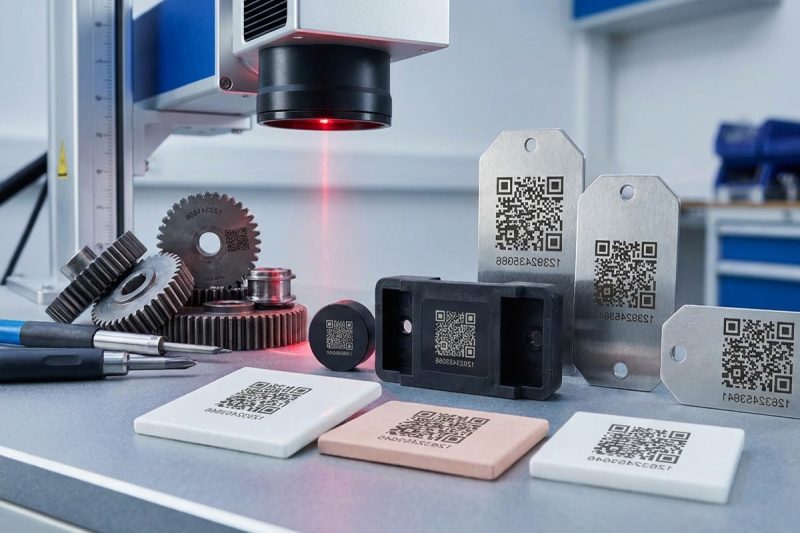
The most widespread application of laser marking is the permanent encoding of product identification information — serial numbers, part numbers, lot codes, date codes, and model numbers — directly onto individual components and finished products. This identification serves multiple purposes simultaneously: it enables traceability throughout the manufacturing process and supply chain, allowing specific units to be linked to their production history, incoming material batches, and quality inspection records; it supports recall management, enabling affected units to be identified and located rapidly if a quality or safety issue is discovered after products have reached the field; and it provides the basis for warranty management, service history tracking, and lifecycle documentation throughout the product’s operating life.
The shift from paper-based labeling and adhesive tags to laser-marked direct part marking (DPM) has been one of the most significant quality management trends in manufacturing over the past two decades, driven by the failure modes of labels — delamination, fading, and loss — that direct marks inherently avoid.
Barcode, QR Code, and Data Matrix Marking
Laser marking machines produce machine-readable codes — one-dimensional barcodes, two-dimensional QR codes, and data matrix codes — with the precision and consistency required for reliable automated scanning. Data matrix codes, which can encode substantial amounts of data in a very small space, have become the standard format for direct part marking in aerospace, automotive, and medical device manufacturing, where traceability requirements mandate that each individual part carry a unique, machine-readable identifier that survives the part’s entire service life.
The ISO/IEC 15415 and 15416 standards define the quality grading system for two-dimensional and one-dimensional codes respectively, and compliance with these standards is a procurement requirement in many automotive and aerospace supply chains. Modern laser marking systems can verify the readability and quality grade of each code immediately after marking, integrating quality assurance directly into the marking process.
Brand Marking and Logo Engraving
Laser marking enables the permanent application of logos, wordmarks, decorative patterns, and custom graphics to products and components with a precision and resolution that pad printing and screen printing cannot match at comparable durability. For consumer products — tools, electronics, kitchenware, sporting goods, and premium accessories — laser-engraved branding adds perceived value, communicates quality, and differentiates the product from competitors in ways that printed labels and stickers cannot sustain over the product’s useful life.
The programmability of laser marking is particularly valuable in branding applications where the same product platform serves multiple brands, markets, or customers — switching between brand marks requires only a software selection rather than a tooling change, enabling flexible, small-batch customization without the setup cost that physical tooling would impose.
Compliance and Regulatory Marking
Many products are legally required to carry specific markings that demonstrate compliance with applicable safety, quality, or identification standards. Medical devices sold in the United States must bear a Unique Device Identification (UDI) code compliant with FDA regulations; equivalent requirements apply in the EU, UK, and other major markets. Electrical and electronic equipment sold in Europe must carry the CE mark and comply with RoHS and WEEE marking requirements. Industrial equipment must display rated specifications, safety warnings, and certification marks in formats specified by applicable standards. Laser marking produces these compliance marks with the permanence, precision, and resistance to wear and sterilization that regulatory standards demand — qualities that ink printing and labels cannot reliably sustain across the full range of environmental conditions products encounter in their service environments.
Anti-Counterfeiting and Security Marking
Laser marking contributes to brand protection and product authentication through features that are difficult or impossible for counterfeiters to replicate without access to the specific marking system, parameters, and material combination used by the authentic manufacturer. Unique serialization — each product unit carrying a different, verifiable code — makes large-scale counterfeiting economically unattractive and enables authentication at the point of sale or import inspection. Micro-text and hidden marking features — marks that are invisible to the naked eye but readable with appropriate magnification or lighting — add authentication layers accessible to authorized inspectors but not to casual counterfeiters. In the pharmaceutical industry, laser marking of packaging and tablets with serialization codes is a regulatory requirement in many markets, designed to prevent the introduction of counterfeit medicines into legitimate supply chains.
Decorative and Personalization Marking
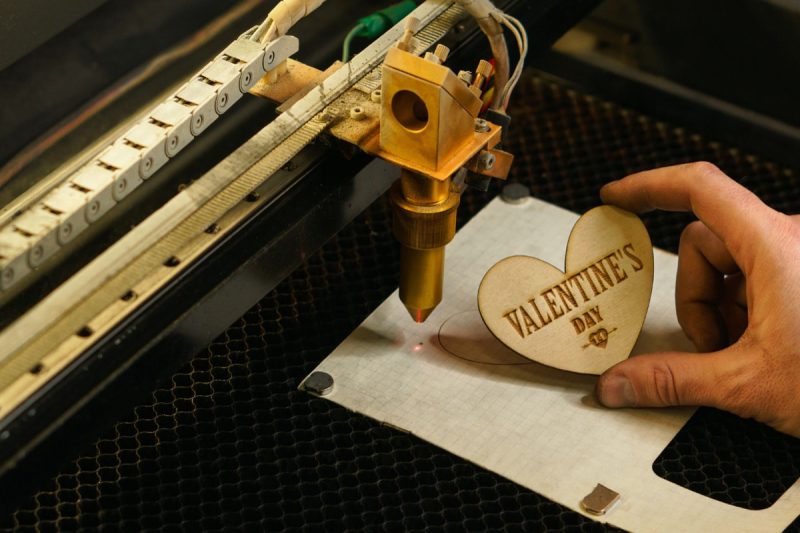
Beyond functional identification and compliance marking, laser marking machines serve a large and growing market for decorative and personalized marking — applying custom text, images, and patterns to products for aesthetic, commemorative, or commercial purposes. Personalized gifts, awards, promotional merchandise, custom-engraved jewelry, and branded corporate gifts all represent applications where the laser marking machine’s ability to execute a unique, customer-specified design on each individual item is the defining capability.
The precision and speed of laser marking — combined with the absence of tooling costs that make every design change free — have democratized personalized product marking, enabling business models that were not economically viable with traditional engraving methods. Photographic-quality engraving — reproducing detailed portrait photographs, artwork, or complex graphic designs in fine-resolution grayscale on wood, leather, stone, or anodized aluminum — represents the creative frontier of laser marking capability, where the precision of the focused laser spot and the dynamic control of the laser generator’s power enable a tonal range and spatial resolution that hand engraving and mechanical methods cannot approach. This capability has opened new market segments in memorial products, artistic reproduction, and premium personalized gifts, where the laser marking machine is the only technology that can deliver the required result.
The core functions of laser marking machines — permanent product identification, machine-readable code marking, brand and logo marking, compliance marking, anti-counterfeiting, and personalization — span a range from tightly regulated industrial traceability requirements to open-ended creative customization. Each function exploits a different combination of laser marking’s technical properties, and most products that benefit from laser marking use several of these functions simultaneously on the same part or product.
Industry-by-Industry Applications
The generic functions described above manifest differently in each industry, shaped by specific regulatory requirements, material constraints, production volumes, and quality standards. This section examines the major industries where laser marking has achieved its deepest adoption and the specific ways the technology serves each sector.
Automotive Industry
The automotive industry is one of the largest global users of laser marking technology, driven by stringent traceability requirements that extend from raw material supply through production, distribution, and after-sales service. Every safety-critical component — engine blocks, transmission housings, braking system components, airbag inflators, and structural chassis elements — must be permanently marked with identifiers that enable the vehicle manufacturer and its suppliers to trace the component to its material heat, production run, and inspection records. In the event of a field quality issue, this traceability enables precise identification of affected vehicles and components, limiting recall scope and protecting both manufacturers and consumers.
Laser marking is the standard technology for this automotive direct part marking requirement because it produces marks that survive the complete lifecycle of the component — including exposure to heat, vibration, lubricants, cleaning chemicals, and the physical handling of assembly and service operations — without degradation. VIN (Vehicle Identification Number) marking on body panels and structural components, engine part serialization, and supplier part number marking on thousands of individual component types all represent high-volume automotive laser marking applications.
Aerospace and Defense
Aerospace component marking operates under the most demanding traceability standards of any commercial manufacturing sector. Aviation authority regulations — FAA in the United States, EASA in Europe — require that aircraft components be permanently marked in ways that survive the component’s full service life, which may span decades and include maintenance cycles that involve cleaning, repainting, and surface treatment. Military standards impose additional requirements for marking permanence and resistance to specific environmental exposures.
Laser annealing on titanium and stainless steel components produces marks that meet these requirements without compromising the surface integrity or corrosion resistance of the base material — properties that mechanical marking methods cannot reliably achieve on the high-performance alloys used in aerospace structures and engines. Data matrix code marking on aircraft structural components enables the digital tracking systems — such as ATA Spec 2000 electronic records management — that are transforming aerospace maintenance and overhaul operations.
Medical Devices and Healthcare
Medical device laser marking presents some of the most demanding and precisely specified requirements of any application category. Surgical instruments, orthopedic implants, dental components, and diagnostic devices must be marked with UDI codes that satisfy regulatory requirements in each market where the device is sold, and the mark must remain fully legible through repeated sterilization cycles — steam autoclave, ethylene oxide, gamma irradiation, or hydrogen peroxide plasma — without compromising the device’s surface biocompatibility or creating crevices that could harbor biological contamination.
Laser annealing on stainless steel and titanium is the standard solution for implantable and surgical device marking precisely because it produces the required regulatory mark without material removal, preserving the surface’s corrosion resistance and eliminating the stress concentration that a recessed engraved mark could introduce in fatigue-critical applications. The combination of regulatory specificity and material sensitivity that defines medical device marking makes it one of the application categories where the choice of marking technology has the most direct impact on patient safety and regulatory compliance.
Electronics and Semiconductors
The electronics industry uses laser marking across a vast range of applications — from fine-feature marking of millimeter-scale components on circuit boards to high-speed batch marking of consumer device housings. PCB (printed circuit board) marking — applying board identification codes, component orientation indicators, and quality inspection marks — uses UV laser generators whose short wavelength and precise beam control enable marking of very small features adjacent to sensitive electronic circuitry without thermal damage to nearby components.
Semiconductor packaging marking — applying identification codes to IC packages, ceramic substrates, and individual dies — requires the same precision and thermal control. Consumer electronics housing marking — applying model names, regulatory marks, certification logos, and serial numbers to smartphone bodies, laptop cases, and tablet frames — uses fiber laser generators for metal housings and CO2 or UV laser generators for plastic and glass surfaces. The electronics industry’s combination of high volumes, tight tolerances, diverse materials, and stringent regulatory marking requirements makes it one of the most technically demanding and commercially significant laser marking markets.
Jewelry and Luxury Goods
Jewelry and luxury goods marking represents a distinct application profile from the industrial traceability-focused uses discussed above, centering on aesthetic quality, personalization precision, and the marking of precious materials. Laser marking on gold, silver, platinum, and gemstone settings produces engravings of extraordinary fineness — the laser’s focused spot enables line widths and feature sizes that hand engraving and mechanical pantograph engraving cannot approach — enabling complex custom designs, fine text, and intricate patterns on ring shanks, pendant backs, watch cases, and bracelet clasps.
Hallmarking — the regulatory marking of precious metal content and origin — is increasingly performed by laser in many markets, as laser marking produces the required hallmark impression consistently, rapidly, and without the physical force that stamping imposes on delicate settings. Authentication marking of luxury handbags, watches, and accessories with hidden laser-marked codes provides brands with a tool for verifying authenticity through their service networks. The personalization market — custom engraving of jewelry for gifts, commemoratives, and special occasions — represents a high-growth segment where the laser marking machine’s combination of precision and programmability directly enables the business model.
Packaging and Food Industry
In the packaging and food production industries, laser marking most commonly replaces inkjet coding for date coding, batch number marking, and product information application on packaging materials. CO2 laser generators mark directly onto cardboard, corrugated board, glass, and many packaging plastics at speeds compatible with high-throughput production lines — producing permanent marks that cannot rub off or smear as ink codes sometimes do during transport and storage.
Laser marking on food packaging has the additional advantage of being a contactless, consumable-free process that eliminates the contamination risk associated with inkjet printer heads in close proximity to food contact surfaces. For beverage producers, laser etching of date codes and batch identifiers on glass bottles provides a permanent mark that survives washing and reuse. For flexible packaging materials — pouches, films, and wrappers — CO2 or UV laser generators can mark through the packaging surface or on the outer face without affecting the integrity of the seal, providing variable data coding that changes with every production run without any physical setup. The elimination of coding consumables — ink, solvent, and printer maintenance chemicals — also delivers meaningful cost and environmental benefits at the production volumes typical of large food and beverage manufacturers. Across the food and beverage sector, the combination of regulatory traceability requirements and high production throughput makes laser marking an increasingly compelling alternative to inkjet and thermal transfer coding systems.
Metal Fabrication and Industrial Manufacturing
In general metal fabrication and industrial manufacturing, laser marking serves the practical requirements of part tracking, quality control documentation, and maintenance identification across a diverse range of component types and materials. Tool and die marking — identifying mold cavities, tooling sets, and precision jigs with part numbers, version identifiers, and quality marks — uses fiber laser generators to produce durable marks on hardened tool steel that survive the demanding service conditions of production tooling. Mold cavity marking is particularly important in multi-cavity injection molding operations, where every part produced must be traceable to the specific cavity that produced it to enable rapid identification and correction of cavity-specific quality issues.
Structural component identification — marking beam sections, pressure vessel components, and pipeline fittings with material grades, pressure ratings, and heat numbers — enables regulatory compliance and facilitates maintenance inspection across the service life of industrial infrastructure. In energy and utilities applications, laser marking of valve bodies, pipe sections, and instrumentation components with permanent identification that survives outdoor exposure, painting, and decades of service provides the traceability infrastructure that safety-critical infrastructure requires. In contract manufacturing environments, laser marking enables rapid, cost-effective customization of standard parts with customer-specific identification, replacing the manual stamping or paint marking that previously required separate handling steps and dedicated operator time.
Consumer Goods and Promotional Products
The consumer goods and promotional products market represents the broadest and most diverse application space for laser marking, encompassing everything from custom-engraved corporate gifts and award plaques to personalized kitchenware, sporting equipment, and fashion accessories. The defining characteristic of this market is variability — every order may be unique, with different text, graphics, and recipient names — and laser marking’s programmability is the enabling technology for economically viable one-off and small-batch personalization.
Online personalization businesses — offering custom-engraved jewelry, leather goods, drinkware, phone cases, and similar products — depend entirely on the laser marking machine’s ability to execute unique designs on individual units without setup costs or tooling changes. Gift retailers, trophy shops, corporate merchandise suppliers, and promotional products distributors all use laser marking as their primary customization tool, enabled by the combination of low per-unit time, high design flexibility, and permanent marking quality that the technology provides. The growth of e-commerce personalization platforms — where customers configure and order individually customized products online with instant design preview — has created a new category of laser marking application centered on single-unit production at scale. In this business model, the laser marking machine’s ability to process a unique design file for every order without operator intervention or physical setup is the enabling technology that makes the business model commercially viable. Materials commonly processed in this consumer goods and promotional marketing space include stainless steel drinkware, bamboo and wood accessories, leather wallets and bags, acrylic awards and plaques, aluminum phone cases, and slate and stone home decoration products.
Pipes, Cables, and Wire Harnesses
An often-overlooked but commercially significant laser marking application is the continuous marking of extruded products — electrical cables, hydraulic hose, tubing, and wire harnesses — as they exit the extrusion or assembly process. Fiber and CO2 laser generators are configured in online flying-beam marking installations that mark directly onto the moving product surface at production line speeds, applying sequential meter markings, part numbers, voltage ratings, installation date codes, and manufacturer identification continuously without stopping or slowing the extrusion process. This application is particularly demanding from a speed and throughput perspective — cable lines may run at speeds of 100 meters per minute or more — and requires laser marking systems with very fast scan head dynamics and real-time speed synchronization with the production line. The permanent laser-marked identification on electrical cable and hydraulic hose is a safety and traceability requirement in many jurisdictions, ensuring that installed products can be identified and traced long after installation when access to original packaging or documentation may no longer be possible.
Laser marking machines serve distinct functions in each industry they touch — from regulatory compliance traceability in automotive and aerospace, to biocompatibility-sensitive medical device marking, to high-speed food packaging date coding, to continuous extrusion line cable marking, to one-of-a-kind consumer personalization. The common thread across all these applications is the combination of permanence, precision, programmability, and zero-consumable operation that defines laser marking’s technical character and underpins its commercial adoption.
Material Compatibility Overview
Laser marking machines can process a wider range of materials than any competing marking technology, with the specific laser generator type selected based on the wavelength most efficiently absorbed by the target material. This section summarizes the material compatibility profile of each major category.
Metals
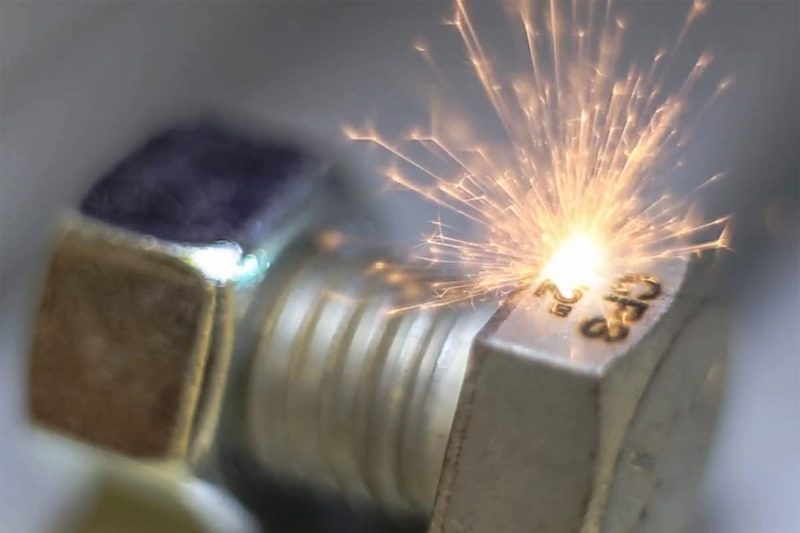
Metals are the primary application domain for fiber laser generators, which at 1,064 nm are efficiently absorbed by the metallic surface and can activate all five marking mechanisms depending on the specific metal and parameter settings. Carbon steel and stainless steel are marked by annealing, carbon migration, or engraving, depending on the required mark appearance and depth. Annealing is preferred for stainless steel where surface integrity must be preserved — medical devices and food equipment being the most common examples — while carbon migration and engraving are used where high contrast or physical depth is the primary requirement.
Aluminum is engraved directly or marked by surface oxidation for color change effects; anodized aluminum responds particularly well to fiber laser marking, as the anodized layer can be locally removed to reveal the contrasting metal substrate beneath, producing very high contrast marks with excellent edge definition. Titanium produces some of the most visually striking annealing results — a full spectrum of vivid colors from controlled oxide layer thickness variation, ranging from gold and bronze through purple, blue, and green — and is widely used in medical devices, aerospace components, and premium consumer products where colored titanium marking adds both aesthetic and functional identification value. Copper, brass, and precious metals including gold, silver, and platinum are all processable by fiber laser generators, with parameters optimized for each alloy’s specific optical and thermal properties.
Plastics and Polymers
Plastic marking represents the most diverse material subcategory in laser marking, because different polymer types respond to laser energy through different mechanisms and require different laser generator wavelengths. Laser-additive-containing plastics — ABS, polycarbonate, polyamide, polypropylene, and many others formulated with specific laser-sensitive additives — produce high-contrast color change marks when processed by fiber laser generators. Clear and light-colored plastics that do not contain laser additives are better addressed by CO2 laser generators, which are absorbed by the polymer matrix. UV laser generators produce the finest-resolution, lowest-thermal-impact marks on heat-sensitive and transparent polymers, making them the preferred choice for medical packaging films, optical components, and thin-wall plastic housings where thermal damage to the material or its contents must be avoided.
Glass and Ceramics
Glass and ceramics can be surface-marked by CO2 and UV laser generators, which are absorbed by the inorganic matrix of these materials. CO2 laser generators produce a frosted, etched surface texture on glass through thermal ablation — a distinctive aesthetic widely used in decorative and personalization applications for glassware, bottles, and architectural glass. UV laser generators offer more controlled, finer-resolution marking with lower thermal stress, enabling precise coding and identification marks on glass pharmaceutical vials, laboratory glassware, and ceramic electronic components. Alumina and other technical ceramics used in electronics — circuit substrates, capacitor bodies, and insulator components — are routinely marked with UV laser generators for identification codes and orientation marks.
Wood, Leather, and Organic Materials
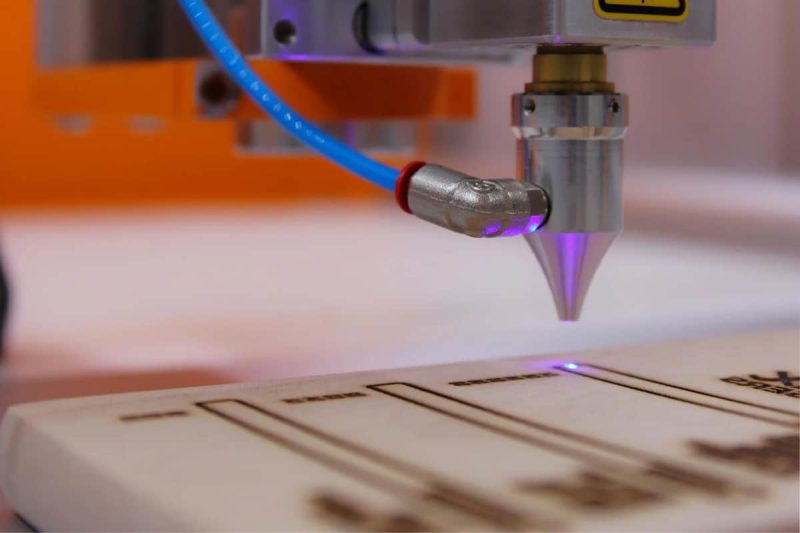
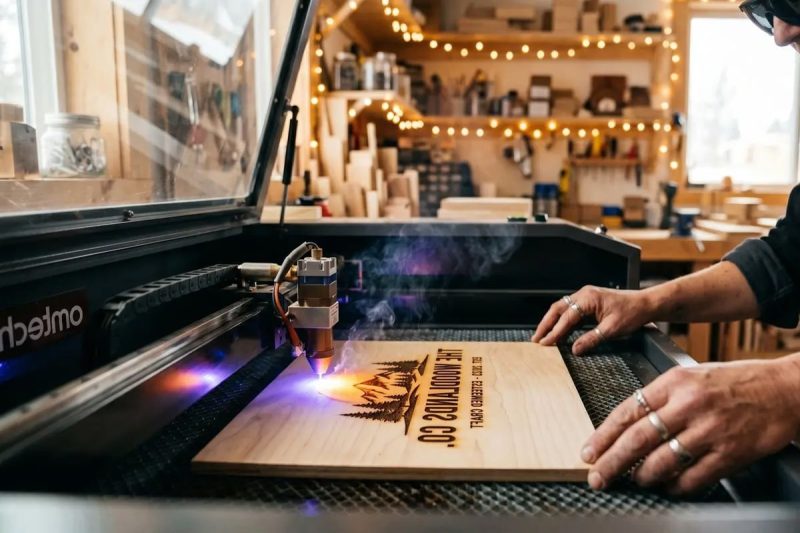
CO2 laser generators are the natural choice for marking wood, leather, paper, and other organic materials, as the 10.6 µm wavelength is strongly absorbed by the carbon-hydrogen bonds in organic molecular structures. Wood marking produces a characteristic dark carbonization pattern that is both aesthetically distinctive and highly legible — widely used in furniture, awards, signage, and decorative products. Leather marking produces a precise surface texture and color change that is used in the luxury goods, fashion, and promotional merchandise industries for branding and personalization. Paper and cardboard can be surface-marked or cut by CO2 laser generators, enabling custom packaging, artistic applications, and coding on corrugated materials.
Laser marking machines offer broader material compatibility than any competing marking technology. Fiber laser generators address the full range of metals and many plastics; CO2 laser generators excel on organic materials, glass, and ceramics; UV laser generators provide cold marking capability for heat-sensitive and transparent materials. Correct laser generator type selection based on the target material’s optical properties is the foundational specification decision that determines whether a marking system can deliver the required mark quality and durability.
Advantages That Drive Adoption Across Industries
The consistent expansion of laser marking into new industries and applications over the past three decades reflects a set of compelling technical advantages over the marking methods it replaces. Understanding these advantages explains not just where laser marking is used today, but why it continues to displace alternative technologies across an ever-broadening range of applications.
Permanent and Tamper-Proof Marks
Laser marks are created by a permanent change to the material itself — a physical removal, chemical transformation, or microstructural alteration that cannot be reversed without additional material processing. This intrinsic permanence distinguishes laser marks from every surface-applied marking method: inks can be dissolved, labels can be peeled, and pad-printed marks can be abraded away. A laser-marked serial number or barcode on a metal component will remain readable at the end of the component’s service life regardless of what it has been exposed to in the interim. For applications where mark durability is a regulatory requirement or a product liability consideration, this permanence is not merely a convenience — it is a fundamental specification requirement.
No Consumables, No Inks
The laser beam is the only marking agent in a laser marking system, and it is generated electrically from the laser generator without any consumable input. This consumable-free operation eliminates the ongoing cost of ink cartridges, pad printing pads, ink cups, cleaning solvents, and stencils that accumulate continuously in ink-based and contact marking systems. At high production volumes, the elimination of consumable costs is economically significant — and the elimination of consumable supply chain management, storage, handling, and disposal is operationally significant even where the direct cost is modest. The absence of inks also removes the risk of ink-related contamination of products or production environments, which is particularly important in food, pharmaceutical, and medical device manufacturing.
High-Speed Marking for Production Lines
Laser marking systems equipped with galvanometer-driven scan heads can mark complete identification fields — serial numbers, barcodes, logos — in a fraction of a second, enabling integration into high-throughput production lines without creating a bottleneck. Galvanometer-driven marking of a standard data matrix code on a metal component typically takes 0.5 to 2 seconds; a full multi-line text field with logo takes 2 to 5 seconds. These cycle times are compatible with the throughput requirements of automotive, electronics, and consumer goods production lines running at tens or hundreds of units per minute.
Non-Contact Process
Laser marking imposes no physical force on the workpiece. This non-contact nature eliminates the risk of mechanical distortion, surface scratching, or stress introduction that stamp marking and mechanical engraving impose — hazards that are particularly significant for precision components, thin-wall parts, and delicate assemblies. It also means that the marking system experiences no mechanical wear from the marking process itself, contributing to the long service life and low consumable cost of laser marking equipment.
Easy Integration with Automation Systems
Modern laser marking machines are designed for integration into automated production environments. Triggering inputs allow the marking cycle to be initiated by a PLC signal, a sensor output, or a robot handshake. Serial communication interfaces — RS-232, Ethernet, and industrial fieldbus protocols — allow the production control system to send the unique marking data for each part to the laser marking controller, enabling variable data marking without operator involvement. Vision system integration enables automatic mark verification and part alignment correction. These integration capabilities allow laser marking to function as a seamless embedded process within a larger automated production cell rather than as a standalone offline operation. In the most sophisticated implementations, the laser marking station communicates bidirectionally with the MES (Manufacturing Execution System) — receiving marking content from the production order database, confirming successful marking completion, and uploading the marked code value and verification result to the traceability record for each unit. This level of integration makes laser marking a data-generating node in the digital manufacturing infrastructure, contributing to the complete digital product history that Industry 4.0 quality systems require.
The five advantages that drive laser marking adoption across industries — permanent marks, zero consumables, high speed, non-contact operation, and automation integration — are not incremental improvements over competing technologies. They represent a qualitative advance in what product marking can achieve: durable, precise, variable-data marks produced at production speed without physical contact, tooling, or consumables. These properties collectively explain why laser marking has become the dominant technology for product identification, traceability, and decorative marking across modern manufacturing.
Conclusion
This article has provided a comprehensive exploration of what laser marking machines are used for — spanning the technical principles that enable the technology, the core functions it performs across industries, the specific applications and requirements of each major market sector, the range of materials it can process, and the fundamental advantages that have established it as the preferred marking solution across modern manufacturing.
The breadth of laser marking’s application landscape is extraordinary: from microscopic identification codes on implantable medical devices to large-format decorative engravings on architectural elements; from high-speed production line date coding on food packaging to one-of-a-kind personalized jewelry engravings; from legally mandated UDI marking on surgical instruments to brand differentiation marks on premium consumer goods. This diversity of application reflects the fundamental versatility of a technology whose core properties — permanence, precision, programmability, and zero-consumable operation — are valuable across an enormous range of marking requirements.
Fiber laser generators address the dominant metal marking market with efficiency and reliability; CO2 laser generators serve organic materials, glass, and ceramics with the wavelength absorption characteristics that make them uniquely effective on these substrates; UV laser generators extend the technology’s reach to heat-sensitive and transparent materials where thermal damage would compromise the workpiece. Each laser generator type enables specific marking mechanisms — engraving, annealing, carbon migration, foaming, and color change — that produce marks with different visual characteristics, depth profiles, and durability levels suited to different application requirements.
The industries that have adopted laser marking most deeply — automotive, aerospace, medical devices, electronics, jewelry, packaging, and consumer goods — each do so for reasons rooted in their specific regulatory requirements, material constraints, and production economics. What they share is the recognition that laser marking delivers a combination of marking quality, durability, production flexibility, and long-term cost efficiency that alternative technologies cannot match across the full range of their marking requirements.
Get a Laser Marking Solution
Understanding the breadth of what laser marking machines can do is the starting point — selecting the right system for a specific application requires matching the laser generator type, output power, marking field size, and automation configuration to the actual material, production volume, and marking content requirements of the intended use.
AccTek Laser is a professional laser marking machine manufacturer with over a decade of experience serving industrial and commercial customers across automotive, aerospace, medical device, electronics, jewelry, packaging, and consumer goods sectors. Its laser marking product range covers fiber laser marking machines in 20W, 30W, 50W, and 100W configurations for metal and dark plastic marking applications, delivering high-contrast permanent marks on steel, stainless steel, aluminum, copper, brass, titanium, and precious metals; CO2 laser marking machines for organic materials, packaging substrates, glass, and ceramics; and UV laser marking machines for precision cold marking of heat-sensitive polymers, transparent materials, and fine-feature electronics applications — all built around high-quality laser generators from globally trusted brands and certified to CE and FDA standards. Desktop, enclosed cabinet, split-type, and flying-beam configurations are available to match the system to different production environments, from bench-top prototyping and small-batch personalization through fully integrated production line marking cells. Customization in laser generator power, marking field size, focal length, rotary attachment for cylindrical parts, and automation interface is available to match the marking system to the specific part geometry, production rate, and marking content requirements of each application. The full-lifecycle service framework covers pre-sales application consultation and laser generator type selection guidance, professional installation and parameter optimization for the specific marking application and material, comprehensive operator training, competitive spare parts supply, and responsive after-sales technical support — providing the complete partnership needed to achieve consistent, high-quality laser marks from the first production shift through the full operating life of the system.

Contact information
- [email protected]
- [email protected]
- +86-19963414011
- No. 3 Zone A, Lunzhen Industrial Zone,Yucheng City , Shandong Province.
Get Laser Solutions