

















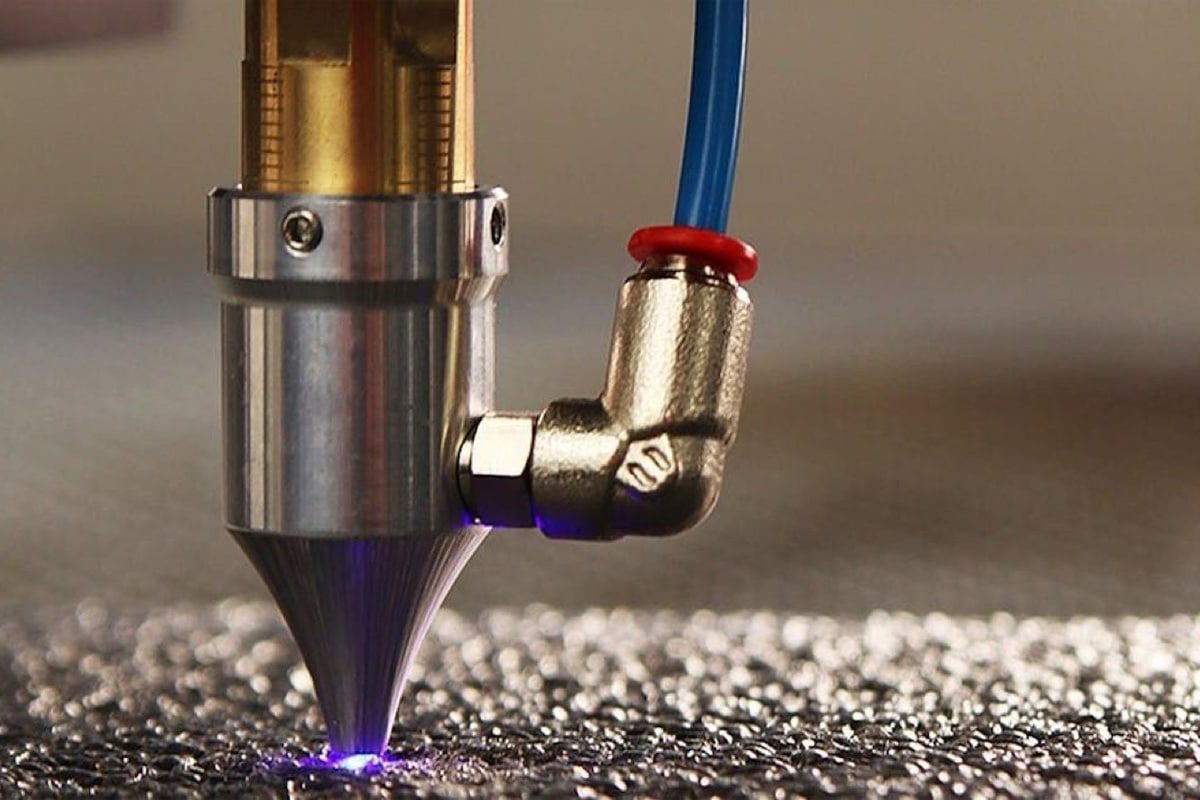
CO2 Laser Power and Cutting Performance
Among the questions most frequently raised by buyers evaluating CO2 laser cutting machines, one stands out—largely because its answer is often misunderstood: Does higher power output invariably translate to faster cutting speeds? The intuitive response—namely, “more power equals greater speed”—while partially correct, oversimplifies the relationship; in practical application, the reality is far more nuanced. Understanding how power output translates into actual cutting performance across various materials is crucial for making informed equipment purchasing decisions and setting realistic production expectations.
Today’s market offers a wide spectrum of CO2 laser cutting machines: options range from 60W models designed for intricate engraving and processing thin materials, to mid-range 100W to 300W models capable of meeting the needs of most small businesses and creative production environments, all the way up to high-power 500W and 600W models optimized for the high-speed cutting of thicker non-metallic materials in mass production settings. These devices are specifically optimized for processing non-metallic materials—including wood, acrylic, MDF (Medium-Density Fiberboard), leather, fabric, rubber, foam, paper, cardboard, and other similar organic or polymer-based substrates—because the 10.6-micron wavelength laser beam generated by CO2 laser sources is absorbed by these materials both efficiently and intensely.
When reviewing marketing materials that lack precise terminology, buyers often encounter a key concept requiring specific clarification: the issue of “cutting depth.” CO2 laser cutting machines with power outputs ranging from 60W to 600W are, in fact, capable of achieving substantial cutting depths in non-metallic materials. Well-configured systems can effortlessly cut through foam materials 20 millimeters thick—or even thicker; in high-power modes, they can penetrate 15 to 20 millimeters of softwood or MDF; and for acrylic, depending on the specific power and cutting speed settings, cutting depths of 10 to 20 millimeters are also attainable. It is precisely this capability for deep cutting in non-metallic materials that constitutes the true core advantage of CO2 laser cutting technology. Within the realm of CO2 laser technology, the cutting of metals is considered a distinct, specialized application with a relatively limited scope. When employed for cutting thin steel sheets, stainless steel, or other metallic materials, CO2 laser machines within the aforementioned power range typically achieve a clean cutting depth of only approximately 3 millimeters while maintaining satisfactory cut quality. Even at their highest power settings—and at the cost of sacrificing both cutting speed and quality—their cutting depth can barely extend to around 5 millimeters.
Consequently, metal cutting is not the primary application domain for CO2 laser machines; rather, it is when processing non-metallic materials that they truly demonstrate their superior performance capabilities. This article comprehensively explores the intrinsic relationship between the power output of a CO2 laser generator and its cutting performance. The discussion covers the principles of power generation and measurement; how power influences the cutting depth, speed, and edge quality of both non-metallic and metallic materials; the specific scenarios in which increasing power yields substantial benefits versus those in which other factors act as limiting bottlenecks; and how to select the appropriate power level for specific application scenarios.
Table of Contents
How CO2 Laser Generators Produce and Measure Power Output
Before examining how power affects cutting performance, it is important to understand what laser generator power means physically, how it is produced in a CO2 system, and what the various power specifications appearing in product literature actually represent.
The Physics of CO2 Laser Generation
A CO2 laser generator produces its beam by electrically exciting a sealed gas mixture — primarily carbon dioxide, combined with nitrogen and helium as supporting gases — within a resonator tube. The electrical discharge energizes CO2 molecules, causing them to release photons at a characteristic wavelength of 10.6 micrometers in the mid-infrared spectrum. These photons bounce between reflective end mirrors in the resonator cavity, stimulating further emission from excited molecules — the process of stimulated amplification that gives laser light its coherence and directionality. A partially transparent output coupler mirror allows a fraction of the amplified light to exit as the usable beam.
The power of this output beam is determined by the electrical energy delivered to the gas discharge, the efficiency of the energy conversion process, and the quality of the resonator design. CO2 laser generators in the 60W to 600W power range are typically based on sealed glass or ceramic discharge tubes — the CO2 laser tube — in which the gas mixture is factory-sealed for the life of the tube. The tube is energized by a high-voltage power supply. The ratio of useful laser output power to electrical input power — the wall-plug efficiency — is typically 10 to 20 percent for CO2 laser generators in this power range, meaning that a 150W laser generator draws 750W to 1,500W of electrical power during active operation.
What Wattage Actually Means in a Cutting Context
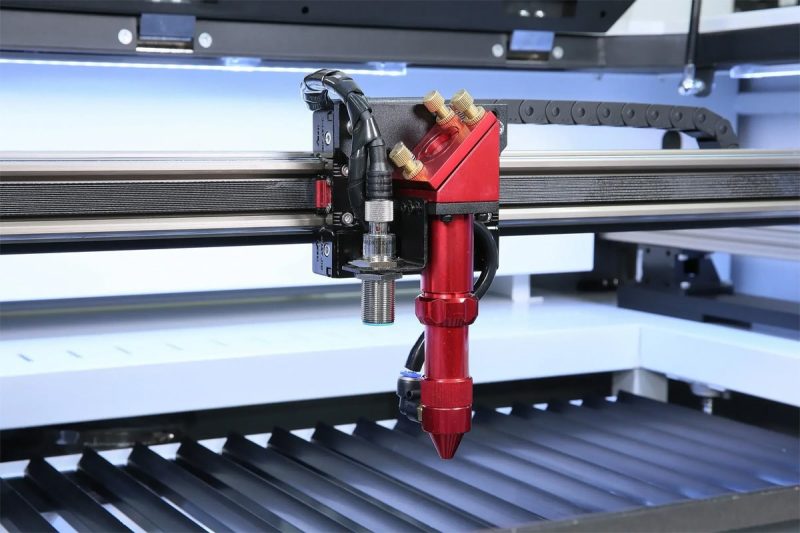
The wattage rating of a CO2 laser generator — 60W, 100W, 300W, 600W — represents the rated maximum continuous optical output power the tube can deliver under its specified operating conditions. This figure sets the ceiling on the energy available for cutting, but it does not translate directly into cutting capability without also knowing how that power is focused and delivered to the material surface. A 150W beam spread across a large spot produces a very different effect on the material than the same 150W focused to a tight 0.2mm focal point: the focused beam’s power density is orders of magnitude higher, driving the rapid local heating that enables clean cutting rather than the gentle surface warming of an unfocused beam.
For cutting applications, the physically relevant metric is power density — watts per square centimeter — at the focal point, not total watts alone. A lower-power laser generator with a high-quality optical system that focuses the beam to a very small spot may achieve higher effective power density at the cut zone, and therefore better cutting performance on thin or fine-detail work, than a higher-power machine with inferior beam quality and a larger focal spot. This is why beam quality and optical system design matter independently of the laser generator’s rated output power.
Peak Power vs. Average Power
In some specifications, particularly for pulsed CO2 laser generators used in engraving and fine cutting, multiple power figures appear. Average power — the time-averaged output in continuous-wave or pulsed operation — is the most relevant figure for characterizing cutting capability, as it determines the energy delivered per unit length of cut at any given travel speed. Peak power in pulsed operation can be significantly higher than average power, as energy is compressed into brief pulses separated by periods of low or zero emission; this peak power is useful for initiating clean cuts and achieving fine detail, but does not translate to proportionally higher average cutting throughput. When comparing machines, rated output power or average power is the figure that most directly reflects real-world cutting capability.
CO2 laser generators in the 60W to 600W range produce their beam through electrical excitation of a sealed CO2 gas tube, converting 10 to 20 percent of electrical input into optical output at 10.6 µm wavelength. The wattage rating represents the maximum continuous output power, setting the ceiling on available cutting energy — but the actual power density at the focal spot, governed by both output power and optical quality, is the physically meaningful quantity that drives material removal. Average power is the most relevant specification for real-world cutting performance comparisons.
How Power Output Affects Cutting Capability
With an understanding of what laser generator power means physically, this section examines how power level specifically influences the three dimensions of cutting performance that matter most in practice: cutting depth and penetration by material type, cutting speed, and edge quality.
Cutting Depth by Material Type
One of the most important distinctions to make when discussing CO2 laser cutting depth is that non-metallic materials and metallic materials behave completely differently, and the depth limits for each category are very different.
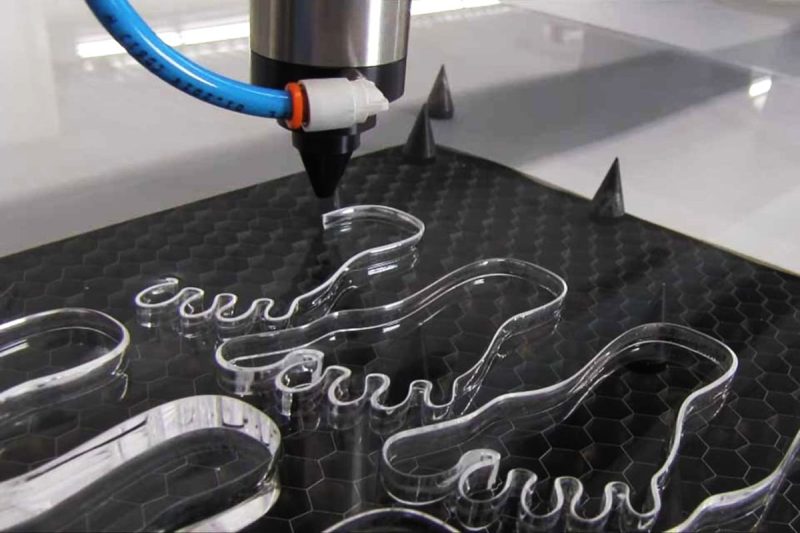
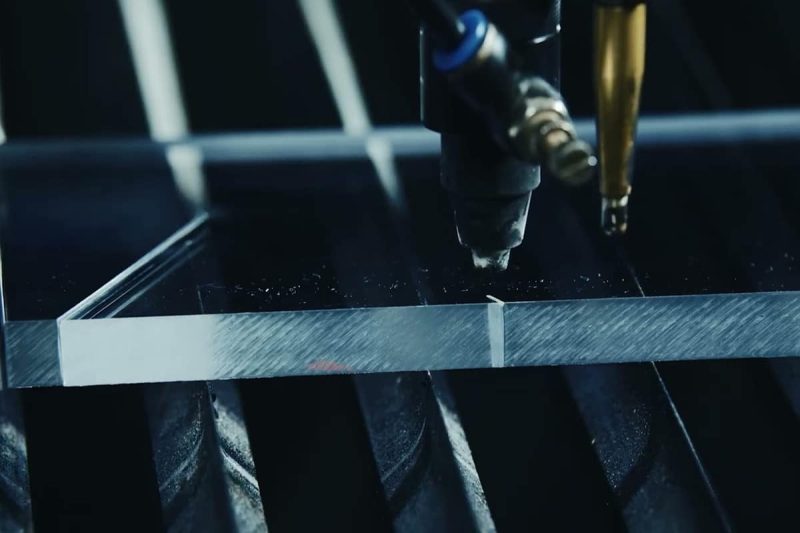
For non-metallic materials — which represent the primary application domain of CO2 laser cutting machines — cutting depth capabilities are substantially greater than many buyers initially expect. Soft woods such as pine, basswood, and balsa can be cut to 15mm to 25mm depth at higher power levels (300W to 600W) with appropriate speeds. MDF and plywood, being more homogeneous, cut cleanly to depths of 15mm to 20mm at 300W and above. Acrylic, one of the most widely CO2 laser-cut materials, can be cut to 10mm to 20mm cleanly at 150W to 600W, depending on configuration, with the characteristic flame-polished edge that makes acrylic such a natural fit for this technology. Leather cuts cleanly to its full practical thickness range; fabric, foam, rubber, and paper are limited primarily by material properties rather than laser power. The depth capability for non-metallic materials increases meaningfully with power level: a 100W machine may cut 8mm to 10mm acrylic cleanly, while a 300W machine reaches 15mm, and a 600W machine extends further at the same material quality level.
For metallic materials, the situation is fundamentally different, and the limits are tighter. The 10.6 µm wavelength of CO2 laser generators is less efficiently absorbed by metals than by organic materials, and the thermal conductivity of metals disperses heat rapidly away from the cut zone. In the 60W to 600W power range, meaningful metal cutting is limited primarily to thin sheets. For mild steel and stainless steel, clean cuts at 1 to 2mm thickness are achievable at appropriate power levels; cutting up to 3mm is possible with good quality at the upper power levels (500W to 600W) with careful parameter optimization; and 5mm represents a practical upper ceiling for metal cutting in this power range, achievable only at very slow speeds and with reduced edge quality. Beyond 5mm, CO2 laser cutting of metals in this power range is not practically viable for production use. Importantly, metal cutting is not the intended primary use case for CO2 laser machines — for any facility with significant metal cutting requirements, fiber laser cutting machines are clearly appropriate technology.
Cutting Speed at Different Power Levels
The effect of power level on cutting speed is real and significant across the full range of CO2 laser cutting machines, but it is more nuanced than a simple proportional relationship. On non-metallic materials at a given thickness, higher power enables proportionally higher cutting speed — roughly, doubling the power (at constant beam quality and optical setup) increases cutting speed by 50 to 70 percent rather than proportionally doubling it, because the relationship between power density and material removal rate is not perfectly linear. This means moving from 100W to 200W does not double throughput, but it does deliver a meaningful and commercially significant productivity improvement for facilities whose workflow is genuinely limited by cutting speed.
To make this concrete with specific examples on non-metallic materials: on 5mm acrylic, a 100W CO2 laser generator might achieve a clean cut at 8 to 12 mm/s; a 300W machine on the same material might reach 30 to 45 mm/s; and a 600W machine could push to 60 to 80 mm/s under optimized conditions — representing a six-fold speed increase for a six-fold power increase, which is roughly consistent with the expected physics. On thin materials such as 1mm fabric or 2mm paper, even modest power levels achieve very high speeds limited more by the motion system than by available laser power, and the speed advantage of higher power diminishes accordingly.
Edge Quality and the Heat-Affected Zone
Power level interacts with cutting speed to determine the thermal energy deposited in the material adjacent to the cut — the heat-affected zone (HAZ). When power and speed are correctly balanced for a given material and thickness, the HAZ is narrow and edge quality is high: acrylic cuts produce a clear, flame-polished edge; wood cuts produce a lightly charred edge with clean geometry; leather cuts produce a sealed, fray-free edge. When power is excessive relative to cutting speed — either because the power level is too high for the material thickness or because cutting speed is too low — the HAZ widens, charring increases in wood and leather, and acrylic edges may become cloudy or crazed. The power-to-speed ratio must be calibrated for each material-thickness combination to achieve consistent, high-quality results.
CO2 laser generator power affects cutting depth, speed, and edge quality in ways that vary significantly between non-metallic and metallic materials. For non-metallic materials — the primary application domain — cutting depths of 10mm to 25mm are achievable at higher power levels depending on material and configuration, representing the genuine strength of CO2 laser cutting technology. For metals, cutting limits of 3mm for good quality and 5mm as an absolute ceiling reflect the fundamental limitations of the CO2 wavelength on metallic substrates. Higher power increases cutting speed by roughly 50 to 70 percent per doubling across most materials, and the power-speed ratio must be optimized for each material to maintain edge quality.
Does Higher Wattage Always Mean Faster Cutting?
The intuitive assumption that more watts always translates to faster cutting is understandable but not universally accurate. Several real-world factors can prevent higher wattage from delivering its theoretical speed advantage, and understanding these limits helps buyers make more realistic specifications and smarter investment decisions.
Where More Power Directly Increases Speed
The clearest case where higher wattage delivers faster cutting is on materials and thicknesses where the laser generator’s power is genuinely the limiting factor — where the available power density at the focal spot is barely sufficient to cut through the material at the current speed, and additional power would enable faster travel at the same penetration depth. This condition is most commonly met when cutting non-metallic materials at the upper end of the intended thickness range — for example, cutting 15mm MDF or 10mm acrylic on a 150W machine. In these cases, stepping up to a 300W or 500W machine on the same material and thickness enables significantly faster travel while maintaining or improving edge quality, because the higher power density drives material removal more aggressively without requiring the extended dwell time that lower power necessitates.
Where Power Is Not the Limiting Factor
Material Absorptivity Differences: On materials that absorb the CO2 laser wavelength very efficiently at thin gauges — lightweight paper, thin fabric, thin foam — even modest power levels achieve very high power density relative to what the material requires to cut cleanly. On these materials, cutting speed is limited not by available power but by the need to prevent burning the material edges with too much energy. Operators must reduce power or increase speed to maintain acceptable edge quality, and more power provides little practical benefit over an appropriately sized machine.
Melt Ejection Limitations: In CO2 laser cutting of dense plastics and thick wood, the molten or vaporized material at the focal point must be efficiently ejected from the kerf by the assist gas before the beam can continue cutting deeper. At very high cutting speeds enabled by high power levels, the assist gas flow may become insufficient to clear the kerf cleanly, causing re-solidification of ejected material on the kerf walls and degrading cut quality. In these situations, pushing speed beyond the assist gas system’s effective operating range produces worse results rather than better, regardless of available power.
Motion System Speed Ceiling: Every laser cutting machine has a maximum motion system speed determined by its drive motors, guides, and control system — not by the laser generator. For thin materials that can theoretically be cut at very high speeds, the motion system frequently reaches its maximum travel speed before the laser generator’s power capacity is fully utilized. In these situations — common when cutting thin paper, fabric, or 1 to 2mm acrylic on a mid-to-high-power machine — additional laser generator power cannot translate into higher cutting speed because the machine cannot move faster.
Optical Focus Quality: The quality of the optical focusing system can become the limiting factor on cutting precision and achievable speed for fine-detail work. A high-power laser generator paired with a lower-quality optical system producing a large, aberrated focal spot may cut slower and less precisely on intricate designs than a lower-power machine with excellent optics producing a tight, well-defined spot.
The Law of Diminishing Returns
Even in applications where higher power does translate to faster cutting, the benefit diminishes progressively as power increases. Moving from 80W to 160W — a doubling — might increase cutting speed on 10mm acrylic by 60 to 70 percent. Moving from 300W to 600W — another doubling — might increase speed on the same material by 40 to 50 percent, as other factors such as assist gas ejection efficiency, thermal management within the kerf, and motion system dynamics become progressively more significant at higher speeds. This means that very high power levels deliver proportionally less incremental benefit per watt than the step from a low-power to a moderate-power machine, and buyers should evaluate whether the incremental speed gain from a high-power machine justifies its higher purchase price, energy consumption, and operating cost for their specific production requirements.
Higher CO2 laser generator wattage reliably increases cutting speed when power is genuinely the limiting factor — primarily when cutting thicker non-metallic materials at the edge of the lower-power machine’s capability. On thin or highly absorbent materials, or in applications constrained by motion system speed or assist gas capacity, higher wattage does not translate proportionally into faster cutting. The law of diminishing returns means each successive doubling of power delivers progressively less incremental speed benefit. Identifying which factor is the actual binding constraint for a given application is the key to rational power specification.
Power Requirements by Material Type
Different materials interact with the CO2 laser wavelength in different ways, and each has its own power requirement profile. This section summarizes the practical power needs for the principal material categories processed by CO2 laser cutting machines, grounded in the 60W to 600W range of current commercial systems.
Wood and Wood-Based Products
Wood is one of the most widely used CO2 laser cut material categories, with behavior that varies significantly across species, density, and moisture content. Soft woods such as pine, balsa, and basswood cut cleanly even at 80W to 100W for thicknesses up to 5 to 8mm, and at 150W to 200W for clean cuts to 10mm or more. Dense hardwoods — oak, walnut, cherry — require proportionally more power: 200W to 300W is comfortable for hardwood up to 10mm, and 500W to 600W enables cutting at meaningful production speeds through 20mm or more of softer wood species.
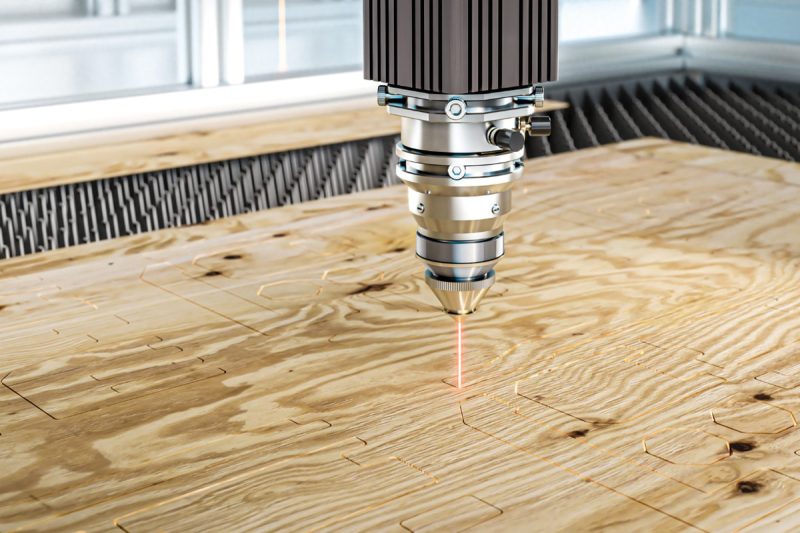
MDF and plywood are the most widely used CO2 laser cut sheet materials in production environments. MDF’s homogeneous composition produces consistent cut behavior; 150W handles MDF comfortably up to 8 to 10mm, and 500W to 600W enables production-speed cutting through 15 to 20mm. Bamboo, veneer, HDF, and cork all fall within the CO2 laser’s material domain, each with specific power-speed requirements that scale with density and thickness.
Acrylic and Plastics
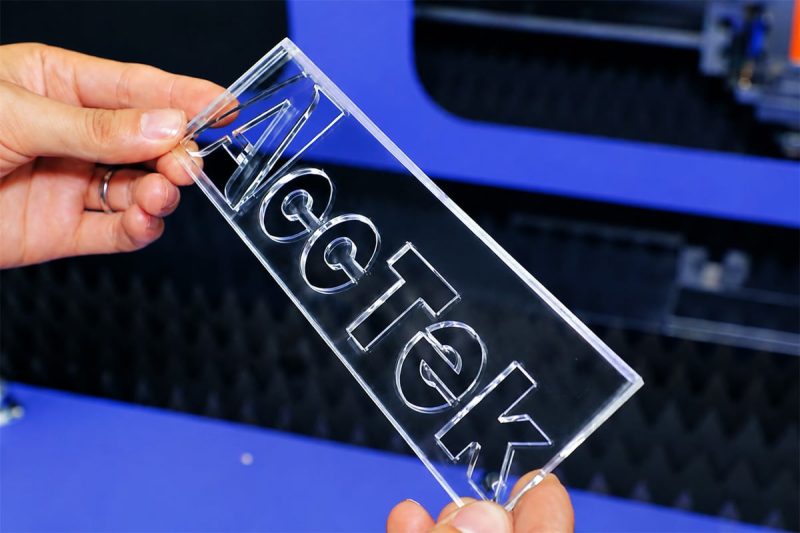
Acrylic is the material where CO2 laser cutting produces its most distinctive quality advantage — the flame-polished, optically clear cut edge. At 3mm cast acrylic, 100W to 150W delivers production cutting speeds with excellent edge quality. Higher power levels — 300W to 500W — enable significantly faster cutting at the same thickness, critical in high-volume sign and display production where throughput determines revenue. For thicker acrylic — 10mm, 15mm, and above — higher power becomes progressively more important: a 600W machine cuts 15mm acrylic at commercially viable speeds where a 100W machine would require multiple slow passes with degraded edge quality.
Other engineering plastics — polycarbonate, ABS, POM (Delrin), PET, polypropylene, and polyethylene — all process well with CO2 laser generators, with power requirements scaling with material density and thickness similar to acrylic. Polycarbonate tends to yellow slightly at the cut edge due to thermal discoloration; POM cuts with very clean, white edges are suitable for precision components.
Leather and Fabric
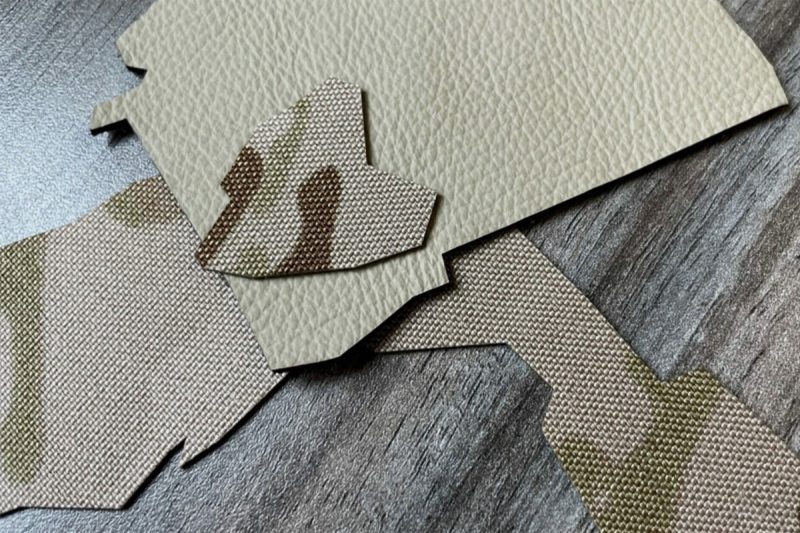
Natural leather, synthetic leather, cotton, polyester, felt, and other textiles are thin, highly absorbent materials that require relatively low power levels. An 80W to 100W machine processes standard leather and fabric thicknesses efficiently, with the primary challenge being the prevention of scorching rather than achieving penetration. Higher-power machines cutting leather and fabric must be operated at reduced power fractions or higher speeds to maintain clean, sealed edges — the additional power capacity of a 300W or 600W machine provides minimal direct cutting benefit for these materials but offers the flexibility to process a wider range of thicker or denser materials within the same platform.
Rubber, Foam, and Flexible Materials
Natural and synthetic rubber — neoprene, EPDM, nitrile — cut well across the CO2 power range, with speed increasing proportionally with power for thicker rubber sheet. Foam materials — polyurethane, EVA, polyethylene foam — require careful power-speed balancing to avoid melting the cut edge, as too much energy causes collapse rather than clean ablation. For foam cutting applications, 80W to 150W handles most foam thicknesses encountered in packaging and display work cleanly. Silicone rubber does not cut cleanly with CO2 laser generators regardless of power level and is better addressed by mechanical cutting.
Paper and Cardboard
Paper, cardboard, and corrugated board are among the easiest CO2 laser cut materials, requiring minimal power and cutting at very high speeds. Even a 60W to 80W machine cuts paper faster than its motion system can travel, making higher power levels largely irrelevant for pure paper cutting applications. Where higher power benefits paper and cardboard work is in processing very thick corrugated board or multiple stacked layers simultaneously, and in enabling higher throughput when other materials in the production mix require the additional power capacity.
Metals: Realistic Expectations
The 10.6 µm CO2 wavelength is significantly less well absorbed by metal surfaces than by organic materials, and the high thermal conductivity of metals disperses heat rapidly away from the cut zone. For mild steel and stainless steel in the 60W to 600W power range, clean cuts at 1 to 2mm are achievable with careful parameter optimization; 3mm steel cutting is possible at the upper power levels (500W to 600W) with good quality when parameters are well tuned; and 5mm represents the practical maximum for CO2 metal cutting in this prange, achievable only at significantly reduced speeds and with noticeably degraded edge quality relative to what a fiber laser cutting machine would produce on the same material. Highly reflective metals — copper, brass, polished aluminum — are particularly challenging for CO2 laser generators due to their very high reflectivity at 10.6 µm. For any production requirement involving regular or significant metal cutting, fiber laser cutting machines are the engineering-appropriate technology choice, and CO2 machines should not be selected for metal cutting as a primary application.
Power requirements vary substantially across CO2 laser cutting materials. Non-metallic materials — the technology’s primary application domain — support cutting to substantial depths (10mm to 25mm for wood and acrylic at higher power levels) with speed that scales directly with power. Metals are a secondary and limited application: clean cutting up to 3mm with good quality and up tlaser-cuta maximum at the upper power levels, but not a primary use case for CO2 machines in this power range.
Power Ranges and Typical Machine Categories
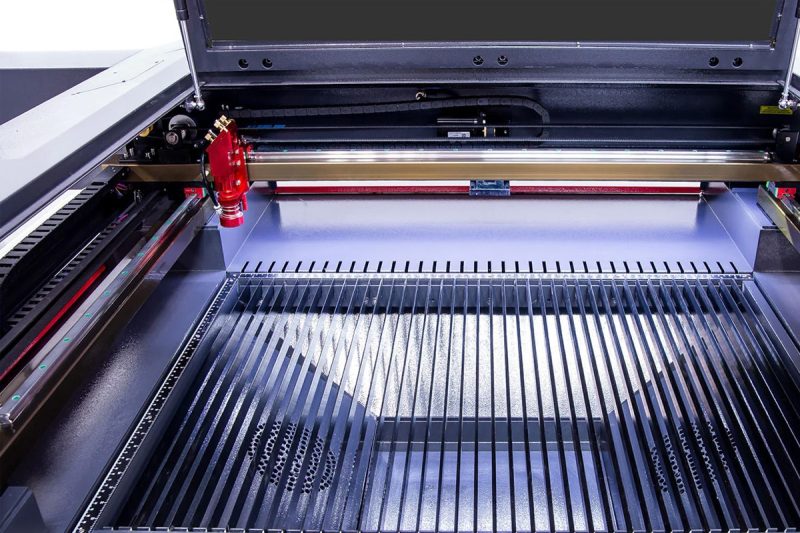
The CO2 laser cutting machine market organizes itself around a set of discrete power levels that correspond to distinct application profiles, price points, and production environments. This section characterizes each tier with reference to the 60W to 600W range that defines current commercial CO2 laser cutting technology.
Entry-Level Systems: 60W to 100W
Machines in the 60W to 100W range represent the accessible entry point into CO2 laser cutting — compact, affordable, and capable of handling the core CO2 material set at moderate thicknesses and speeds. At 80W to 100W, a well-configured machine cuts 6 to 8mm acrylic cleanly, handles wood veneer and thin plywood up to 5 to 6mm, processes leather and fabric with sealed edges at high speed, and engraves a wide range of materials for personalization and decoration. These machines suit hobbyists, maker spaces, small sign shops, custom gift producers, schools, and prototyping environments where the combination of accessible price and genuine CO2 material versatility is the primary value.
Mid-Range Systems: 100W to 300W
The 100W to 300W range is where most commercial CO2 laser cutting production occurs, covering the broadest range of applications with a balance of cutting capability, speed, and purchase price. A 150W machine cuts 10mm acrylic cleanly at good production speeds, handles 8 to 10mm MDF and plywood, and processes the full range of leather, fabric, rubber, and foam applications that define the CO2 cutting material set. Moving to 200W to 300W extends clean cutting capability to 15mm or more on softer wood and MDF, and increases cutting speeds on all materials enough to meaningfully improve throughput for businesses where machine productivity directly affects revenue. This power range serves sign shops, display fabricators, furniture component producers, packaging prototypers, and mixed non-metallic production facilities.
High-Performance Systems: 300W to 600W
Machines from 300W to 600W represent the upper tier of commercial CO2 laser cutting capability, delivering the highest cutting speeds and the deepest non-metallic cutting capacity in the product range. At 500W to 600W, cutting speeds on standard materials approach or reach the motion system’s maximum travel speed on thin gauges, maximizing throughput for high-volume production. These machines are also capable of cutting the thickest non-metallic materials that CO2 laser cutting can address — 20mm or more of softwood, 15 to 20mm of MDF, and 15mm or more of acrylic — at speeds that are commercially viable for production use. The trade-offs are higher purchase price, greater electrical energy consumption, and the need for more robust cooling systems to manage the laser generator’s substantially higher heat output.
CO2 laser cutting machines from 60W to 600W span from hobbyist entry points through high-volume commercial systems. The most impactful power steps are from the 60W to 80W entry tier to the 150W to 200W mid-range — where production speed and maximum thickness capability both increase meaningfully — and from 200W to 300W to the 500W to 600W upper range, where the highest throughput and deepest non-metallic cutting capability become available. All systems share the same fundamental material compatibility profile centered on non-metallic substrates.
Factors That Work Alongside Power to Determine Cutting Performance
Power is the most prominent specification in CO2 laser cutting machine marketing, but it is one of several factors that collectively determine the cutting performance achieved in production. This section examines the factors that work alongside power and, in many cases, enable or constrain the performance that power alone cannot fully determine.
Beam Quality
Beam quality — characterized by the M² factor — determines how tightly the CO2 beam can be focused for a given optical configuration. A high-quality beam with M² close to 1.0 focuses to a smaller spot than a lower-quality beam at the same power level, achieving higher power density and therefore better cutting performance for fine details, thin materials, and clean-edge work. CO2 laser tubes from established manufacturers such as Reci, Yongli, EFR, and SLW — which are the tube brands used in commercial CO2 cutting systems — are engineered for consistent beam quality throughout their rated service life, and the beam quality difference between a high-quality tube and a low-cost alternative can meaningfully affect cutting performance independently of the wattage rating.
Focal Length and Spot Size
The focusing lens in the cutting head determines the focal length and therefore the focused spot size and depth of focus. A shorter focal length produces a smaller, higher-intensity spot — ideal for fine detail cutting and thin materials, but with a shallower depth of focus that is sensitive to surface height variation. A longer focal length produces a larger spot with a wider depth of focus — better suited for thick material cutting where the beam must maintain useful intensity across many millimeters of cut depth. Matching focal length to the primary cutting application is a configuration decision that affects performance independently of laser generator power.
Assist Gas Type and Pressure
Compressed air is the standard assist gas for CO2 laser cutting of most non-metallic materials, performing two critical functions: ejecting the molten or vaporized material from the kerf to prevent re-solidification, and cooling the kerf walls to limit thermal damage to the material adjacent to the cut. The pressure and flow rate of the assist gas must be matched to the cutting speed and material: too low a pressure allows ejected material to re-deposit on cut walls and degrade edge quality; too high a pressure can disturb delicate cut features and create turbulence that destabilizes the cut path. Nitrogen assist gas is occasionally used for applications where the slight oxidation caused by compressed air is undesirable, though for most non-metallic CO2 cutting applications compressed air delivers excellent results at the lowest operating cost.
Cutting Speed and Feed Rate
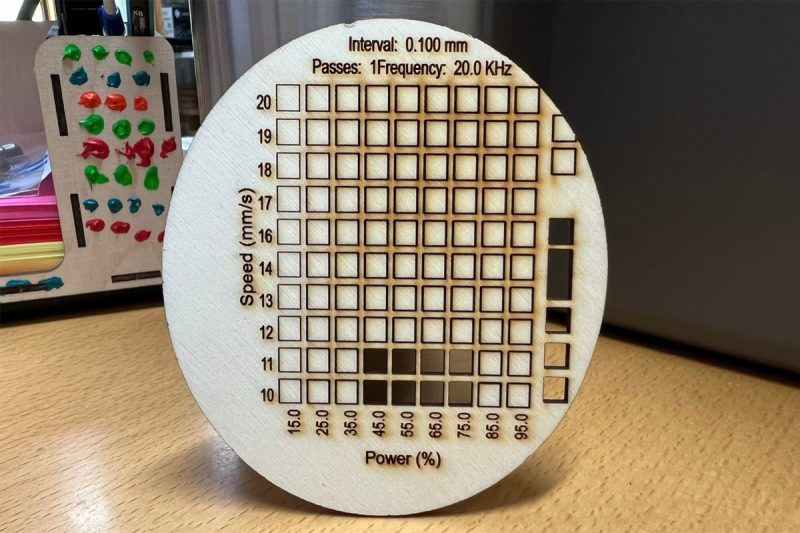
Cutting speed — the rate at which the cutting head traverses the workpiece — is the parameter that must be tuned in conjunction with power to achieve optimized results. For every combination of laser generator power, material type, and thickness, there is an optimal speed range that balances energy delivery with material removal rate. Too slow deposits excess energy that widens the HAZ and increases charring; too fast leaves material incompletely cut or produces a rough kerf. Documenting optimized speed settings for each material-thickness combination in production is a practical calibration investment that pays dividends in consistent quality and maximum throughput throughout the machine’s operating life.
Material Surface Condition
The surface condition of the material affects how efficiently it absorbs the incident laser energy and therefore how consistently it cuts at a given power level. Clean, uncontaminated surfaces absorb energy more uniformly than surfaces with oil films, dust deposits, or protective release films. Moisture content in wood materials significantly affects cutting behavior — very dry wood cuts faster but with more charring; high-moisture wood requires more energy to vaporize and cuts more slowly at the same power. For reflective materials such as polished acrylic with protective film, ensuring that the protective film is left in place during cutting (it absorbs CO2 laser radiation and protects the acrylic surface) and removed only after cutting is complete prevents surface damage that would otherwise require post-processing.
CO2 laser generator power interacts with beam quality, focal configuration, assist gas parameters, cutting speed, and material surface condition to determine actual cutting performance in production. Optimizing all of these factors in combination — not simply selecting the highest available power — is the path to consistent, high-quality results. A well-configured 150W machine can outperform a poorly configured 300W machine on the materials and thicknesses that define the majority of CO2 laser cutting applications.
How to Choose the Right Power Level for Your Application
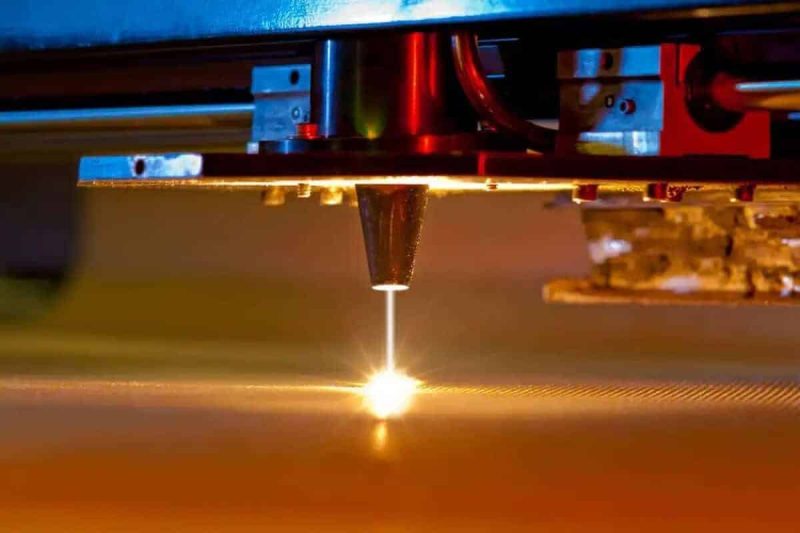
Selecting the right CO2 laser generator power level should be driven by the specific materials, thicknesses, and production volumes of the intended application — not by the assumption that maximum power always delivers the best outcome. This section provides a practical decision framework grounded in the real-world application profiles of CO2 laser cutting.
Matching Power to Material and Thickness
The most important input to power selection is an honest assessment of the thickest material that will regularly be cut in production and the cutting speed required to meet throughput targets at that thickness. For primarily thin material work — fabric, paper, thin leather, acrylic up to 3 to 5mm — the 60W to 150W range is genuinely sufficient, and higher power provides minimal practical benefit while adding cost and energy consumption. For a sign shop primarily cutting 6 to 10mm acrylic in moderate volumes, 150W to 200W provides comfortable operating margin. For facilities cutting 15mm to 20mm wood or MDF in high volumes where throughput is a commercial priority, 300W to 600W delivers the speed and depth capability that justify the higher investment.
A practical approach is to identify the material-thickness combination representing 80 percent or more of production volume and select the power level that cuts that combination at the target speed with 20 to 30 percent headroom above the minimum required. This margin accommodates tube aging over the service life, material batch variation, and the occasional need to process thicker or denser materials than the standard production mix.
Balancing Power with Operating Cost
Higher power CO2 laser generators consume more electrical energy, require more robust cooling systems, and have laser tubes that cost more to replace at end of life. A 600W machine draws substantially more total electrical power than a 100W machine during operation, and this energy cost accumulates significantly over years of production use. For applications where 150W or 200W delivers adequate performance, the energy and maintenance cost savings of operating at lower power represent a genuine long-term economic advantage that should be factored into total cost of ownership comparisons rather than being ignored in the pursuit of maximum specification.
Avoiding Oversizing and Undersizing
Undersized machines — power levels genuinely insufficient to cut the required materials at acceptable speeds and depths — are an obvious problem: they may require multiple passes on thicker materials, produce inferior edge quality, and fail to meet production cycle time targets. But oversizing carries its own costs: higher purchase price, higher energy consumption, greater cooling system demands, and the need to run the machine at a fraction of its power capacity for most production work. Operating a 600W machine at 15 to 20 percent power on thin materials is both energy-inefficient and unnecessary. Right-sizing to the application consistently delivers better economics and more reliable process control than selecting the highest available power as a default.
Right-sizing a CO2 laser cutting machine’s power level to the actual application requirements — based on material type, maximum thickness in regular production, and throughput targets — delivers the best combination of cutting performance, operating cost, and long-term economic return. The 60W to 600W range covers the full spectrum of non-metallic CO2 laser cutting applications, and the optimal selection within that range is determined by application characteristics rather than by the general assumption that higher is always better.
Conclusion
This article has provided a comprehensive examination of how CO2 laser generator power shapes cutting performance — covering the physics of power generation and measurement, the specific effects of wattage on cutting depth by material type, the important cases where higher power does not translate proportionally into faster cutting, the practical material-specific power requirements within the 60W to 600W commercial range, the additional factors that work alongside power to determine real-world results, and the framework for selecting the right power level for a given application.
The most important factual clarification this article has provided is the distinction between non-metallic and metallic cutting depth capabilities. CO2 laser cutting machines in the 60W to 600W range excel at cutting non-metallic materials to substantial depths — 10mm to 25mm for wood, MDF, and acrylic at appropriate power levels — which is the genuine strength of the technology and the primary application domain for which it is designed. Metal cutting is a fundamentally different and more limited proposition: clean cuts to 3mm for steel and stainless steel with good quality, and up to 5mm as a practical maximum at upper power levels with reduced speed and quality. Metal cutting is not the primary intended use of CO2 machines in this power range; fiber laser cutting machines are the engineering-appropriate technology for regular metal cutting applications.
Within the non-metallic material domain that defines CO2 laser cutting’s excellence, higher power delivers genuine and commercially significant benefits — faster cutting speeds, access to greater material depths, and more comfortable operating margins — but with a law of diminishing returns that means each successive power increase delivers proportionally less incremental benefit. Beam quality, optical configuration, assist gas management, and parameter optimization work alongside power to determine actual production performance, and optimizing all of these factors together consistently outperforms simply maximizing power specification.
Selecting the right power level — matched to the actual material mix, thickness range, and throughput requirements of the specific application — consistently delivers better outcomes than defaulting to maximum available power.
Get a Laser Cutting Solution
Choosing the right CO2 laser cutting machine for your application requires accurate performance expectations, honest power matching to your material requirements, and a supplier who can guide the configuration decision with genuine application knowledge.
AccTek Laser is a professional CO2 laser cutting machine manufacturer offering systems across the complete commercial CO2 power range — from 60W through 600W — available in multiple configurations including standard flatbed formats, fully enclosed safety cabinets for clean production environments, large-format working areas up to 1,500 × 3,000 mm for full-sheet material processing, double-head systems for parallel production with doubled throughput on identical parts, CCD camera-equipped machines for precise contour cutting of printed and patterned materials, and automatic feeding systems for continuous processing of rolled or sheet-fed flexible materials such as fabric and leather. All systems are built around high-quality CO2 laser tubes from trusted brands including Reci, Yongli, EFR, and SLW, paired with precision HIWIN linear guide rails, Ruida control systems, and high-quality ZnSe optical components that ensure consistent beam quality and focal performance across the machine’s operating life. For facilities that need both CO2 and fiber laser capabilities in a single platform, a dual-beam CO2 and fiber laser cutting machine is also available, combining 60W to 600W CO2 laser processing of non-metallic materials with 1,500W to 6,000W fiber laser cutting of metals in one integrated system. Pre-sales application consultation — including power selection guidance based on the specific materials, thicknesses, and throughput requirements of the application — professional installation and commissioning, comprehensive operator training, competitive spare parts supply, and responsive after-sales technical support are provided as part of the full-lifecycle service commitment that ensures the machine delivers on its performance potential from the first production day through its full working life.

Contact information
- [email protected]
- [email protected]
- +86-19963414011
- No. 3 Zone A, Lunzhen Industrial Zone,Yucheng City , Shandong Province.
Get Laser Solutions