


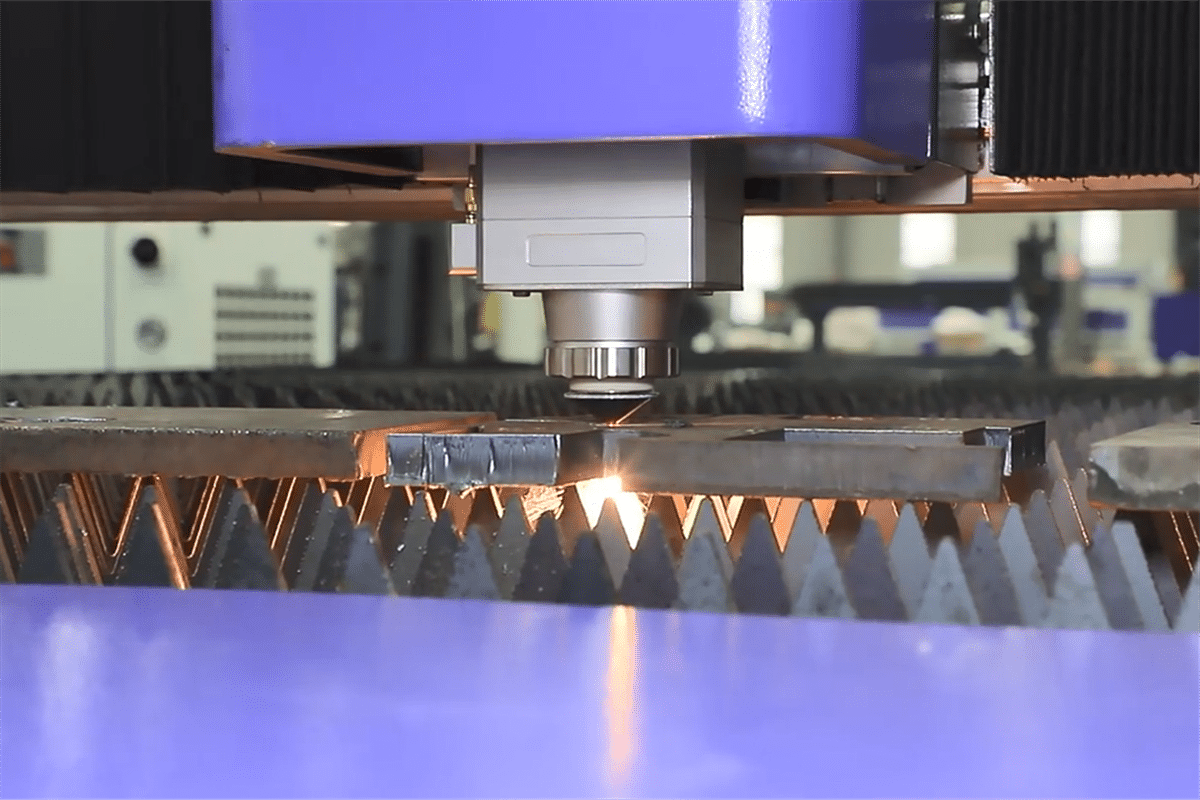
How to Choose The Right Auxiliary Gas For Laser Cutting
Assist gas selection is one of the most consequential decisions in laser cutting operations, and yet it is frequently treated as an afterthought compared to the more visible choices of laser generator power, machine brand, and material specification. In reality, the choice between oxygen, nitrogen, and compressed air as the assist gas for a given cutting job directly determines cut edge quality, achievable cutting speed, post-processing requirements, and — perhaps most significantly for long-term profitability — the ongoing operating cost of every single cutting job performed on the machine for as long as it remains in service.
Many fabricators default to whichever gas they were trained on or whichever gas their machine arrived configured for, without revisiting that choice as their material mix, production volume, or cost structure evolves. This is an understandable but costly habit. The gas consumption cost of a busy laser cutting operation, accumulated across thousands of cutting hours per year, frequently rivals or exceeds other major line items in the shop’s operating budget, and a mismatch between the assist gas being used and the actual requirements of the job at hand can quietly erode profit margins for years without anyone stopping to examine why. A shop that has always used nitrogen because that is what the previous owner specified, or because the original equipment supplier defaulted to it during installation, may be paying a substantial and entirely avoidable premium on every cutting job it runs, simply because nobody has revisited the assumption against the shop’s current material mix and production volume.
This article provides a clear, technically grounded explanation of what assist gas actually does during the laser cutting process, a detailed comparison of the three primary assist gas options — oxygen, nitrogen, and compressed air — across the material compatibility, edge quality, and cost dimensions that matter most to fabricators, and a practical, numbers-based breakdown of the long-term cost implications of each choice. The goal is to move beyond generic recommendations and give shop owners, process engineers, and equipment buyers the concrete information needed to select the assist gas strategy that genuinely fits their production mix and protects their margins over the full operating life of their laser cutting equipment.
Table of Contents
What Role Does Assist Gas Play in Laser Cutting?
Before comparing the three primary assist gas options against each other, it is essential to understand precisely what function the assist gas performs during the laser cutting process. Assist gas is not a passive byproduct of the cutting setup — it is an active participant in the cutting mechanism itself, and its specific role varies depending on which gas is selected. This section examines the three core functions that assist gas performs: clearing molten material from the cut, protecting the optical system, and, in some cases, directly participating in the cutting chemistry.
Blowing Away Molten Slag and Debris
The most fundamental and universal function of assist gas, regardless of which specific gas is used, is to physically eject molten and vaporized material from the kerf as the laser generator’s beam progresses along the cutting path. As the focused beam heats the material to its melting or vaporization point, the resulting molten pool and vapor must be cleared away quickly and completely to allow the beam to continue cutting through the full thickness of the material without obstruction. A coaxial stream of assist gas, delivered through the nozzle surrounding the focused beam, provides the mechanical force needed to blow this molten material downward and out of the cut, preventing it from re-solidifying within the kerf or adhering to the underside of the workpiece as dross.
Without adequate assist gas flow, molten material accumulates at the bottom of the cut, forming a rough, irregular bead of resolidified metal — commonly called dross or slag — along the lower edge of the workpiece. This dross typically requires secondary grinding or deburring to remove, adding labor cost and production time to every affected part. Adequate assist gas pressure and flow rate, properly matched to the material thickness and cutting speed being used, is therefore the first line of defense against poor edge quality and the additional finishing labor that comes with it.
Protecting the Focusing Lens from Contamination
A second critical function of assist gas is protecting the cutting head’s focusing lens and protective window from the spatter, fume, and vaporized material that the cutting process generates at the point of contact with the workpiece. As the beam interacts with the material, some quantity of vaporized metal, smoke, and fine particulate is inevitably thrown back toward the cutting head along the beam path. Without a sufficient gas barrier to push this contamination away from the optical path, these byproducts would gradually accumulate on the protective window and eventually the focusing lens itself, degrading beam quality and cutting performance over time and necessitating more frequent and more costly optical component replacement.
The coaxial assist gas flow, directed downward through the nozzle in the same direction as the beam travels, creates a continuous barrier that keeps this contamination moving away from the optics and toward the underside of the workpiece, where it can be safely cleared from the cutting zone. This protective function operates continuously throughout every cutting operation, regardless of which specific gas is selected, though the effectiveness of this protection can vary somewhat depending on the gas pressure and flow characteristics of each gas type.
Participating in the Cutting Chemistry
The third function of assist gas — and the one that most clearly differentiates oxygen from the other two gas options — is direct chemical participation in the cutting process itself. When oxygen is used as the assist gas for cutting carbon steel, it does not merely clear molten material from the kerf; it actively reacts with the heated iron at the cut front in an exothermic oxidation reaction, similar in principle to the combustion that occurs in oxy-fuel cutting torches. This reaction releases additional thermal energy directly at the cutting front, supplementing the energy delivered by the laser generator’s beam and allowing the cut to proceed at higher speeds or through thicker material than the laser energy alone would achieve at a given power level.
Nitrogen and compressed air, by contrast, are selected specifically because they do not participate in this kind of reactive chemistry to any significant degree. Nitrogen is deliberately chosen as an inert gas precisely because its lack of chemical reactivity prevents the oxidation of the cut edge, while compressed air — being roughly 78 percent nitrogen and 21 percent oxygen — sits in an intermediate position, providing enough oxygen content to support some degree of exothermic assistance on certain materials while still being far less reactive overall than pure oxygen.
Assist gas performs three distinct functions during laser cutting: it mechanically clears molten material and debris from the kerf to produce a clean cut, it protects the cutting head’s optical components from contamination generated during the cutting process, and — in the specific case of oxygen on carbon steel — it actively participates in an exothermic chemical reaction that supplements the laser generator’s energy and accelerates the cutting process. Understanding these three functions clearly is the foundation for evaluating why oxygen, nitrogen, and compressed air each produce meaningfully different cutting outcomes, which the next section examines in detail.
How Gas Pressure and Purity Affect Cutting Outcomes
Before moving into the detailed comparison of the three gas types, it is worth addressing two practical variables that significantly influence how well any given assist gas performs in actual production use: the pressure and flow rate at which the gas is delivered, and the purity of the gas supply itself. These variables apply across all three gas options and are frequently the difference between a fabricator getting the results theoretically available from a given gas choice and falling short of those results due to an improperly configured gas delivery system.
Matching Gas Pressure to Material Thickness and Type
The pressure at which assist gas is delivered through the cutting nozzle must be matched carefully to the material thickness and type being cut, and to the specific gas being used. Thicker materials generally require higher gas pressure to ensure that molten material is ejected forcefully enough to clear the longer kerf path through the full material thickness, while thinner materials typically perform better at somewhat lower pressures that avoid disturbing the precision of fine, intricate cutting paths. Nitrogen cutting, in particular, typically requires substantially higher pressure than oxygen cutting on comparable material thickness, since nitrogen lacks the assisting exothermic reaction that oxygen provides and must therefore rely more heavily on raw mechanical force to achieve clean material ejection from the kerf.
Operating at pressure levels below what a given material and gas combination requires typically manifests as incomplete dross removal, rough cut edges, or, in severe cases, failure to achieve complete cut-through across the full material thickness. Operating at excessive pressure, beyond what is actually needed for clean material ejection, wastes gas unnecessarily — directly inflating operating costs without any corresponding improvement in cut quality — and in some cases can actually degrade cut quality by introducing turbulence into the gas flow that disrupts the otherwise smooth, laminar ejection of molten material from the kerf. Properly calibrated pressure settings, established through systematic testing on each new material and thickness combination a shop regularly processes, are therefore an important lever for both cost control and quality consistency regardless of which assist gas has been selected.
Gas Purity and Its Impact on Cut Quality
The purity of the assist gas supply, particularly for nitrogen, has a direct and sometimes underappreciated impact on cut quality outcomes. Nitrogen gas is typically specified and purchased at a stated purity level, commonly expressed as a percentage such as 99.9 percent or higher, with the remaining trace fraction consisting primarily of residual oxygen and moisture. Even small increases in this trace oxygen content can noticeably affect cut-edge quality on stainless steel, since any oxygen in the nominally inert gas stream will still participate in oxidation chemistry at the cut front, gradually reintroducing the discoloration pure nitrogen is chosen to avoid.
Fabricators sourcing nitrogen from an on-site nitrogen generator should pay close attention to the purity level the generator can produce and maintain over time, since membrane and pressure swing adsorption nitrogen generators can gradually degrade in purity as filtration media age or as the generator operates outside its specified flow rate range. Periodic purity verification, either through the generator’s built-in monitoring or through independent gas analysis, helps ensure that the nitrogen being delivered to the cutting head continues to meet the purity threshold needed for consistently clean cut edges, rather than allowing gradual purity decline to silently erode cut quality over months of operation without anyone noticing the underlying cause.
Compressed air purity is a somewhat different consideration, centered less on trace gas composition — since air-assist cutting deliberately accepts ambient air’s natural oxygen content — and more on moisture and particulate contamination introduced during the compression process. Inadequately dried or filtered compressed air can introduce moisture into the cutting process that affects cut consistency and can contribute to corrosion within the gas delivery lines and cutting head components over time, making proper air treatment equipment an essential rather than optional component of any air-assist cutting setup.
Gas pressure and purity are practical variables that significantly influence how well any assist gas choice performs in real production use. Pressure must be carefully matched to material thickness and gas type, with nitrogen generally requiring higher pressure than oxygen on comparable materials due to the absence of an assisting exothermic reaction, and improperly calibrated pressure settings can degrade either cut quality or cost efficiency, depending on whether pressure is too low or unnecessarily high. Gas purity, particularly for nitrogen, has a direct bearing on cut edge quality, with even small trace oxygen contamination capable of reintroducing some of the discoloration that pure nitrogen is meant to eliminate, making purity verification an important ongoing consideration for shops relying on on-site nitrogen generation.
In-Depth Comparison: Oxygen VS Nitrogen VS Air
With the functional role of assist gas established, this section provides a detailed, material-by-material comparison of oxygen, nitrogen, and compressed air as assist gas options for laser cutting. Each gas carries a distinct profile of advantages and limitations that make it well suited to certain applications and poorly suited to others, and understanding these profiles in depth is essential to making an informed assist gas selection for any specific cutting requirement.
Oxygen: The Workhorse for Thick Carbon Steel
Oxygen assist gas is the standard choice for cutting carbon steel, particularly at greater thicknesses where its exothermic reaction provides a meaningful cutting speed and thickness-capacity advantage. As described in the previous section, the oxidation reaction between the oxygen assist gas and the heated steel releases additional thermal energy directly at the cut front, supplementing the laser generator’s beam energy and enabling the machine to cut through thicker plates at faster speeds than would be achievable with an inert assist gas at the same laser power level. This makes oxygen assist particularly valuable for fabricators working with thick carbon steel plate — structural components, heavy machinery parts, and similar applications where material thickness frequently exceeds what nitrogen- or air-assisted cutting can handle efficiently.
The primary drawback of oxygen assist is the cut edge quality it produces. The same oxidation reaction that accelerates the cut also leaves a layer of iron oxide along the cut edge, manifesting as a visible black or dark gray discoloration. For many structural and industrial applications, this oxide layer is cosmetically and functionally irrelevant, and the parts proceed directly to the next stage of fabrication or assembly without further treatment. However, for applications where the cut edge must be paint-ready, weld-ready without additional cleaning, or visually presentable without further finishing, the oxide layer represents an additional processing step — typically grinding, sanding, or chemical treatment — that adds labor cost and production time that would not be necessary with a cleaner cutting method.
Oxygen assist also introduces a heat-affected zone along the cut edge that is generally wider than what nitrogen cutting produces, a consequence of the additional thermal energy contributed by the oxidation reaction. For most structural and general fabrication applications, this wider heat-affected zone has negligible practical impact, but for precision components where dimensional accuracy and minimal thermal distortion at the cut edge are critical requirements, this can be a meaningful consideration, favoring an alternative assist gas.
Nitrogen: The Premium Choice for Stainless Steel and Aluminum
Nitrogen assist gas is the preferred choice for cutting stainless steel and aluminum, materials where the corrosion resistance and surface appearance of the base metal are functionally and commercially important properties that must be preserved at the cut edge. As an inert gas, nitrogen does not participate in oxidation chemistry, meaning that the cut edge it produces emerges free of the dark oxide layer that characterizes oxygen-assisted cutting. The resulting cut surface is bright, smooth, and silver-white in appearance — a finish commonly described as a clean or smooth edge — that requires no additional grinding, deburring, or oxide removal before the part proceeds to welding, polishing, or direct use.
This clean-edge characteristic is particularly valuable for stainless steel fabrication, where preserving the corrosion resistance of the base material across the cut surface is often a functional requirement rather than merely a cosmetic preference. An oxidized cut edge on stainless steel can compromise the passive chromium oxide layer that gives stainless steel its corrosion resistance, creating a localized zone of reduced corrosion performance precisely at the cut edge — exactly where structural or hygienic integrity often matters most, such as in food processing equipment, medical device components, or architectural stainless steel applications.
The principal drawback of nitrogen assist is cost. Nitrogen must either be supplied from bulk liquid nitrogen storage with an on-site vaporization system, from high-pressure gas cylinders that must be regularly replaced, or from an on-site nitrogen generator that separates nitrogen from compressed air. Each of these supply methods carries a significant ongoing expense, particularly for high-pressure cutting applications that demand substantial gas flow rates and consume nitrogen rapidly during continuous production. For shops with high cutting volumes on stainless steel or aluminum, nitrogen gas costs can become one of the largest recurring operating expenses associated with the laser cutting process, a reality explored in greater financial detail in the following section of this article.
Compressed Air: The Economical Workhorse for Thin Material
Compressed air assist gas offers a fundamentally different cost proposition than either oxygen or nitrogen. Rather than purchasing gas as a consumable — whether in cylinders, bulk liquid delivery, or through a dedicated nitrogen generator — compressed air is produced on-site using a standard industrial air compressor, drawing on ambient atmospheric air and compressing it to the pressure required for the cutting process. Once the upfront capital investment in an appropriately sized, high-pressure air compressor has been made, the ongoing cost of compressed air assist consists almost entirely of the electricity required to run the compressor, which is dramatically lower than the cost of purchasing nitrogen or oxygen as a consumable gas on an ongoing basis.
Compressed air performs well for cutting thinner gauge carbon steel, stainless steel, and aluminum, and many fabricators find that the cut quality achieved with properly configured air assist on thin and medium gauge material is entirely acceptable for general fabrication purposes. Because air contains roughly 21 percent oxygen, it provides a modest exothermic assist on carbon steel similar in principle to, though weaker than, pure oxygen assist, which can support reasonably fast cutting speeds on appropriate material thicknesses.
The limitations of compressed air assist become more apparent on thicker material and on applications demanding the cleanest possible cut edge. The oxygen content in compressed air means that cut edges, particularly on stainless steel and aluminum, will show some degree of oxidation discoloration — generally lighter and less pronounced than pure oxygen cutting, but more pronounced than the fully oxide-free finish that pure nitrogen produces. Thinner sheet material generally tolerates this trade-off well, since any minor surface discoloration or microscopic dross formation has limited practical consequence on light-gauge parts, but as material thickness increases, air-assisted cutting can begin to show more pronounced dross formation and edge quality degradation compared to nitrogen-assisted cutting on the same material and thickness.
Air-assisted cutting also requires a reliable, adequately sized, high-pressure air compressor system as a prerequisite, along with appropriate air drying and filtration equipment to remove moisture and particulate contamination from the compressed air stream before it reaches the cutting head. Moisture or contamination in the air supply can degrade cut quality and, over time, contribute to corrosion or fouling within the gas delivery system and cutting head components. This means that while the ongoing per-job cost of air assist is low, it does require an appropriately specified and well-maintained compressed air infrastructure to deliver consistent results.
Each of the three primary assist gas options carries a distinct profile suited to different cutting requirements. Oxygen excels at cutting thick carbon steel quickly through its exothermic reaction, at the cost of a visible oxide layer and a wider heat-affected zone along the cut edge. Nitrogen delivers the cleanest, most corrosion-resistant cut edge on stainless steel and aluminum, but at a significantly higher ongoing gas cost than the alternatives. Compressed air offers a dramatically lower ongoing operating cost by drawing on ambient atmospheric air rather than purchased gas, performing well on thinner material across multiple metal types, though with some compromise in edge quality and thickness capacity compared to nitrogen, and requiring a properly specified compressor and air treatment system to deliver consistent results.
Cost Breakdown: Which Gas Saves the Most Money in the Long Run?
Having established the functional and quality trade-offs between oxygen, nitrogen, and compressed air, this section turns to the financial dimension of the decision — the dimension that ultimately determines which assist gas strategy makes the most economic sense for a given fabrication business over the realistic operating life of its laser cutting equipment. This section walks through the upfront investment comparison between compressed air infrastructure and nitrogen supply systems, works through a practical payback example and a simplified calculation method fabricators can apply to their own operation, explores hybrid strategies that combine multiple gas types within a single shop, and identifies the circumstances under which nitrogen remains the financially sound choice despite its higher per-hour gas cost.
Upfront Investment: Air Compressor VS Nitrogen Supply Systems
Switching laser cutting operations to compressed air assist, or specifying air assist capability when purchasing new equipment, requires an upfront capital investment in an appropriately sized, high-pressure air compressor along with supporting air treatment equipment — typically a refrigerated or desiccant air dryer and multi-stage filtration to remove moisture, oil, and particulate from the compressed air before it reaches the cutting head. This compressor and treatment package represents a meaningful one-time capital expense, and the compressor must be sized correctly for the cutting head’s pressure and flow requirements, which can be substantial for high-power cutting applications.
Nitrogen supply, by contrast, typically requires a much smaller upfront capital investment if the chosen supply method is cylinder delivery or bulk liquid nitrogen tank rental, since the gas supplier generally owns and maintains the storage and delivery infrastructure as part of an ongoing supply contract. The fabricator’s upfront cost in this scenario is limited to the gas distribution piping within the facility connecting the storage point to the cutting machine. Alternatively, a fabricator can invest in an on-site nitrogen generator, which separates nitrogen from compressed air using membrane or pressure swing adsorption technology — this approach requires a more substantial upfront capital investment, broadly comparable to or somewhat higher than a high-pressure air compressor system, but eliminates the ongoing cost of purchasing nitrogen as a delivered consumable gas.
This means the upfront investment comparison is not simply “air costs more upfront, nitrogen costs less” — it depends heavily on which nitrogen supply method is being compared against the air compressor investment. Cylinder or bulk liquid nitrogen delivery has a lower upfront cost than an air compressor system but a substantially higher ongoing cost. An on-site nitrogen generator has an upfront cost in a similar range to an air compressor system but still carries some ongoing electricity and maintenance costs, generally lower than purchased nitrogen delivery but higher than the electricity cost of simple compressed air production.
A Practical Payback Example
To make this comparison concrete, consider a fabrication shop currently relying on purchased nitrogen gas for the majority of its stainless steel and aluminum cutting work, evaluating whether to invest in a high-pressure air compressor system to shift a meaningful portion of that cutting work to compressed air assist instead. The shop’s nitrogen consumption for cutting operations represents a substantial recurring monthly expense, driven by the combination of cylinder or bulk delivery charges and the sheer volume of gas consumed during continuous high-pressure cutting across a full production schedule.
The air compressor and treatment system required to support the shop’s cutting head represents a one-time capital investment that, while significant, is paid once rather than recurring every month indefinitely. Once installed, the ongoing cost of producing compressed air consists almost entirely of the electricity needed to run the compressor — a cost that is generally a small fraction of what the equivalent volume of purchased nitrogen would have cost across the same cutting volume.
When the monthly nitrogen expense being eliminated is compared against the one-time compressor investment, many fabrication shops find that the capital cost of the air compressor system is recovered from the accumulated nitrogen savings within approximately twelve months of operation, particularly for shops with high cutting volume where nitrogen consumption was previously substantial. After that initial payback period, every month of continued operation using compressed air assist instead of purchased nitrogen represents nearly pure savings relative to the previous cost structure, compounding into very substantial cumulative savings across the multi-year operating life that follows. The exact payback period naturally varies by region, local utility and gas pricing, cutting volume, and the specific equipment configuration involved, but the directional pattern — a meaningful upfront investment recovered within roughly a year through eliminated ongoing gas purchases — holds across a wide range of realistic operating scenarios for shops with substantial cutting volume.
Building Your Own Simplified Payback Calculation
Rather than relying solely on generic figures, fabricators can build a reasonably accurate payback estimate specific to their own operation using a small number of inputs that most shops already have readily available. The first input is current monthly nitrogen spend — the total amount paid to the gas supplier for cylinder deliveries or bulk tank refills over a representative recent month, which captures the real-world consumption pattern of the shop’s actual cutting workload rather than a theoretical estimate. The second input is the quoted price for an appropriately sized air compressor and air treatment package matched to the cutting head’s pressure and flow specifications, obtainable directly from compressor suppliers or through the laser cutting machine manufacturer.
Dividing the compressor and treatment system cost by the current monthly nitrogen spend yields a straightforward payback period in months, before accounting for the modest electricity cost of running the compressor, which should be subtracted from the projected monthly savings to arrive at a more precise net payback figure. Shops should also factor in that not all of their nitrogen-cut work may be suitable for conversion to air assist — material thickness limitations and edge quality requirements discussed earlier in this article may mean that only a portion of current nitrogen consumption, rather than all of it, is realistically displaceable by switching to air. Calculating the payback period based on the realistically displaceable share of nitrogen spend, rather than the full current nitrogen budget, produces a more conservative and more reliable estimate of the true financial case for investing.
Hybrid Strategies: Using Different Gases for Different Jobs
For many fabrication shops, the most effective long-term assist gas strategy is not an exclusive commitment to a single gas type but a deliberate hybrid approach that matches each job to the gas best suited to its specific requirements. A shop might install an air compressor system to handle the bulk of its thinner stainless steel and aluminum cutting work — capturing the bulk of the available cost savings on high-volume, less demanding jobs — while retaining a nitrogen supply, whether through cylinders or an on-site generator, for thicker material sections or for the subset of precision orders where flawless edge quality is a non-negotiable customer requirement. Similarly, a shop processing a substantial mix of carbon steel alongside stainless steel and aluminum will generally retain oxygen assist for its carbon steel cutting regardless of its strategy for the other materials, since oxygen’s speed and thickness-capacity advantages on carbon steel are not something nitrogen or air assist can realistically replicate.
This hybrid approach requires a laser cutting machine and gas delivery system capable of supporting multiple assist gas types and switching between them efficiently as the job mix dictates, which is a specification consideration worth raising directly with the equipment manufacturer at the time of purchase rather than discovering after the fact that a machine’s gas delivery configuration cannot accommodate the flexibility the shop’s actual production mix requires.
When the Math Still Favors Nitrogen
Despite the compelling long-term economics of switching to compressed air assist for many applications, there are specific circumstances where continuing to use purchased nitrogen remains the financially and operationally sound choice. Shops with relatively low cutting volume, where the monthly nitrogen expense is modest to begin with, may find that the payback period for an air compressor investment stretches out considerably, potentially to a point where the capital could be better deployed elsewhere in the business rather than tied up in compressor infrastructure that only marginally outperforms the status quo.
Applications demanding the absolute cleanest possible cut edge — precision stainless steel components for food-grade, medical, or architectural applications where any trace of oxidation discoloration is commercially unacceptable — may require nitrogen’s superior edge quality regardless of the cost differential, since the cost of customer rejection, rework, or lost contracts from inadequate edge quality can far exceed any gas cost savings achieved by switching to air. Similarly, fabricators cutting thicker stainless steel or aluminum sections, where compressed air’s reduced cutting capability becomes a more significant practical limitation, may find that nitrogen remains necessary to maintain acceptable cutting speed and edge quality regardless of the cost comparison.
Finally, shops without access to adequate electrical capacity to support a large air compressor installation, or facilities where floor space and noise considerations make installing and operating a high-capacity compressor impractical, may find that the practical barriers to an air assist conversion outweigh the financial case for making the switch, even where the underlying gas cost economics would otherwise favor air.
The long-term cost comparison between compressed air and nitrogen assist gas favors compressed air decisively for fabrication shops with substantial cutting volume on stainless steel and aluminum, where the upfront investment in a properly sized air compressor and treatment system is typically recovered from eliminated nitrogen purchase costs within approximately a year, after which compressed air delivers substantial ongoing savings for the remaining operating life of the equipment. A simplified payback calculation based on current nitrogen spend and compressor quotes allows any shop to estimate this payback period for its own specific operation, while a hybrid strategy that matches different gases to different jobs often captures the bulk of the available savings without forcing an all-or-nothing commitment to a single gas type. Nitrogen remains the financially and operationally sound choice for lower-volume operations where the payback period would stretch out impractically, for precision applications demanding the cleanest possible cut edge regardless of cost, for thicker material cutting where air’s capability limitations become a binding constraint, and for facilities where the electrical capacity or physical space to support a large compressor system is not readily available.
Summary
This article has examined assist gas selection in laser cutting from every angle that matters to a fabrication business making this decision — what assist gas actually does during the cutting process, how gas pressure and purity influence real-world cutting outcomes, how oxygen, nitrogen, and compressed air compare across material compatibility and edge quality, and how the long-term financial implications of each choice play out across realistic production scenarios.
Assist gas performs three essential functions in laser cutting: clearing molten material from the kerf to produce a clean cut, protecting the cutting head’s optical components from contamination, and — in the specific case of oxygen — actively participating in an exothermic chemical reaction that supplements the laser generator’s cutting energy. These functions explain why the choice of gas has such a direct and significant impact on cutting outcomes rather than being a minor operational detail. Beyond the choice of gas itself, the pressure at which it is delivered and the purity of the supply both have a meaningful, sometimes underappreciated, bearing on whether a given gas choice actually delivers the cut quality and cost performance it is theoretically capable of in production use.
Oxygen remains the workhorse choice for thick carbon steel, delivering faster cutting speeds and greater thickness capacity through its exothermic reaction, at the cost of a visible oxide layer along the cut edge that may require additional finishing for cosmetically sensitive applications. Nitrogen delivers the cleanest, most corrosion-resistant cut edge available, making it the preferred choice for stainless steel and aluminum applications where edge quality and corrosion performance are functional requirements rather than mere preferences, but its ongoing gas cost represents one of the largest recurring expenses many fabrication shops face in their cutting operations. Compressed air offers a fundamentally more economical operating cost structure by drawing on ambient atmospheric air rather than purchased gas, performing acceptably on thinner material across multiple metal types once an appropriately sized compressor and air treatment system has been installed, with the upfront capital investment frequently paid back within about a year for shops with substantial cutting volume.
The financially optimal assist gas strategy is not universal — it depends on cutting volume, material thickness, the specific edge quality requirements of the parts being produced, and the practical constraints of available capital, electrical capacity, and floor space at each facility. High-volume shops cutting substantial quantities of stainless steel and aluminum will generally find compelling, often rapid, financial justification for investing in air compressor infrastructure to displace ongoing nitrogen purchases, and many will find that a hybrid strategy combining air assist for routine work with retained nitrogen capacity for precision or thick-material jobs captures the largest share of available savings without sacrificing the flexibility to meet every customer requirement. Lower-volume operations, precision applications demanding flawless edge quality regardless of cost, and shops working with thicker material sections will often find that nitrogen remains the right choice despite its higher per-job cost.
Approaching this decision with a clear understanding of the technical trade-offs and a realistic, numbers-based assessment of the long-term cost implications — built from a shop’s own actual nitrogen spend and compressor quotes rather than generic industry figures alone — is the surest way to protect margins and ensure that assist gas selection works in favor of, rather than against, a fabrication business’s bottom line.
Get Laser Cutting Solutions
Selecting the right assist gas strategy — and specifying the right machine configuration to support that strategy — has a direct and lasting impact on the operating economics of any laser cutting business, and working through that decision with a manufacturer who understands both the technical and financial dimensions of the choice leads to far better long-term outcomes than defaulting to whatever gas configuration a machine happens to arrive with.
AccTek Laser manufactures laser cutting machines configured to support oxygen, nitrogen, and compressed air assist gas delivery, with cutting head and gas delivery system designs engineered to perform reliably across all three gas types, depending on the specific material and application requirements of each customer. Its engineering team can help customers size an appropriate air compressor and treatment system matched to their cutting head’s pressure and flow requirements, evaluate whether an on-site nitrogen generator makes sense relative to continued cylinder or bulk delivery for their specific consumption pattern, and configure machines to support the flexible hybrid gas strategies that many growing fabrication shops find deliver the best balance of cost control and production flexibility.
Customers evaluating their assist gas strategy — whether assessing a potential switch from nitrogen to compressed air, sizing equipment for a new machine purchase based on their material mix and production volume, or simply seeking a second opinion on their current gas costs relative to what their cutting volume should realistically require — can receive application-specific guidance covering material compatibility, expected edge quality outcomes, and realistic cost projections for their particular operation, supported by full pre-sales consultation, installation assistance, and ongoing after-sales technical support throughout the equipment’s working life.

Contact information
- [email protected]
- [email protected]
- +86-19963414011
- No. 3 Zone A, Lunzhen Industrial Zone,Yucheng City , Shandong Province.
Get Laser Solutions