

















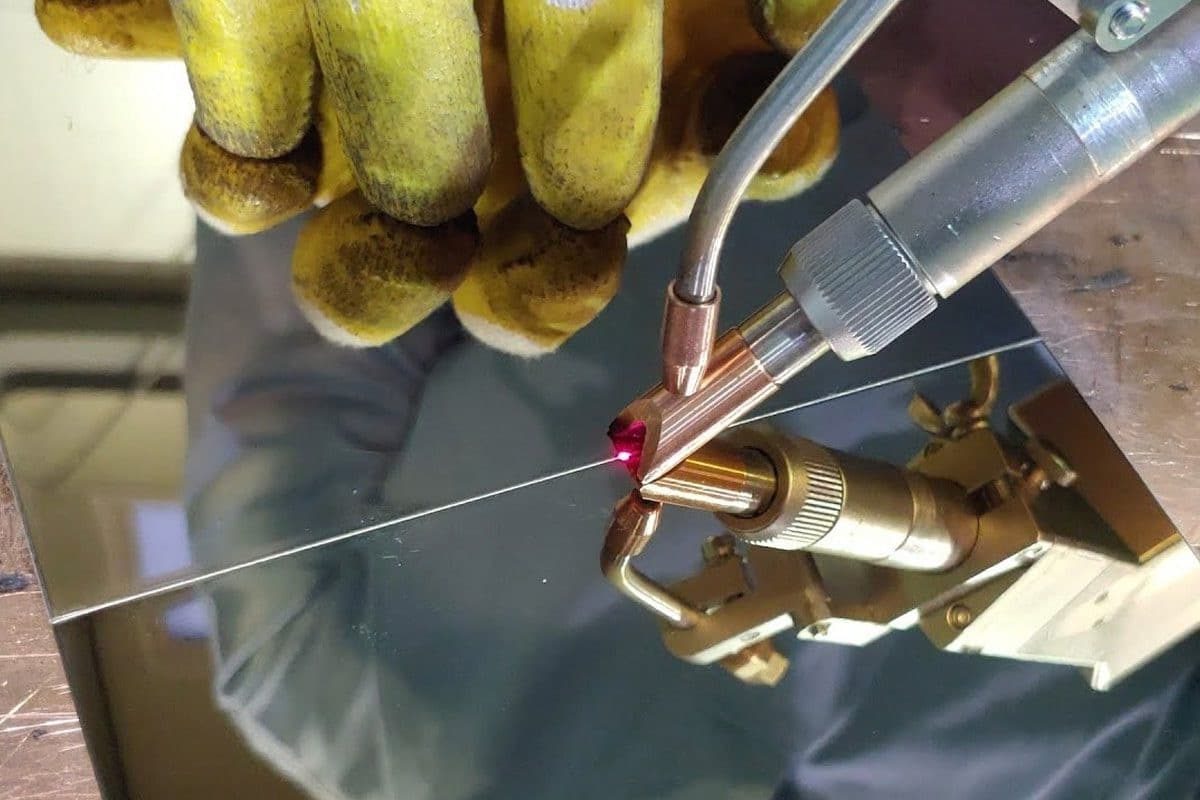
Autogenous Laser Welding vs. Laser Welding with Filler Material: Core Differences, Technical Characteristics, and Application Selection
Laser welding (LBW) is a crucial joining technology in modern manufacturing, evolving from lab experiments in the 1960s to widespread industrial use across sectors like automotive, aerospace, medical devices, electronics, and shipbuilding. Laser welding machines leverage highly focused laser beams to generate high energy densities in a small area, enabling deep-penetration welding. Compared to traditional methods like arc or gas welding, laser welding offers advantages such as concentrated heat, narrow heat-affected zones, minimal distortion, fast processing speed, and ease of automation, making it ideal for high-precision, high-efficiency manufacturing.
Laser welding machines come in two main forms: autogenous laser welding, which uses the base metal alone for welding, and laser welding with filler material, where wire or powder is added to the molten pool. Both rely on the laser heat source but differ in process implementation, weld performance, material suitability, equipment, and cost. Understanding these differences helps engineers choose the right laser welding machine for specific applications. This article compares the two processes across key aspects such as principles, characteristics, advantages, limitations, and application considerations.
Table of Contents
What Is Autogenous Laser Welding?
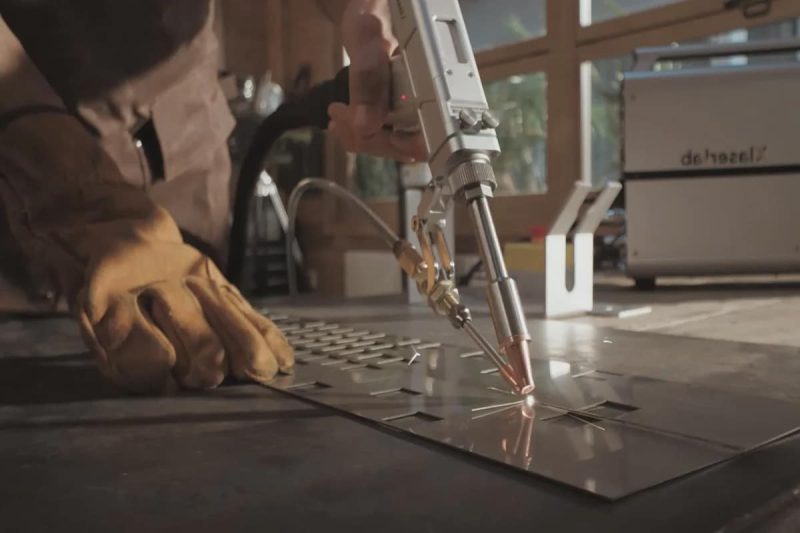
Autogenous laser welding, as the name implies, is a welding process in which no external filler material is added. The weld is formed entirely by the base metal melting, flowing, and solidifying under the influence of the high energy density of the laser beam. The term “autogenous” precisely captures the core logic of this process: the base metal serves both as the workpiece being joined and as the sole source of weld metal.
Autogenous laser welding, as the name implies, is a welding process in which no external filler material is added. The weld is formed entirely by the base metal melting, flowing, and solidifying under the influence of the high energy density of the laser beam. The term “autogenous” precisely captures the core logic of this process: the base metal serves both as the workpiece being joined and as the sole source of weld metal.
Working Principle
The physical process of autogenous laser welding can be understood from two perspectives: energy transfer and molten pool dynamics.
From the perspective of energy transfer, the laser beam is focused by a precision optical system — comprising collimating and focusing lenses — down to a focal point, where the spot diameter typically ranges from 0.1 to 1.0 mm, yielding an extremely high power density. When the laser beam strikes the surface of the base metal, optical energy is absorbed and converted into heat, which rapidly propagates into the material and causes a sharp temperature rise.
When the laser power density exceeds a critical threshold — approximately 10⁶ W/cm² — the metal surface does not merely melt; it also undergoes localized vaporization, generating high-pressure metallic vapor. This vapor jets outward, exerting a strong recoil pressure on the liquid metal in the molten pool and excavating a narrow, elongated cavity known as the “keyhole.” The keyhole allows the laser energy to be absorbed not only at the surface but also along the cavity walls through multiple reflections, enabling it to penetrate deep into the material. This keyhole effect is the defining feature that distinguishes deep-penetration laser welding from conduction-mode (shallow-penetration) laser welding.
From the perspective of molten pool dynamics, the keyhole is surrounded by a pool of liquid metal. As the laser beam advances along the welding direction, fresh material is continuously melted at the leading edge while the trailing portion of the pool solidifies rapidly. Under ideal conditions, the solidified weld metal exhibits a fine-grained, dense microstructure, and the weld cross-section displays the characteristic “nail-head” profile — relatively narrow at the surface but significantly deeper, with a depth-to-width ratio typically reaching 3:1 or higher.
Process Characteristics
The process characteristics of autogenous laser welding are both distinctive and focused. First, since no external material needs to be introduced, the process flow is highly streamlined, the mechanical structure of the welding system is comparatively simple, and the key process parameters are essentially limited to three core variables: laser power, welding speed, and defocus distance. Second, this process is extremely sensitive to joint fit-up accuracy — the two base metal surfaces must be in intimate contact, with the joint gap generally kept within 10% of the plate thickness (typically no more than 0.1 to 0.2 mm). Exceeding this tolerance may cause the laser beam to pass through the gap without effectively fusing the material, resulting in an incomplete or absent weld. Furthermore, the chemical composition of the weld is nearly identical to that of the base metal, with no introduction of foreign elements — a property of critical importance in applications requiring strict compositional purity, such as medical implants and nuclear industry components.
Autogenous laser welding has established an irreplaceable position in the field of precision thin-sheet welding, thanks to its streamlined process, high efficiency, narrow heat-affected zone, and compositional purity. However, its stringent requirements for joint fit-up accuracy also define its boundaries — once the joint gap exceeds the allowable tolerance, the robustness of the process deteriorates sharply.
What Is Laser Welding with Filler Material?
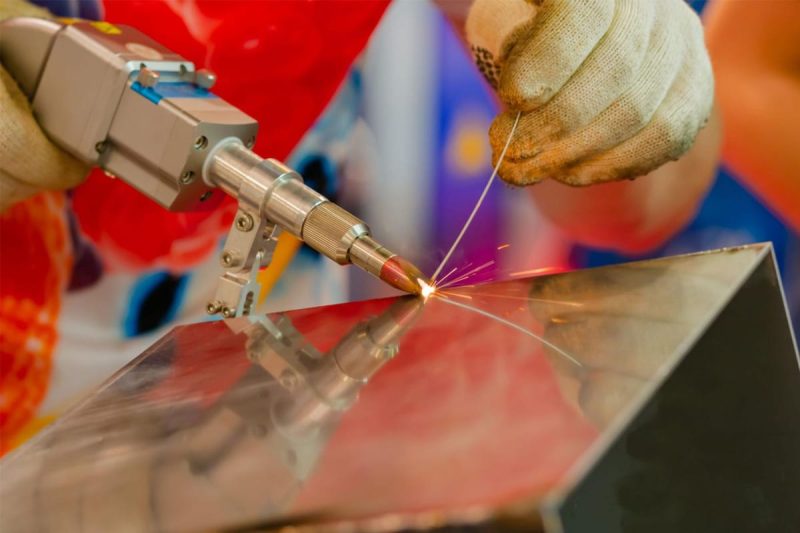
Laser welding with filler material is a hybrid welding process that builds on laser welding by continuously feeding external filler material — typically in the form of welding wire or powder — into the welding zone. The filler material and the base metal melt together under the laser heat source, mix within the molten pool, and solidify to form the weld. This process organically combines the high-energy-density advantage of laser welding with the flexibility of conventional filler welding, significantly broadening the application boundaries of laser welding technology.
Working Principle
Laser welding with filler material incorporates a filler delivery mechanism on top of the laser focusing and keyhole formation process. Depending on the form of the filler material, two main delivery methods are employed: laser wire welding and laser powder welding.
In laser wire welding, a welding wire is fed continuously into the laser irradiation zone at a precisely controlled speed by a wire feeder. The tip of the wire melts rapidly within the laser heat field, and the molten wire metal mixes thoroughly with the molten base metal in the pool, participating jointly in solidification and weld formation. The feed position and angle of the wire, as well as the matching relationship between wire feed speed and laser parameters, are critical factors governing process stability.
In laser powder welding, powder filler material is delivered through a nozzle carried by an inert carrier gas at a specified flow rate and direction into the laser focal zone. The powder particles are melted by the laser and deposited onto the base material surface, forming a molten pool together with the melted base metal. This method is also widely used in laser cladding and additive manufacturing (3D printing).
From a weld pool metallurgy perspective, the addition of filler material significantly alters the chemical composition of the weld pool. By selecting filler materials with specific compositions, engineers can purposefully adjust the chemical makeup of the weld metal, thereby influencing its mechanical properties, corrosion resistance, and crack susceptibility. For example, when welding high-carbon steel, a low-carbon filler wire can be used to reduce the carbon content in the weld, thereby suppressing martensitic transformation and improving weld toughness. When welding aluminum alloys, silicon- or copper-bearing filler wires can be added to mitigate the material’s sensitivity to hot cracking.
Working Principle
The process characteristics of laser welding with filler material are manifested in a larger parameter space and greater process flexibility. On one hand, the filler material can physically bridge joint gaps, allowing this process to tolerate significantly larger gaps than autogenous welding — typically up to 0.3 to 1.0 mm or even more — which substantially reduces the demands on part machining accuracy and fixture precision. On the other hand, the number of process parameters increases considerably: in addition to laser power, welding speed, and defocus distance, the wire (or powder) feed speed, filler angle, and relative positioning of filler to the laser spot must all be precisely controlled. The complex interactions among these parameters make process window definition and optimization a considerably more systematic undertaking. Moreover, the presence of filler material alters the thermodynamic behavior of the molten pool to some degree, and the increased weld metal volume helps reduce the incidence of defects such as shrinkage cavities and porosity.
By introducing external material, laser welding with filler material endows the laser welding process with stronger engineering adaptability — whether in reducing dependence on joint fit-up precision, expanding the range of weldable materials and thicknesses, or enabling targeted control of weld properties, this process route demonstrates unique value. Of course, the increased process complexity and higher equipment cost are real trade-offs that must be honestly assessed when selecting this approach.
Key Differences Between Autogenous Laser Welding and Laser Welding with Filler Material
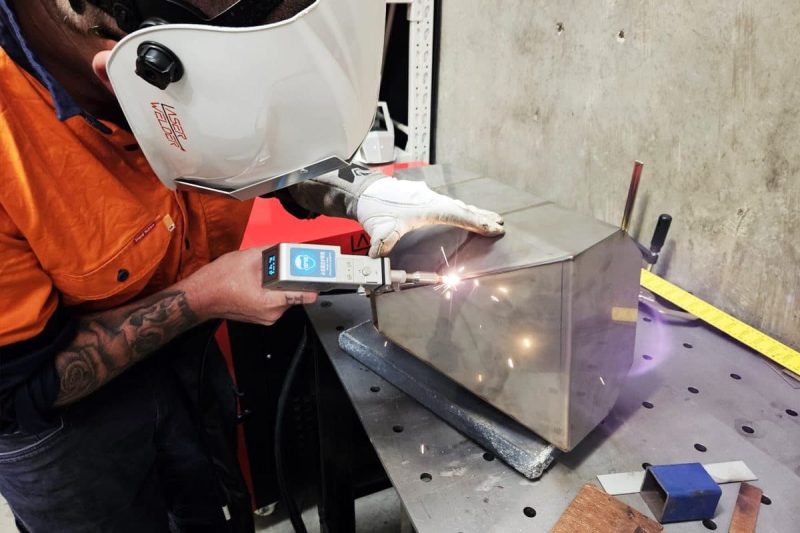
Although both processes share the same fundamental laser heat source, their differences — spanning the functional role of filler material, process control logic, joint design requirements, and weld performance characteristics — permeate the entire welding chain. Understanding these differences is an essential prerequisite for making scientifically sound process selections in specific engineering projects.
Differences in the Role of Filler Material
This is the most fundamental distinction between the two processes. In autogenous laser welding, the weld is provided entirely by the base metal itself, with no foreign material introduced. This characteristic ensures that the weld’s chemical composition is virtually identical to that of the base metal, fully preserving its metallurgical characteristics. For products where compositional purity is critically sensitive — such as stainless steel medical devices and nuclear reactor components — this feature offers an irreplaceable advantage.
In laser welding with filler material, the role of the welding wire or powder is multidimensional: first, it physically bridges the joint gap, ensuring the continuity of the weld; second, it serves as a carrier for alloying elements, allowing targeted supplementation of specific components to precisely control the weld’s chemical composition; third, in dissimilar metal welding, it acts as a compositional transition medium, relieving interfacial stress caused by differences in thermophysical properties between two dissimilar base metals; and fourth, it increases the volume of weld metal, thereby enhancing the load-bearing capacity of the joint cross-section. This “functional layering” makes the filler material a powerful tool for process engineers to steer welding outcomes.
Differences in Welding Process and Technology
From the perspective of process implementation logic, the two processes present a clear contrast of simplicity versus complexity. The autogenous laser welding system is comparatively lean: a laser generator, optical focusing system, motion platform, and shielding gas supply form the basic configuration, with a parameter set centered on laser power, welding speed, and defocus distance. The coupling relationships among these parameters are relatively straightforward. This simplicity makes autogenous welding extremely easy to integrate into highly automated production lines, and once parameters are established, process repeatability is excellent, making it very well-suited for large-scale continuous production.
Laser welding with filler material additionally incorporates a wire (or powder) delivery system, significantly increasing both the mechanical complexity of the system and the sophistication of electrical process control. The number of process parameters grows substantially, and the interactions between them become more pronounced. For example, the ratio of wire feed speed to laser power directly affects the balance between penetration depth and bead height; the preheat temperature and feed angle of the wire influence its melting behavior in the pool; and the flow rate stability of powder delivery governs the uniformity of the cladding layer. These complexities demand that operators and process engineers possess deeper domain knowledge and extensive hands-on tuning experience.
Differences in Control and Precision
At the level of process control, the two approaches differ in their critical sensitivity points and control priorities. Autogenous laser welding is heavily dependent on joint fit-up quality — this “upstream” requirement is the decisive factor in process success or failure. If the joint gap exceeds the allowable tolerance, even the most precisely tuned laser parameters cannot produce a continuous, complete weld. Accordingly, this process typically requires supporting high-precision CNC machining equipment to ensure the quality of mating surfaces, as well as rigid clamping fixtures during welding to strictly constrain workpiece displacement.
Laser welding with filler material shifts part of the process control emphasis to “in-process monitoring.” Because filler material is present, the process tolerates much larger joint gaps, significantly reducing upstream assembly pressure. However, the real-time matching between laser power and wire feed speed must be continuously monitored and dynamically adjusted during welding to prevent process drift-induced defects such as undercut, excessive bead height, or incomplete fusion. In demanding applications, closed-loop feedback control systems based on vision sensors or spectroscopic sensors are typically introduced to continuously sense the state of the molten pool and automatically correct parameters, ensuring consistent weld formation quality.
Differences in Joint Design and Fit-Up
From the joint design perspective, the two processes differ markedly in their “tolerance” for joint geometry and assembly conditions. Autogenous laser welding is well-suited to butt joints and lap joints, especially for precision butt welding of thin sheet materials. Mating surfaces must be precision-machined — by milling or grinding — to achieve extremely high standards of flatness and squareness. Any warping, misalignment, or gap beyond the allowable range may trigger weld defects. Consequently, high-precision fixture design is an indispensable component of any autogenous laser welding process solution.
Laser welding with filler material is considerably more adaptable in terms of joint design. It can handle not only butt joints and lap joints, but also T-joints, corner joints, and other configurations, and can accommodate workpieces with a degree of dimensional variation or prepared groove geometries in thicker plates. In multi-pass thick-plate welding, filler material is essential — not only for filling the groove but also for providing “transition” and “support” between successive weld passes to ensure the mechanical integrity of the overall joint. This flexibility makes laser welding with filler material far more broadly applicable in structural component fabrication.
The key differences between the two processes are not simply a matter of “filler present or absent.” Rather, this fundamental distinction gives rise to a systematic divergence across the entire process chain — from fit-up requirements and in-process control to weld performance. Only by clearly understanding these differences can engineers identify the most appropriate technical pathway for their specific engineering needs.
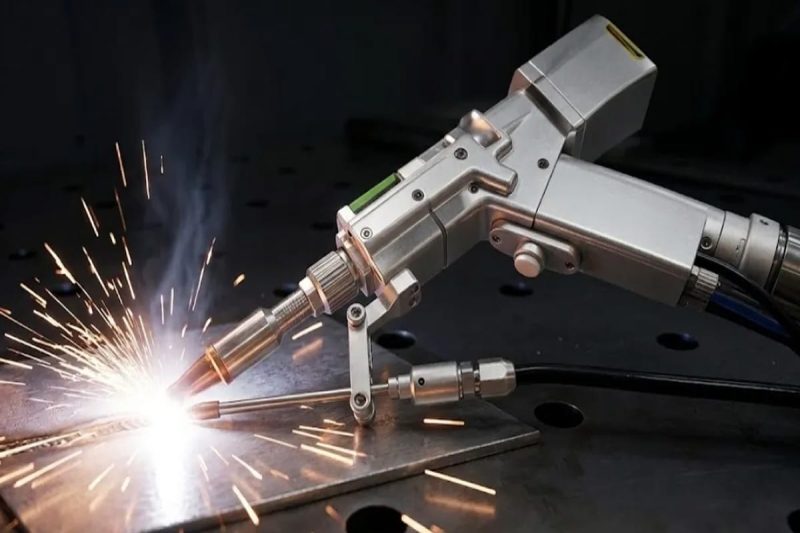
Advantages and Limitations of Each Technology
No welding process is universally superior or inferior in an absolute sense — its value is always contextual, determined by the specific application environment in which it is used. Both autogenous laser welding and laser welding with filler material have their own compelling technical strengths and equally real process limitations.
Autogenous Laser Welding
Advantages
The core advantage of autogenous laser welding is, first and foremost, its process simplicity. Since no filler material needs to be introduced or managed, the welding system has a straightforward mechanical architecture, a small number of parameters, low maintenance requirements, and is particularly amenable to high-level automation. This simplicity is especially valuable in large-scale, high-throughput production line environments, where it can significantly reduce the complexity of process management and minimize the need for human intervention.
Second, autogenous laser welding offers exceptionally high thermal efficiency and welding speeds that rank among the fastest of any welding process. Because energy is highly concentrated, the heat-affected zone (HAZ) is extremely narrow, and the extent and severity of microstructural disruption in the base metal is far less than that caused by conventional arc welding, resulting in substantially reduced welding distortion. This characteristic is of particular significance for precision components with tight dimensional tolerances, such as electronic component housings and sensor enclosures.
Additionally, because the weld composition closely matches that of the base metal, the welded joint maintains the same corrosion resistance, electrical conductivity, and other properties as the parent material, without any risk of metallurgical complications from foreign element introduction. In fields such as medical devices and nuclear power, where material purity is strictly regulated, this is often the decisive factor in selecting autogenous welding.
Limitations
However, the limitations of autogenous laser welding are equally pronounced. The most critical constraint is its extreme sensitivity to joint fit-up accuracy. Any joint gap beyond the allowable range leads directly to weld failure, meaning that both part machining accuracy and fixture positioning accuracy must be maintained at very high levels, indirectly raising part manufacturing costs and tooling costs.
Second, the thickness range suited to autogenous laser welding is relatively limited. Single-pass autogenous laser welding is generally applicable to plate thicknesses not exceeding 6 mm; for thicker workpieces, the base metal alone is insufficient to fill a groove, and the probability of defects such as porosity and hot cracking increases with thickness.
Furthermore, since weld composition is fixed, there is no process-level means of compensating for inherently poor weldability in the base metal. For materials such as certain aluminum alloys and high-carbon steels that are highly susceptible to hot cracking, autogenous welding frequently fails to yield satisfactory weld quality. Dissimilar metal joining is also extremely difficult to accomplish via autogenous welding processes.
Laser Welding with Filler Material
Advantages
The most prominent advantage of laser welding with filler material is its tolerance for joint gaps. The continuous delivery of wire or powder allows the process to bridge a degree of assembly gap, significantly reducing requirements for part machining accuracy and fixture precision, thereby lowering upstream manufacturing costs and improving the overall robustness of the production process.
More importantly, by selecting filler materials of appropriate composition, engineers can purposefully optimize weld properties. Whether the objective is to enhance impact toughness, improve crack resistance, increase hardness, or boost corrosion resistance, these goals can be achieved through appropriate filler selection. This ability to “custom-tune” weld performance on demand is one of the most fundamental competitive advantages of laser welding with filler material over autogenous welding in demanding applications.
Furthermore, laser welding with filler material is capable of welding thicker workpieces, adapting to more complex joint geometries, and accomplishing dissimilar metal joining — capabilities that collectively expand the overall application footprint of laser welding technology.
Limitations
The cost of laser welding with filler material is primarily reflected in increased system complexity and higher expenditures. The introduction of wire or powder delivery mechanisms substantially raises both the mechanical complexity of the welding equipment and the precision requirements of its electrical control system, resulting in notably higher capital investment compared with autogenous laser welding systems. At the same time, filler material constitutes a continuous operating expense, and different filler materials for different applications must be procured and managed separately, adding supply chain management burden.
The greater number of process parameters also implies a longer process development and optimization cycle. The complex interaction effects between laser parameters and wire (or powder) feed parameters require systematic experimental design and parameter tuning by experienced process engineers — a time- and resource-intensive endeavor during new product introduction phases.
Additionally, the presence of filler material generally results in some reduction in welding speed and a slight increase in heat input. Compared with autogenous welding, the heat-affected zone may be somewhat wider. For applications that demand the absolute fastest welding speed and minimum distortion, these disadvantages must be carefully weighed in the process design.
Autogenous laser welding is distinguished by simplicity and efficiency, while laser welding with filler material is distinguished by flexibility and adaptability. The advantages and limitations of each are determined by their respective fundamental process logic — there is no absolute winner, only the question of which is best suited to the application at hand.
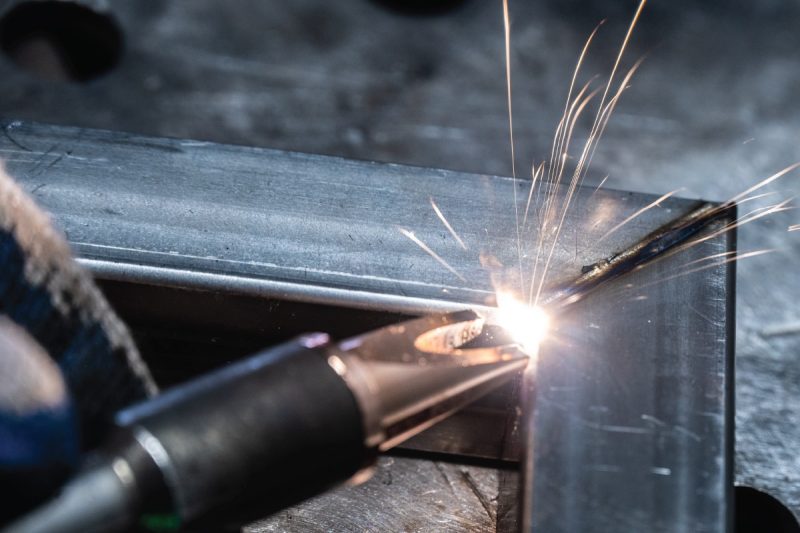
Applications and Industries
The value of any process technology is ultimately realized in specific applications. Autogenous laser welding and laser welding with filler material have each found the stage best suited to their technical characteristics, in different industries and application scenarios.
Autogenous Laser Welding
Application Examples
Autogenous laser welding is extremely widely used in lithium battery manufacturing for new energy vehicles. The hermetic sealing weld between the battery casing and the cover plate demands the highest levels of weld gas-tightness and compositional purity — any foreign contamination could degrade battery performance or create safety hazards — making the no-filler characteristic of autogenous welding uniquely advantageous in this scenario.
In the medical device manufacturing sector, products such as orthopedic implants, cardiac pacemaker housings, and surgical instruments are subject to strict biocompatibility regulations. Autogenous laser welding can ensure connection strength while guaranteeing that no foreign elements harmful to the human body are introduced into the weld. In aerospace, precision components such as engine thin-wall skins and combustion chamber liners likewise rely heavily on autogenous laser welding to achieve low-distortion, narrow-HAZ welds of the highest quality. Hermetic welding of precision electronic components — including sensors and relays — and the joining of ultra-high-purity stainless steel piping in the semiconductor industry are also typical application scenarios where autogenous laser welding excels.
Primary Industries
New energy vehicles and battery manufacturing, medical devices, aerospace, precision electronics and semiconductors, and nuclear power — industries that are highly sensitive to material purity, welding precision, and distortion control — constitute the primary application domain of autogenous laser welding.
Laser Welding with Filler Material
Application Examples
Laser welding with filler material holds a position of great importance in automotive manufacturing, particularly in the production of Tailored Welded Blanks (TWB). Steel sheets of varying thickness and strength grades are joined by laser welding into a single blank, which is then stamped into a body panel, achieving lightweighting objectives while meeting the differentiated performance requirements of each region. The use of filler material helps overcome weldability challenges that can arise from compositional differences between dissimilar steel grades.
In shipbuilding and marine engineering, the welding of medium and thick-plate steel structures is the primary application. Hull flat panel assembly and stiffener fillet welding demand high toughness and fatigue strength in the joint — characteristics that laser welding with filler material delivers through its gap tolerance and compositional tunability, making it a strong competitor to conventional MAG welding.
In the welding of aerospace aluminum alloy structural components, aluminum alloys are inherently susceptible to hot cracking due to their wide solidification range, large coefficient of thermal expansion, and high thermal conductivity. Autogenous welding frequently struggles to produce crack-free welds, whereas the addition of silicon-bearing filler wire improves melt pool fluidity, narrows the solidification range, and effectively suppresses hot cracking. Pipe welding in the petrochemical industry (particularly dissimilar steel joints), mold repair and remanufacturing, and offshore platform steel structural welding are also important application areas for laser welding with filler material.
Application Examples
Automotive manufacturing (body blank welding and chassis components), shipbuilding and marine engineering, aerospace aluminum and titanium alloy structures, petrochemicals (piping and pressure vessels), and heavy machinery and mold manufacturing form the primary market for laser welding with filler material.
The two processes exhibit a clear complementarity in their industry distribution. Applications demanding precision thin-sheet welding and high compositional purity favor autogenous welding; applications involving medium-to-thick plates, complex joints, dissimilar materials, or a need to enhance weld performance favor laser welding with filler material. In many advanced manufacturing enterprises, both processes coexist within the same production system, each deployed for the parts or operations where it provides the greatest advantage.
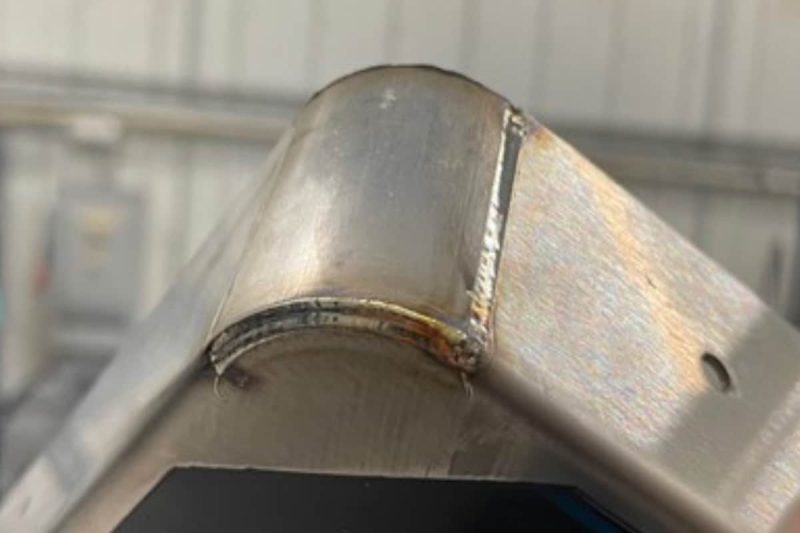
Considerations When Choosing Between Autogenous Welding and Filler Material Welding
In practical engineering projects, process selection is not a simple either/or judgment but a systematic decision that requires the comprehensive weighing of multiple technical and economic dimensions. The following reviews the core factors that deserve priority attention during selection, across four dimensions: material characteristics, performance requirements, cost structure, and application-specific requirements.
Laser Welding with Filler Material
The weldability of the material and the plate thickness are the most basic and critical dimensions in process selection. For thin-plate materials with good weldability — such as low-carbon steel and austenitic stainless steel with thicknesses up to 3 to 4 mm — autogenous laser welding can typically deliver stable, reliable weld quality and represents the optimized choice for balancing efficiency and cost.
However, when material weldability is poor, the selection logic must shift accordingly. Aluminum alloy is a classically hot-crack-sensitive material — its wide solidification range, large coefficient of thermal expansion, and high thermal conductivity make autogenous welding highly prone to hot cracking in the weld. Adding an appropriately composed filler wire (such as ER4043 or ER5356) can effectively overcome this challenge. High-carbon steel, when autogenously welded, is susceptible to the formation of brittle martensitic phases due to carbon enrichment in the weld, causing a sharp drop in weld toughness; filling with a low-carbon wire dilutes the carbon content in the weld and restores satisfactory mechanical properties.
For workpieces thicker than 6 to 8 mm, single-pass autogenous laser welding often cannot achieve the required penetration depth, necessitating multi-pass welding, where filler material is a prerequisite for complete groove filling. For dissimilar metal joints — such as stainless steel to carbon steel, or aluminum alloy to titanium alloy — filler material is an essential means of achieving metallurgical compatibility at the interface.
Required Weld Performance
If the application requires nothing more than a reliable joint, with no special need to tailor weld composition, autogenous laser welding is fully capable of meeting the objective at a lower process cost.
However, when the weld must meet specific performance targets, the balance of the selection decision frequently tips toward laser welding with filler material. For instance: in marine engineering applications where low-temperature impact toughness is critical, low-temperature steel filler wire can be used to ensure adequate toughness reserves at extreme temperatures; in high-strength steel welding, strength-matched filler wire prevents the joint from becoming the structural weak point; in wear-resistant component repair, hardfacing filler wire allows the workpiece to recover — or even exceed — its original wear life. The tunability of weld performance is the irreplaceable core value of laser welding with filler material in many demanding applications.
Cost Considerations
From an economic standpoint, cost analysis must encompass three levels — capital equipment investment, operating costs, and quality costs — rather than merely comparing process unit prices.
The capital equipment cost of an autogenous laser welding system is significantly lower than that of a laser welding system with filler material equipped with wire or powder delivery mechanisms. At the operating level, the absence of filler material consumption and the lower system maintenance workload confer a long-term operating cost advantage. However, if selecting autogenous welding necessitates a substantial increase in part machining accuracy and fixture precision, the associated increases in tooling manufacturing costs and part scrap rates may offset the process-level savings.
Laser welding with filler material carries higher equipment and material costs, but its lower fit-up precision requirements can reduce the overall upstream manufacturing cost. Moreover, in certain high-value component repair applications, the ability to restore a part via filler material welding rather than scrapping it can yield savings far exceeding the cost of the process itself. Therefore, a truly rigorous cost comparison must be conducted from a whole-life-cycle perspective.
Application-Specific Requirements
Beyond the general factors discussed above, several application-specific considerations must also be incorporated into the decision framework.
Production throughput and batch scale directly influence process choice. High-volume, high-throughput production lines are better suited to the parameter simplicity and repeatability of autogenous welding; low-volume, high-mix flexible manufacturing environments are more tolerant of the process adjustment time inherent in laser welding with filler material.
Post-weld treatment requirements are also an important factor. Some applications impose strict limits on weld reinforcement height — for example, sliding fit surfaces may not tolerate any weld bead protrusion — which directly affects the design of filler wire feed rate and pass sequence. For joints requiring post-weld leak testing or radiographic inspection, the in-weld quality control strategy also differs between the two processes.
Furthermore, applicable industry standards and certification specifications — such as AWS D17.1 for aerospace, ISO 13485 requirements for medical devices, and classification society rules for shipbuilding — often prescribe specific requirements for welding procedure qualification methods, inspection procedures, and quality documentation. Confirming that the selected process can satisfy the relevant standard requirements and pass formal procedure qualification must be addressed at the process selection stage, not deferred to production.
Process selection is an integrative task that blends technical judgment with economic trade-off analysis. There is no universally optimal solution. Only by fully understanding material characteristics, clearly defining performance objectives, evaluating the full life-cycle cost structure, and ensuring compliance with applicable standards can engineers make the scientifically grounded decision that best fits the specific demands of their project.
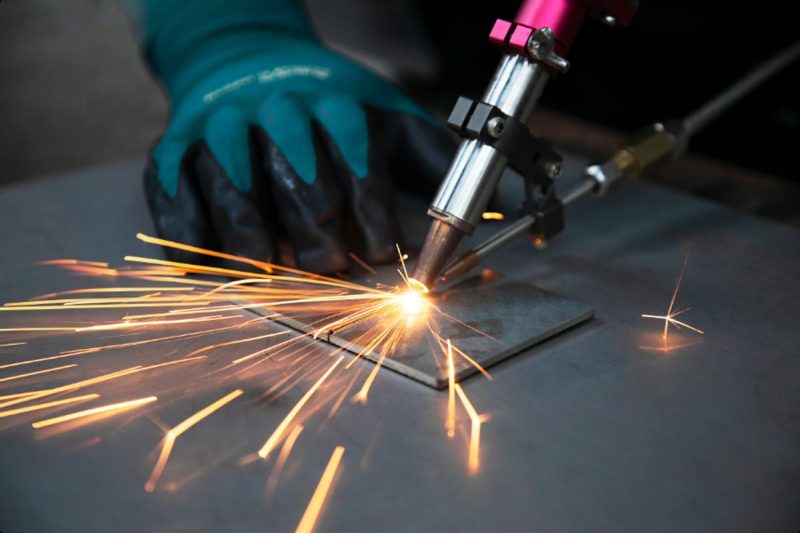
Conclusion
This article has conducted a systematic and in-depth comparative analysis of autogenous laser welding and laser welding with filler material — two fundamental laser welding process routes — across the dimensions of definition and principle, process characteristics, advantages and limitations, typical applications, and selection considerations, to provide readers with a clear and comprehensive technical framework.
From a process essence perspective, both share the same foundational core: a high-energy-density laser generator as the heat source. Yet the fundamental difference of whether external filler material is introduced determines a comprehensive divergence in process logic, performance characteristics, and applicable boundaries. Autogenous laser welding is distinguished by simplicity — no filler material, a streamlined system, few parameters, fast speed, a narrow heat-affected zone, and compositional purity — making it the ideal process for precision thin-sheet welding and high-volume automated production. Its trade-off is an extreme sensitivity to joint fit-up accuracy, along with inherent limitations in thick-plate welding, dissimilar metal joining, and the handling of materials with poor weldability.
Laser welding with filler material is distinguished by flexibility — high tolerance for joint gaps, tunability of weld composition and performance, a broader range of applicable materials, and greater adaptability to diverse joint geometries — giving it irreplaceable engineering value in medium-to-thick structural component fabrication, complex material systems, and high-performance joint applications. Its trade-off is higher system complexity, more process parameters, greater capital investment, and higher operating costs.
From an industry application perspective, the two processes are not in competition but are complementary partners, each serving its distinct purpose. Precision electronics, medical devices, and new energy batteries — scenarios demanding high purity and high precision — are the stronghold of autogenous welding. Automotive body blank welding, shipbuilding structural components, and aerospace aluminum alloy parts — scenarios involving medium-to-thick plates and complex structures — are where laser welding with filler material excels. In many large manufacturing enterprises, both processes operate in parallel within the same welding facility, each delivering optimal value for the products or operations best suited to it, together underpinning the quality system of high-end manufacturing.
At the level of process selection, there is no universal optimal answer. Material type and thickness, required joint performance, full life-cycle cost, and applicable standards together form a multidimensional decision matrix. Rational engineering decision-making requires a solid foundation of complete information across all these dimensions, combined with the company’s own production realities and technical capabilities, confirmed through systematic welding procedure qualification before final commitment.
Looking to the future, with the maturation and widespread adoption of next-generation laser generator technologies — including ultra-high-brightness fiber laser generators and blue laser generators — and the deep integration of AI-driven process monitoring and closed-loop control, the performance boundaries of both autogenous laser welding and laser welding with filler material will be further extended. Autogenous welding is expected to achieve stable, high-quality welds on progressively thicker materials, while the process window for laser welding with filler material will broaden further as intelligent control capabilities continue to advance. It is foreseeable that laser welding technology will continue to serve as a leading innovator in the joining processes of advanced manufacturing, providing sustained technical momentum for industrial upgrading and product innovation.
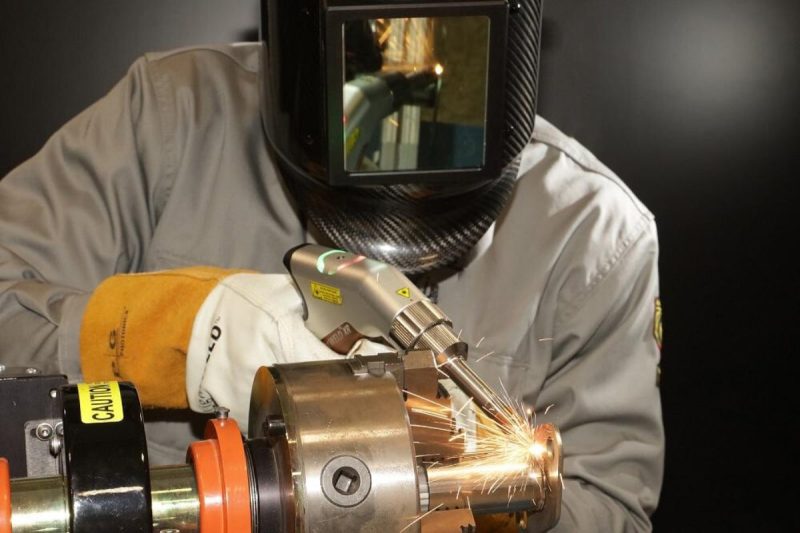
Finding the Right Laser Welding Solution
Finding the right laser welding solution involves more than just purchasing a machine. It requires a partner with expertise and a broad product portfolio to guide the process from feasibility to stable production. Start with process validation, conducting small-batch experiments to confirm feasibility, mechanical properties, and stability. Finite element simulation can also help predict thermal cycles and stress distribution to optimize the process.
Equipment selection is crucial for performance. The laser generator’s output power, beam quality, and wavelength must align with the specific process requirements and materials. For filler material welding, wire or powder delivery systems must be stable for consistent results. Evaluate the supplier’s technical support and case studies before making a decision.
AccTek Laser offers a range of welding solutions, from handheld machines to high-power systems, using high-quality fiber laser generators and advanced control systems. We provide customizable solutions, pre- and post-sales support, and ongoing optimization to ensure stable production. Additionally, investing in training and collaborating with research institutions helps build a knowledgeable engineering team, while integrating data-driven solutions like AI-driven process control improves weld quality and production reliability.

Contact information
- [email protected]
- [email protected]
- +86-19963414011
- No. 3 Zone A, Lunzhen Industrial Zone,Yucheng City , Shandong Province.
Get Laser Solutions