

















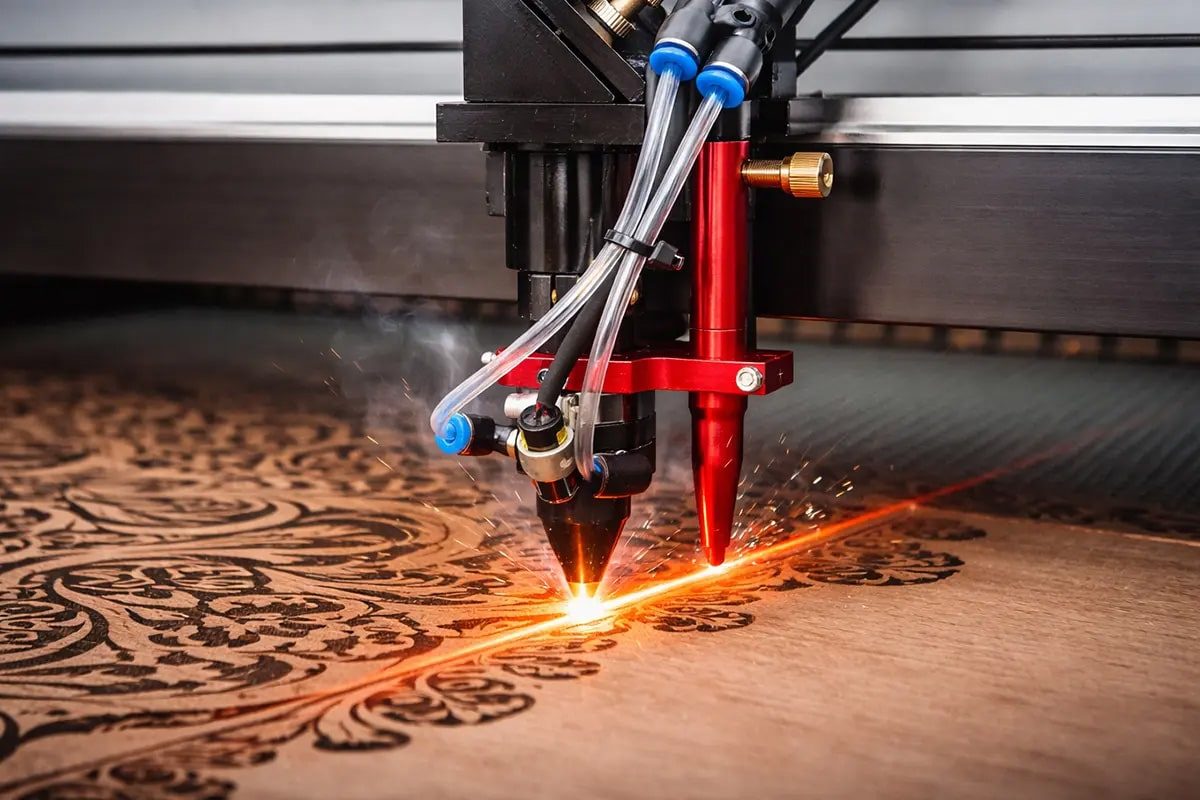
Maszyny do cięcia laserem CO2: zalety, wady i kiedy ich używać
Laser cutting has fundamentally transformed how manufacturers, fabricators, and designers approach the challenge of cutting and shaping materials. Among the various laser technologies available today, the Maszyna do cięcia laserem CO2 holds a particularly distinguished place in the history and practice of industrial laser processing. Introduced commercially in the 1970s and refined continuously over the decades since, the CO2 laser cutting machine was for many years the undisputed workhorse of precision laser cutting — and it remains a highly relevant and widely deployed technology today, despite the rapid growth of fiber laser alternatives.
A CO2 laser cutting machine generates its beam by electrically exciting a gas mixture — primarily carbon dioxide, combined with nitrogen and helium — within a sealed resonator. The resulting beam, emitted at a wavelength of 10.6 micrometers in the mid-infrared spectrum, is invisible to the human eye but is exceptionally well absorbed by a broad range of organic, polymeric, and non-metallic materials. This absorption characteristic is the foundation of the CO2 laser generator’s remarkable versatility: wood, acrylic, leather, textiles, paper, rubber, foam, glass, and a wide variety of engineering plastics all respond to CO2 laser cutting with a quality and precision that alternative processes — mechanical routing, die cutting, waterjet — routinely fail to match.
Yet no technology is without trade-offs, and the CO2 laser cutting machine is no exception. Its relatively low wall-plug efficiency, the maintenance demands of its gas resonator and optical alignment system, and its limitations when cutting highly reflective metals are genuine considerations that must be weighed carefully against its strengths. The emergence of high-brightness fiber laser generators has intensified this evaluation by offering a compelling alternative for metal cutting applications — one that is faster, more energy-efficient, and lower in maintenance cost for that specific material category.
The purpose of this article is to provide a comprehensive, balanced, and practically oriented analysis of CO2 laser cutting machines: what they are, how they work, where they excel, where they fall short, how they compare with fiber laser technology on the dimensions that matter most, and ultimately, when choosing a CO2 machine is the right decision for a given application and business. Whether evaluating a first laser cutting investment or reconsidering an existing technology mix, this article provides the structured analytical framework needed to make a well-informed choice.
Spis treści
Co to jest maszyna do cięcia laserem CO2?
Understanding the strengths and limitations of a CO2 laser cutting machine begins with a clear grasp of how the technology works at a physical level, what components make up the system, and what form factors are available in the market. This foundation prevents the common mistake of evaluating CO2 machines on marketing claims rather than engineering reality.
Jak działa cięcie laserem CO2
The CO2 laser generator produces its beam through a process of stimulated emission in a gas medium. An electrical discharge — from radio frequency (RF) excitation in most modern sealed-tube designs, or from direct current (DC) excitation in older flowing-gas systems — energizes molecules in the gas mixture within the resonator cavity. Carbon dioxide molecules absorb this energy and release it as photons at a wavelength of 10.6 micrometers, which is amplified by the resonator’s optical feedback into a coherent, highly directed laser beam.
This beam is then directed through a series of reflective mirrors — since standard glass lenses and optical fibers do not transmit 10.6 µm radiation efficiently — to a focusing head, where a zinc selenide (ZnSe) focusing lens converges it to a small focal spot on the workpiece surface. At this focal spot, power densities sufficient to melt, vaporize, or thermally ablate the target material are achieved. An assist gas — typically compressed air, nitrogen, or oxygen, depending on the material and application — is directed coaxially through the cutting nozzle to eject molten or vaporized material from the kerf and protect the focusing optic from contamination.
The CNC motion system moves the cutting head along the programmed path while the laser generator maintains its output, producing a continuous cut of precise geometry. The combination of the 10.6 µm wavelength — which is strongly absorbed by organic materials and many plastics — and the high spatial coherence of the focused beam enables the CO2 laser generator to cut a uniquely broad range of non-metallic materials with exceptional edge quality.
Key Components of a CO2 Laser Cutting System
A CO2 laser cutting system comprises several interconnected subsystems whose coordinated performance determines overall cutting quality and productivity. The laser generator — whether a sealed RF-excited tube or a flowing-gas DC-excited resonator — is the energy source, converting electrical input into the infrared beam. In sealed-tube designs, the gas mixture is factory-sealed for the life of the tube, typically 20,000 to 45,000 hours; in flowing-gas designs, the gas is continuously replenished from external cylinders, allowing indefinite resonator life but adding gas cost and supply management complexity.
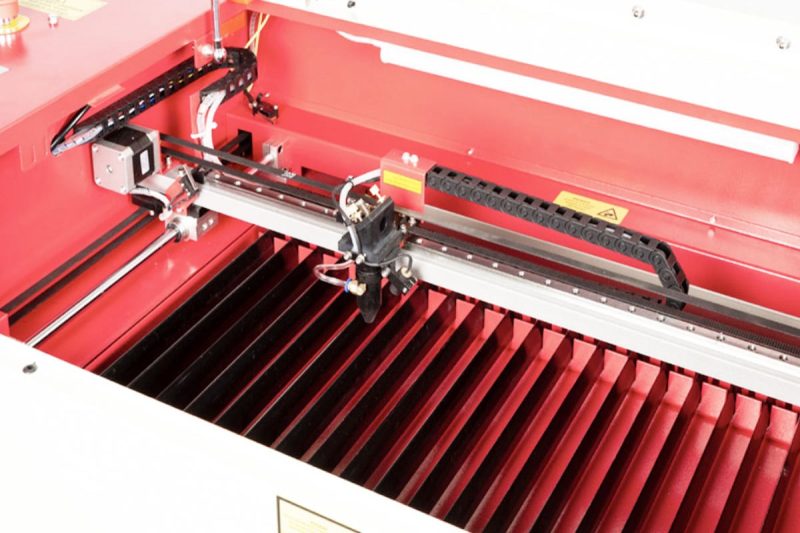
The beam delivery system consists of a series of water-cooled copper or gold-coated mirrors that reflect the beam from the laser generator output aperture to the cutting head. Each mirror must be precisely aligned and kept scrupulously clean; misalignment or contamination introduces beam quality degradation and power loss that directly reduces cutting performance. The cutting head houses the ZnSe focusing lens — the most optically sensitive and highest-maintenance component in the beam path — along with the assist gas nozzle and a capacitive height sensor that maintains a consistent standoff distance between nozzle and workpiece. The water chiller maintains the laser generator tube and optics at a stable operating temperature; the CNC controller executes the cutting program; and the fume extraction system captures the gases and particulates generated during cutting to protect operators and maintain optical cleanliness.
Common Types of CO2 Laser Cutting Machines
CO2 laser cutting machines are available in several configurations suited to different production environments and material types. Flatbed CO2 laser cutting machines — the most widely deployed type — position the workpiece on a flat cutting table and move the cutting head across it using a flying-optics gantry. They range from desktop-format machines with cutting areas of 300 × 200 mm for hobbyist and small-business use, to large industrial flatbed systems with cutting areas of 3,000 × 1,500 mm or larger for sheet materials. Tower-format CO2 laser cutting machines are designed for sheet metal fabrication, incorporating automated sheet loading and sorting towers that maximize productive utilization by minimizing idle time between cutting jobs. CO2 laser engraving machines — optimized for marking, engraving, and surface texturing rather than through-cutting — use lower power levels and raster-scanning motion patterns to produce images, text, and surface patterns on non-metallic materials.
Hybrid CO2 laser systems combine cutting and engraving capabilities in a single platform, allowing manufacturers to perform both cutting and surface decoration operations on the same machine and workpiece without repositioning — a practical efficiency advantage for products such as personalized gifts, branded packaging, and decorative architectural components that require both shaping and surface marking.
CO2 laser cutting machines generate their beam by electrically exciting a CO2-nitrogen-helium gas mixture, producing a 10.6 µm infrared beam that is delivered to the workpiece through a mirror-based optical system and a ZnSe focusing lens. Available in flatbed, tower, and engraving configurations across a wide range of power levels and cutting areas, they form a mature and well-supported technology family whose operating principles directly determine both their strengths and their limitations.
Zalety maszyn do cięcia laserem CO2
The CO2 laser cutting machine’s enduring market presence — despite the rapid adoption of fiber laser technology for metal cutting — reflects real and substantial technical advantages that make it the superior choice for a well-defined range of applications. This section examines those advantages in detail, providing the specific technical and practical context needed to evaluate them accurately.
Versatility Across a Wide Range of Materials
The most fundamental advantage of the CO2 laser cutting machine is its unmatched versatility across material types. The 10.6 µm wavelength of the CO2 beam is strongly absorbed by an extraordinarily broad range of non-metallic materials, enabling clean, precise cutting of wood and MDF, acrylic and other clear plastics, leather, natural and synthetic textiles, rubber and foam, paper and cardboard, glass (surface engraving and scribing), and many engineering polymers including polycarbonate, ABS, and HDPE. This absorption characteristic makes the CO2 laser generator the only practical laser technology for many of these materials — a fiber laser generator operating at 1,064 nm is largely transparent to clear acrylics and many polymers, making it ineffective for cutting them.
On the metallic side, CO2 laser generators can cut thin to medium thicknesses of stal węglowa, Stal nierdzewna, I aluminium — though their performance on these materials is increasingly surpassed by fiber laser generators at higher power levels and thicknesses. For mixed-material facilities that need to cut both metals and non-metals, the CO2 laser generator’s ability to handle both categories within a single platform offers a consolidation advantage that reduces capital investment and floor space requirements relative to operating two separate laser cutting systems.
Superior Cut Quality on Non-Metals
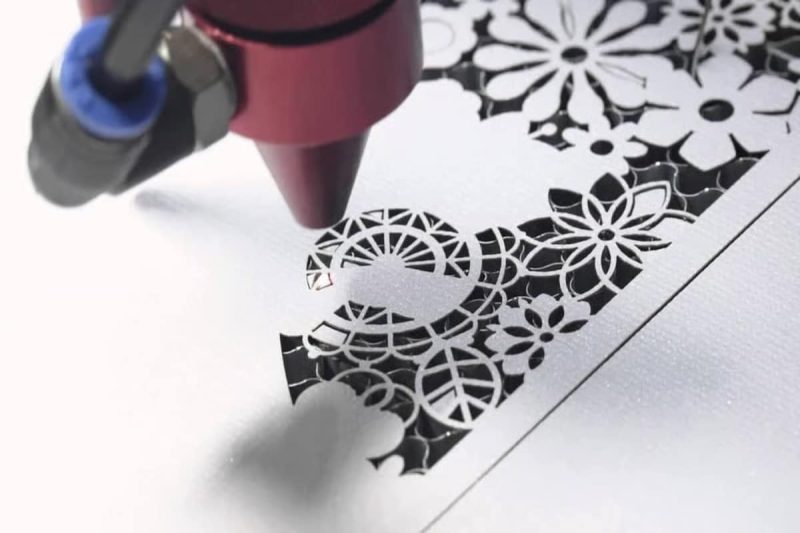
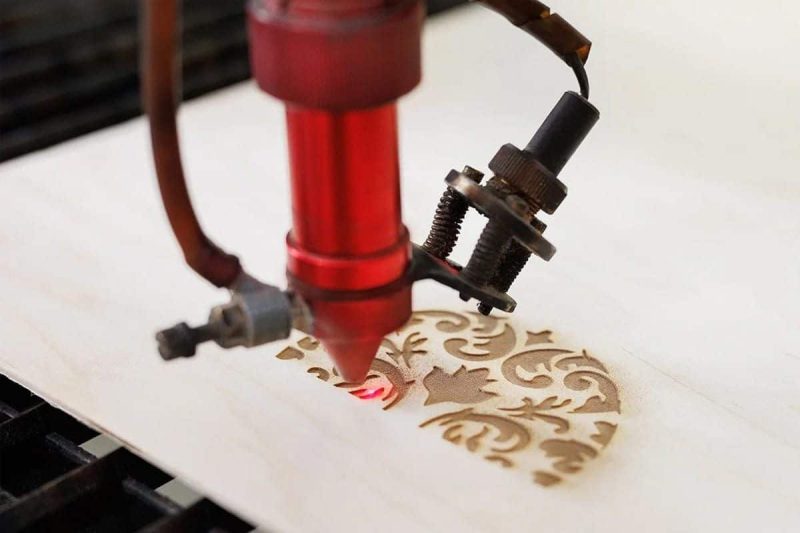
For non-metallic materials, the CO2 laser generator not only cuts effectively — it cuts with a quality that competing processes rarely approach. Acrylic cut with a CO2 laser generator produces a flame-polished, optically clear edge that requires no secondary finishing; the same edge produced by mechanical routing requires sanding and buffing to achieve comparable optical quality. Wood cut with a CO2 laser generator produces clean, lightly charred edges that many designers and woodworkers find aesthetically desirable. Leather cut by CO2 laser produces sealed edges that resist fraying — a quality that sewing and die-cutting cannot replicate. Textiles and technical fabrics cut with CO2 laser generators produce clean, sealed edges that prevent unraveling, eliminating the need for subsequent edge treatment.
This combination of cutting precision and edge quality on non-metallic materials has made CO2 laser generators indispensable in industries where these materials dominate — signage, display, furniture, fashion, packaging, architecture, and artisan fabrication — and where the edge quality delivered by the CO2 process is a direct determinant of the final product’s perceived value and quality.
High Beam Quality and Consistency
Mature CO2 laser generator designs — particularly modern sealed RF-excited tubes from established manufacturers — deliver high beam quality characterized by a near-Gaussian spatial mode profile. This beam quality enables tight focusing to small spot sizes, which translates into narrow kerf widths, fine feature resolution, and consistent cutting performance across the full range of the laser generator’s operating power. High beam quality also means that the cutting performance is reproducible from job to job and shift to shift, providing the process consistency that production environments require. The stability of modern sealed CO2 laser generators — which maintain their beam quality throughout their rated tube life without requiring user adjustment of the resonator optics — further contributes to this consistency.
Cost-Effectiveness for Non-Metal Applications
For facilities whose primary cutting requirement is non-metallic materials, CO2 laser cutting machines offer a highly cost-effective solution. The machines themselves are competitively priced across a wide range of power levels, from entry-level desktop systems available for under $5,000 to mid-range production systems in the $20,000 to $60,000 range. The consumable costs for non-metal cutting are low: compressed air is the only assist gas required for most non-metallic materials, and the cutting speeds achievable on thin non-metals are high, maximizing throughput per operating hour. The investment in a CO2 laser cutting machine for a sign shop, furniture manufacturer, or leather goods producer is typically recovered quickly from the labor savings, quality improvements, and new design capabilities it enables.
Beyond the direct cost metrics, CO2 laser cutting enables manufacturers of non-metallic products to bring entirely new product categories to market that would be impractical with conventional cutting methods. Intricate geometric patterns in acrylic that would require dozens of hours of manual routing can be produced in minutes by a CO2 laser cutting machine with no operator intervention. Personalized products — engraved gifts, custom leather accessories, bespoke furniture components — that command premium prices are feasible only because the CO2 laser generator can execute highly variable, design-specific operations at production speed. This revenue-generating capability, alongside the direct cost savings, contributes to the business case for CO2 laser cutting in ways that a pure cost-per-part analysis would understate.
Mature Technology with Wide Support
CO2 laser cutting technology has been commercially deployed for more than four decades, and the infrastructure supporting it — from compatible CAD and CAM software to trained service engineers, spare parts availability, and published process databases — is correspondingly mature and accessible. Operators and service technicians who understand CO2 laser cutting are widely available in the labor market. Application data for common material-laser parameter combinations is extensively documented in manufacturers’ resources and community knowledge bases. Service and spare parts networks for established CO2 laser generator brands are well-developed globally. This maturity reduces the risk and friction associated with implementing and operating the technology compared with newer or less widely deployed alternatives.
The breadth of compatible software is particularly noteworthy. CAD software packages from AutoCAD to Illustrator, and CAM nesting platforms from Lantek to SigmaNest, have supported CO2 laser cutting workflows for decades and incorporate deep libraries of CO2-specific process parameters and cutting strategies. The wealth of online tutorials, community forums, user groups, and training resources available for CO2 laser cutting — far exceeding what is currently available for newer laser technologies — significantly lowers the learning curve for new operators and provides a rich troubleshooting resource when problems arise. For small businesses and individual operators with limited access to formal technical support, this community knowledge infrastructure is a practical asset that meaningfully reduces the operational risk of CO2 laser cutting investment.
Suitable for Large-Format Cutting
CO2 laser cutting machines are available in large-format configurations — cutting areas of 1,600 × 1,000 mm, 2,000 × 1,000 mm, and larger — that accommodate full-size sheets of acrylic, wood, foam, and other non-metallic materials without the need to cut and reposition. Large-format CO2 systems are standard equipment in sign-making, display, and furniture production environments where full-sheet utilization maximizes material efficiency and minimizes handling time. The flying-optics design of most large-format CO2 machines — where the cutting head moves over a stationary workpiece — accommodates large, heavy, or irregularly shaped workpieces that would be difficult to move through a fixed-beam system.
CO2 laser cutting machines offer exceptional material versatility — particularly for non-metallic materials — combined with superior cut edge quality, high beam consistency, cost-effectiveness in their target application range, a mature support ecosystem, and large-format availability. These advantages position CO2 laser generators as the preferred technology for non-metal cutting applications and as a practical solution for mixed-material facilities that need to cut both metals and non-metals from a single platform.
Disadvantages of CO2 Laser Cutting Machines
A balanced evaluation of CO2 laser cutting machines requires equal clarity about their limitations. Several genuine technical and economic disadvantages constrain their performance and cost-effectiveness in specific application contexts — most notably high-speed metal cutting — and understanding these limitations precisely is essential for making the right technology choice.
Lower Efficiency Compared to Fiber Laser Generators
The most fundamental limitation of the CO2 laser generator, relative to the fiber laser generator that has largely replaced it in metal cutting applications, is its low wall-plug efficiency. CO2 laser generators convert electrical input into laser output at an efficiency of approximately 10 to 20 percent — meaning that for every 10 watts of electrical power consumed, only 1 to 2 watts of laser output is produced, with the remaining 8 to 9 watts released as waste heat that must be removed by the cooling system. Fiber laser generators, by contrast, achieve wall-plug efficiencies of 30 to 45 percent. This efficiency gap has significant practical consequences: for an equivalent laser output power, a CO2 laser generator requires 2 to 4 times the electrical input of a fiber laser generator, resulting in substantially higher electricity costs, a larger and more energy-intensive cooling system, and a greater carbon footprint per unit of cutting work performed.
Higher Maintenance Requirements
CO2 laser cutting machines have more demanding maintenance requirements than fiber laser generators, arising from the nature of their optical delivery system and, in flowing-gas designs, their consumable gas supply. The beam delivery mirror system — typically consisting of three to five reflective mirrors between the laser generator output and the cutting head — must be maintained in precise optical alignment and kept scrupulously clean. Mirror contamination from cutting fumes or cleaning mishandling absorbs laser energy, causing mirror heating, coating degradation, and beam quality loss that reduces cutting performance and can ultimately damage the mirror. Mirror realignment after any mechanical disturbance — from moving the machine, replacing a component, or even thermal expansion during a production session — requires skilled adjustment using specific alignment procedures and tools.
The ZnSe focusing lens in the cutting head is highly transparent to CO2 laser radiation when clean, but absorbs significantly more energy when contaminated. A contaminated ZnSe lens heats up, undergoes thermal lensing that shifts the focal position and degrades beam quality, and can crack under the resulting thermal stress — a failure mode that damages the lens irreparably and may spray fragments into the cutting zone. Regular inspection and gentle cleaning of the ZnSe lens, combined with replacement at appropriate intervals, is a mandatory maintenance discipline. In flowing-gas CO2 laser generators, the laser gas mixture must be replenished periodically from external cylinders, adding gas purchase, supply management, and cylinder handling to the operational overhead.
The cumulative maintenance burden of a CO2 laser cutting machine — covering mirror cleaning and alignment checks, ZnSe lens inspection and replacement, protective window maintenance, cooling system servicing, and in flowing-gas systems the gas supply management — requires dedicated technician time and skill that many small operations find challenging to sustain consistently. The consequence of inadequate maintenance is not merely gradual performance degradation, but the risk of sudden, costly optical failures that cause production outages and expensive component replacements. Facilities considering a CO2 laser cutting machine must honestly assess whether their maintenance program and technical staffing can sustain the discipline that the machine’s optical system demands throughout its operating life.
Limited Performance on Highly Reflective Metals
The 10.6 µm wavelength of the CO2 beam is significantly less well absorbed by polished metal surfaces — particularly copper, brass, and aluminum — than the 1,064 nm wavelength of fiber laser generators. Polished copper, for example, reflects more than 98 percent of incident CO2 laser radiation at room temperature, making keyhole initiation very difficult and requiring high power densities to achieve stable cutting. Even for carbon steel, where the CO2 laser generator can cut effectively, fiber laser generators at equivalent or lower power levels achieve substantially higher cutting speeds at medium and heavy thicknesses, because the shorter wavelength is more efficiently absorbed by the metal surface. This performance gap on metals — particularly on aluminum, copper, brass, and stainless steel above approximately 3 to 5 mm thickness — is the primary reason that CO2 laser generators have been progressively displaced by fiber laser generators in metal fabrication applications over the past decade.
Larger Footprint and More Complex Infrastructure
CO2 laser cutting machines generally have a larger physical footprint than fiber laser machines of equivalent cutting capability, reflecting the space required by the gas resonator, the mirror-based beam delivery system, and the larger cooling system needed to manage the CO2 laser generator’s lower thermal efficiency. In facilities where floor space is at a premium, this size disadvantage is a genuine constraint. The infrastructure requirements of CO2 machines are also more complex: in addition to electrical supply, cooling water, and compressed air, flowing-gas systems require a supply of laser gas cylinders, safe storage for pressurized gas, and a gas management system. The mirror-based beam delivery requires a clear, mechanically stable optical path that limits the flexibility of machine layout and makes the system more sensitive to vibration from nearby equipment.
The sensitivity of the CO2 optical path to environmental disturbance has practical implications for facility planning. A CO2 laser cutting machine installed near a press, a heavy-duty stamping machine, or any equipment that generates significant floor vibration will require isolation measures — vibration-damping mounts or a separate equipment bay — to maintain mirror alignment stability. Temperature fluctuations in the production facility can cause thermal expansion of the machine’s structural components, causing subtle shifts in the optical path that gradually degrade beam quality and cutting performance. These environmental sensitivities are manageable with appropriate facility planning, but they add engineering and operational complexity that is largely absent in fiber laser systems, whose flexible fiber optic beam delivery is immune to mirror misalignment and far more tolerant of environmental variation.
Higher Long-Term Operating Costs
The combination of lower energy efficiency, higher maintenance demands, and the eventual replacement of consumable components — particularly the laser tube in sealed designs — results in higher long-term operating costs for CO2 laser generators compared to fiber laser generators in metal cutting applications. Sealed CO2 laser tubes have a rated service life of 20,000 to 45,000 hours, depending on the design and manufacturer; at the end of life, tube replacement — at a cost ranging from several hundred to several thousand dollars, depending on the power level — is a significant cost event that has no equivalent in fiber laser generators, whose gain fiber is effectively a permanent component. When all operating costs are summed — energy, cooling, maintenance labor, optical consumables, gas supply (for flowing-gas systems), and tube replacement — the total cost of ownership of a CO2 laser generator in a high-duty-cycle metal cutting application is materially higher than that of a comparable fiber laser generator.
CO2 laser cutting machines carry genuine disadvantages that limit their competitiveness in specific applications: low wall-plug efficiency relative to fiber laser generators, demanding optical alignment and component maintenance requirements, limited performance on highly reflective metals, a larger physical footprint, and higher long-term operating costs in metal cutting duty cycles. These limitations are not reasons to dismiss the technology — they are the boundary conditions that define where CO2 laser generators are the right choice and where they are not.
CO2 vs. Fiber Laser Cutting: A Direct Comparison
The most practically consequential technology choice facing anyone evaluating laser cutting equipment today is the decision between CO2 and fiber laser generators. This section provides a direct, balanced comparison across the four dimensions that matter most: cutting speed and power efficiency, material compatibility, maintenance and uptime, and total cost of ownership.
Cutting Speed and Power Efficiency
On thin to medium gauge metals — carbon steel and stainless steel in the 1 to 6 mm range — modern fiber laser generators cut significantly faster than CO2 laser generators of equivalent or even higher output power. A 3,000 W fiber laser generator typically achieves cutting speeds 2 to 3 times higher than a 3,000 W CO2 laser generator on 2 mm mild carbon steel, reflecting the superior absorptivity of the 1,064 nm wavelength by metal surfaces and the higher beam quality achievable from fiber laser generators. At higher material thicknesses — above approximately 10 to 15 mm in carbon steel — the performance gap narrows somewhat, though fiber laser generators maintain an advantage in most thickness ranges. On non-metallic materials, the comparison reverses: CO2 laser generators cut acrylic, wood, leather, and most organic materials effectively, while fiber laser generators are largely unable to process these materials at all due to the transparency of many non-metals at 1,064 nm.
On power efficiency, fiber laser generators hold a clear advantage at every power level and material type: their 30 to 45 percent wall-plug efficiency versus the CO2 generator’s 10 to 20 percent means that a fiber laser generator requires 2 to 4 times less electrical energy to produce equivalent laser output, with proportionally lower cooling system loads and electricity costs.
Kompatybilność materiałowa
Material compatibility is where the CO2 and fiber laser generators most clearly define their respective niches. Fiber laser generators excel on metals — carbon steel, stainless steel, aluminum, copper, brass, and titanium — and their performance advantage over CO2 generators is most pronounced on thin metals and on highly reflective materials such as copper and brass. CO2 laser generators excel on non-metallic materials — wood, acrylic, leather, textiles, rubber, foam, glass, and most engineering plastics — and on thin metals where very smooth cut edges are required. For facilities that process a single dominant material category, the choice is usually straightforward: fiber for primarily metallic applications, CO2 for primarily non-metallic applications. For facilities that process a genuine mix of metals and non-metals, the CO2 generator’s multi-material capability offers consolidation advantages, though some mixed-material producers elect to invest in both technologies, deploying each where it performs best.
Maintenance and Uptime
Fiber laser generators have a clear advantage in maintenance requirements and associated uptime. The fiber laser generator’s all-solid-state architecture — with no mirrors to align, no gas to manage, and no resonator tube to replace — results in substantially lower routine maintenance demands and fewer failure modes than the CO2 generator’s gas-based, mirror-aligned optical system. Fiber laser generators are also more forgiving of the vibration, temperature variation, and humidity that characterize real production environments. CO2 laser generators, with their precise optical alignments, sensitive ZnSe optics, and gas supply dependencies, require more consistent attention from technically trained maintenance personnel and are more susceptible to performance degradation from environmental factors. In high-duty-cycle production environments where uptime is a critical business metric, this maintenance advantage is a significant factor in the total value calculation.
Całkowity koszt posiadania
For primarily metal cutting applications, fiber laser generators deliver a lower total cost of ownership than CO2 generators at equivalent capability levels, across most scenarios when all cost components — purchase price, energy, maintenance, consumables, and major component replacement — are properly accounted for. Purchase prices for fiber laser cutting machines have fallen substantially over the past decade and are now broadly competitive with CO2 machines at equivalent power levels for metal cutting configurations. The fiber generator’s energy efficiency and lower maintenance demands then deliver ongoing operating cost savings that compound over the machine’s operating life.
For primarily non-metal applications, the comparison changes. CO2 laser generators remain the only practical technology for many non-metallic materials, making the fiber alternative effectively unavailable for these applications — the TCO comparison is therefore not between CO2 and fiber, but between CO2 laser cutting and alternative non-laser processes such as routing, die cutting, or waterjet. In this context, the CO2 laser cutting consistently delivers favorable TCO through labor savings, quality improvements, and design flexibility.
The total cost of ownership analysis also reveals an important nuance around purchase price trends. While fiber laser cutting machines have become significantly more affordable over the past decade — with purchase prices falling by 50 to 70 percent in many power ranges — CO2 laser cutting machines, particularly those optimized for non-metallic materials, have maintained their price competitiveness because they serve applications for which fiber laser machines are not substitutes. A sign shop comparing the TCO of a CO2 laser cutting machine with that of a router or die-cutting press will find a compelling case for the CO2 machine on quality, flexibility, and operating cost grounds; the fiber laser generator does not enter this comparison because it cannot process the materials the sign shop cuts. This application specificity is what sustains the CO2 laser generator’s commercial relevance despite the fiber technology’s growing dominance in metal cutting.
Fiber laser generators are the superior choice for high-speed metal cutting, offering higher cutting speeds, better energy efficiency, lower maintenance demands, and competitive total cost of ownership relative to CO2 generators in metal cutting duty cycles. CO2 laser generators retain a clear technical advantage for non-metallic materials and mixed-material applications where the 10.6 µm wavelength’s broad non-metal absorptivity is genuinely required. The choice between the two technologies is ultimately a function of the material mix the machine will process — not of the general technical superiority of either platform.
When Should You Choose a CO2 Laser Cutting Machine?
The preceding analysis provides the technical foundation for a practical decision framework. This section translates that foundation into specific guidance on the application contexts and industry environments where a CO2 laser cutting machine is the right choice — and, conversely, where a fiber laser generator is the better option.
Ideal Applications and Industries
A CO2 laser cutting machine is the clearly correct technology choice when the application is dominated by non-metallic materials. Sign and display fabrication — one of the largest markets for CO2 laser cutting — relies on the technology to cut and engrave acrylic, wood, foam PVC, and aluminum composite panels with the edge quality and design resolution that sign-making demands. The acrylic flame-polish edge that CO2 laser cutting produces is a quality standard that no competing process reliably achieves, and it is central to the perceived value of premium signage and display products.
Furniture and interior design manufacturing uses CO2 laser cutting to produce intricate decorative panels, screens, and components in wood, MDF, and acrylic — geometries and tolerances that would be impossible to achieve economically with conventional woodworking tools. Fashion and leather goods manufacturers rely on CO2 laser cutting for precise, sealed-edge cutting of leather, synthetic leather, and technical textiles, enabling design complexity and production efficiency that die cutting cannot match for small and medium production runs. The packaging industry uses CO2 laser cutting for prototype and short-run production of custom boxes, bags, and inserts in paper, card, and foam. Hobbyists and small-business makers use CO2 laser cutters and engravers — available in desktop formats from under $1,000 — for personalized products, prototyping, and creative production in wood, acrylic, leather, and other accessible materials.
In industrial manufacturing, CO2 laser cutting machines remain relevant for processing non-metallic industrial materials — gaskets, seals, insulation, composite panels, and technical textiles — where the 10.6 µm wavelength’s absorption characteristics deliver cutting quality that fiber laser generators cannot replicate.
When Fiber Laser Is the Better Choice
A fiber laser generator is the better choice when the primary or exclusive cutting requirement is metal — particularly carbon steel, stainless steel, aluminum, copper, or brass at thicknesses above approximately 1 mm and at production volumes where cutting speed and energy efficiency materially affect unit economics. Sheet metal fabricators, metal component manufacturers, automotive suppliers, and structural carbon steel processors who have adopted fiber laser cutting have consistently reported productivity gains of 2 to 5 times compared with CO2 laser cutting on their metal cutting workloads, along with meaningful reductions in energy costs and maintenance demands.
Fiber laser generators are also the better choice when cutting highly reflective metals — copper, brass, and polished aluminum — where CO2 laser generators struggle to initiate and maintain stable keyhole formation, and when the production environment demands maximum uptime and minimum maintenance intervention. For any facility whose material mix is predominantly or exclusively metallic, the fiber laser generator’s advantages in speed, efficiency, and maintenance simplicity make it the clearly preferable technology, and the CO2 generator’s material versatility advantage is irrelevant if the non-metallic materials it handles are not part of the production requirement.
It is also worth noting that for facilities currently operating CO2 laser generators for metal cutting who are evaluating an upgrade, the transition to fiber laser technology typically delivers an immediate and measurable productivity benefit. The combination of faster cutting speeds, reduced energy bills, lower maintenance demands, and improved performance on materials such as aluminum and stainless steel above 3 mm consistently justifies the capital investment in fiber laser replacement or supplementation of CO2 cutting capacity. Many facilities adopt a transitional strategy — retaining existing CO2 capacity for non-metallic applications while introducing fiber laser capacity for metallic applications — before progressively consolidating as their CO2 equipment approaches the end of life.
Choose a CO2 laser cutting machine when the application is dominated by non-metallic materials — acrylic, wood, leather, textiles, foam, rubber, and similar organic or polymeric substrates — or when a mixed-material capability from a single platform is genuinely required. Choose a fiber laser generator when the primary requirement is high-speed, high-efficiency metal cutting, particularly on carbon steel, stainless steel, aluminum, copper, or brass at production volumes where speed, energy cost, and uptime are key commercial drivers.
Wniosek
This article has provided a comprehensive analysis of CO2 laser cutting machines — examining how they work, where they excel, where they fall short, how they compare with fiber laser technology, and when each represents the right technology choice.
The CO2 laser cutting machine is a mature, capable, and genuinely versatile technology whose core strength — the 10.6 µm wavelength’s exceptional absorption by non-metallic materials — makes it irreplaceable in applications involving acrylic, wood, leather, textiles, rubber, foam, and a wide range of engineering plastics. The superior cut edge quality it delivers on these materials — particularly the flame-polished acrylic edge and the sealed textile cut that no competing laser wavelength can replicate — is a technical asset that directly translates into product quality and commercial value for manufacturers and designers in signage, furniture, fashion, packaging, and related industries. Its material versatility across both non-metals and thin-to-medium metals, its mature support ecosystem, and its large-format availability further strengthen its position as the preferred technology for mixed-material and non-metal-dominant applications.
At the same time, the CO2 laser generator’s lower wall-plug efficiency, more demanding optical maintenance requirements, limited performance on highly reflective metals, and larger infrastructure footprint are genuine disadvantages that have driven the progressive adoption of fiber laser generators in metal cutting applications over the past decade. For high-speed metal cutting, the fiber laser generator’s higher energy efficiency, lower maintenance demands, superior performance on reflective metals, and increasingly competitive purchase price give it a clear advantage in total cost of ownership that grows more compelling as production volumes increase.
The choice between CO2 and fiber laser technology is ultimately not a question of which is better in the abstract — it is a question of which best matches the specific material mix, production volume, quality requirements, and economic context of the application at hand. CO2 laser generators continue to serve the applications for which they are genuinely the best tool with a combination of versatility, quality, and maturity that remains highly valuable. Fiber laser generators have established clear dominance in metal cutting applications where speed, efficiency, and uptime are the defining metrics. Understanding where each technology’s strengths and limitations apply — as this article has aimed to provide — is the essential foundation for making the right investment decision.
Get a Laser Cutting Solution
Understanding the technical and economic differences between CO2 and fiber laser cutting is the analytical foundation for a sound equipment decision — but putting that understanding to work requires access to a supplier who offers both technologies, understands the applications deeply, and can provide the guidance and support needed to maximize the return on the investment.
Laser AccTek is a professional laser cutting machine manufacturer with over a decade of experience serving industrial and commercial customers across a wide range of materials, power requirements, and production environments. Its product portfolio includes CO2 laser cutting and engraving machines suited to non-metallic materials and mixed-material applications, maszyny do cięcia laserem światłowodowym from 1,500 W through 20 kW and above for metal cutting in configurations spanning standard flatbed formats, exchange-platform systems for high-throughput production, and tube and profile cutting machines — all built around high-quality laser generators from globally recognized brands and supported by CE and FDA certifications.
Customization in laser generator power, cutting area, automation level, and control interface is available to match the machine precisely to the production requirement. The full-lifecycle service framework covers pre-sales application consultation and technology selection guidance, professional installation and commissioning, comprehensive operator training, competitive spare parts supply, and responsive after-sales technical support, including remote diagnostics — providing the complete partnership needed to translate the right technology choice into sustained production performance and financial return. For any business evaluating CO2 laser cutting, fiber laser cutting, or a combination of both, a direct conversation with an application engineer is the most productive step toward a solution that is right for the application, the budget, and the long term.

Informacje kontaktowe
- [email protected]
- [email protected]
- +86-19963414011
- Nr 3 Strefa A, strefa przemysłowa Lunzhen, miasto Yucheng, prowincja Shandong.
Uzyskaj rozwiązania laserowe