

















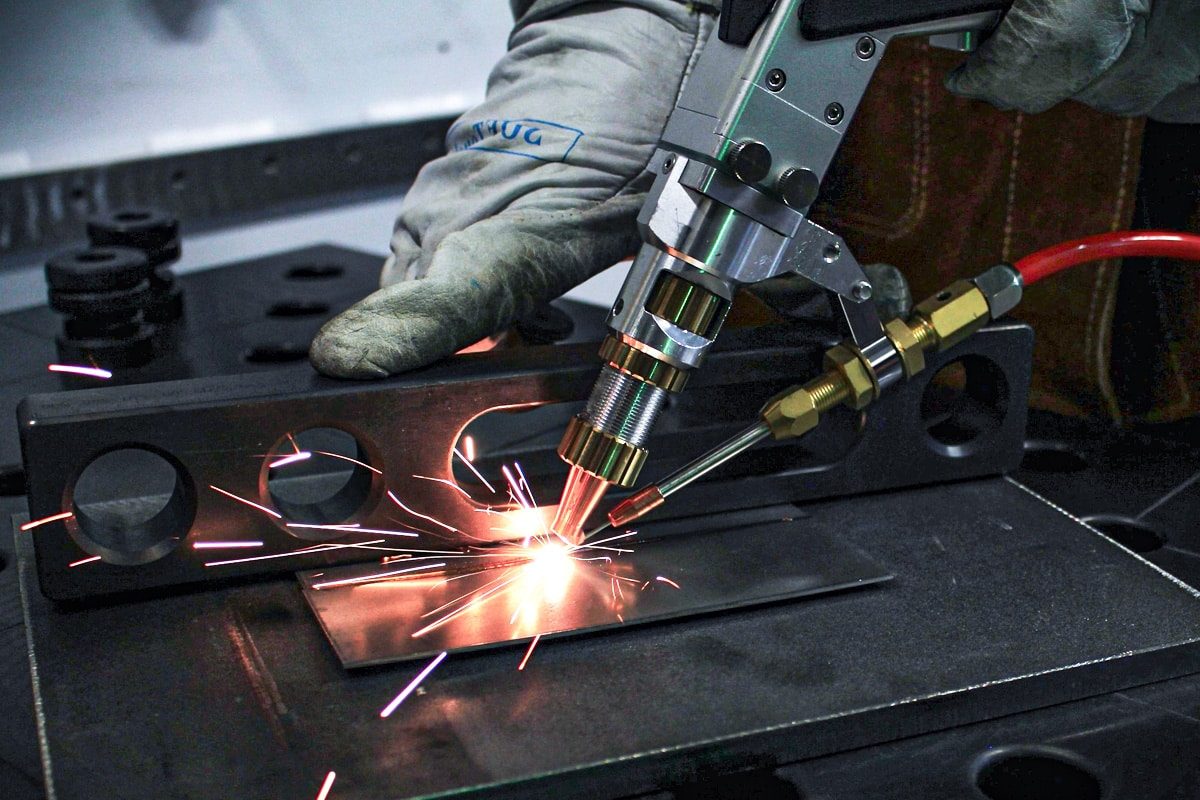
What Are the Different Welding Techniques in Laser Welding?
In modern manufacturing, welding quality directly determines the structural reliability, functional stability, and overall service life of products. While traditional welding methods such as arc welding, TIG welding, and MIG welding are mature and widely applicable, they are gradually revealing limitations in precision manufacturing and high-consistency production scenarios. These limitations include high heat input, significant weld deformation, a wide heat-affected zone (HAZ), and high costs for subsequent correction and processing. With the continuous advancement of Industry 4.0 and intelligent manufacturing, the manufacturing industry is placing higher demands on welding processes—higher precision, more stable quality, lower energy consumption, and stronger automation compatibility. Against this backdrop, laser welding technology, with its high energy density, high welding speed, and excellent process controllability, is gradually replacing some traditional welding methods and becoming an important solution in high-end manufacturing and precision machining.
Laser welding concentrates energy onto the material surface using a high-energy laser beam in a very short time, achieving deep penetration welding or heat conduction welding. This significantly reduces the heat-affected zone and weld deformation, making it particularly suitable for thin plates, high-precision structural components, and products with high appearance requirements. Based on the type of laser source and process characteristics, laser welding can be categorized into various technologies, such as fiber laser welding, CO2 laser welding, and semiconductor laser welding. In terms of operating modes, it can be further divided into continuous laser welding and pulsed laser welding to meet the needs of different material thicknesses, weld formations, and production cycles. This article will systematically analyze the main technical types of laser welding, their core working principles, and selection strategies for different application scenarios. This will help manufacturing enterprises more efficiently evaluate laser welding solutions and provide a reference for achieving high-quality, automated, and sustainable production.
Table of Contents
Laser Welding Technology Fundamentals
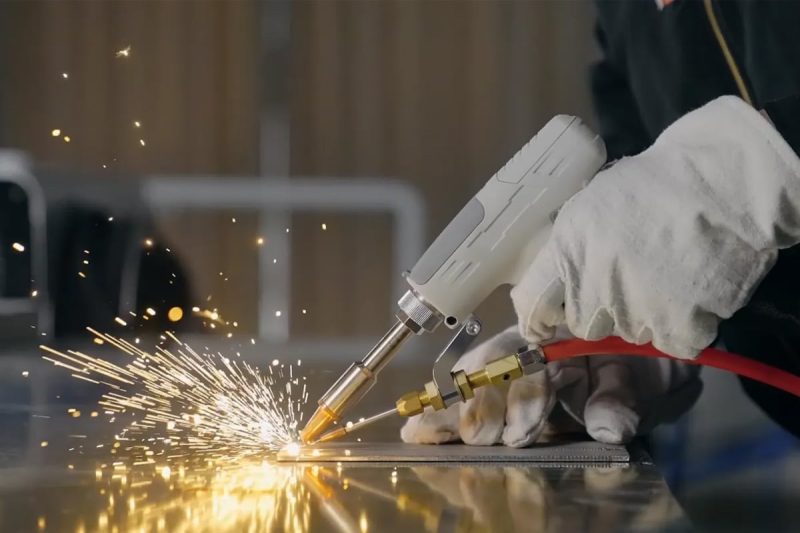
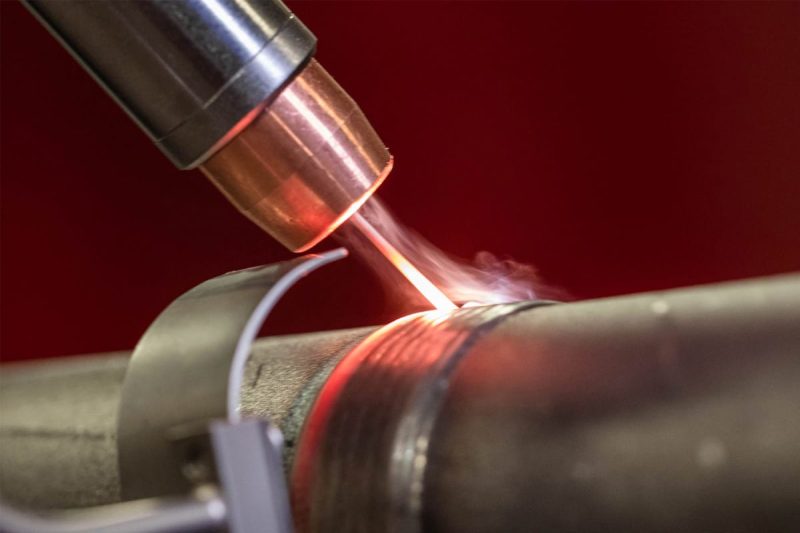
Laser welding is a joining process that uses a high-energy-density laser beam as a heat source to locally melt and solidify materials to form a weld. Compared to traditional welding, laser welding can precisely focus energy onto a tiny area, achieving deep penetration, narrow weld seams, and a minimal heat-affected zone. This characteristic makes laser welding particularly suitable for processing precision parts, joining dissimilar materials, and applications requiring high-strength welding.
The core advantage of laser welding lies in its non-contact processing characteristics. Once focused, the laser beam can release thousands of watts of energy within a few millimeters, instantly melting the metal. The entire process requires no filler material and does not apply mechanical pressure to the workpiece, thus avoiding workpiece deformation and surface damage. This is crucial for thin-plate welding, precision electronic component joining, and high-end equipment manufacturing.
Different Laser Welding Technologies
Currently, there are three main categories of laser welding technologies used in industrial applications: CO2 laser welding, Nd: YAG laser welding, and fiber laser welding. Each technology has its unique working principle and applicable scenarios.
CO2 Laser Welding Technology
CO2 laser welding is one of the earliest laser welding technologies to achieve industrial application. CO2 laser generators use carbon dioxide gas as the laser medium, generating infrared laser light with a wavelength of 10.6 micrometers through electrical excitation. This wavelength of laser light can be effectively absorbed by most metal materials, making it particularly suitable for welding common industrial materials such as carbon steel, stainless steel, and aluminum alloys.
Working Principle and Operation
The core components of a CO2 laser generator include a discharge tube, a resonant cavity, optical lenses, and a cooling system. In the discharge tube, a high-voltage current excites a mixture of CO2, nitrogen, and helium, generating stimulated emission. After being amplified by the resonant cavity, the laser beam is transmitted through a series of mirrors to a focusing lens, ultimately forming a high-energy-density focal point that acts on the workpiece surface. The entire system requires continuous gas circulation and a water-cooling system to maintain stable operation.
CO2 laser welding equipment typically ranges in power from 1 kW to 20 kW and can weld metal sheets with thicknesses from 0.5 mm to 25 mm. In practice, welding parameters need to be precisely adjusted according to material properties. For example, when welding stainless steel, the combination of laser power, welding speed, and shielding gas flow directly affects weld quality. Too high a welding speed may result in insufficient penetration, while too low a speed will cause over-melting and deformation.
Technical Advantages and Limitations
The main advantages of CO2 laser welding lie in its high maturity and wide application. After decades of development, CO2 laser technology has formed a complete process system and accumulated rich application experience. It is particularly suitable for thick plate welding and holds an irreplaceable position in shipbuilding, steel structure, and heavy machinery manufacturing. Furthermore, CO2 lasers have relatively low requirements for material surface conditions; even with a slight oxide layer or oil contamination, effective welding can be achieved.
However, CO2 laser systems also have significant limitations. Firstly, there’s the issue of beam transmission. Due to the long wavelength, the laser beam must be transmitted through a reflector, limiting system flexibility and increasing maintenance costs for optical components. Secondly, the electro-optical conversion efficiency is low, typically only 10% to 15%, meaning most electrical energy is converted into waste heat, requiring a powerful cooling system. Furthermore, CO2 laser generators are bulky, usually occupying more than tens of square meters, making them unsuitable for space-constrained production environments.
Application Scenarios
CO2 laser welding is most widely used in the automotive manufacturing industry, particularly for welding body panels, transmission system parts, and exhaust systems. In the aerospace field, it is used to weld titanium alloys and high-strength steel structural components. The steel processing and metal products industries also extensively use CO2 lasers for sheet metal welding, pipe welding, and structural component manufacturing. For applications with lower requirements but high production volumes, CO2 laser welding remains a cost-effective choice.
In actual production, CO2 laser welding systems are typically equipped with multi-axis CNC worktables and automatic feeding devices to achieve a highly automated production process. For example, in automotive parts manufacturing, a complete CO2 laser welding production line can include a loading robot, positioning fixtures, laser welding heads, a quality inspection system, and an unloading mechanism. The entire line can operate continuously for 24 hours, requiring only a small number of operators for monitoring and maintenance.
The choice of shielding gas has a significant impact on the quality of CO2 laser welding. When welding carbon steel, nitrogen or argon is typically used as the shielding gas to prevent weld oxidation. Stainless steel welding requires higher purity argon, and sometimes argon is also used for backfilling the weld. For aluminum alloy welding, helium or a helium-argon mixture is recommended because helium has a higher thermal conductivity, which helps improve welding stability. Controlling the gas flow rate is also crucial; too low a flow rate results in insufficient protection, while too high a flow rate will disturb the molten pool and may even disperse the shielding gas.
Nd: YAG Laser Welding Technology
Nd: YAG laser welding uses neodymium-doped yttrium aluminum garnet crystals as the laser medium to generate near-infrared laser light with a wavelength of 1.064 micrometers. This wavelength is much shorter than that of CO2 lasers, allowing for better absorption by metal surfaces, making it particularly suitable for welding highly reflective materials such as aluminum alloys, copper alloys, and precious metals like gold and silver.
Working Principle and Characteristics
Nd: YAG laser generators come in two main types: lamp-pumped and diode-pumped. Traditional lamp-pumped systems use xenon or krypton lamps to excite neodymium ions to generate laser light. This method has lower energy conversion efficiency and generally lower beam quality, but is relatively inexpensive. Diode-pumped systems use semiconductor laser diodes as the pump source, achieving energy efficiency of over 25% and significantly improving beam quality, although the equipment is also more expensive.
The biggest advantage of Nd: YAG lasers is their ability to be transmitted via optical fiber, allowing for flexible movement of the welding head and even enabling 3D welding in conjunction with robots. Fiber optic transmission distances can reach tens of meters with almost no energy loss, greatly facilitating the welding of complex workpieces. In practical applications, Nd: YAG lasers are commonly used in pulsed mode, with single pulse energies reaching tens of joules and peak power reaching kilowatts, making them ideal for spot welding and thin-plate welding.
Due to their shorter wavelength, the focused spot can be made smaller, resulting in weld widths often only a few hundred micrometers and a very small heat-affected zone. This makes it an ideal choice for electronics, precision instruments, and jewelry manufacturing. When welding aluminum alloy casings, battery tab connections, and micro-motor components, Nd: YAG lasers offer precision and reliability that are difficult to achieve with other technologies.
Main Application Areas
The medical device industry is a significant market for Nd: YAG laser welding, used for welding surgical instruments, implants, and precision medical devices. These products have extremely high requirements for weld quality and biocompatibility; any defects can jeopardize patient safety. The electronics industry extensively uses Nd: YAG lasers for battery assembly, sensor packaging, and circuit board welding. The rapid development of automotive electronics, consumer electronics, and new energy vehicles has further expanded the application scope of Nd: YAG laser welding.
In the battery manufacturing field, Nd: YAG lasers demonstrate unique advantages. The welding of electrode tabs in mobile phone lithium batteries, power tool batteries, and automotive power batteries requires extremely high precision and reliability. Traditional spot welding methods are prone to spatter, contaminating the battery interior and potentially damaging electrode materials. Nd: YAG lasers can achieve spatter-free, low-heat-input precision welding with excellent weld consistency and low contact resistance. Furthermore, pulse energy can be precisely controlled, avoiding overheating that could degrade battery performance.
Jewelry processing is another traditional application area for Nd: YAG lasers. Laser welding can be used for the repair, reshaping, and processing of gold, platinum, and silver jewelry. Due to the small laser spot and narrow heat-affected zone, localized welding can be performed without damaging gemstones and surrounding metal. Some high-end jewelry brands are equipped with Nd: YAG laser equipment specifically to provide customized and repair services. This technology is also used to create complex openwork designs and intricate metal weave structures, creating artistic effects that are difficult to achieve with traditional techniques.
Fiber Laser Welding Technology
Fiber laser welding is the fastest-growing laser welding technology in recent years and is widely considered to represent the future direction of laser welding. Fiber laser generators use rare-earth-doped optical fibers as the gain medium and generate laser light through diode pumping. This technology combines the high power of CO2 lasers with the beam quality of Nd: YAG lasers, while also offering higher energy efficiency and lower maintenance costs.
Core Technologies and Operation
The working principle of a fiber laser generator is relatively simple but technologically advanced. Light emitted from the pump laser diode is injected into a specially designed optical fiber, forming an optical resonant cavity inside the fiber to generate a high-quality laser beam. The entire laser generator is very compact; the main unit is often smaller than an office desk, yet its power density can be several times that of traditional laser generators. The beam is transmitted through flexible optical fibers, allowing for easy connection to various processing heads and automated equipment.
The operation of fiber laser welding equipment is relatively simple and highly automated. Modern fiber laser systems are typically equipped with intelligent control software that automatically adjusts parameters according to the welding task. Real-time monitoring systems can detect weld quality and immediately alarm or automatically adjust upon detecting abnormalities. This intelligent feature greatly reduces the skill requirements of operators and improves production stability and consistency.
Technical Advantages Analysis
Fiber laser welding boasts an energy efficiency exceeding 30%, two to three times that of CO2 lasers. This not only reduces energy costs but also lessens the burden on the cooling system, resulting in a significant decrease in overall power consumption. Fiber lasers exhibit excellent beam quality, with a BPP value typically less than 8 mm·mrad, meaning the laser can be focused into an extremely small spot, achieving higher power density and deeper penetration.
Low maintenance costs are another major advantage of fiber lasers. Without a complex optical path system, there’s no need for regular bulb replacements or mirror adjustments, and the pump diodes have a lifespan exceeding 100,000 hours. This drastically reduces equipment downtime for maintenance and significantly improves production efficiency. Furthermore, fiber laser generators are more adaptable to environmental temperature and humidity, operating stably even in harsh workshop environments.
Application Prospects and Examples
The explosive growth of the new energy vehicle industry has created a huge market for fiber laser welding. Fiber laser technology is widely used in the welding of power battery packs, the connection of motor housings, and the manufacturing of lightweight structural components for vehicle bodies. The 3C electronics industry is also rapidly shifting towards fiber laser welding, especially in the precision assembly of smartphones, tablets, and wearable devices. In the future, with further increases in the power of fiber laser generators and a continued decrease in cost, its application scope will continue to expand.
Power battery welding is a typical application scenario for fiber lasers. Welding the tabs of lithium batteries requires small weld joints, narrow heat-affected zones, and low connection resistance. Traditional resistance welding or ultrasonic welding often fails to meet these requirements, while fiber lasers can complete welding within milliseconds, with weld joint diameters of only a few hundred micrometers and contact resistance controlled at the milliohm level. A modern battery production line equipped with multiple fiber laser welding robots can complete hundreds of weld joints per minute, several times more efficiently than traditional methods.
The demand for fiber laser welding in medical device manufacturing is also growing rapidly. Components for products such as pacemakers, artificial joints, and surgical instruments are typically made of titanium alloys or medical-grade stainless steel, requiring precise dimensions, high strength, and excellent surface quality. Fiber lasers provide a clean and pollution-free welding environment, resulting in smooth, flat welds that eliminate the need for subsequent polishing. This is crucial for implantable medical devices, as any surface defects can cause tissue reactions or infections.
In the aerospace field, fiber laser welding is replacing some traditional brazing and riveting processes. Butt welding of aircraft skins, repair welding of engine blades, and precision welding of satellite structural components are all beginning to utilize fiber laser technology. This technology can reduce structural weight while maintaining strength, potentially reducing the weight of each aircraft by tens or even hundreds of kilograms, resulting in significant fuel savings. Furthermore, laser welding is highly automated, improving production efficiency and shortening manufacturing cycles.
Five Main Working Modes of Laser Welding
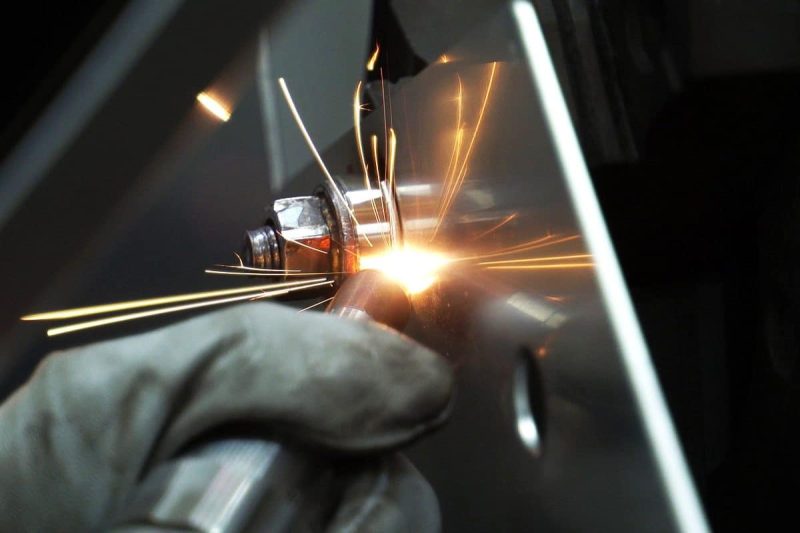
The welding mode determines how laser energy interacts with the material, directly affecting the depth, width, and quality of the weld. Choosing the appropriate welding mode is crucial for ensuring welding results.
Conduction Mode Welding
Conduction mode is the most basic working mode of laser welding. The laser beam power density is relatively low, typically in the range of 10^4 to 10^5 W/cm². After the laser irradiates the material surface, the material absorbs energy and melts, forming a shallow and wide molten pool. Heat mainly diffuses into the material interior through thermal conduction, and the weld depth-to-width ratio is generally less than 1:1.
Conduction mode is characterized by a wide process window, insensitivity to parameter fluctuations, and a smooth and flat weld surface. It is particularly suitable for lap welding and sealing welding of thin sheet materials, with weld thicknesses typically below 3 mm. In thin sheet lap welding applications, two thin sheets are stacked together, and the laser heats the surface of the upper sheet, melting the contact surface between the upper and lower layers to form a weld.
Keyhole Mode Welding
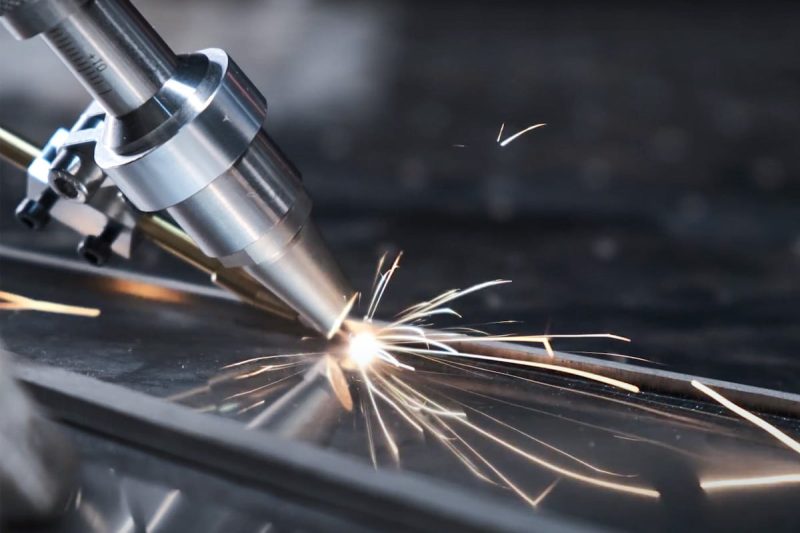
When the laser power density exceeds 10^6 W/cm², the welding process enters keyhole mode. At this high energy density, the material not only melts but also rapidly evaporates, forming a deep hole supported by vapor pressure, known as a keyhole or pinhole. The laser beam penetrates deep into the material through this channel, resulting in a weld depth far exceeding its width, with a depth-to-width ratio reaching 10:1 or even higher.
Keyhole welding enables deep penetration and high-speed welding, making it ideal for joining thick plates. The weld is narrow and deep, with a small heat-affected zone, and material deformation is effectively controlled. Keyhole welding is widely used in automotive body welding, pressure vessel manufacturing, and pipe butt welding. Welding speeds can reach tens of meters per minute, increasing production efficiency several times compared to traditional welding methods.
The challenge of keyhole welding lies in the high requirement for process stability. The formation and maintenance of the keyhole require precise energy balance; improper parameter settings can easily lead to weld defects such as undercut, porosity, and cracks. Furthermore, keyhole collapse can trap gas, creating internal defects, which need to be prevented by optimizing process parameters and using shielding gases.
The key to keyhole welding is controlling the stability of the keyhole. An ideal keyhole should be a dynamically balanced structure, where steam pressure pushes the molten metal outwards, while surface tension and gravity attempt to close the keyhole. When the laser power, welding speed, and focus position are properly matched, the keyhole can move forward steadily, allowing the molten metal behind it to solidify smoothly and form a weld. However, if the parameters are mismatched, the keyhole may oscillate, drift, or even collapse, leading to a decline in weld quality.
Hybrid Mode Welding
Hybrid mode combines the features of conduction and keyhole modes, dynamically switching between the two. By adjusting laser power, focus position, and welding speed, the penetration depth and weld shape can be flexibly controlled during the welding process. This mode is particularly suitable for welding materials of varying thicknesses and connecting complex joints.
In automotive manufacturing, it is often necessary to weld plates of different thicknesses. Hybrid mode can automatically adjust energy distribution according to the plate thickness, ensuring penetration without burn-through. Variable focus technology and oscillating welding are important means to achieve the hybrid mode.
Pulse Mode Welding
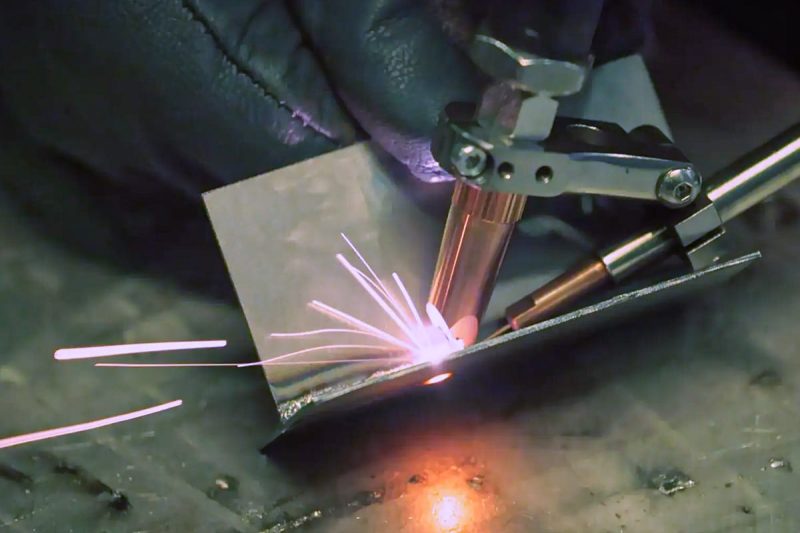
Pulse mode uses intermittent laser pulses for welding, with each pulse lasting from a few milliseconds to hundreds of milliseconds. The interval between pulses allows the material time to cool, reducing heat accumulation and the heat-affected zone. This mode is particularly suitable for welding heat-sensitive materials such as aluminum alloys, copper alloys, and thin-walled parts.
Spot welding is a typical application of pulse mode. Pulse spot welding is widely used in PCB board soldering, battery tab connections, and sensor packaging in electronic products. Individual solder joint diameters can be as small as a few hundred micrometers, and the depth can be precisely controlled. The disadvantage of pulse mode is its relatively slow welding speed, making it less suitable for mass production.
Continuous Wave Welding
Continuous wave welding provides a stable and continuous laser output with constant power, making it suitable for long welds and high-speed welding. This is the most widely used mode in industrial production, especially on automated welding lines. Continuous wave welding can achieve welding speeds of several meters or even tens of meters per minute, significantly improving production efficiency.
Continuous wave welding is primarily used in automotive production lines for body welding, pipe manufacturing, and steel structure processing. Modern fiber laser generators can output thousands to tens of thousands of watts of power in continuous mode, meeting various welding needs from thin to thick plates. Combined with high-speed scanning systems and robots, continuous wave welding can complete complex three-dimensional welding paths.
The process parameters for continuous wave welding are relatively simple but require precise control. Laser power determines the weld depth and molten pool size, while welding speed affects the weld width and heat input. The matching relationship between these two directly determines the weld quality. Welding speeds that are too high can lead to incomplete fusion and penetration, while speeds that are too low can cause overheating and deformation. Through extensive experimentation and numerical simulation, power-speed curves can be established, providing parameter guidance for welding different materials and thicknesses.
Shielding gas plays a crucial role in continuous wave welding. Argon, helium, or a mixture of both is used to protect the molten pool from oxidation. The gas flow rate needs to be adjusted according to the welding speed and environmental conditions, generally between 10 and 50 liters per minute. Insufficient flow rate results in inadequate protection, leading to oxidation, discoloration, and porosity on the weld surface. Excessive flow rate wastes gas and may also disrupt the molten pool, affecting weld formation.
Key Factors in Technology and Mode Selection
Choosing the appropriate laser welding technology and working mode requires comprehensive consideration of multiple interrelated factors, which collectively determine the final welding solution.
The Influence of Material Properties
Different materials exhibit significantly different laser absorption rates. Carbon steel absorbs approximately 10% to 15% of a 10.6-micron CO2 laser, while its absorption rate for a 1-micron fiber laser can exceed 30%. Highly reflective materials such as aluminum and copper alloys have an absorption rate of less than 5% for CO2 lasers, making effective welding almost impossible, but their absorption rate for fiber lasers can reach around 20%, significantly improving welding results.
Material thickness directly determines the required laser power and welding mode. For welding thin plates less than 1 mm thick, a few hundred watts of fiber laser power with a specific conduction mode is sufficient. Welding 10 mm thick steel plates requires a laser power of over 5 kilowatts and a keyhole mode to achieve single-sided welding with double-sided forming. For plates thicker than 20 mm, composite welding or multi-pass welding may be necessary.
The thermophysical properties of the material are also important. Aluminum alloys have high thermal conductivity, leading to significant energy loss during welding and necessitating higher laser power and faster welding speeds. While titanium alloys boast high strength, they are prone to oxidation, requiring the use of high-purity shielding gases during welding. Stainless steel is relatively easy to weld, but certain grades are susceptible to hot cracking, necessitating careful control of heat input and cooling rates.
Laser welding of aluminum alloys has long been a technical challenge. Aluminum’s reflectivity exceeds 90%, resulting in the reflection of most laser energy and absorption of only a small portion. Furthermore, aluminum’s thermal conductivity is three times that of steel, causing rapid heat dissipation and hindering the formation of a stable molten pool. However, advancements in fiber laser technology have significantly improved these issues. While the absorption rate of 1-micron wavelength fiber lasers for aluminum remains relatively low, it is far superior to that of CO2 lasers. By increasing laser power, optimizing focal position, and using appropriate shielding gases, it is now possible to weld various aluminum alloys with high quality, including aerospace-grade 2-series and 7-series alloys.
Joining dissimilar materials is another important application of laser welding. Joining steel and aluminum is in high demand in lightweight automotive design, but the two materials differ significantly in melting point, coefficient of thermal expansion, and chemical properties, easily leading to the formation of brittle intermetallic compounds at the joint. Laser welding can address this issue to some extent by precisely controlling heat input and using transition layer materials. Joining titanium and stainless steel is also used in medical devices and aerospace; laser welding can create a metallurgical bond between the two materials, achieving good joint strength.
Application Requirements Considerations
Welding quality requirements are the primary criterion for technology selection. Welding in aerospace and nuclear power equipment demands extremely high reliability, typically requiring fiber lasers combined with strict process control. Automotive body welding prioritizes aesthetics and cost-effectiveness; both CO2 lasers and fiber lasers can meet these requirements.
Production efficiency directly impacts cost competitiveness. High-speed welding is required for mass production, making continuous-wave fiber lasers usually the best choice. Small-batch or customized production may be better suited to flexible pulsed Nd: YAG lasers.
Cost Factor Analysis
Equipment procurement costs constitute the largest initial investment. CO2 laser systems range in price from hundreds of thousands to millions of yuan, primarily depending on power and configuration. Nd: YAG laser systems are similarly priced, but lamp-pumped and diode-pumped versions differ significantly. While fiber laser systems have a slightly higher price per unit power, their high efficiency and low maintenance often result in a lower overall cost of ownership.
Operating costs include electricity, consumables, and labor. CO2 lasers have low electro-optical conversion efficiency; a 5 kW system may actually consume over 50 kW of electricity. Fiber lasers, for the same output power, may consume only 15 to 20 kW, resulting in substantial annual electricity savings. CO2 lasers also require regular replacement of laser gas and optical lenses, and these consumable costs are significant.
Maintenance costs differ even more significantly. CO2 laser systems require professional technicians to regularly calibrate the optical path, replace lenses, and maintain the cooling system; annual maintenance costs can reach 5% to 10% of the equipment price. Fiber lasers are virtually maintenance-free; the main maintenance tasks are cleaning and protecting the lenses and checking the cooling water quality, with annual costs typically less than 2% of the equipment price.
The return on investment (ROI) cycle must also be carefully calculated. Although the initial investment in fiber lasers may be higher, the payback period is often shorter than that of CO2 lasers due to their lower operating costs and higher production efficiency. For high-volume applications, fiber lasers can recoup their costs within one to two years. For low-volume or occasional use scenarios, choosing a lower-priced CO2 laser system may be more reasonable.
Future Development Trends of Laser Welding
Laser welding technology is evolving rapidly, and several clear development directions deserve attention. First, there is the continuous improvement in laser power. Currently, commercial fiber laser generators have exceeded 100 watts, capable of welding plates thicker than 50 mm. Higher power means faster welding speeds and greater material penetration, which will further expand the application range of laser welding.
Intelligentization and automation are other important trends. Modern laser welding systems increasingly integrate visual recognition, online monitoring, and adaptive control functions. Machine vision can automatically identify weld positions, monitor welding quality in real time, and immediately adjust parameters or issue alarms upon detecting defects. This intelligence significantly reduces reliance on operator skills and improves welding stability and consistency.
Hybrid welding technologies are also developing rapidly. Laser-arc hybrid welding combines the deep penetration capability of lasers with the filling performance of electric arcs, enabling the welding of wider joint gaps and improving tolerance for assembly precision. Laser-ultrasonic hybrid welding utilizes ultrasonic vibration to improve molten pool flow and enhance weld quality. These hybrid technologies provide new solutions to some inherent limitations of traditional laser welding.
Blue and green lasers represent emerging directions in laser welding technology. Traditional infrared lasers (wavelength around 1 micrometer) have limited absorption rates for highly reflective materials like copper and aluminum, while blue lasers (wavelength 450 nanometers) and green lasers (wavelength 515 nanometers) can increase absorption rates several times over. This makes welding these materials easier and more efficient. With the increasing power and decreasing cost of blue and green laser generators, their applications in power electronics, new energy vehicles, and battery manufacturing will grow rapidly.
The digitalization and networking of laser welding are also advancing. Modern laser welding equipment can be networked for monitoring, uploading welding parameters, quality data, and equipment status to a cloud platform in real time. Factory managers can check production status anytime via mobile phone or computer, and equipment manufacturers can provide remote diagnostics and maintenance services. Based on big data analysis, the system can predict equipment failures, optimize process parameters, and improve production plans, achieving true intelligent manufacturing.
Flexible manufacturing is a key development direction for laser welding systems. Traditional dedicated welding lines can only produce specific products, resulting in high switching costs and long lead times. The new generation of flexible laser welding systems adopts a modular design, combined with reconfigurable tooling fixtures and intelligent robots, enabling rapid switching between different product production. This is particularly suitable for customized production models with diverse product types and small batches, helping companies improve market responsiveness and product competitiveness.
From a market perspective, the global market size for laser welding equipment is expanding rapidly. According to industry research institutions, the global laser welding machine market is projected to grow at an annual rate of 5.7% in 2026, with fiber laser welding experiencing the fastest growth. Demand growth in Asia, especially in China, is particularly rapid, driven by manufacturing upgrades and the booming development of emerging industries. With breakthroughs in domestically produced laser generator technology and the improvement of the industrial chain, the price of laser welding equipment will further decrease, lowering the application threshold and enabling more SMEs to adopt this advanced technology.
Summarize
Laser welding technology provides modern manufacturing with efficient, precise, and reliable joining solutions. CO2 laser welding, with its mature stability and high power output, plays a crucial role in thick plate welding and the manufacturing of large structural components. Nd: YAG laser welding, with its fiber optic transmission and precise control capabilities, has become the preferred choice for the manufacturing of electronic products and medical devices. Fiber laser welding, with its superior beam quality, high energy efficiency, and low maintenance costs, represents the future direction of laser welding technology.
Regarding welding modes, conduction mode is suitable for thin plate welding, keyhole mode achieves deep penetration, hybrid mode provides flexible process adaptability, pulse mode is used for precision materials, and continuous wave mode meets the needs of high-efficiency production. Choosing the appropriate technology and mode requires comprehensive consideration of material properties, application requirements, and cost factors.
With the continuous advancement of laser technology, laser welding systems with higher power, more intelligent control, and wider applications are constantly emerging. Driven by smart manufacturing and Industry 4.0, laser welding is accelerating its development towards automation, digitalization, and high consistency. As a manufacturer specializing in industrial laser equipment solutions, AccTek Laser continuously invests in the research and application of fiber laser welding technology, committed to providing global customers with stable, efficient, and easily integrated laser welding equipment. By combining mature process solutions, reliable core configurations, and professional technical support, we are helping manufacturing companies achieve higher quality, higher efficiency, and more sustainable welding production.

Contact information
- [email protected]
- [email protected]
- +86-19963414011
- No. 3 Zone A, Lunzhen Industrial Zone,Yucheng City , Shandong Province.
Get Laser Solutions