

















Guide to Materials that Can Be Cut by CO2 and Fiber Laser Cutting Machines
Laser cutting has become one of the most widely adopted material processing technologies in modern manufacturing, and for good reason. It delivers a combination of speed, precision, design flexibility, and repeatability that conventional cutting methods — mechanical saws, routers, plasma cutters, and waterjet systems — routinely fail to match across the same breadth of applications. From intricate decorative panels in acrylic and wood to thick structural steel plates and precision titanium aerospace components, laser cutting machines have demonstrated the capacity to handle an extraordinary range of materials with a quality and efficiency that has made them indispensable across virtually every manufacturing sector.
Yet the phrase “laser cutting machine” encompasses two fundamentally different technologies whose material compatibility profiles are almost entirely distinct. CO2 laser cutting machines — which generate their beam by electrically exciting a carbon dioxide gas mixture, producing infrared radiation at a wavelength of 10.6 micrometers — excel at cutting non-metallic materials: wood, acrylic, plastics, leather, textiles, rubber, foam, paper, and glass. Fiber laser cutting machines — which generate their beam by pumping a rare-earth-doped optical fiber with semiconductor diodes, producing near-infrared radiation at approximately 1,064 nanometers — excel at cutting metals: carbon steel, stainless steel, aluminum, copper, brass, titanium, and a wide range of engineering alloys.
This distinction is not arbitrary. It is determined by fundamental physics — specifically, by how different materials absorb electromagnetic radiation at different wavelengths. A material that strongly absorbs CO2 laser radiation may be nearly transparent to fiber laser radiation, and vice versa. Understanding this wavelength-absorptivity relationship is the key to understanding why CO2 and fiber laser generators serve such different material categories, why choosing the wrong laser generator type for a given material produces poor results, and how to match the right technology to every cutting application.
This article provides a comprehensive, structured guide to the materials that can be cut by each technology. It covers CO2 laser cutting machine materials and fiber laser cutting machine materials in dedicated sections, examines the areas of overlap and exclusive capability between the two technologies, offers practical guidance on parameter optimization by material type, and provides a decision framework for selecting the right laser generator when both technologies could theoretically be applied. Whether you are evaluating a first laser cutting investment or expanding an existing laser cutting capability to new material categories, this guide provides the material knowledge needed to make informed, confident decisions.
Table of Contents
How Laser Cutting Works: CO2 vs. Fiber
Before examining the material compatibility of each laser cutting technology in detail, it is essential to understand the physical principles that govern why different laser generator types are suited to different materials. This foundation prevents the common and costly mistake of selecting a machine based on brand recognition or price rather than fundamental compatibility with the intended application.
The Core Difference Between CO2 and Fiber Laser Generators
A CO2 laser generator produces its beam by electrically exciting a sealed or flowing mixture of carbon dioxide, nitrogen, and helium within a resonator cavity. The excited CO2 molecules release photon energy at a wavelength of 10.6 micrometers — in the mid-infrared region of the electromagnetic spectrum — which is amplified by the resonator’s optical feedback into a coherent, high-power beam. This beam is transmitted to the cutting head through a series of reflective mirrors, since standard optical fibers and glass lenses do not transmit 10.6 µm radiation efficiently.
A fiber laser generator produces its beam through a fundamentally different mechanism. Semiconductor pump diodes inject optical energy into a length of optical fiber whose core is doped with ytterbium, a rare earth element whose energy level structure supports stimulated emission at approximately 1,064 nanometers. The doped fiber serves simultaneously as the gain medium and the beam delivery waveguide; the output is a high-brightness, near-infrared beam that is transmitted directly through standard single-mode optical fiber to the cutting head. The all-fiber beam path eliminates the mirror alignment requirements of CO2 systems and enables compact, robust machine designs with very high wall-plug efficiency — typically 30 to 45 percent, compared to 10 to 20 percent for CO2 laser generators.
How Wavelength Determines Material Compatibility
The wavelength difference between CO2 and fiber laser generators — 10.6 µm versus 1.064 µm, a factor of approximately ten — has profound consequences for material compatibility. Each material has a characteristic absorptivity spectrum that determines what fraction of incident radiation at each wavelength is absorbed rather than reflected or transmitted. A material with high absorptivity at the laser wavelength couples the beam energy efficiently into heat, enabling effective cutting. A material with low absorptivity — whether because it reflects the beam, transmits it, or both — cannot be efficiently processed regardless of how much laser generator power is available.
Non-metallic materials — wood, plastics, leather, textiles, and organic polymers generally — absorb strongly in the mid-infrared region around 10.6 µm due to the vibrational resonances of their carbon-hydrogen, carbon-oxygen, and carbon-nitrogen molecular bonds. This is why CO2 laser generators cut these materials so effectively. Metals, by contrast, absorb much more efficiently at the shorter near-infrared wavelength of 1.064 µm, where their free-electron optical response provides strong coupling. This is why fiber laser generators are the dominant technology for metal cutting. Clear and light-colored plastics — particularly acrylic and polycarbonate — are partially or largely transparent at 1.064 µm, which is why fiber laser generators cannot cut them effectively even at high power.
Choosing the Right Laser Generator for Your Material
The practical implication of this physics is straightforward: identify the primary material or materials to be cut, and select the laser generator type whose wavelength is well absorbed by those materials. For facilities processing predominantly or exclusively non-metallic materials, a CO2 laser generator is the appropriate choice. For facilities processing predominantly or exclusively metals, a fiber laser generator is the appropriate choice. For facilities processing a genuine mix of metallic and non-metallic materials, either a combination of both machine types or a dual-source hybrid system may be warranted — a decision that requires careful analysis of the relative volumes and value of each material category.
CO2 laser generators emit at 10.6 µm and excel at cutting non-metallic materials whose molecular bonds strongly absorb mid-infrared radiation. Fiber laser generators emit at 1.064 µm and excel at cutting metals whose free-electron optical response efficiently absorbs near-infrared radiation. Material compatibility is determined by wavelength-dependent absorptivity, and selecting the wrong laser generator type for a given material produces ineffective cutting regardless of machine power. All subsequent material discussions in this article rest on this physical foundation.
Materials That CO2 Laser Cutting Machines Can Cut
CO2 laser cutting machines occupy a unique position in the laser cutting market by virtue of their ability to process an extraordinarily wide range of non-metallic materials with high edge quality and excellent detail resolution. This section examines each major material category compatible with CO2 laser generators, describing the cut characteristics, typical applications, and any important limitations or precautions associated with each.
Solid Wood
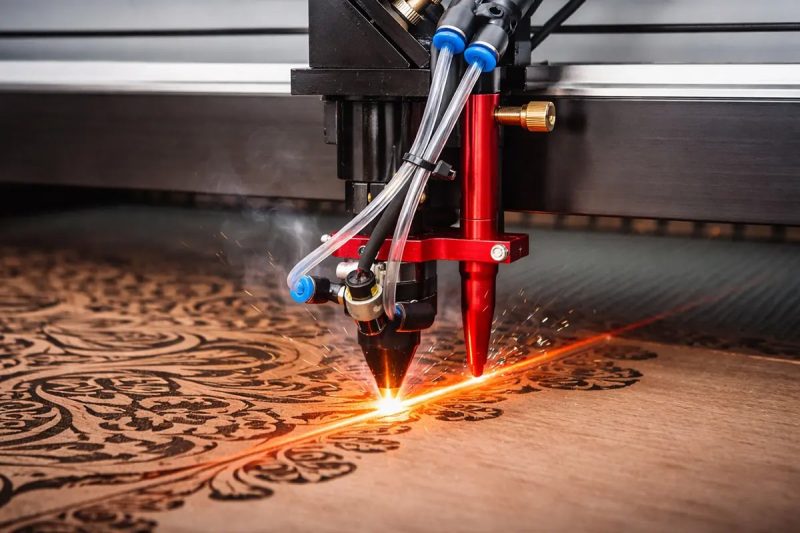
Solid wood — in species ranging from soft balsa to dense hardwoods such as walnut, cherry, oak, and maple — is one of the most widely and successfully processed materials in CO2 laser cutting. The 10.6 µm wavelength is strongly absorbed by the cellulose and lignin structures of wood, enabling clean cutting at high speed with a characteristic lightly charred edge that many woodworkers and designers find aesthetically desirable. Cutting depth and speed depend on wood density, moisture content, and grain direction; denser and more resinous species require lower speeds or multiple passes for clean through-cuts. CO2 laser cutting enables intricate geometric patterns, precise joinery features, and complex design elements that would be impractical or impossible with conventional woodworking tools, making it the standard process for decorative panels, furniture components, architectural screening, and custom gift and award products.
MDF and Plywood
Medium-density fiberboard (MDF) and plywood are the most commonly CO2 laser-cut wood-based sheet materials in production environments. MDF cuts cleanly and consistently due to its homogeneous composition, producing smooth, dark edges that are easy to paint or finish. Plywood cuts well, but the alternating grain direction of successive plies can produce slightly varying edge quality across the panel thickness; higher-quality plywood with void-free cores and consistent ply thickness produces the best results. Both materials contain formaldehyde-based resin binders that release formaldehyde fumes during CO2 laser cutting, requiring effective fume extraction with appropriate filtration. Bamboo, which shares many processing characteristics with hardwoods, cuts cleanly with CO2 laser generators and is increasingly used for sustainable product applications in laser cutting. Bamboo’s tight, uniform fiber structure produces crisp cut edges with minimal charring at optimized parameters, making it well-suited to the decorative panels, kitchenware, and sustainable packaging applications for which it is increasingly specified. Engineered wood products such as veneer sheet, hardboard, and oriented strand board (OSB) are also processable by CO2 laser generators, though the adhesive content and fiber orientation of each product type influence the specific parameters required for optimal edge quality.
Acrylic and Transparent Plastics
Acrylic — polymethyl methacrylate (PMMA) — is arguably the material most closely associated with CO2 laser cutting. The 10.6 µm wavelength is strongly absorbed by acrylic, enabling clean, rapid cutting with a characteristic flame-polished edge that is optically transparent and requires no secondary finishing. This flame-polished edge quality — which no mechanical or abrasive cutting process can replicate — is central to the value proposition of laser-cut acrylic in signage, display, lighting, and design applications. Cast acrylic produces better edge quality than extruded acrylic, as it has a more uniform molecular structure that responds more consistently to laser heating. Acrylic is available in a wide range of colors, including transparent, translucent, and opaque grades, all of which cut well with CO2 laser generators. Thickness capability ranges from 0.5 mm foil grades to 25 mm or thicker sheet in high-power systems, making CO2 laser cutting the process of choice for virtually the entire acrylic product range.
Other Plastics and Polymers
CO2 laser generators can cut a wide range of engineering plastics beyond acrylic. Polycarbonate (PC) cuts with CO2 laser generators but tends to produce slightly yellowed edges due to thermal discoloration of the material near the cut zone; it is generally better suited to engraving and scoring than through-cutting in thick sections. POM (polyoxymethylene, also known as Delrin or acetal) cuts cleanly and precisely with CO2 laser generators, producing smooth, white edges that require minimal post-processing — a property exploited in precision engineering components such as gears, bushings, and structural brackets where dimensional accuracy is important. PETG and PET cut well with CO2 laser generators, producing clean edges suitable for packaging, display, and consumer product applications. Most polyamides (nylons) and polyesters also cut effectively, though the specific grade and any additive packages should be assessed for fume compatibility before production cutting.
Rubber and Foam
Natural rubber and most synthetic rubber formulations — silicone being an important exception, as it does not cut cleanly with CO2 laser generators — are well-processed by CO2 laser cutting. Laser-cut rubber gaskets, seals, O-rings, and custom profile shapes can be produced with high precision and clean edges that eliminate the tooling cost and lead time of conventional die cutting, while maintaining the dimensional accuracy required for sealing applications. Neoprene rubber, EPDM, and nitrile rubber all cut well with CO2 laser generators and are widely processed for automotive, industrial, and marine sealing applications. Polyurethane foam cuts cleanly with CO2 laser generators at appropriate power levels, enabling custom packaging inserts, acoustic panels, and foam padding components with complex geometries that would require expensive dedicated tooling to produce by conventional methods. Polyethylene foam and EVA foam are also processable, though power and speed parameters must be carefully tuned to avoid excessive melting at the cut edge. Polystyrene foam should be avoided due to the toxic styrene fumes it releases when heated — CO2 laser cutting is not appropriate for this specific foam type regardless of power or speed settings.
Leather and Synthetic Leather
Natural leather — in all grades from thin garment leather to thick saddle and upholstery leather — is one of the materials most consistently well-served by CO2 laser cutting. The cut edge is clean, sealed, and resistant to fraying — a quality that die cutting and mechanical cutting cannot replicate without secondary edge treatment. This sealed edge property is particularly valuable in the production of leather goods, footwear, automotive upholstery, and fashion accessories where edge quality is visible and central to the perceived value of the finished product. CO2 laser cutting also enables engraving and surface texturing of leather for decorative and branding purposes. Only natural leather and polyurethane-based synthetic leather formulated without PVC should be processed with CO2 laser generators; PVC-based artificial leather releases hydrogen chloride gas when laser cut and must be avoided.
Fabric and Textiles
Technical and fashion fabrics — including cotton, polyester, nylon, silk, wool, felt, and a wide range of blended and technical textiles — are routinely cut with CO2 laser generators in the apparel, automotive interior, filtration, and industrial textile industries. The laser-cut edge is thermally sealed in synthetic fabrics, preventing fraying and eliminating the need for overlock stitching on cut edges. This capability enables production of complex cut patterns with sealed edges in a single operation, reducing manufacturing steps and improving edge consistency relative to mechanical cutting. Natural fiber fabrics such as cotton and linen do not seal in the same way as synthetics, but still cut cleanly with CO2 laser generators. Laser cutting of fabrics requires very low power levels and high cutting speeds to avoid scorching, and effective smoke extraction to manage the combustion products of the textile.
Paper and Cardboard
Paper, card, and cardboard are among the easiest materials to cut with CO2 laser generators, requiring very low power levels and enabling extremely high cutting speeds and very fine feature resolution. CO2 laser cutting is the standard process for producing custom packaging prototypes and short-run packaging, invitation cards, paper art and decorations, architectural models, and retail display units. The ability to cut, score, and perforate paper and card in a single operation — simply by varying the laser generator power — provides workflow flexibility that die cutting cannot match for short runs and variable designs.
Glass and Stone (Engraving Only)
Glass and stone can be surface-engraved with CO2 laser generators — the beam causes localized thermal stress that produces a frosted or etched surface texture — but can
not be through-cut in any practical production sense. The brittle nature of both materials means that the thermal gradients induced by through-cutting attempts cause uncontrolled cracking rather than clean separation. Tempered glass must never be laser-processed in any way, as its internal stress state means that any crack initiation causes instantaneous catastrophic shattering. CO2 laser engraving of glass and stone is widely used for personalized gifts, awards, memorial stones, and architectural decoration.
Thin Non-Ferrous Metals (with Limitations)
CO2 laser generators can cut thin non-ferrous metals — aluminum foil and sheet up to approximately 3 to 5 mm, and thin copper and brass sheet, though their performance is significantly inferior to fiber laser generators on these materials at equivalent power levels. The 10.6 µm wavelength is less well absorbed by metals than 1.064 µm, requiring higher power and lower speeds to achieve equivalent penetration. For facilities whose primary cutting requirement is non-metallic materials, but who occasionally need to cut thin metals, a high-power CO2 laser generator provides a single-platform solution; for any facility with significant metal cutting requirements, a fiber laser generator is clearly the superior choice.
What CO2 Does Best
CO2 laser generators deliver their best performance on organic and polymeric non-metallic materials — wood and wood products, acrylic and most engineering plastics, natural leather, textiles, rubber, foam, paper, and cardboard. The combination of strong absorption at 10.6 µm, clean-cut edge quality with minimal post-processing requirements, and the ability to process a wide variety of material types from a single machine makes CO2 laser cutting the standard technology for signage, display, furniture, fashion, packaging, and artisan fabrication industries.
CO2 laser cutting machines are capable of processing an exceptionally broad range of non-metallic materials, each with specific cut characteristics and applications. Wood, acrylic, engineering plastics, rubber, foam, leather, textiles, paper, and cardboard all respond well to CO2 laser cutting under appropriate parameters. Glass and stone can be engraved but not through-cut. Thin non-ferrous metals can be cut with limitations. The common thread is strong absorption of the 10.6 µm wavelength by the molecular structures of organic and polymeric materials, which is the physical foundation of CO2 laser cutting’s non-metallic material versatility.
Materials That Fiber Laser Cutting Machines Can Cut
Fiber laser cutting machines have become the dominant technology for metal cutting in industrial manufacturing, and for compelling reasons. Their high wall-plug efficiency, excellent beam quality, long service life, and superior performance across the full range of engineering metals — including highly reflective materials that challenge other laser technologies — make them the preferred choice for any facility whose primary cutting requirement is metallic. This section examines each major metal category compatible with fiber laser generators.
Carbon Steel and Mild Steel
Carbon steel and mild steel are the most widely cut materials in fiber laser cutting and represent the application for which the technology has been most thoroughly optimized. Fiber laser generators at 1.064 µm are strongly absorbed by the iron matrix of steel, enabling high cutting speeds at relatively modest power levels. With oxygen as the assist gas, the exothermic oxidation reaction contributes additional energy to the cutting process, enabling very high cutting speeds on mild steel at thicknesses up to 25 mm and beyond in high-power systems. With nitrogen assist gas, oxide-free, bright cut edges suitable for direct welding or painting are achievable. Carbon steel is used across virtually every manufacturing sector — automotive, construction, industrial equipment, agricultural machinery, and structural fabrication — and its combination of low cost, high availability, and excellent laser cuttability makes it the highest-volume material in most fiber laser cutting facilities.
Stainless Steel
Stainless steel is the second most commonly used fiber laser-cut metal, processed in enormous volumes for applications in the food and beverage, pharmaceutical, chemical processing, architectural, and consumer goods industries. Fiber laser generators cut stainless steel efficiently across a wide thickness range — from 0.5 mm foil grades to 30 mm plate in high-power systems. Nitrogen is the standard assist gas for stainless steel cutting, producing bright, oxide-free edges that preserve the alloy’s corrosion resistance and require no post-cut treatment before welding, passivation, or direct use in corrosive service. High-power fiber laser generators — 6 kW and above — achieve cutting speeds on thin stainless steel that were unattainable with CO2 laser generators even at equivalent or higher power levels, reflecting the superior absorptivity of stainless steel at the fiber laser wavelength.
Aluminum and Aluminum Alloys
Aluminum and its alloys are processable by fiber laser generators, though their high reflectivity at 1.064 µm and high thermal conductivity require higher laser generator power and careful parameter optimization compared with steel of equivalent thickness. High-brightness fiber laser generators — whose superior beam quality achieves higher power density at the focal spot for a given output power — have significantly improved aluminum cutting performance compared with earlier, lower-brightness fiber laser systems. Nitrogen assist gas is used for aluminum cutting, producing clean, bright edges with minimal dross. Aluminum is widely fiber laser cut for automotive body panels, aerospace structural components, electronic enclosures, architectural cladding, and marine fittings, and its lightweight, combined with high-quality laser-cut edge characteristics, makes it an increasingly important material in the fiber laser cutting market.
Copper and Copper Alloys (Brass, Bronze)
Copper and copper alloys — brass (copper-zinc) and bronze (copper-tin) — are among the most challenging metals for fiber laser generators due to their very high reflectivity at 1.064 nm in their polished, unoxidized state. A polished copper surface can reflect more than 95 percent of incident fiber laser radiation, and the back-reflected energy can damage the laser generator if adequate protection systems are not in place. Modern high-power fiber laser generators equipped with back-reflection protection and optimized for highly reflective materials can cut copper and brass effectively — a capability that has enabled the technology’s adoption in electrical, electronics, and decorative metalwork applications where copper and brass are the primary materials. Parameter optimization for copper and brass requires attention to surface preparation, assist gas selection, and power ramping to initiate keyhole formation before sustained cutting begins.
Titanium and Titanium Alloys
Titanium and its alloys — including the widely used Ti-6Al-4V grade — are excellent candidates for fiber laser cutting. Titanium has good absorptivity at the fiber laser wavelength, a relatively high melting point, but low thermal conductivity that concentrates the laser energy at the cut zone, and produces clean, precise cuts with argon assist gas, which prevents oxidation of the titanium surface during cutting. The use of oxygen assist gas on titanium is strongly discouraged as it causes violent exothermic oxidation that produces rough, heavily oxidized cut edges and can ignite the titanium in extreme cases. Fiber laser cutting of titanium is standard practice in aerospace, medical device, and sporting equipment manufacturing, where the combination of titanium’s mechanical properties and laser cutting’s precision and flexibility is particularly valued.
Galvanized Steel and Coated Metals
Galvanized steel — mild steel with a zinc coating applied for corrosion protection — is widely processed by fiber laser generators in the automotive, construction, and HVAC industries. Zinc vaporizes during the laser cutting process, producing zinc oxide fumes that are hazardous at elevated exposure levels and require effective fume extraction with appropriate filtration rated for metal oxide aerosol. The cut quality on galvanized steel is generally good, though the zinc coating can produce slightly more dross than bare mild steel at equivalent parameters, and cut speed may need to be reduced compared to uncoated steel of the same thickness. Pre-galvanized sheet steel — where the zinc coating was applied before forming and cutting — and hot-dip galvanized structural sections are both processable, though the coating thickness and uniformity affect parameter optimization. Other coated metals — powder-coated steel, painted steel, and anodized aluminum — can also be fiber laser cut, with similar considerations regarding fume generation from the coating materials and the potential need for parameter adjustment relative to the uncoated substrate. The decomposition products of specific coating formulations — particularly those containing chromium compounds — require assessment before production cutting to confirm that existing fume extraction provisions are adequate.
Tool Steel and High-Alloy Steels
Tool steels and high-alloy engineering steels — including grades used for cutting tools, dies, and high-wear components — can be fiber laser cut effectively, though the high carbon content and alloy additions that give these materials their mechanical properties also change their cutting behavior compared to mild steel. High-carbon steels are prone to hardening in the heat-affected zone adjacent to the cut, which can cause edge cracking in thick sections and may require post-cut stress relief for demanding applications. High-alloy steels with significant chromium, molybdenum, or vanadium content generally cut well at reduced speeds compared to mild steel, with nitrogen assist gas typically preferred to minimize oxidation-related edge degradation.
Precious Metals
Gold, silver, platinum, and other precious metals are processable by fiber laser generators for jewelry, watchmaking, dental, and electronic contact applications. The high material value of precious metals makes laser cutting — with its minimal kerf and therefore minimal material waste — particularly attractive economically compared with mechanical cutting methods. Fiber laser generators produce clean, precise cuts on gold and silver alloys used in jewelry, and on platinum alloys used in high-value industrial and dental applications. The reflectivity of polished silver is even higher than that of copper, requiring the same back-reflection protection measures and careful parameter optimization as for highly reflective metals in general.
What Fiber Does Best
Fiber laser generators deliver their best performance on metals across the full engineering spectrum — from thin sheet metal at high speed to thick plate at high power, and from commodity mild steel to challenging materials such as copper, titanium, and precious metals. The combination of the 1.064 µm wavelength’s strong absorption by metallic materials, high wall-plug efficiency, excellent beam quality, and robust all-fiber-optic beam delivery makes fiber laser cutting the dominant technology for metal fabrication, automotive manufacturing, aerospace component production, and structural engineering applications worldwide.
Fiber laser cutting machines are capable of processing the full range of engineering metals — carbon and mild steel, stainless steel, aluminum, copper and brass, titanium, galvanized and coated metals, tool steel, and precious metals — each with specific parameter requirements and assist gas selections. The common thread is the strong absorption of 1.064 µm radiation by metallic materials, which enables high cutting speeds, deep penetration, and precise, clean cut edges across the full metal thickness range from thin foil to heavy plate.
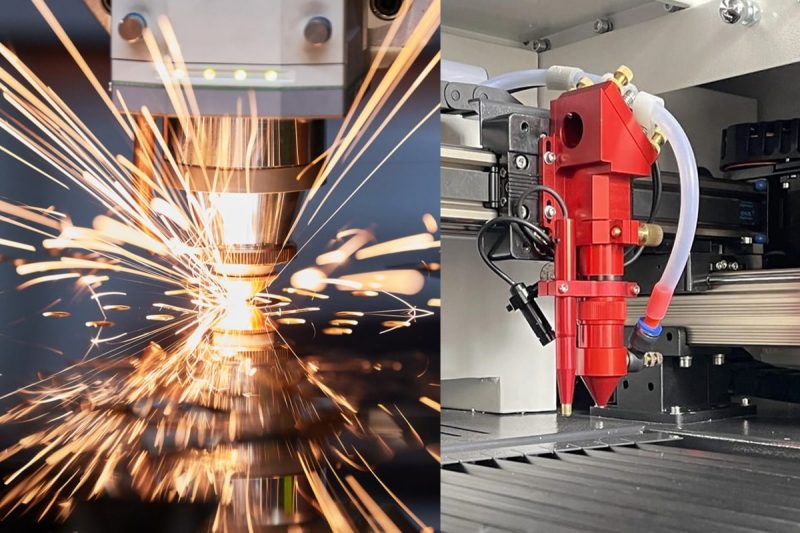
CO2 vs. Fiber: Material Compatibility at a Glance
Having examined the material capabilities of each technology in detail, this section draws the comparison together — identifying where both technologies overlap, where each has exclusive capability, and how to decide between them when both are theoretically viable.
Overlapping Materials: Where Both Can Be Used
A small number of material categories fall within the processing range of both CO2 and fiber laser generators, though typically with different performance characteristics. Thin stainless steel and aluminum foil and sheet — below approximately 1 to 2 mm — can be cut by high-power CO2 laser generators, though fiber laser generators at equivalent or lower power achieve significantly higher cutting speeds and better edge quality on these materials. The superior metal absorptivity at 1.064 µm gives fiber laser generators a consistent speed advantage on metals that makes them the economically preferred choice for any production volume of thin metal cutting, even when a CO2 laser generator is technically capable of the task. Certain dark or carbon-filled plastics and composites that absorb at both 10.6 µm and 1.064 µm can be processed by either technology, though with different cut quality outcomes — the CO2 generator typically produces smoother, cleaner edges on plastics, while the fiber generator may produce faster cuts on carbon-loaded grades with high absorptivity at 1.064 µm. Anodized aluminum can be surface-engraved by both CO2 and fiber laser generators, though the mark appearance differs between the two wavelengths, with fiber generators typically producing darker, higher-contrast marks on anodized surfaces.
Exclusive Materials: What Only CO2 Can Cut
Clear and lightly colored acrylic, polycarbonate, PETG, and most transparent or translucent plastics are exclusively within the CO2 laser generator’s domain, as the fiber laser wavelength passes largely through these materials without being absorbed. Wood, MDF, plywood, and all wood-derived sheet materials are exclusively CO2 territory, as are natural and untreated leather, textiles and fabrics, paper and cardboard, rubber and most foams, and non-conductive organic materials generally. For any facility whose primary material requirement falls in these categories, CO2 laser cutting is not merely preferable — it is the only viable laser cutting technology.
Exclusive Materials: What Only Fiber Can Cut
Thick metals — carbon steel, stainless steel, and aluminum above approximately 3 to 5 mm — are exclusively within the fiber laser generator’s practical cutting range. Copper and brass in any thickness that requires production-speed cutting are in the fiber laser territory. Titanium, precious metals, and high-alloy engineering steels are all better served by fiber laser generators. For any facility whose primary material requirement is metal at production volume and speed, fiber laser cutting is clearly appropriate technology.
How to Decide When Both Are Viable
When both technologies are theoretically viable — for thin metals or dark plastics that both can cut — the decision should be based on the dominant material in the production mix, the required cut quality, and the total cost of ownership. If the facility primarily cuts metals with occasional non-metal requirements, a fiber laser generator for the metals and a CO2 laser generator for the non-metals — each deployed for the material category it handles best — is typically the optimal configuration. If the facility cuts a genuine mix where consolidation to a single machine is commercially important, a high-power CO2 laser generator provides the broadest material coverage in a single platform, accepting some performance compromise on metals relative to a dedicated fiber system.
CO2 and fiber laser generators have largely complementary rather than overlapping material domains. CO2 laser generators hold an exclusive advantage on transparent plastics, wood, leather, textiles, and organic materials; fiber laser generators hold an exclusive advantage on metals above thin-sheet thicknesses. Where both are viable, the dominant material mix and required cut quality guide the selection. Understanding this complementarity is the foundation of rational multi-machine planning for facilities with diverse material processing requirements.
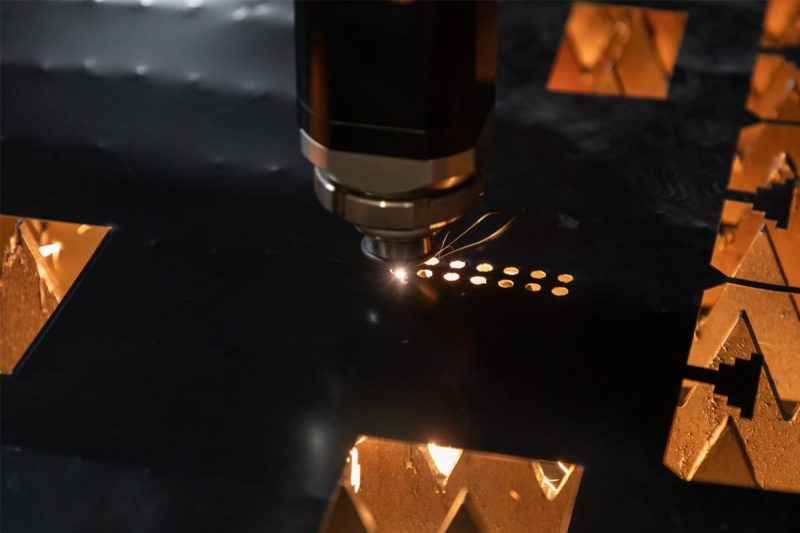
Tips for Optimizing Cut Quality by Material Type
Knowing which laser generator to use for a given material is necessary but not sufficient for achieving consistent, high-quality cuts. The specific combination of laser generator power, cutting speed, focal position, and assist gas selection must be optimized for each material, thickness, and application. This section provides practical guidance on the key parameters and the most common mistakes to avoid.
Key Parameters: Power, Speed, Focus, and Assist Gas
Laser generator power and cutting speed are the two most fundamental process variables, and they must be matched to each other and to the material properties in a balanced way. Too much power at a given speed causes excessive heat input — widening the kerf, increasing dross formation, and degrading edge quality through burning or melting. Too little power causes incomplete penetration or requires such slow speeds that heat accumulation still degrades edge quality. The optimal power-speed combination for each material and thickness must be determined through systematic trials, starting with the manufacturer’s recommended parameters and adjusting based on observed cut quality.
Focal position — the location of the beam’s minimum spot diameter relative to the material surface — controls power density and penetration mode. For thin materials, positioning the focus at or just above the surface maximizes power density and enables the cleanest cut at the smallest kerf width. For thick materials, a slightly negative defocus — focal point below the surface — can improve penetration by maintaining a higher power density deeper in the kerf. Assist gas type and pressure are critical variables that interact with both the material chemistry and the cutting mechanics. Oxygen provides exothermic reaction assistance for carbon steel, enabling high speed at modest laser generator power; nitrogen provides inert assist for stainless steel, aluminum, and non-ferrous metals, producing oxide-free edges at the cost of higher gas pressure and laser generator power requirements; compressed air is cost-effective for many non-metallic materials where edge oxidation is not a quality concern.
Common Mistakes and How to Avoid Them
The most common error in laser cutting parameter selection is attempting to cut a new material using parameters carried over from a different material without adjustment. Even within the same broad material category — different wood species, different acrylic formulations, different steel grades — material properties vary enough to require parameter adjustment for consistent quality. A structured approach — starting with manufacturer-provided baseline parameters, making single-variable adjustments, and documenting results — produces reliable, reproducible process knowledge that benefits the facility in the long term.
A second common mistake is neglecting the role of assist gas purity and pressure stability on cut quality. Contaminated oxygen assist gas produces inconsistent oxidation reactions on steel, causing variable cut speed and edge roughness. Insufficient nitrogen pressure on stainless steel or aluminum allows oxygen from the atmosphere to enter the kerf, producing oxidized, discolored edges that fail quality specifications. Regular inspection and maintenance of the assist gas delivery system — regulators, hoses, nozzle, and filter elements — is as important to cut quality as the laser generator parameters themselves. On non-metallic materials, ensure that the assist gas flow is sufficient to clear the cutting zone of fumes and debris without disturbing the material — particularly important for lightweight fabrics and thin paper.
Achieving consistently high cut quality on any material requires systematic optimization of laser generator power, cutting speed, focal position, and assist gas type and pressure for each specific material and thickness combination. Structured parameter development — starting from manufacturer baselines, making controlled adjustments, and documenting results — builds the process knowledge library that enables rapid, reliable setup for new materials and thicknesses. Attention to assist gas system maintenance is equally important to laser generator parameter selection in achieving consistent, specification-compliant cut quality.
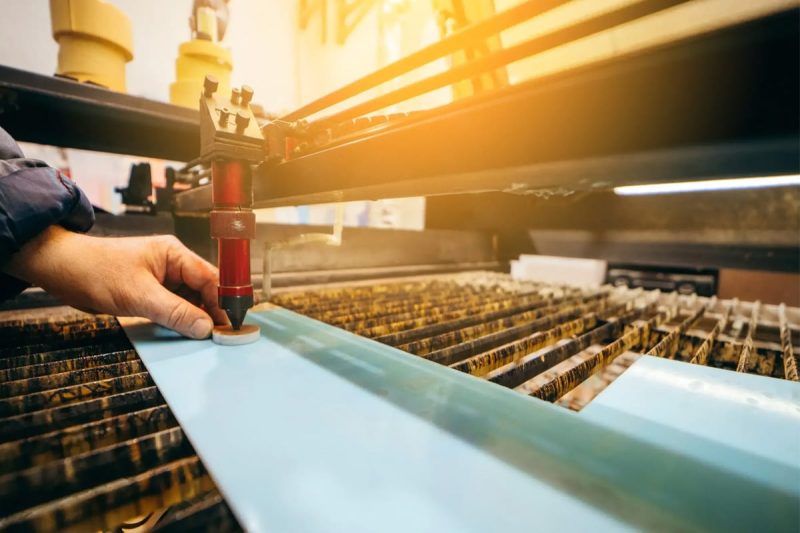
Conclusion
This article has provided a comprehensive guide to the materials that can be cut by CO2 and fiber laser cutting machines — covering the physical principles that determine material compatibility, the full range of materials processable by each technology, the comparison between the two technologies’ material domains, and practical guidance on parameter optimization for consistent cut quality.
The central insight is that CO2 and fiber laser generators are not competing technologies for the same applications — they are complementary technologies with largely distinct material domains defined by fundamental physics. CO2 laser generators, emitting at 10.6 µm, are the unambiguous choice for non-metallic materials: wood and wood products, acrylic and engineering plastics, natural leather, textiles, rubber, foam, paper, and cardboard. The flame-polished acrylic edge, the sealed textile cut, and the clean wood carbonization that CO2 laser cutting produces are qualities that no other laser technology can replicate, and they are the foundation of the technology’s indispensable role in signage, display, furniture, fashion, and artisan fabrication industries.
Fiber laser generators, emitting at 1.064 µm, are the unambiguous choice for metals: carbon steel, stainless steel, aluminum, copper, brass, titanium, and the full range of engineering alloys. Their high wall-plug efficiency, superior beam quality, long service life, and performance on highly reflective metals have made them the dominant technology for metal fabrication, automotive manufacturing, aerospace component production, and structural engineering worldwide — a dominance that has only grown as fiber laser generator power levels and brightness have continued to increase while purchase prices have fallen.
For facilities processing a mix of materials, both technologies may be warranted — each deployed for the material category it serves best. For facilities whose requirements fall clearly within one technology’s domain, the choice is straightforward. For facilities navigating the boundary between the two — cutting thin metals and non-metals from a single platform — the dominant material mix and the required cut quality on each material type guide the decision.
Armed with the material knowledge provided in this article, equipment buyers, production engineers, and machine operators are equipped to make informed, application-specific decisions about laser cutting technology — decisions that maximize productivity, cut quality, and return on investment across the full range of materials their operations require.
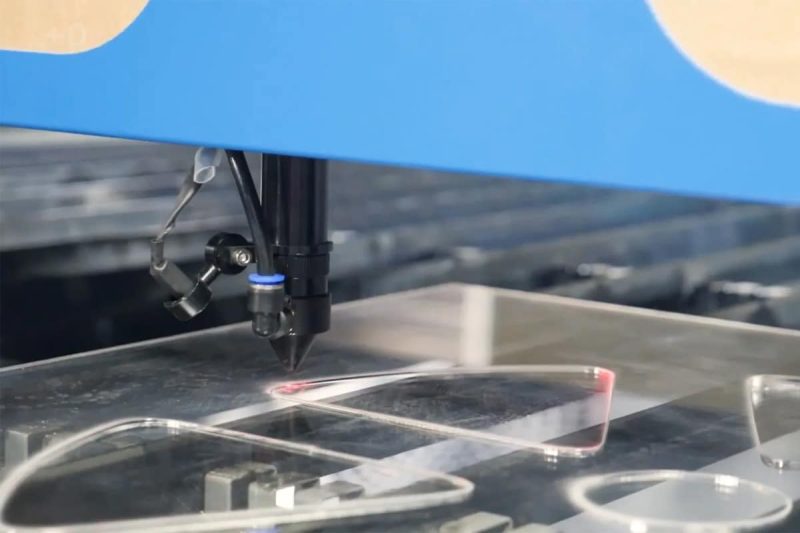
Get a Laser Cutting Solution
Knowing which laser cutting technology is right for your materials is the analytical foundation — putting it into practice requires access to equipment that is correctly specified, reliably built, and backed by the technical expertise to support it throughout its productive life.
AccTek Laser is a professional laser cutting machine manufacturer with over a decade of experience serving industrial and commercial customers across a wide range of materials, sectors, and production requirements. Its product portfolio covers the full spectrum of laser cutting needs: fiber laser cutting machines from 1,500 W through 30 kW and above for high-speed precision cutting of carbon steel, stainless steel, aluminum, copper, brass, titanium, and all engineering alloys, available in standard flatbed formats, exchange-platform configurations for high-throughput production, tube and profile cutting systems, and large-format heavy-duty configurations for thick-plate industrial cutting; and CO2 laser cutting and engraving machines optimized for non-metallic materials including acrylic, wood, leather, textiles, rubber, foam, and cardboard, where the 10.6 µm wavelength delivers the edge quality and material versatility that fiber laser generators cannot replicate.
All systems are built around high-quality laser generators from globally recognized brands, certified to CE and FDA standards, and available with customized configurations — laser generator power, cutting area, automation level, assist gas system, and control interface — matched to the specific material and production requirements of the application. The full-lifecycle service framework covers pre-sales application consultation and laser generator type selection guidance, professional installation and commissioning, comprehensive operator training covering material-specific parameter optimization, competitive spare parts supply, and responsive after-sales technical support. Whether the requirement is a fiber laser cutting machine for metal fabrication, a CO2 laser cutting machine for non-metallic materials, or guidance on configuring the right combination of both technologies for a mixed-material production environment, the application engineering team is equipped to recommend and support the solution that best serves the material mix, production volume, and long-term business objectives.

Contact information
- [email protected]
- [email protected]
- +86-19963414011
- No. 3 Zone A, Lunzhen Industrial Zone,Yucheng City , Shandong Province.
Get Laser Solutions