


















Laser Welding Machine Speed and Productivity
In modern manufacturing, speed and productivity are not simply operational metrics — they are competitive imperatives. The pressure to produce more parts per shift, reduce cycle times, and control labor costs has driven manufacturing engineers to scrutinize every process step, and welding is no exception. For many metal joining applications, laser welding has emerged as the technology that resolves the longstanding tension between joining speed and weld quality — delivering both at levels that arc-based welding processes struggle to approach.
A laser welding machine uses the focused output of a laser generator to melt and fuse metal at the joint interface. The energy is delivered with extraordinary precision to an extremely small area, generating power densities that can exceed one million watts per square centimeter. At these intensities, the metal does not simply melt at the surface — it vaporizes locally, forming the characteristic deep-penetration keyhole that allows the laser beam to fuse metal far below the surface in a single pass. The result is a narrow, deep weld completed at speeds that frequently run five to ten times faster than conventional TIG welding and two to three times faster than MIG welding on comparable material thicknesses.
Yet speed in welding is a more nuanced concept than a simple meters-per-minute figure suggests. A welding process that produces joins at high linear speed but requires extensive fixturing time, generates frequent defects that necessitate rework, or runs productively for only a fraction of each shift due to maintenance interruptions is not truly a productive process. True welding productivity encompasses the entire production cycle — arc-on time as a fraction of total available time, the first-pass acceptance rate of completed welds, the integration of the welding process with upstream part preparation and downstream quality inspection, and the utilization efficiency of capital equipment across shifts and production runs.
This article addresses all dimensions of laser welding productivity. It examines the realistic speed performance of laser welding across different materials and thicknesses, the constellation of factors that determine whether a laser welding installation achieves its theoretical speed potential in practice, the specific optimization strategies that push productivity higher, the common bottlenecks that prevent facilities from realizing the full productivity potential of their equipment, and the measurement framework that makes productivity improvement a data-driven discipline rather than a guesswork exercise.
Table of Contents
How Fast Is Laser Welding? Understanding the Performance Benchmark
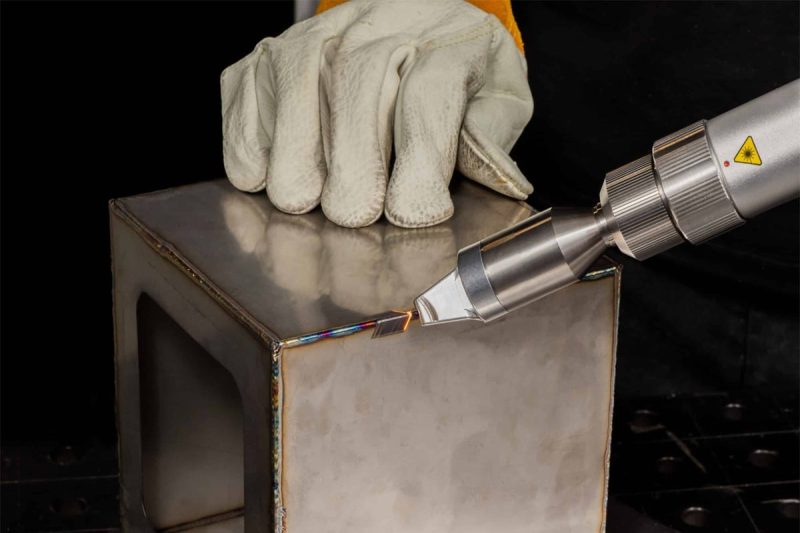
Before examining what drives laser welding productivity, it is useful to establish concrete speed benchmarks and to understand how those benchmarks compare with competing welding technologies. This context prevents both overestimation — treating manufacturer specifications as guaranteed production outcomes — and underestimation of what the technology genuinely achieves under well-optimized production conditions.
Typical Welding Speeds by Material and Thickness
Laser welding speed varies substantially with material type, thickness, and the power level of the laser generator being used. On a thin stainless steel sheet — 1 mm thickness, which is a common gauge in food processing equipment, medical device enclosures, and consumer electronics housings — a 3,000 W fiber laser generator typically achieves continuous welding speeds of 8 to 15 meters per minute. On 3 mm stainless steel — representative of structural housings and industrial enclosures — the same 3,000 W laser generator produces speeds of 3 to 6 meters per minute. Moving to 6 mm mild steel — a thickness common in automotive structural components and industrial fabrication — speeds of 1 to 3 meters per minute are typical at 6,000 W output power.
Aluminum presents different characteristics due to its high thermal conductivity and high reflectivity at the fiber laser wavelength. On 2 mm aluminum — the thickness of automotive body sheet — a well-optimized 4,000 W fiber laser generator achieves speeds of 5 to 10 meters per minute. Titanium, which has lower thermal conductivity than steel, welds faster at equivalent thickness and power: 2 mm titanium can be welded at 6 to 12 meters per minute with a 3,000 W laser generator. These figures represent the actual welding speed — the rate at which the weld joint is completed during active laser emission — and do not include fixturing, positioning, and handling time that determine overall cycle time.
How Laser Welding Compares to TIG, MIG, and Plasma Welding
The speed advantage of laser welding over arc-based processes is most pronounced on thin to medium material thicknesses, where the concentrated laser energy achieves deep penetration in a single pass without the preheat, interpass cooling, and multiple-pass sequences that thick-plate arc welding requires. TIG welding on 2 mm stainless steel typically achieves speeds of 0.3 to 0.8 meters per minute with a skilled operator — a fraction of the 8 to 15 meters per minute achievable with laser welding. MIG welding is faster than TIG and more comparable to laser welding on thicker materials, but still typically achieves only 1 to 3 meters per minute on 3 mm carbon steel, versus the 3 to 6 meters per minute of laser welding. Plasma welding bridges the gap between TIG and laser welding in some thickness ranges, but lacks the laser’s ability to achieve very high depth-to-width ratios that reduce distortion and enable tight joint designs.
Beyond raw linear speed, laser welding’s narrow heat-affected zone dramatically reduces post-weld distortion compared to arc processes, which in many applications eliminates or reduces straightening and finishing operations that consume significant production time downstream of the welding station. This indirect time saving — often unquantified in speed comparisons — can be as significant as the direct welding speed advantage in determining overall production cycle time.
Why Speed Alone Does Not Define Productivity
A laser welding machine that can weld at 10 meters per minute delivers no productivity benefit if it spends 80 percent of the available shift time idle — waiting for parts, executing setup changes, undergoing maintenance, or processing rework. Welding productivity in the industrial sense is the product of achievable welding speed and the fraction of available time during which the machine is actively producing good welds. This fraction — often called arc-on time or laser-on time in welding contexts — is typically far lower than naive expectations suggest. In manually loaded laser welding stations without automation, laser-on time fractions of 30 to 50 percent of total shift time are common, meaning that half to two-thirds of the potential welding output is lost to non-productive time. Automated cells with robotic part handling and intelligent fixturing designs can push laser-on time above 80 percent, capturing the speed advantage of the laser generator across a much larger fraction of each production hour.
Laser welding achieves linear speeds of 1 to 15 meters per minute across common material types and thicknesses, consistently exceeding TIG welding by five to ten times and MIG welding by two to three times under comparable conditions. However, these speeds represent the upper bound of productivity — actual production output depends on how large a fraction of each shift is spent in active welding versus setup, handling, and maintenance. Maximizing true productivity requires both optimizing welding speed and maximizing the fraction of available time during which that speed is applied productively.
Factors That Influence Laser Welding Speed and Productivity
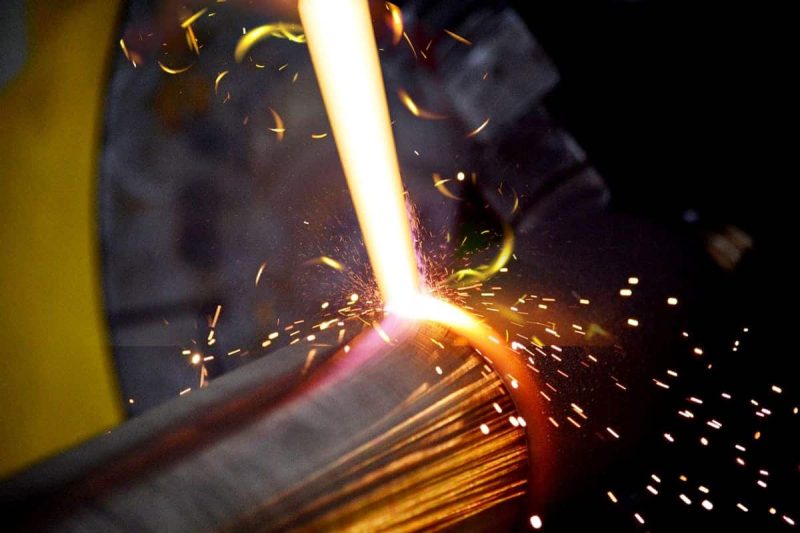
The welding speed achieved by a laser welding installation in production is the outcome of many interacting variables. Some are determined at the time of equipment specification — laser generator power, beam quality, and motion system performance. Others are determined by the design of the production process — joint geometry, fixturing, and automation level. Still others are determined by the quality of day-to-day operation — parameter settings, maintenance practices, and operator competence. Understanding each factor’s contribution enables targeted investment in the improvements that deliver the greatest productivity gain.
Laser Generator Power and Beam Quality
Laser generator output power is the most direct determinant of welding speed for a given material and thickness. The physics of keyhole formation require a minimum power density at the focal spot that depends on the material’s thermal properties; once this threshold is exceeded, higher power enables faster travel speed while maintaining full penetration. In practical terms, doubling the laser generator power from 3,000 W to 6,000 W typically increases welding speed by 60 to 80 percent on a given material and thickness — a substantial gain, though not a doubling, because the relationship between power and speed is not perfectly linear due to the thermal dynamics of the weld pool.
Beam quality — characterized by the beam parameter product (BPP) or the M² factor — determines how tightly the beam can be focused for a given optical configuration. A high-brightness laser generator with excellent beam quality can be focused to a smaller spot than a lower-brightness source of the same power, achieving higher power density and therefore faster welding speed. Modern single-mode fiber laser generators produce beams of near-theoretical quality that can be focused to spot diameters below 0.1 mm, enabling keyhole formation at relatively modest average powers. This beam quality advantage is particularly significant for thin material welding, where narrow kerfs and minimal heat-affected zones are as important as speed.
Material Type and Thickness
Different metals respond to laser welding with very different speed characteristics determined by their optical absorptivity, thermal conductivity, melting temperature, and surface condition. Low-carbon steel has relatively high absorptivity at the fiber laser wavelength and moderate thermal conductivity, making it among the most efficiently laser-welded materials — high speeds are achievable at modest laser generator powers. Stainless steel is similar to carbon steel in welding response. Aluminum’s high thermal conductivity disperses heat rapidly away from the weld zone, requiring higher power density to maintain keyhole conditions and limiting the achievable welding speed relative to carbon steel at comparable thickness. Copper is the most challenging common engineering metal for fiber laser welding: its near-perfect reflectivity at 1,064 nm at room temperature means that keyhole initiation requires extremely high peak power density, and once established, the high thermal conductivity demands sustained high power to maintain penetration.
Material thickness directly determines the minimum laser generator power required for single-pass full-penetration welding. Below the minimum power-thickness combination that supports keyhole formation, welding must either use multiple passes — reducing speed — or accept conduction-mode welding with its inherently lower depth-to-width ratio and greater heat input. Specifying laser generator power that matches the thickest material in the production range with an appropriate margin for process variability is therefore a foundational productivity decision that determines the speed ceiling for the installation.
Joint Design and Fit-Up Accuracy
The geometry of the weld joint and the accuracy with which parts are positioned relative to each other at the point of welding have a profound influence on achievable welding speed. Laser welding’s narrow, focused beam is highly sensitive to joint gap — in autogenous (no filler wire) welding, a gap exceeding approximately 10 percent of the plate thickness can cause the beam to pass through without fusing the joint, requiring either slower speeds that widen the weld pool to bridge the gap, or the introduction of filler wire that adds process complexity and reduces speed. Tight butt joints with machined or laser-cut mating faces and rigid fixturing that maintains gap control throughout the thermal cycle of welding enable the fastest, most consistent welding speeds. Lap joints are more tolerant of surface variation but introduce weld pool depth sensitivity to the overlap dimension that must be controlled in fixturing.
Joint design choices that minimize the weld cross-section — narrow butt joints rather than wide fillets — also directly reduce the volume of metal that must be melted per unit length of wg higher travel speeds for a given laser generator power. Design engineers who optimize joint geometry for laser welding — rather than adapting designs originally conceived for arc welding — consistently achieve higher production welding speeds than those who simply substitute laser welding into a joint design optimized for a different process. Specific design choices that favor laser welding productivity include eliminating unnecessary weld volume by using the minimum joint cross-section that meets structural requirements, designing self-locating features into mating parts that reduce fixturing complexity and part loading time, and specifying surface finishes on joint faces that minimize the oxide and contamination layers that impair energy coupling and require cleaning before welding.
Welding Mode: Continuous Wave vs. Pulsed
Continuous-wave (CW) laser generators maintain a constant output power during welding, producing the keyhole and weld pool conditions that enable the highest linear welding speeds. CW welding is the standard mode for high-productivity applications on carbon steel, stainless steel, and aluminum where maximum speed and deep penetration are the primary objectives. Pulsed laser generators deliver energy in discrete bursts — high peak power for a brief duration, followed by a period of low or zero emission. This mode reduces average heat input, controls weld pool dimensions more precisely, and is well-suited to thin materials, heat-sensitive assemblies, and applications where the weld pool must be carefully controlled to achieve specific metallurgical outcomes. The trade-off is typically a lower average welding speed compared to CW at equivalent average power, because the off-time between pulses is not productive welding time. Selecting the appropriate mode — CW for speed-dominant applications, pulsed for quality-dominant ones — is a fundamental productivity parameter choice.
Focal Position and Beam Spot Size
The position of the laser beam’s focal point relative to the material surface — the defocus distance — controls the power density delivered to the weld zone and therefore the penetration mode and depth. At or near zero defocus, power density is maximized, supporting keyhole formation and deep penetration at the highest travel speeds. As defocus increases — moving the focal point above or below the surface — power density falls and the weld transitions from keyhole to conduction mode, reducing penetration depth and requiring slower travel speeds to maintain fusion at the root. Maintaining correct focal position throughout the welding path — accounting for any surface height variation in the workpiece or thermal expansion of the fixture — is therefore essential for consistent high-speed production. Capacitive or optical height-sensing systems that actively maintain ca onstant standoff between the welding head and the workpiece surface are standard equipment in high-productivity laser welding cells.
Assist Gas Selection and Flow Rate
The assist gas — delivered coaxially through the welding nozzle or as a crossflow jet — performs several functions that affect both welding speed and weld quality. It suppresses the plasma plume above the keyhole that would otherwise partially absorb and scatter the incoming laser beam, reducing the effective power reaching the weld zone. It shields the molten metal from atmospheric oxygen and nitrogen that would cause oxidation and porosity in the solidified weld. And in some configurations, it assists in ejecting metal vapor and spatter from the weld zone. For carbon steel welding with a fiber laser generator, nitrogen is the most common shielding gas, providing good plasma suppression at a reasonable cost. Helium provides superior plasma suppression but at a higher cost; argon provides good shielding but inferior plasma suppression for fiber laser applications. The gas flow rate must be optimized — too low provides inadequate protection; too high generates turbulence that destabilizes the weld pool and entrains atmospheric air. The correct gas type and flow rate for each application can make a measurable difference to achievable welding speed by maximizing the fraction of laser generator power that reaches the weld zone rather than being absorbed by the plasma plume. In applications where maximum welding speed is the primary objective, a crossflow helium jet directed at the keyhole opening — in addition to coaxial shielding gas — provides aggressive plasma suppression that can increase effective welding speed by 10 to 25 percent compared with argon-only shielding, by ensuring that the maximum available laser generator power reaches the weld interface rather than being dissipated in the plasma cloud above it.
Machine Motion System and Acceleration
The motion system that moves the laser welding head along the joint path — whether a Cartesian gantry, a six-axis articulated robot, or a galvanometer-driven scanner — determines not only the maximum travel speed but also the tion and deceleration rates at path features such as corners, curves, and start and stop points. A motion system with high maximum speed but low acceleration takes a long time to reach and decelerate from its maximum speed, spending a large fraction of the weld path at sub-maximum speed. For typical weld paths that include many short straight segments, corners, and feature changes, the effective average welding speed is often significantly lower than the motion system’s rated maximum. High-dynamic-performance motion systems — robots with low-inertia arms, gantries with servo systems optimized for rapid acceleration — maximize the fraction of path length completed at or near maximum welding speed, directly translating into higher part throughput per unit time.
Automation and Robotic Integration
The degree of automation in the laser welding cell — from fully manual operation through semi-automated fixturing to fully robotic part loading, welding, and unloading — is among the most powerful determinants of production productivity, independent of welding speed. Manual cells require operator time for every part load and unload cycle, limit the machine to single-shift operation without additional staffing, and introduce human variability in part positioning that affects weld quality. Automated cells with robotic or gantry-based part handling systems can operate continuously across multiple shifts, maintain consistent positioning accuracy regardless of operator fatigue, and free human personnel for value-added activities such as quality inspection and process improvement rather than repetitive material handling.
Operator Skill and Programming Quality
In installations where human operators play a significant role — whether in programming, setup, or operation — their skill level has a direct and measurable impact on productivity. An experienced laser welding programmer who understands the relationship between welding speed, power, focal position, and gas flow can develop optimized process parameters for a new joint in a fraction of the time required by a less experienced technician, and the resulting parameters typically achieve higher welding speeds with fewer trials. Programming quality — the accuracy and efficiency of the CNC or robot program that executes the weld path — determines how closely the actual welding head motion matches the designed weld path, and how efficiently approach, retract, and repositioning motions are planned to minimize non-welding travel time between joints.
Laser welding speed and productivity are shaped by a hierarchy of factors: the laser generator’s power and beam quality set the theoretical speed ceiling; material properties and joint geometry determine what fraction of that ceiling is achievable; welding mode, focal position, and assist gas selection determine how consistently the process operates at its optimum; the motion system’s dynamic performance determines how much of the programmed speed is actually realized along real-world weld paths; and automation level and operator skill determine what fraction of each production shift translates into completed good welds. Productivity improvement requires addressing all of these dimensions concurrently rather than focusing on any single variable in isolation.
How to Improve Laser Welding Speed and Productivity
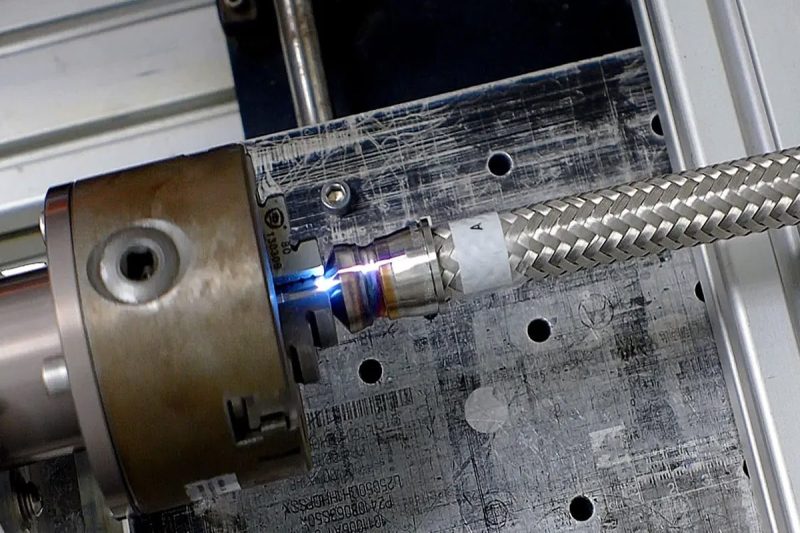
With a clear understanding of the factors that govern laser welding productivity, the path to improvement becomes systematic rather than speculative. This section translates that understanding into specific, prioritized strategies that production engineers and facility managers can implement to raise throughput, reduce cycle time, and maximize the return on the laser welding investment.
Optimizing Laser Generator Parameters
For most laser welding installations, significant productivity gains are available through systematic parameter optimization without any capital investment. Power, travel speed, focal position, pulse frequency (for pulsed systems), and assist gas flow rate all interact in complex ways, and the parameter combination in current production use may not represent the true optimum. Structured Design of Experiments (DoE) methodology — varying multiple parameters simultaneously in a planned matrix rather than adjusting one variable at a time — is the most efficient approach to identifying the parameter combination that delivers the fastest welding speed consistent with the required weld quality. DoE-based parameter development typically identifies welding speeds 15 to 30 percent higher than those found by one-variable-at-a-time trial methods, because it captures the interaction effects between parameters that single-variable methods systematically miss. Documenting optimized parameter sets for each material-thickness-joint configuration and storing them as named programs in the machine controller enables rapid, repeatable setup for recurring production jobs without re-optimization. This program library is a valuable operational asset whose economic value grows with each new material-joint combination added to it over time.
Upgrading to Higher-Power or Higher-Brightness Systems
When the current laser generator’s power level is the binding constraint on welding speed — when the full rated power is required to achieve current production speeds and higher speeds would require more power than the system provides — upgrading to a higher-power or higher-brightness laser generator is the most direct path to speed improvement. As discussed, doubling laser generator power typically increases welding speed by 60 to 80 percent, representing a very significant cycle time reduction for power-limited applications. In other cases, upgrading to a higher-brightness laser generator of the same nominal power — through the adoption of single-mode or near-single-mode fiber technology — can increase effective power density at the focal spot sufficiently to enable higher welding speeds without increasing total output power.
Improving Joint Preparation and Fixture Design
Investment in joint preparation quality and fixture design often delivers productivity returns that exceed those available from laser generator parameter optimization. Machined or laser-cut mating faces that maintain the tight fit-up tolerances required for autogenous welding at high speed — typically a gap of less than 0.1 mm for sheet metal applications — enable the highest consistent welding speeds. A fixture redesign that improves part loading speed, maintains tighter positional repeatability, and incorporates active clamping that compensates for thermal distortion during welding can simultaneously increase welding speed, reduce weld defect rates, and cut part loading cycle time. For high-volume production, the engineering investment in a well-designed, application-specific fixture pays back through improved productivity across every production run that uses it.
Implementing Real-Time Process Monitoring
Real-time process monitoring systems that detect process disturbances — such as joint gap exceedances, focal position drift, or keyhole instability — and trigger immediate corrective action or part rejection prevent the productivity loss associated with discovering defective welds downstream during quality inspection. A weld that is identified as defective at the welding station takes seconds to reject and re-weld; the same defective weld discovered during final inspection may require hours of rework or result in a scrapped assembly. Inline monitoring systems — using photodiode arrays, camera-based weld pool imaging, or optical coherence tomography for real-time penetration measurement — shift quality assurance from a downstream detection activity to an upstream prevention activity, reducing rework rates and the productivity disruption they cause.
Integrating Automation and Robotic Systems
Introducing robotic part handling, automated fixturing exchange, or conveyor-based part feeding to a previously manual laser welding cell can dramatically increase the productive fraction of each shift without changing any welding parameters. A cell that achieves 40 percent laser-on time in manual operation — with an operator loading and unloading each part — can realistically target 75 to 85 percent laser-on time after automation, more than doubling effective throughput from the same laser generator and welding speed. Collaborative robots have made automation accessible to medium-volume, mixed-product production environments that previously could not justify the capital cost of traditional industrial robot cells, by enabling flexible, rapidly reprogrammable part handling without the safety enclosure infrastructure that traditional robots require.
Adopting Hybrid Laser Welding
Hybrid laser-arc welding — combining a laser beam with a MIG or TIG arc in a single, co-located process — extends the productivity advantage of laser welding to thicker materials and wider joint gaps than autogenous laser welding can address economically. The laser provides deep penetration and high travel speed; the arc contributes heat, filler metal, and gap-bridging capability. The result is welding speeds on thick plate — 10 to 25 mm carbon steel— that are two to four times faster than conventional multi-pass MIG welding, with significantly reduced distortion due to the lower total heat input. For shipbuilding, heavy structural fabrication, and pressure vessel manufacturing, where these thickness ranges dominate, hybrid laser welding represents the most significant productivity advancement currently available.
Reducing Non-Productive Time
Analysis of the full production cycle — not just the welding step — frequently reveals that significant time is consumed by activities that do not contribute to weld output: part loading and unloading, fixture exchange between product variants, machine setup and parameter changeover, preventive maintenance activities scheduled during production hours, and quality inspection at the welding station. Targeting these non-productive time elements — through lean manufacturing analysis, setup time reduction through fixture standardization, and rescheduling maintenance activities to planned downtime windows — can increase productive welding time by 20 to 40 percent in facilities where these activities currently consume a significant fraction of available shift time.
Training and Skill Development
Investing in the technical development of laser welding operators, programmers, and maintenance technicians produces productivity returns that compound over time as the team’s collective knowledge deepens. Operators who understand the physics of the laser welding process can identify early warning signs of parameter drift — subtle changes in weld appearance, plasma plume behavior, or spatter pattern — before they result in defective parts. Programmers who understand motion system dynamics can generate more efficient weld paths that reduce non-welding travel time. Maintenance technicians who understand the laser generator’s optical alignment requirements can perform preventive maintenance that sustains beam quality and, therefore, welding speed over the machine’s operating life.
Productivity improvement in laser welding is a multi-front effort that spans parameter optimization, power and brightness upgrades, joint preparation and fixture investment, real-time monitoring, automation integration, hybrid process adoption, non-productive time reduction, and team skill development. The greatest gains come not from any single intervention but from the compounding effect of simultaneous improvement across multiple dimensions — and from treating productivity improvement as a continuous discipline rather than a one-time project.
Common Productivity Bottlenecks and How to Address Them
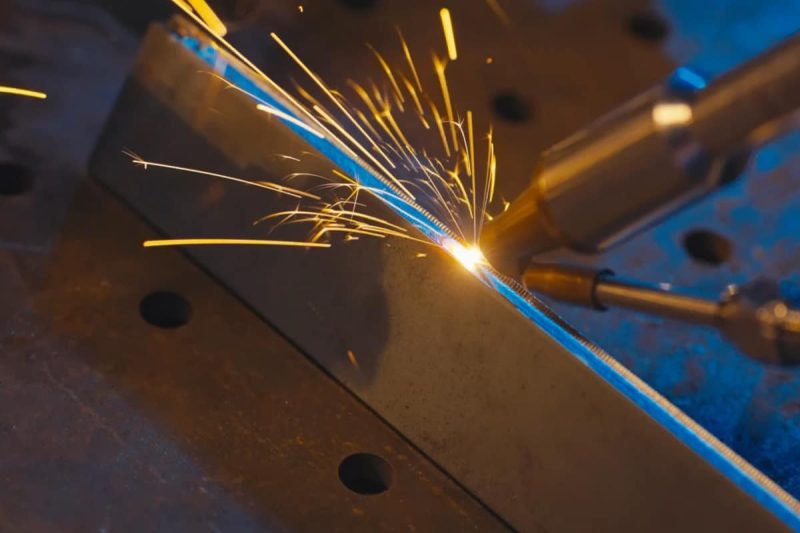
Even in well-intentioned laser welding operations, specific recurring problems consume disproportionate amounts of productive time. Identifying and resolving these bottlenecks often delivers faster and larger productivity gains than broader process optimization efforts.
Fit-Up and Alignment Issues
Poor joint fit-up — gaps that exceed the laser welding process’s tolerance, misalignment between mating surfaces, or inconsistent part dimensions from upstream forming or machining — is the most common production-limiting bottleneck in autogenous laser welding. When fit-up quality is inconsistent, operators must either slow welding speed to widen the weld pool and bridge larger gaps, introduce filler wire with its associated speed penalty, or accept higher reject rates. Addressing fit-up issues requires going upstream of the welding station — improving forming tool maintenance, tightening machining tolerances on joint surfaces, and implementing incoming dimensional inspection that catches non-conforming parts before they reach the welder — rather than attempting to compensate for fit-up variability through welding parameter adjustment alone.
Thermal Distortion and Heat Management
Thermal distortion — the warping of workpieces due to differential thermal expansion and contraction during welding — disrupts production in two ways. It can cause parts to move out of position during welding, creating fit-up variations that degrade weld quality in the middle of a batch. And it can produce finished assemblies that are dimensionally out of specification, requiring costly straightening or causing downstream assembly problems. Laser welding’s inherently narrow heat-affected zone and low heat input reduce distortion relative to arc welding, but do not eliminate it, particularly on thin materials or complex assemblies where residual stress accumulates.
Optimizing welding sequence — the order in which multiple welds in an assembly are completed — and implementing active fixture clamping that constrains distortion during cooling are the primary countermeasures. In assemblies with multiple weld joints, finite element simulation of the thermal and mechanical response to different welding sequences can identify the sequence that minimizes net distortion before production begins, avoiding the costly trial-and-error that typically accompanies distortion problem-solving in production. Pre-setting fixture geometry to compensate for predictable distortion — building in a deliberate angular or positional offset that is canceled by the welding distortion — is another effective strategy for high-volume production of assemblies where the distortion pattern is repeatable.
Inconsistent Weld Quality Leading to Rework
Weld quality variability that results in a significant fraction of joints requiring rework or scrapping is among the most damaging productivity problems, because it simultaneously reduces effective output and consumes additional machine time for repair welding. Quality variability typically traces to one or more of: inconsistent part fit-up, laser generator parameter drift from the qualified process parameters, focal position shift from optical component degradation or thermal expansion, shielding gas supply interruption, or surface contamination on the workpiece. Root-cause analysis using the machine’s process monitoring data — correlating quality defects with specific parameter deviations recorded during welding — is the most efficient diagnostic approach and enables targeted corrective action rather than broad parameter adjustment that may trade one problem for another.
Equipment Downtime and Maintenance Gaps
Unplanned equipment downtime — from laser generator faults, optical component failures, cooling system problems, or control system errors — interrupts production with no warning and at unpredictable times, making production planning and customer commitment difficult. The most effective response is prevention: implementing and consistently executing the preventive maintenance program specified by the laser generator and machine manufacturer, so that the condition of wear-prone components is known and managed before failure rather than discovered at failure. Monitoring key equipment health indicators — laser generator output power, cooling system temperatures, optical transmission through the beam path — provides early warning of developing problems that allow maintenance intervention during planned downtime rather than emergency repair during production.
The four most common laser welding productivity bottlenecks — fit-up variability, thermal distortion, weld quality inconsistency, and unplanned equipment downtime — each have well-understood root causes and effective countermeasures. Addressing them requires looking both upstream (part quality, fixture design) and downstream (quality feedback) of the welding station itself, and investing in the preventive maintenance disciplines that sustain equipment performance. Resolving any one of these bottlenecks typically delivers a larger and more immediate productivity improvement than general process optimization.
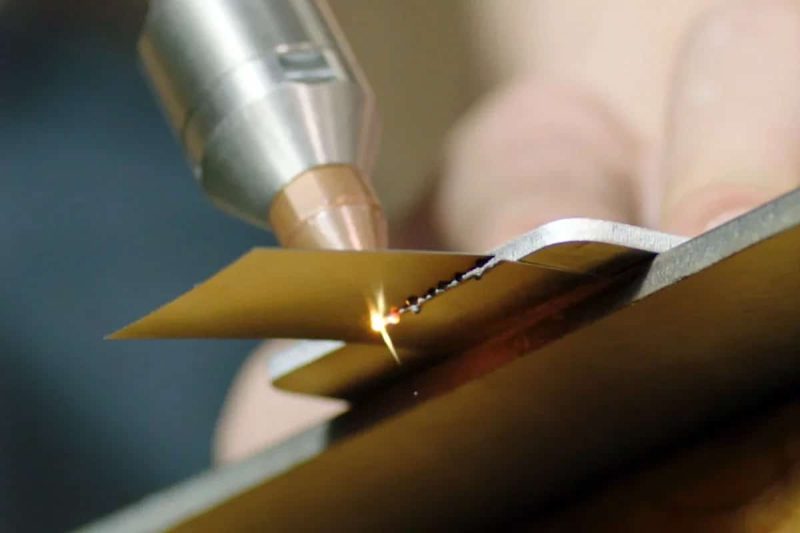
Measuring and Monitoring Welding Productivity
Improvement without measurement is guesswork. Establishing a clear set of productivity metrics and a systematic process for collecting, analyzing, and acting on performance data is the foundation of sustained, compounding productivity improvement in laser welding operations.
Key Performance Indicators for Laser Welding
The most informative productivity KPIs for a laser welding operation span four dimensions. Throughput KPIs — parts per hour, welds per shift, meters of weld completed per day — measure raw output and provide the baseline against which improvement initiatives are assessed. Quality KPIs — first-pass acceptance rate, defect rate by defect type, rework hours per production hour — quantify the fraction of output that meets specification on the first attempt and the cost of quality failures. Equipment utilization KPIs — laser-on time as a percentage of scheduled production time, mean time between failures, mean time to repair — reveal how effectively the equipment’s capacity is being used and how reliably it is available for production. Process stability KPIs — standard deviation of key weld parameters (power, speed, focal position) across a production batch — indicate whether the process is under control or drifting in ways that will eventually manifest as quality problems.
Tracking these KPIs over time — with sufficient granularity to identify trends, correlate quality events with process parameter changes, and compare performance before and after improvement interventions — is the analytical infrastructure that transforms welding productivity management from reactive problem-solving to proactive continuous improvement.
Data-Driven Process Improvement
Modern laser welding machines increasingly incorporate data logging capabilities that record process parameters at high frequency throughout each weld — power, speed, focal position, plasma emission intensity, and other signals — creating a time-stamped process record for every weld produced. When this process data is linked to downstream quality inspection results, it becomes possible to identify the specific parameter signatures that predict defect formation, to set statistical process control limits on the monitored parameters, and to trigger automatic alerts when parameters drift toward out-of-control conditions. This closed-loop, data-driven approach to process management reduces defect rates, tightens the quality distribution, and provides documented evidence of process compliance for customers and regulators who require process traceability. As AI-assisted process analysis tools become more accessible, the ability to identify complex, multi-parameter patterns that precede quality failures — patterns too subtle for human analysis of raw data to detect — is extending the productivity benefit of process monitoring from reactive quality control to genuine predictive quality assurance, where defects are predicted and prevented rather than detected after formation.
Productivity measurement and monitoring transform welding improvement from an intuitive activity into a scientific discipline. A well-chosen set of throughput, quality, equipment utilization, and process stability KPIs — tracked consistently and analyzed systematically — identifies the highest-impact improvement opportunities, quantifies the return on improvement investments, and sustains the discipline of continuous improvement through the visibility that measurement provides.
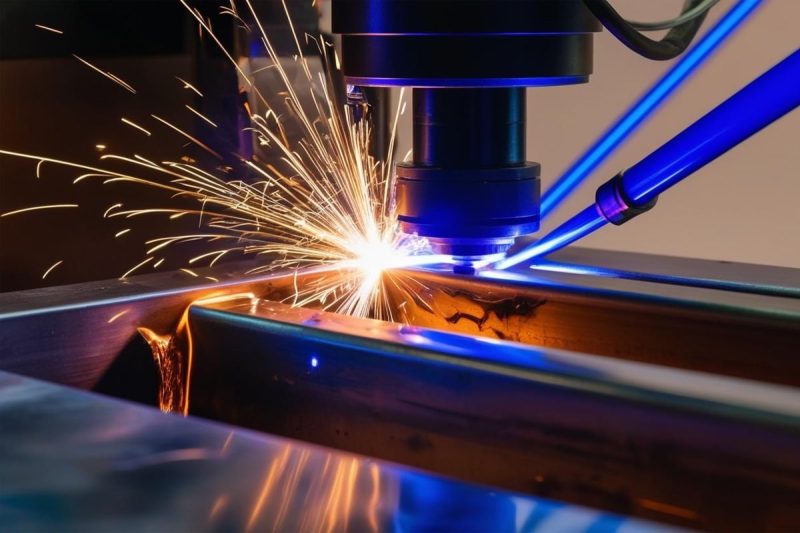
Conclusion
This article has provided a comprehensive examination of laser welding machine speed and productivity — from the concrete speed benchmarks that establish the technology’s performance potential, through the multi-dimensional factor landscape that determines whether that potential is realized in production, to the specific improvement strategies and measurement disciplines that drive sustained productivity growth.
Laser welding’s speed advantage over conventional arc-based processes is real and substantial — five to ten times faster than TIG welding and two to three times faster than MIG welding across common material thicknesses. But linear welding speed is only one component of production productivity. The factors that determine actual production throughput span every layer of the welding operation: the laser generator’s power and brightness, the material and joint geometry, the welding mode and parameter optimization, the motion system’s dynamic performance, the automation level of the production cell, and the competence of the operators and technicians who program, set up, and maintain the equipment. Addressing each of these dimensions systematically — through structured parameter optimization, joint preparation investment, automation integration, hybrid process adoption, non-productive time reduction, and team skill development — compounds productivity gains over time in ways that any single intervention alone cannot achieve.
The common bottlenecks that prevent facilities from realizing their laser welding equipment’s full productivity potential — poor fit-up, thermal distortion, weld quality variability, and unplanned equipment downtime — are well understood and addressable through a combination of upstream process improvement, real-time monitoring, and preventive maintenance disciplines. And the measurement framework of throughput, quality, equipment utilization, and process stability KPIs provides the visibility needed to identify where improvement investment will deliver the greatest return and to confirm that improvement initiatives are working as intended.
For manufacturing operations that have already adopted laser welding, this article provides a structured framework for extracting more productivity from existing investments. For those evaluating laser welding for the first time, it establishes realistic expectations for what the technology can deliver — and what it requires from the production system around it — in order to deliver that productivity reliably and sustainably over the long term.
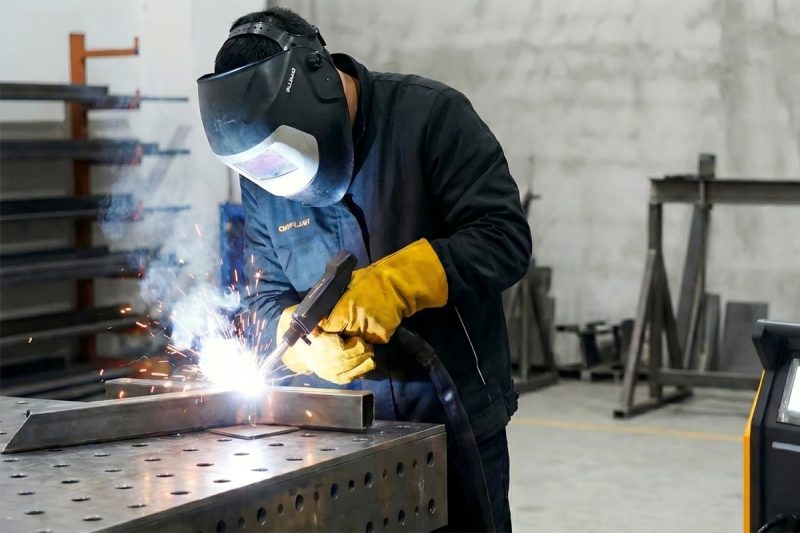
Get a Laser Welding Solution
Translating the productivity potential of laser welding into measurable production results requires the right equipment, correctly specified for the application, and backed by a supplier with the technical depth to support optimization from initial installation through continuous improvement over the machine’s operating life.
AccTek Laser is a professional laser welding machine manufacturer with over a decade of experience serving industrial customers across automotive, aerospace, medical device, electronics, and general metal fabrication sectors. Its laser welding product range covers handheld laser welding machines suited to flexible repair and short-run production, portable and desktop systems for precision component welding, automatic laser welding machines for filler-material applications where gap tolerance and weld profile control are critical, high-power systems up to 6,000 W for thick-section and high-speed production welding, and fully automated laser welding robots with six-axis articulation for complex three-dimensional weld paths and high-throughput unmanned production — all built around high-quality fiber laser generators from globally trusted brands including Raycus, JPT, and IPG, and equipped with advanced motion control, real-time process monitoring options, and flexible shielding gas delivery systems.
CE and FDA certifications confirm compliance with international safety and quality standards. Customization in laser generator power, welding head configuration, automation level, and control interface is available to match the system to specific production requirements — including the joint geometry, material mix, and throughput targets that determine the optimal configuration for each application. The full-lifecycle service framework covers pre-sales application consultation and welding speed feasibility assessment, professional installation and parameter qualification for specific material-joint combinations, comprehensive operator and programming training, competitive spare parts supply, and responsive after-sales technical support, including remote diagnostics — providing the complete partnership needed to achieve and sustain the welding speed and productivity levels that make laser welding a genuine competitive advantage in the applications it serves.

Contact information
- [email protected]
- [email protected]
- +86-19963414011
- No. 3 Zone A, Lunzhen Industrial Zone,Yucheng City , Shandong Province.
Get Laser Solutions